
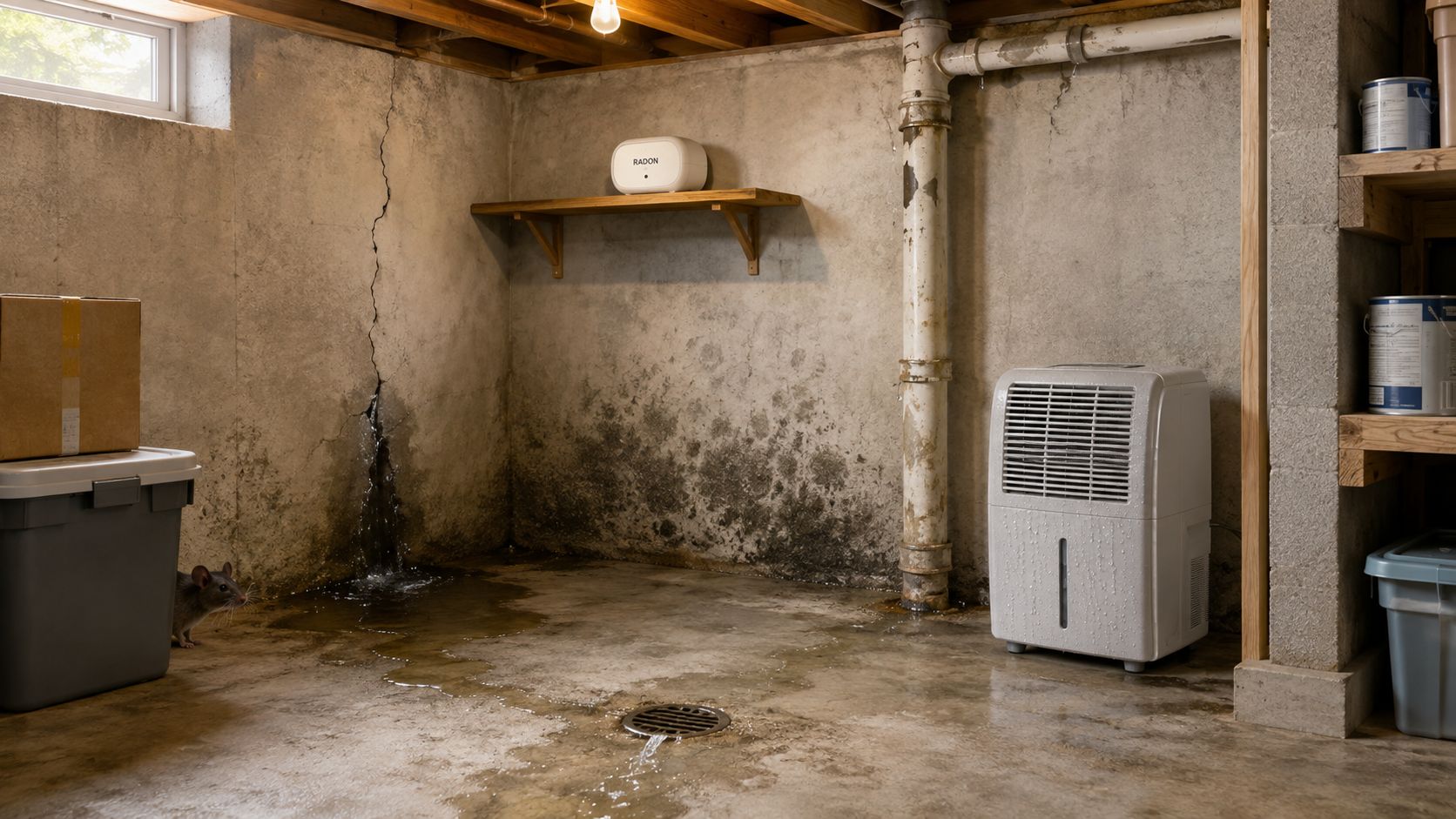
A lot of Missouri homeowners end up in the same spot. You go downstairs after a storm, catch a musty smell, notice a white chalky line on the wall, or spot a crack near the corner and wonder whether you're looking at normal aging or the start of a bigger problem. That uncertainty is common because basements and crawlspaces tend to show the first signs of moisture, drainage trouble, air-quality concerns, soil movement, and safety issues.
From the inspection side, that's what makes below-grade spaces worth slowing down for. In homes around Cape Girardeau, Jackson, Sikeston, Poplar Bluff, Farmington, Perryville, Columbia, Jefferson City, Fulton, Boonville, and Sedalia, the same visible clues can point to very different causes. A stain may be old. A crack may be cosmetic. A damp corner may trace back to exterior drainage instead of a failed wall.
At Upchurch Inspection, Madi's field-informed perspective comes from participating in residential and commercial inspections and inspection training, where the job is to separate what's visible from what still needs verification. That matters here. A visual inspection can flag patterns and document concerns, but it doesn't replace targeted testing, monitoring, or specialist evaluation when the cause isn't clear.
These are seven common basement problems in Missouri homes, organized around what you can see, what the finding does and doesn't prove, what you can safely check yourself, and who should evaluate the underlying issue when needed.
Table of Contents
- 1. Water Seepage and Efflorescence on Foundation Walls
- 2. Cracks in Foundation Walls and Concrete Floors
- 3. Inadequate or Failed Sump Pump Systems
- 4. Mold Growth and Moisture-Related Microbial Contamination
- 5. Deteriorating or Missing Vapor Barriers and Crawlspace Issues
- 6. Radon Gas Accumulation and Lack of Mitigation Systems
- 7. Deteriorated or Non-Code Electrical Systems in Basements
- 7-Point Comparison: Missouri Basement Problems
- From Basement Finding to Clear Next Step
1. Water Seepage and Efflorescence on Foundation Walls
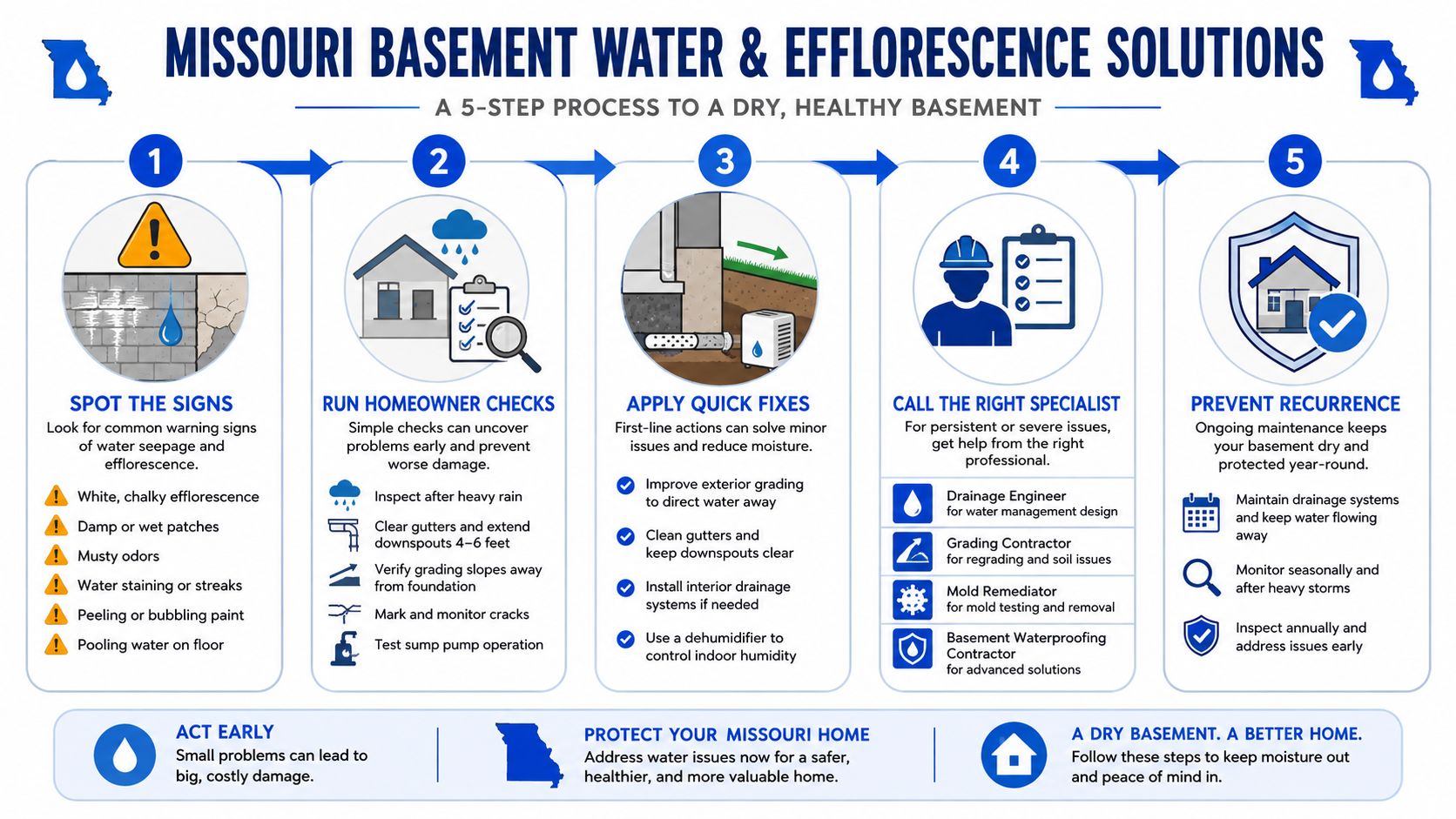
Water seepage is one of the most common basement complaints because it's easy to notice and easy to misunderstand. Homeowners often find damp wall surfaces, darkened concrete, peeling paint, or a thin white crust on masonry after wet weather. That white residue is efflorescence, and it usually means water has been moving through the wall and leaving mineral deposits behind as it evaporates.
In Missouri homes, that often points back to drainage and water collecting around the foundation. The Missouri Department of Natural Resources says a dry basement depends on continuous footing drains around the house plus drainage beneath the basement floor, and that visible surface sealing alone isn't the practical benchmark for a dry system. The same guidance recommends exterior fixes like cleaning gutters and downspouts, regrading soil, and using French drains because many basement moisture issues start at the perimeter, not inside the room (Missouri basement and yard water guidance).
Before talking repair, it helps to picture the pattern visually.
What it does and doesn't prove
Efflorescence tells you moisture has been there. It doesn't automatically prove the wall is structurally failing, and it doesn't tell you whether the water source is current or old. In older homes around Southeast Missouri and Mid-Missouri, especially where exterior grading has changed over time, I'd treat it as a sign to inspect water management first, not as a reason to start with interior paint or patch products.
Practical rule: If the basement wall is wet but the yard drainage is poor, fix the water path before spending money on cosmetic finishes.
A homeowner can safely check a few basics:
- Look at downspouts: Make sure they discharge away from the foundation and aren't dumping water beside the basement wall.
- Check grading: Soil should slope away from the house rather than trapping runoff at the perimeter.
- Watch timing: Note whether the dampness shows up only after storms or stays present in dry weather too.
For a more detailed look at runoff control, foundation drainage and grading tips for homeowners line up with the same practical idea. Move water away first. If seepage continues, a home inspector, waterproofing contractor, or foundation specialist can sort out whether the issue is exterior drainage, hydrostatic pressure, footing drain failure, or something else.
2. Cracks in Foundation Walls and Concrete Floors
Cracks make people nervous, and sometimes they should. But not every crack means the house is shifting out from under you.
Small vertical or hairline cracks can show up from normal concrete shrinkage or minor seasonal movement. The bigger concern is the pattern. Horizontal cracking, stair-step cracking in masonry, visible bowing, repeated seepage through the crack, or a crack that appears to be widening deserves closer attention because those clues can point to pressure or movement rather than simple surface aging.
Missouri gives foundations a tough cycle to live through. Clay soil expands when wet and contracts when dry, which creates repeated heave-and-settlement stress on basement walls and footings. Missouri-focused foundation guidance commonly notes that clay can swell by 10% or more after rainfall, then shrink during drought conditions, which is one reason crack behavior can change across seasons.
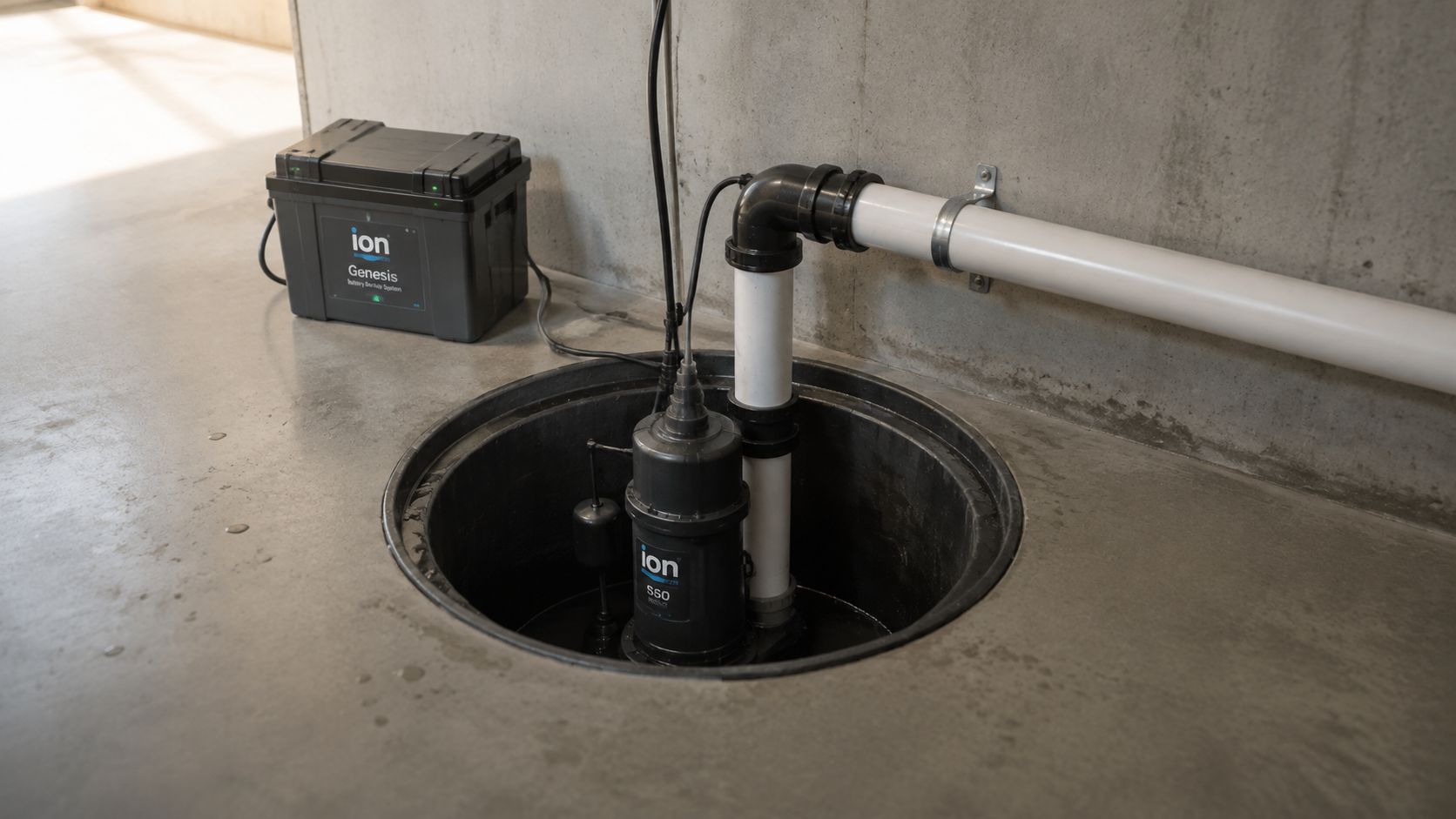
Here's a related basement component that often shows up near crack and water evaluations.
What to watch instead of guessing
A crack matters less by itself than by what it's doing. Is one side displaced? Is there fresh moisture staining? Does the wall lean inward? In homes around Jefferson City, Columbia, or older neighborhoods in Cape Girardeau and Jackson, those details tell more than the fact that a crack exists.
Missouri Extension materials also note that when moisture in soil freezes, it expands and increases pressure on foundation walls. That freeze-thaw mechanic helps explain why some homeowners notice seepage or crack changes after winter, especially where drainage leaves soil wet near the house (Missouri basement moisture and freeze-thaw discussion).
A crack is an observation. Movement is the diagnosis question.
Homeowners can photograph the crack, date the photo, and watch for changes in width, length, moisture, or wall alignment. They can also keep gutters clear and reduce water near the foundation. What they shouldn't do is assume paint, mortar smear, or a DIY filler answers the structural question.
If you want a plain-English breakdown, cracks that matter vs cracks that don't is a useful starting point. For actual repair direction, the right next call may be a home inspector, a foundation contractor experienced with quality residential concrete foundations, or an engineer when the signs suggest active structural movement.
3. Inadequate or Failed Sump Pump Systems
A sump pit can make a basement look protected even when it isn't. I've seen homeowners assume they're covered because the pit is there, but the key question is whether the system works when water shows up.
Common problems are simple. The pump doesn't run. The float gets stuck. The discharge line clogs or sends water right back next to the house. Sometimes there's no pump at all, just an empty pit. In a basement that takes on water during wet weather, that setup can turn a manageable drainage issue into floor flooding, wet insulation, damaged belongings, or recurring mold conditions.
What a homeowner can safely check
You don't need to disassemble the system to notice useful clues. Listen for short-cycling, check whether the pit holds standing water for long periods, and look outside to see where the discharge ends. If the line empties close to the foundation, the system may be moving water out of the pit but not away from the house.
That doesn't automatically mean the pump is undersized or failed. It may mean exterior drainage is poor, the discharge route is wrong, or the pump needs service rather than replacement.
The photo below shows the kind of damp corner conditions that sometimes trace back to water management failures, including drainage and pump issues.
When the issue is bigger than the pump
A working sump pump is the last line of defense, not the first. If grading, gutters, buried drain lines, or footing drainage are failing, the pump may be carrying too much of the load. That's especially true in homes with repeated wet-basement history or low-lying lots.
- Check the outlet area: Make sure discharged water isn't creating a soggy zone right beside the house.
- Check power backup: A pump tied to a storm-driven basement risk is vulnerable during outages.
- Check for maintenance neglect: Sediment, debris, and stuck floats can keep a good pump from doing its job.
If buried drain routing is part of the question, why a camera check matters for underground drainage pipes helps explain what visual inspection alone can miss. A plumber, drainage contractor, or basement waterproofing specialist may need to determine whether the problem is mechanical failure, discharge design, or water load beyond what the system can handle.
4. Mold Growth and Moisture-Related Microbial Contamination
Mold in a basement usually isn't the first problem. It's the result of moisture that hasn't been controlled.
Homeowners may see black, green, or white growth on framing, cardboard boxes, drywall, insulation, or the back side of stored furniture. Sometimes the first sign is a musty smell rather than visible growth. That's common in finished basements where moisture is tucked behind walls or under flooring instead of sitting out in the open.
In Missouri, cool foundation walls, humid air, and damp lower levels create good mold conditions. If the basement has chronic seepage, plumbing leaks, condensation, or poor ventilation, cleaning the surface without correcting the moisture source usually means the problem comes back.
What visible mold means and what it doesn't
Visible growth means there's been enough moisture for microbial activity. It does not automatically tell you the species, the full extent, or whether hidden areas are also involved. It also doesn't prove a health outcome for a specific person, though people with allergies, asthma, or other sensitivities may react more strongly in damp spaces.
The practical question is where the moisture is coming from. Is it bulk water entry, air condensation, a plumbing leak, or damp materials that never dried properly after a storm?
Wet basements don't stay just wet. They affect wood, insulation, stored contents, and indoor air.
A homeowner can safely do basic observation and housekeeping:
- Move stored items back from walls: That creates a viewing gap and improves airflow.
- Look for recurring dampness: Check corners, rim joists, and below windows or pipes.
- Avoid disturbing large visible growth: Scrubbing extensive contamination can spread spores and won't solve the moisture source.
For day-to-day prevention thinking, these basement moisture control tips are a reasonable companion to inspection findings. If mold is extensive, keeps returning, or appears tied to hidden moisture in finishes, bring in a mold assessment professional, qualified remediation contractor, plumber, or waterproofing specialist depending on the suspected source.
5. Deteriorating or Missing Vapor Barriers and Crawlspace Issues
Not every Missouri home has a full basement. In Southeast Missouri and parts of Mid-Missouri, crawlspaces show many of the same moisture problems, just in a tighter and less visible space.
A damaged or missing ground vapor barrier lets moisture rise from the soil into the crawlspace air. That can feed wood decay, musty odors, insulation problems, condensation on ductwork and pipes, and higher moisture levels above the crawlspace in the living area. If the crawlspace has standing water, torn plastic, sagging insulation, or signs of animals, the moisture issue usually isn't under control.
Why this matters in Missouri homes
Crawlspaces also matter for air quality and soil gas. Missouri-focused radon guidance notes that radon enters through openings such as foundation cracks, slab-to-wall joints, sump pits, and utility penetrations, and that damp conditions can change sub-slab gas pathways. In practical terms, basement dampness and crawlspace moisture shouldn't be treated as separate issues from radon risk, especially after heavy rain or saturated soil (foundation cracks, moisture, and radon entry guidance).
That doesn't mean every wet crawlspace has high radon. It does mean the space deserves more attention than many homeowners give it.
A safe homeowner check is visual only. Use a flashlight, look for torn vapor barrier sections, check whether soil is exposed, and note any standing water, loose duct insulation, or sagging fiberglass batts. Don't crawl into a tight or unsafe space if wiring is exposed, the area is muddy, or you suspect pests.
When to call for help
If the issue is minor, maintenance may be enough. Re-secure loose access doors, keep gutters clean, and manage runoff away from the foundation. If the crawlspace stays damp, smells musty, or shows repeated water entry, the next call may be a home inspector, crawlspace contractor, plumber, or mold professional depending on what's visible.
In older homes near Farmington, Perryville, Sikeston, or Poplar Bluff, crawlspace conditions often tell you a lot about long-term moisture habits in the house. They're easy to ignore because they're out of sight, but they're not low priority.
6. Radon Gas Accumulation and Lack of Mitigation Systems
Radon is one of the easiest basement risks to miss because you can't see or smell it. A basement can look dry and sound, and still be the place where radon levels are high first.
Missouri has a statewide radon problem that matters directly to basements. The state health department says radon is present in every county, and a statewide residential testing program found that 1 in 3 homes tested exceeded the EPA action level of 4.0 pCi/L. That program tracked results from 2003 to 2023, and Missouri's county distribution includes 115 counties with 11 in EPA Zone 1, 97 in Zone 2, and 7 in Zone 3, which tells you the concern is geographically widespread, not limited to one city.
What you can observe and what you can't
What you can observe are possible entry conditions. Cracks in slabs, open sump pits, utility penetrations, and basement moisture can all matter because lower levels tend to have greater radon concentrations. The University of Missouri Extension advises checking obvious entry points like cracks, pipe openings, and capped sumps, and notes that increasing airflow and opening windows when practical can help reduce concentrations in basements (University of Missouri radon guidance).
What you cannot do is diagnose radon by smell, age of the home, or whether the basement “feels fine.” Testing is the only way to know.
A clean basement can still have a radon problem.
Missouri's Department of Health and Senior Services says free radon test kits are available to Missouri residents, that homes at or above 4.0 pCi/L should be fixed or mitigated, and that the EPA suggests considering action at 2.0 pCi/L or higher (Missouri radon testing and mitigation guidance).
If a basement has been wet after storms, timing matters too. Missouri-specific radon guidance also notes that saturated soils can increase radon movement toward openings and recommends retesting within 48 hours after major water intrusion using continuous monitors rather than simple charcoal tests (Missouri spring rain radon guidance). For a buyer or homeowner, that means radon and moisture should be evaluated together, not as unrelated basement topics.
7. Deteriorated or Non-Code Electrical Systems in Basements
Electrical problems in basements don't always announce themselves with sparks or tripped breakers. More often, they show up as corrosion on components, extension-cord workarounds, old wiring methods, open junctions, missing covers, or receptacles installed in damp locations without proper protection.
Basements are rough on electrical equipment because moisture and condensation can affect metal parts and wiring insulation over time. In older Missouri homes, especially those with unfinished basements, it's also common to find a mix of original wiring and later DIY additions. That mix is where a lot of trouble starts.
What basement electrical issues may mean
A rusty panel cabinet, staining below conduits, or corrosion on outlet screws can suggest a moisture history. An exposed splice or buried junction box suggests poor workmanship. Older wiring types may indicate the system hasn't been updated for modern loads. None of those findings automatically mean the whole house is unsafe, but they do raise the need for a closer look by the right person.
This category matters even more if the basement has had seepage or standing water. Water and damaged electrical components are not a DIY diagnosis situation.
A homeowner can safely check visible conditions without opening equipment:
- Look for corrosion: Rust, staining, or mineral residue near electrical parts can point to damp conditions.
- Look for unfinished work: Missing cover plates, hanging wires, or open junctions deserve attention.
- Test only what's user-level: If an outlet tester is used, stay with normal receptacle testing. Don't remove covers or open panels.
When an electrician should step in
Bring in a qualified electrician if you see damaged conductors, moisture near the service equipment, repeated breaker trips, overheated receptacles, or basement wiring that appears altered without proper enclosures. If the basement also has water intrusion, solve both sides of the problem. Drying the area matters, but so does verifying the electrical system wasn't compromised in the process.
7-Point Comparison: Missouri Basement Problems
| Condition | Implementation complexity | Resource requirements | Expected outcomes | Ideal use cases | Key advantages |
|---|---|---|---|---|---|
| Water Seepage & Efflorescence on Foundation Walls | Low–High: simple grading/gutter fixes to excavation and exterior membrane | Moderate: landscaping, gutters/downspouts, French drain or waterproofing contractor | Reduce wall moisture, prevent mold and deterioration; may require follow-up monitoring | Homes with damp walls, visible efflorescence, or pooling at foundation | Early visual detection enables targeted, often cost-effective interventions |
| Cracks in Foundation Walls & Concrete Floors | Low–High: monitor and seal vs. structural bracing/underpinning | Variable: sealing materials and monitoring; expensive for structural repairs and engineers | Stabilize cracks, stop leaks; determine whether movement continues | Visible horizontal, widening, stair-step cracks, or cracks with seepage | Many cracks can be monitored or sealed; early action prevents escalation |
| Inadequate or Failed Sump Pump Systems | Low–Moderate: testing and replacement to rerouting discharge or adding backups | Modest–Moderate: pump, check valve, discharge piping, possible battery backup, electrician | Reduce basement flooding risk when operational; limited by power outages without backup | Homes with sump pits, high water table, or prior basement flooding | Relatively affordable fixes; battery/dual pumps provide redundancy |
| Mold Growth & Moisture-Related Microbial Contamination | Moderate–High: remediation plus addressing underlying moisture sources | Moderate: remediator, dehumidifiers, repairs to drainage or HVAC | Remove active mold, improve indoor air quality if moisture source is controlled | Visible mold, musty odors, health-sensitive occupants, or moisture stains | Professional assessment guides targeted remediation; prevents health impacts when paired with source control |
| Deteriorating/Missing Vapor Barriers & Crawlspace Issues | Moderate–High: install/repair barrier, encapsulation, or add drainage | Moderate–High: vapor barrier materials, dehumidifier, contractors; possible sump/French drain | Lower ground moisture, reduce mold/radon risk, protect framing longevity | Crawlspaces with exposed soil, standing water, torn or missing barrier | Encapsulation provides long-term moisture control and reduces multiple risks |
| Radon Gas Accumulation & Lack of Mitigation Systems | Low–Moderate: testing is simple; mitigation installation is moderate | Low for testing; moderate for mitigation system and certified contractor | Accurate risk assessment; mitigation typically reduces radon by 50–99% | Homes in high-radon areas, no testing history, or elevated test results | Testing is inexpensive and mitigation is effective and minimally disruptive |
| Deteriorated or Non-Code Basement Electrical Systems | Moderate–High: retrofit GFCIs to full rewiring or panel upgrade | Moderate–High: licensed electrician, permits, new wiring/panels | Improved electrical safety, code compliance, reduced shock/fire risk | Exposed knob‑and‑tube, corroded outlets, lack of GFCI protection in damp areas | Targeted upgrades (GFCIs) are low-cost; full upgrades markedly improve safety and compliance |
From Basement Finding to Clear Next Step
Most basement findings fall into one of three buckets. Some are maintenance signals, like minor staining near a downspout problem, loose vapor barrier sections, or a small shrinkage-type crack that isn't showing movement. Some need prompt attention, like repeated seepage, a sump system that doesn't discharge properly, or visible mold that keeps coming back. A smaller group deserves faster specialist follow-up, including active water intrusion, growing or bowing cracks, standing crawlspace water, high radon, and electrical components affected by dampness or corrosion.
The biggest mistake I see homeowners make is treating the visible symptom as the whole problem. Waterproof paint over a damp wall, bleach on recurring mold, or patching a crack without asking why it formed usually leads to repeat issues. Missouri's drainage, clay soil movement, freeze-thaw pressure, and lower-level radon risk all make basements a place where cause matters more than cover-up.
Document conditions across seasons when you can. Take photos after storms, during dry periods, and after winter weather. If the smell, crack, staining, or seepage pattern changes, that history helps an inspector or specialist separate a one-time event from an active pattern. That's especially useful in places like Columbia, Jefferson City, Fulton, Boonville, Sedalia, Cape Girardeau, and Jackson, where the same house can behave differently from spring to late summer.
Correct exterior drainage before spending money on cosmetic repairs whenever the evidence points that way. Then use targeted services based on the actual question. A home inspection can document basement, foundation, and moisture-related observations. A radon test can answer the invisible air-quality question. A mold assessment can help when visible growth or musty odors don't match the amount of moisture you can see. A sewer scope may be worth adding if backup, slow drains, or repeated lower-level water problems suggest a buried line issue instead of simple seepage. If rodents are part of the basement picture, FullScope Pest Control rodent services may also be part of the solution.
Upchurch Inspection is one relevant option when you need clear findings, photos, and help sorting basement observations into realistic next steps within its service area and inspection offerings. The point isn't to jump straight to the biggest repair. It's to verify what the finding means, prioritize correctly, and avoid spending money in the wrong place. A basement finding is the start of the conversation, not the final diagnosis.
If you're dealing with moisture, cracks, crawlspace concerns, or radon questions, Upchurch Inspection offers inspection services that can help document what's visible and point you toward the right next evaluation. You can learn more about available home, radon, mold, and related inspection options at Upchurch Inspection.