

A spring storm rolls through Columbia, and the next morning you notice a damp mark near a basement window. The gutters are full of leaves, the sump pump hasn't been tested since last year, and the furnace filter is overdue for replacement. None of those observations proves a major defect, but together they show why seasonal maintenance matters in Mid-Missouri. Small water-management and heating issues can become much harder to manage when homeowners wait for visible damage.
A useful Mid-Missouri seasonal home maintenance checklist follows weather risk and priority rather than a generic month-by-month routine. Missouri homes face freezing temperatures every year, repeated freeze and thaw cycles, heavy rain, humidity, storms, and long heating seasons. The state's northern half averages about 110 days below 32°F, while the Bootheel averages around 70, according to Missouri climate information on winter moisture and roof leaks.
The checkpoints below separate what homeowners can safely observe or maintain from warning signs that deserve an inspector or qualified specialist. Homeowners, buyers, sellers, and property managers can use the same process to document conditions, plan service, and decide what needs attention first.
Table of Contents
- 1. Inspect and Clean Gutters and Downspouts
- 2. Check Roof Condition and Address Visible Damage
- 3. Test HVAC System and Replace Air Filters
- 4. Inspect Foundation, Basement, and Crawlspace for Cracks and Moisture
- 5. Test Sump Pump Function and Check Drainage Systems
- 6. Check Exterior Caulking, Weatherstripping, and Siding Condition
- 7. Inspect Attic Ventilation, Insulation, and Roof Decking
- 8. Inspect Plumbing, Water Heater, and Test Water Quality
- Mid-Missouri Seasonal Home Maintenance, 8-Point Comparison
- Turn Seasonal Checks Into a Maintenance Record
1. Inspect and Clean Gutters and Downspouts
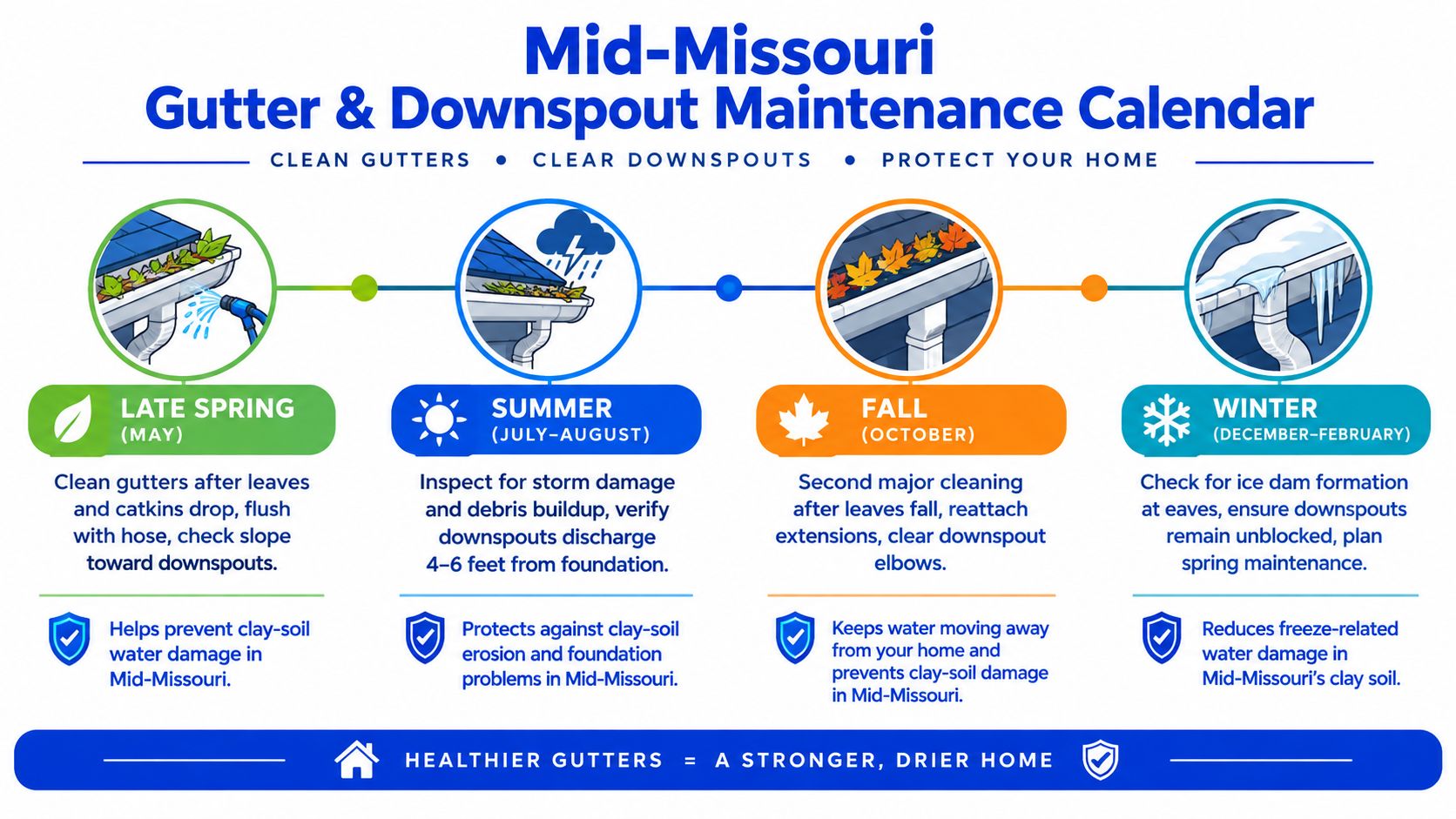
Gutters handle a lot of work in Mid-Missouri. Spring storms wash debris from roofs, summer winds add branches and seed pods, and fall leaves can fill a system quickly, particularly on properties with mature trees in Cape Girardeau, Columbia, or Jefferson City. When water can't move through the gutter, it can spill behind the fascia, wet soffits, and reach the attic or wall framing.
Walk the perimeter after rain and look for overflowing sections, sagging gutters, loose fasteners, stained fascia, and soil erosion below the roof edge. Downspouts should discharge away from the foundation and shouldn't send water toward a basement wall, crawlspace, or neighboring property. Clay-heavy soils can hold water near foundations, so poor discharge can contribute to persistent moisture and movement concerns.
A safe cleaning routine
Late spring and late fall are practical reminders, but the right timing depends on the trees around your home. A Cape Girardeau property beneath oak trees may need another cleaning after spring catkins and again after leaf drop. If you're comfortable using a ladder, wear gloves, remove debris with a scoop, then run a hose through the full gutter length to confirm that water reaches the downspouts without backing up.
Check gutter guards too. They can reduce debris entering the trough, but they don't eliminate maintenance, and leaves can accumulate on top or leave gaps at edges. A two-story home, steep roof, or mobility limitation is a good reason to hire a cleaning service rather than take a fall risk.
Practical rule: Fix the water path before investigating an interior stain. A loose extension or blocked outlet may be the simplest explanation, but recurring staining still needs evaluation.
For more context on keeping discharge water away from the foundation, see this explanation of gutter and downspout extensions.
2. Check Roof Condition and Address Visible Damage
A roof can look acceptable from the driveway and still have a damaged flashing point, lifted shingle, or leak pathway. Spring hail around Poplar Bluff and Sikeston, summer heat, wind-driven rain, and winter freeze-thaw cycles all deserve a ground-level review. Don't climb onto the roof unless you're trained and properly equipped. Binoculars, a stable view from the ground, and an attic check provide useful information without creating a fall hazard.
Look for missing, curled, cracked, or unusually bare shingles, exposed fasteners, damaged flashing, and shingle pieces on the ground. Dark streaks may be algae rather than mold, so their appearance alone doesn't diagnose a roof failure. In the attic, check for water stains, damp insulation, mold-like growth, or daylight around penetrations after heavy rain or snowmelt.
Separate warning signs from a diagnosis
A 20-year-old asphalt roof in Fulton may appear intact while showing granule loss and curling that suggest it deserves a roofing contractor's assessment. That doesn't automatically mean the roof is leaking or must be replaced immediately. A professional should evaluate the roof's remaining serviceability, storm damage, flashing, ventilation, and installation details.
Older Colonial and Cape Cod homes with multiple valleys can have more complicated water paths. Leaves or ice-related backup in a valley can produce an attic stain that looks like a broad roof failure, while a single failed pipe boot can create a localized problem. Document visible damage from the ground with photographs, especially after hail, and contact your insurer or roofing contractor when appropriate.
A home inspector can identify visible conditions and recommend further evaluation, but a roofing contractor handles roof repair and replacement decisions. For another perspective on roof inspection methods, read this drone roof inspection guide.

3. Test HVAC System and Replace Air Filters
Mid-Missouri homes spend far more time preparing for heating than cooling. A Missouri state report lists 5,219 heating degree days, 1,250 cooling degree days, and about five months of winter conditions, defined there as average temperatures below 50°F. That makes furnace service, filter checks, insulation, and air leakage important before cold weather arrives, as explained in the Missouri residential energy and heating report.
Test the system before each major season. Adjust the thermostat, confirm that the equipment starts, listen for unusual sounds, and check whether air reaches the registers. A filter that's visibly loaded with dust can restrict airflow and increase strain. The correct replacement interval depends on the filter, pets, dust, and household occupants, so a regular visual check is more useful than blindly following a single schedule.
Know when to stop troubleshooting
A homeowner can replace a filter, keep the outdoor condenser clear of leaves, and confirm that supply and return registers aren't blocked. You can also write the filter size on the cabinet or thermostat so the next replacement doesn't become a guessing exercise. If the system won't start, the thermostat doesn't respond, or you hear grinding, squealing, or banging, shut down the experiment and call an HVAC professional.
Older equipment may still operate while approaching the end of its practical service life. A 25-year-old furnace in Columbia, for example, might heat the house but still require an HVAC professional to assess safety, efficiency, controls, and parts availability. A working system isn't automatically a healthy system, and an inspection doesn't replace specialized combustion, electrical, or refrigerant diagnostics.
Read why the furnace filter is checked first for a practical look at how one neglected item can affect the rest of the system. Seasonal tune-ups can also involve tasks beyond a homeowner's safe maintenance range, as described in this guide to the benefits of regular HVAC tune-ups.
4. Inspect Foundation, Basement, and Crawlspace for Cracks and Moisture
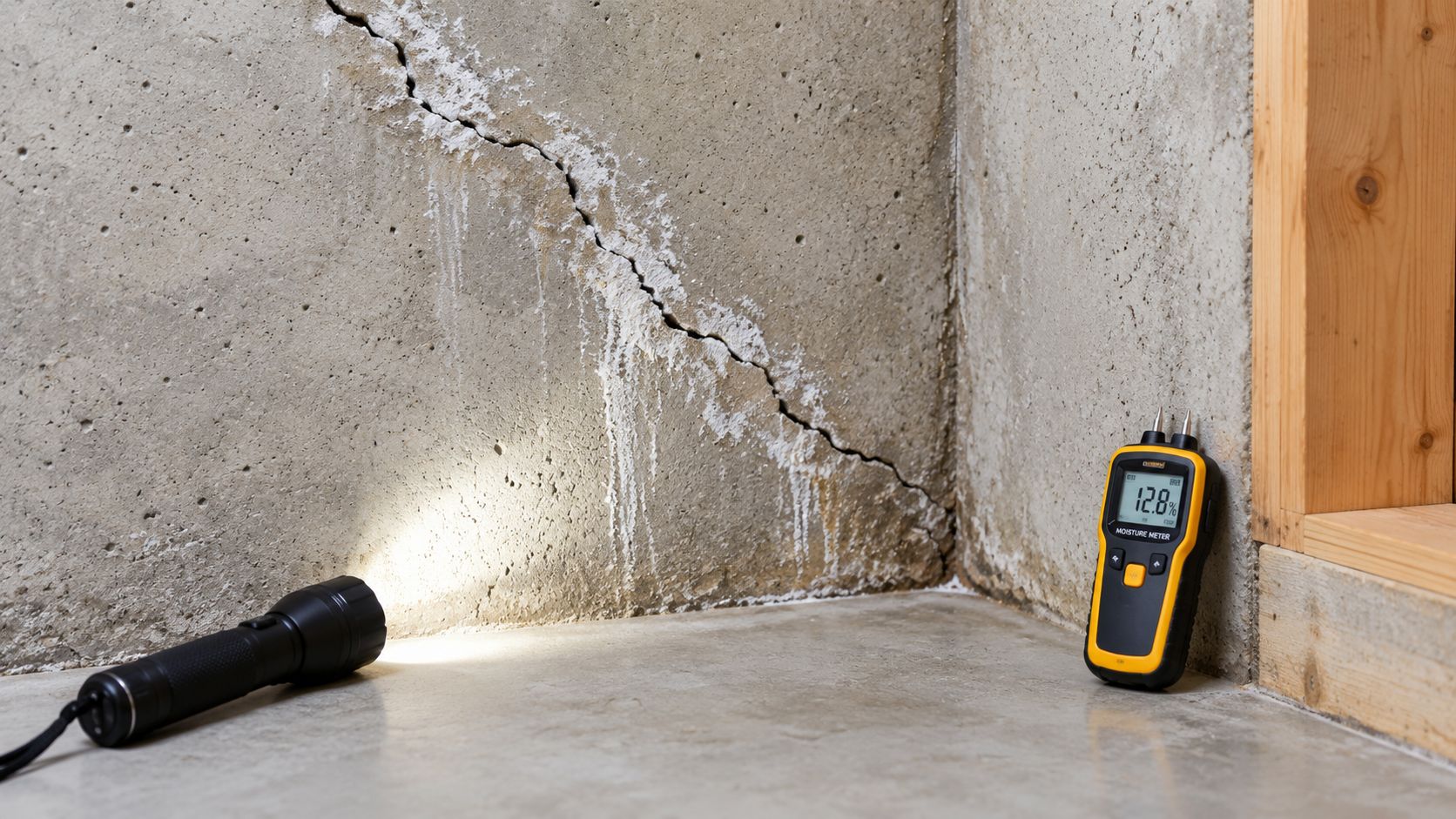
Basements and crawlspaces tell you how a house is handling water, soil movement, condensation, and plumbing leaks. Start with a flashlight and look for efflorescence, damp odors, active seepage, stained framing, rust on support components, and cracks in concrete, block, brick, or mortar. A hairline crack doesn't automatically indicate structural failure, and a crack's width alone isn't a diagnosis.
Track changes instead of guessing at the cause. Photograph the same area from a similar angle in spring and fall, note whether it appears after rain, and record whether water is active or historical. New cracks, widening cracks, horizontal cracks in masonry, stair-step mortar cracks, bowing walls, and standing water deserve a foundation specialist, structural engineer, or qualified drainage professional.
Water intrusion and structural movement aren't the same thing
A Jackson basement with a diagonal crack and seepage after heavy rain may be experiencing water pressure, movement, or both. A Farmington crawlspace with standing water, rust-stained posts, and a musty smell needs prompt evaluation because moisture can damage framing and encourage mold growth. A Perryville brick-and-block home with stair-step cracking and a bowing wall should be evaluated before repairs or a purchase decision.
Homeowners can maintain grading, clear drainage paths, and correct downspout discharge when the work is straightforward and safe. They shouldn't seal a crack and assume the underlying issue is resolved. A professional home inspection can document visible conditions, while an engineer or foundation specialist determines whether structural design or movement requires further analysis.
Missouri Extension recommends checking foundation cracks, loose gutters, downspouts, and low spots after spring storms, as outlined in its spring storm home inspection guidance. If water appears near a sewer cleanout or floor drain, a sewer scope may help identify a separate drainage problem rather than proving that the foundation itself has failed.
5. Test Sump Pump Function and Check Drainage Systems
Heavy rain can overwhelm a Mid-Missouri basement or crawlspace quickly, especially where clay soil drains slowly. A sump pump helps only when it has power, activates correctly, and sends water away from the foundation. Slowly add water to the pit and confirm that the float or switch starts the pump. Watch the discharge point outside. Water should leave the system and remain away from the building.
Inspect the discharge line while the pump runs. Look for kinks, loose connections, blocked outlets, and sections that could freeze during winter. If the line releases water beside the basement wall, seepage may continue and appear similar to a foundation problem. Keep the pit cover accessible, and leave enough working space for a plumber or restoration professional.
Backup power needs its own test
A battery backup can support the pump during a thunderstorm outage, but its presence does not confirm that it will operate. Follow the manufacturer's testing instructions, check the battery charge, and verify that the system switches over when normal power is unavailable. Grinding, weak operation, unusual cycling, or failure to start calls for a plumber or water-management specialist.
Winter preparation should include exposed plumbing in unheated crawlspaces, garages, attics, and cabinets on exterior walls. Protecting those lines before a freeze can reduce the risk of burst pipes. Review this guide to winterizing exposed plumbing and testing sump pumps before the first freeze for additional maintenance steps.
A homeowner can safely observe pump cycling, power status, and discharge direction. During an Upchurch Inspection assessment, the report can document whether the pump operates and where the discharge terminates. Pump sizing, electrical troubleshooting, and rerouting a discharge line require a plumber or water-management contractor. For a focused explanation of drainage controls, see ways to reduce basement moisture in Missouri.

6. Check Exterior Caulking, Weatherstripping, and Siding Condition
The exterior enclosure manages water and air before either reaches the framing. Walk around the house in daylight and look at window and door joints, siding seams, penetrations, trim, masonry mortar, and areas below roof edges. Cracked caulk, loose vinyl panels, open joints, missing mortar, and soft trim can allow wind-driven rain into places you can't see from inside.
Mid-Missouri's hot, humid summers and freezing winters make expansion and contraction a recurring stress on sealants and siding. A Boonville home with failed caulk around basement windows may show moisture inside long before the exterior looks dramatic. Loose siding on a Fulton home can let rain reach the weather-resistive layer and underlying wood, but the visible gap doesn't tell you how far water has traveled.
Small repairs are reasonable, hidden damage isn't
Replacing worn weatherstripping and recaulking a sound, accessible joint can be a manageable DIY project. Remove failing material, clean and dry the surface, and use a product suited to the location. Don't seal vinyl siding in a way that prevents its designed movement, and don't cover a soft spot just to improve appearance.
Interior staining near an exterior wall, bubbling paint, swollen trim, or recurring musty odors changes the situation. An inspector can help identify likely entry points and visible damage, while a siding contractor, masonry contractor, or building-envelope specialist handles concealed repairs. An electrician may be needed if water has reached exterior electrical components.
Air sealing also affects heating and cooling performance, but a draft isn't automatically evidence of a major enclosure failure. Compare rooms, inspect seals, and document patterns before deciding whether the next step is caulk, weatherstripping, insulation work, or a more detailed evaluation.
7. Inspect Attic Ventilation, Insulation, and Roof Decking
The attic connects roof performance, indoor comfort, and moisture control. Check it on a cooler day with a flashlight, and step only where there are secure walking surfaces. Look for wet or displaced insulation, dark staining, mold-like growth, pest evidence, and daylight around roof penetrations.
Warm, humid indoor air can enter an attic through gaps around fixtures, ducts, and access panels. If bathroom or kitchen exhaust fans terminate in the attic instead of outdoors, that moisture can condense on cold roof surfaces. Fall and winter guidance emphasizes keeping soffit vents clear and confirming that exhaust fans discharge outdoors, as described in this attic ventilation maintenance checklist.
Ventilation problems need careful diagnosis
Blocked soffit vents, missing exhaust paths, or uneven insulation can contribute to roof moisture, but homeowners shouldn't assume that adding insulation will fix every attic problem. More insulation can hide a leak, block intake ventilation, or leave air leaks untreated. A professional should evaluate wet insulation, soft roof decking, widespread staining, suspected mold, or damaged framing.
Don't disturb insulation that may contain asbestos, particularly in older homes. If material looks unusual or its history is uncertain, stop and arrange professional assessment. A home inspector can document accessible attic conditions and recommend a roofer, insulation contractor, mold assessor, or other specialist based on what is visible.
Attic conditions also matter during a real estate transaction. Buyers should ask whether the inspector entered the attic, whether ventilation paths were accessible, and whether water staining appears active or old. Sellers benefit from dated records and completed repairs, but repainting a stained area without correcting the source won't resolve the risk.
8. Inspect Plumbing, Water Heater, and Test Water Quality
Plumbing problems often announce themselves. Check beneath sinks, around toilets, near the main shutoff, and beside the water heater for active drips, mineral deposits, swelling, rust, or stained flooring. With every fixture off, listen for water movement. A persistent hiss or running sound may indicate a leak, although a professional should confirm the source.
Run faucets and showers, observe pressure and drainage, and note whether several fixtures drain slowly. One slow sink may have a local blockage. Slow drainage in multiple locations can point to a main-line concern and may justify a plumber or sewer scope, especially in older homes or properties with mature trees.
Don't confuse water appearance with a diagnosis
A water heater can leak from its tank, fittings, relief valve, or drain connection. Look at the identification label, check whether the relief-valve discharge pipe terminates safely, and keep the area accessible. Don't remove safety components or attempt gas, electrical, or pressure-related repairs yourself.
Discolored water, rotten-egg odors, iron staining, cloudy water, or unusual taste deserve testing rather than assumptions. Missouri homes may have different water concerns depending on the source and location, and rural properties with wells deserve particular attention during a purchase. Missouri's Department of Health and Senior Services explains that radon can enter homes through foundation gaps and cracks and recommends mitigation when indoor levels reach or exceed 4.0 pCi/L, as described in its Missouri radon information.
The EPA notes that high radon levels have been found in homes across all three Missouri radon zones and recommends testing every home regardless of zone, according to its Missouri radon materials. Upchurch Inspection can provide water-quality and radon testing, while plumbers handle leaks, sewer work, water-heater repairs, and treatment equipment. For urgent equipment issues, this water-heater service resource illustrates why a failing unit should be assessed by a qualified professional.
Mid-Missouri Seasonal Home Maintenance, 8-Point Comparison
| Item | Implementation Complexity | Resource Requirements | Expected Outcomes | Ideal Use Cases | Key Advantages |
|---|---|---|---|---|---|
| Inspect and Clean Gutters and Downspouts | Low–Medium (ladder work; safety risk on multi‑story) | Ladder, gloves, scoop/leaf blower, hose; periodic time | Prevents water intrusion, protects fascia and foundation, immediate debris removal | Homes with trees, clay soils, seasonal leaf drop; twice‑year maintenance | Inexpensive, DIY‑friendly, prevents high‑cost water/foundation damage |
| Check Roof Condition and Address Visible Damage | Medium–High (ground inspection OK; rooftop work risky) | Binoculars, camera, ladder (optional); roofer for repairs/replacement | Identifies storm/hail damage, aging shingles, leak risks; informs repair or replacement | After storms/hail, roofs ~15+ years old, pre‑sale inspections | Detects costly issues early; may be insurance‑covered for storm damage |
| Test HVAC System and Replace Air Filters | Low–Medium (filter change easy; diagnostics may need pro) | Replacement filters, basic tools, thermostat check; HVAC tech for faults | Improved efficiency, airflow, indoor air quality, extended equipment life | Seasonal tune‑ups, homes with pets/allergies, systems nearing end‑of‑life | Very low‑cost preventive action; reduces energy bills and emergency repairs |
| Inspect Foundation, Basement, and Crawlspace for Cracks and Moisture | Medium (visual inspection doable; structural assessment needs pro) | Flashlight, moisture meter, camera; engineer or foundation specialist for serious issues | Detects cracks, seepage, mold risk; enables timely drainage or structural fixes | Clay‑soil regions, older homes, after heavy rain or new cracks | Early detection prevents expensive structural and moisture remediation |
| Test Sump Pump Function and Check Drainage Systems | Low–Medium (simple test; replacements may be professional) | Bucket of water for test, listen/observe, check discharge and battery backup; plumber if needed | Confirms pump operation, prevents basement flooding, ensures proper discharge | Homes with sump pits, high groundwater areas, before wet seasons | Simple seasonal test prevents catastrophic flooding and costly repairs |
| Check Exterior Caulking, Weatherstripping, and Siding Condition | Low (visual inspection and DIY repairs common) | Caulk, caulk gun, weatherstripping materials, basic hand tools; mason for complex repairs | Seals air/water leaks, reduces energy loss, prevents moisture damage behind siding | Older homes, extreme temperature swings, preparing a home for sale | Low‑cost DIY fixes that improve comfort, efficiency, and curb appeal |
| Inspect Attic Ventilation, Insulation, and Roof Decking | Medium (attic access and hazards; remediation may require pros) | Flashlight, protective gear, tape measure, insulation materials; contractor for major work | Ensures proper ventilation, consistent insulation, detects leaks and pest damage | Homes with ice dam history, poor ventilation, uneven heating/cooling | Addresses root causes of roof and energy problems; can reduce ice dams and bills |
| Inspect Plumbing, Water Heater, and Test Water Quality | Medium (visual checks simple; testing/repairs may require pro) | Flashlight, basic tools, water test kit, plumber for repairs or water treatment systems | Finds leaks, verifies water heater safety, identifies water contaminants | Homes with wells, older water heaters, before purchase or after odors/discoloration | Protects against water damage and health issues; extends appliance lifespan |
Turn Seasonal Checks Into a Maintenance Record
A seasonal checklist works best when it becomes a record rather than a one-time search for defects. In spring, inspect for winter and storm damage, clean or verify gutters, check the roof, look for foundation moisture, test the sump pump, and confirm that drainage carries water away from the building. Missouri's freeze-thaw timing makes this window important. One Missouri checklist places the autumn pass before the first freeze around October 18 and the spring pass after the last freeze around April 13, as shown in this Missouri seasonal maintenance calendar.
Summer shifts attention toward exterior seals, siding, attic humidity, cooling performance, and water quality. Walk the enclosure after heavy rain, inspect for staining or swelling, verify that attic exhaust paths work as intended, and arrange HVAC service before a cooling complaint becomes an emergency. If the property uses a private well or has unusual water odor or staining, schedule testing instead of treating the condition as normal.
Fall is the preparation season. Clean gutters after leaf drop, review roof valleys and flashing, test the heating system, replace or check the filter, inspect the attic, protect exposed plumbing, and winterize exterior faucets. Missouri's climate source reports winter snowfall of about 18 to 24 inches north of the Missouri River, which reinforces the value of completing roof, attic, and drainage preparation before hard freezes and snow, as explained in this regional winter moisture resource.
Winter maintenance is mostly observation and response. Watch for ice buildup, frozen sump discharge lines, frozen plumbing, roof leaks during snowmelt, and changes in heating performance. Shut off and drain exterior valves before freezing, and test smoke and carbon monoxide alarms monthly, following the practical guidance in this Mid-Missouri homeowner maintenance checklist.
Date your photographs, save service records, and describe recurring symptoms without trying to diagnose them. An Upchurch Inspection home inspection or annual maintenance inspection can help document the roof, foundation, structure, plumbing, electrical, and HVAC conditions that are visible at the time of the inspection. Radon or mold testing, a sewer scope, water-quality testing, roof evaluation, or commercial property assessment may be appropriate when the risk calls for a specialized service.
Inspectors clarify conditions and recommend next steps. Contractors, engineers, plumbers, electricians, HVAC professionals, and mold assessors perform repairs and specialized diagnoses. Use a simple priority rule: address active water, safety hazards, structural movement, and failed heating or cooling before cosmetic work.
Upchurch Inspection offers home and commercial inspections, annual maintenance inspections, roof and building evaluations, radon and mold testing, sewer scopes, and water-quality testing across the Mid-South, including Central Missouri and Southeast Missouri. Use the seasonal findings in this checklist to prepare your questions and contact Upchurch Inspection for clear documentation and practical next steps.