
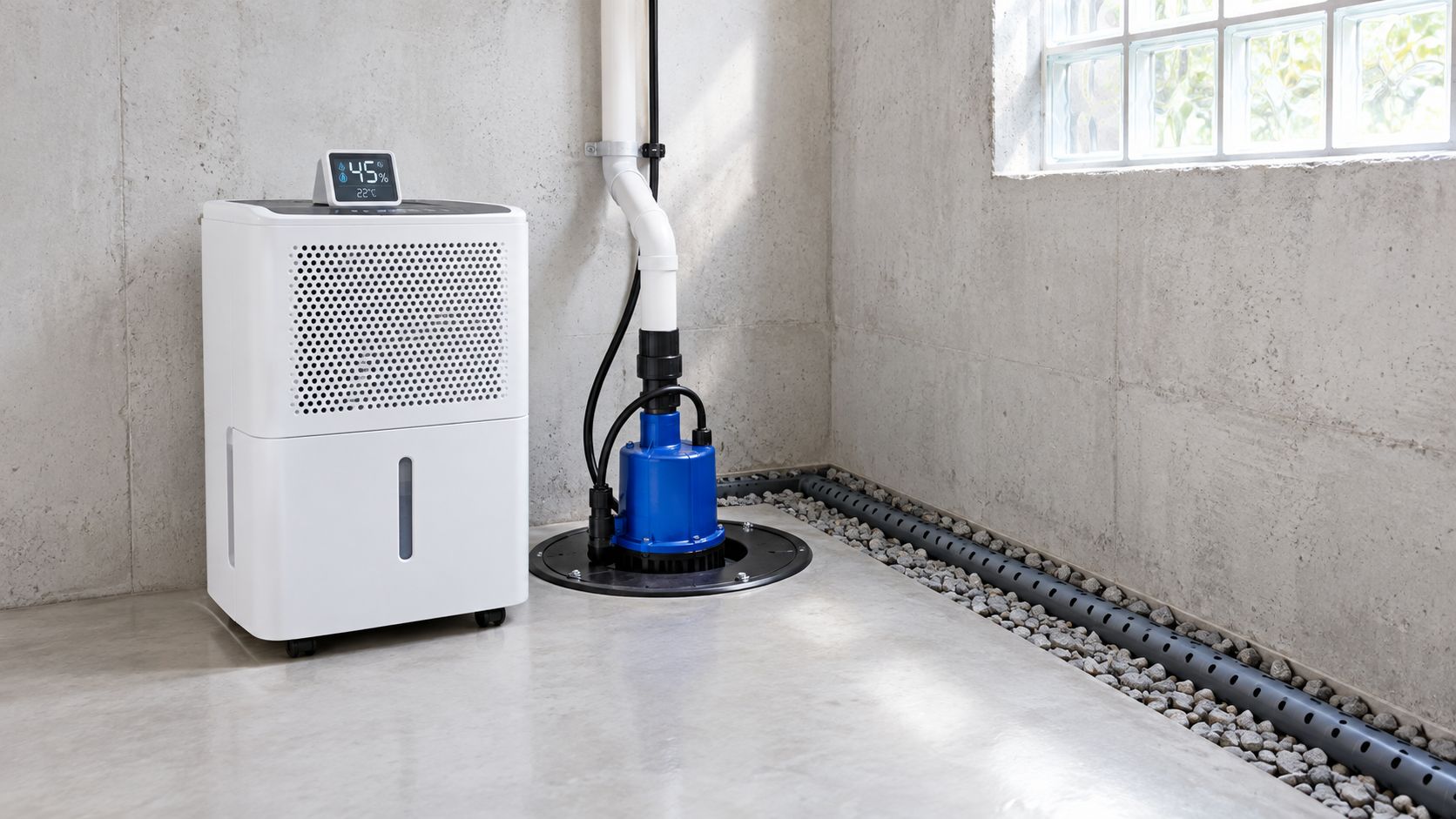
After a March thaw or a July downpour, a Missouri basement can tell you something is wrong before you know what the problem is. Cardboard boxes soften at the bottom, a finished wall develops a dark patch, or the dehumidifier runs constantly while the room still feels clammy. A home near Jefferson City, Cape Girardeau, Columbia, or Sedalia may be dealing with water entering through the foundation, moisture already in the air, or a hidden plumbing leak that only looks like seepage.
The practical answer to how to reduce basement moisture in Missouri starts with diagnosis, not a new paint coating or a larger appliance. Missouri's mixed-humid climate, rainfall patterns, saturated soils, and frequent heavy storms mean a dry basement usually needs several layers working together. Missouri-focused moisture guidance describes annual rainfall of roughly 38 to 48 inches, summer dew points commonly around 65 to 75°F, and condensation risk that can persist for 120 to 140 days. Those conditions make it important to separate liquid water, humidity, and concealed leaks before spending money.
Table of Contents
- What Missouri Basement Moisture Actually Looks Like
- Diagnosing the Source Before You Fix Anything
- Exterior Fixes That Move Water Away From the House
- Interior Solutions for Persistent Dampness
- Mold, Radon, and the Health Side of a Wet Basement
- Costs, Timelines, and When to Call a Specialist
- A Seasonal Maintenance Checklist for Missouri Basements
What Missouri Basement Moisture Actually Looks Like
A ranch home outside Jefferson City may look fine from the street after a storm. Downstairs, though, the owner finds damp cardboard, a musty smell, and a dehumidifier that can't keep up. The floor is not flooded, but a wall corner feels cool and wet, and a white chalky deposit runs along the concrete. That combination deserves investigation, not a guess.
Three moisture sources can look alike
Liquid water intrusion usually follows a weather pattern. Water may appear at a floor crack, the wall-to-floor cove joint, a window well, or a masonry crack after rain. Clay-rich soils can hold water against foundation walls, while intense storms can overwhelm gutters, downspouts, and weak grading. Efflorescence, a white mineral residue, indicates that moisture has moved through masonry at some point, but it doesn't automatically mean the foundation is failing.
Ambient humidity behaves differently. The basement may feel damp even when no water is visibly entering. Condensation can form on cool concrete, pipes, ductwork, or windows when warm humid air meets those surfaces. Missouri's long humid periods explain why a basement can remain uncomfortable after the storm has passed, even when exterior drainage is functioning.
A concealed plumbing leak can mimic both conditions. A leaking supply line, drain connection, water heater, or bathroom fixture may wet one area continuously, including during dry weather. Older homes in Sikeston, Poplar Bluff, Farmington, Perryville, and surrounding communities often contain plumbing installed or altered across different eras, so the visible stain doesn't always identify the source.
Practical rule: A wet basement wall is an observation. It isn't a diagnosis.
The rest of the work should follow that distinction. Check the exterior first, then the foundation and drainage system, then indoor humidity and plumbing. Treating humidity with a dehumidifier won't stop active seepage, and sealing a wall won't repair a leaking pipe. The wrong fix can leave you with the same dampness and a lighter wallet.
Diagnosing the Source Before You Fix Anything
Start outside because water usually follows the easiest available path. Missouri guidance recommends a layered approach that includes footing drains, drainage beneath the basement floor, gravel backfill, exterior waterproofing, gutters, downspouts, and grading. This Missouri basement-leak overview also supports beginning with site drainage rather than assuming the wall itself is the first thing that needs repair.
Begin with the perimeter
Walk the foundation after a storm, but stay on safe, stable ground. Look for soil that slopes toward the house, settled backfill, mulch or planting beds piled against the wall, water collecting near a footing, and window wells holding water. Missouri's Department of Natural Resources drainage benchmark calls for a minimum slope of 1 inch of vertical drop for every foot of horizontal distance away from the foundation. The Missouri drainage guidance summarized here also says downspouts should discharge on undisturbed soil beyond the backfill zone.
Next, inspect the roof-drainage system. Clear visible gutter debris, check for overflow marks, and confirm extensions or splash blocks haven't shifted. Don't rely on a downspout that empties beside the wall. The exact discharge route depends on the lot, local drainage, and whether a permitted underground system is present, so the important question is whether water returns to the foundation.
Move indoors only after the exterior check
Look at the sump pit, pump, discharge line, floor cracks, cove joint, and window wells. If the pump runs, note whether it cycles constantly, whether the float moves freely, and whether the discharge area becomes saturated. Missouri Extension explains that homes on flat sites without a natural outlet for a tile drain may need an electric sump pump, while more severe water conditions may call for a tile drain beside the footing. The Missouri Extension house-moisture publication makes clear that a sump pump is part of a drainage system, not a cosmetic basement accessory.

Finally, measure indoor relative humidity with a hygrometer and compare dampness during wet and dry weather. A meter reading that stays high after the ground dries points more toward indoor moisture, poor air control, or a concealed leak. Check exposed plumbing, water heaters, laundry connections, and bathroom areas without opening electrical panels or dismantling fixtures.
Exterior Fixes That Move Water Away From the House
Exterior drainage is where many basement repairs either succeed or fail. If roof runoff and surface water remain against the foundation, an interior coating may hide the stain while hydrostatic pressure continues outside. Missouri's Department of Natural Resources recommends keeping water away from the structure through grading, gutters, downspouts, and foundation drainage, rather than depending on one interior product.
Match the repair to the source
Correct settled soil so water moves away from the wall. Use suitable compacted fill where needed, rather than placing loose topsoil directly against the foundation. The slope should follow the Missouri benchmark of 1 inch of drop per foot of horizontal distance, and the final surface should not create a low pocket beside the house.
Extend downspouts to a stable discharge point on undisturbed soil or into an appropriately designed solid drain line. Don't bury a perforated pipe beside the foundation and assume it will carry roof water away. A drainage guide from R.E. and Sons Landscaping can help homeowners think through yard-drainage patterns, but persistent foundation water may require a drainage contractor or engineer to assess the whole site.
Clean gutters at least seasonally and inspect them after major storms, especially where mature trees overhang the roof. Confirm splash blocks and extensions still point away from the house. This guidance on stopping basement water after heavy rain is useful when the timing of the leak strongly matches roof runoff.
| Exterior Fix | Moisture Source Addressed | Missouri Clay Soil Performance |
|---|---|---|
| Correct negative grading | Surface runoff collecting beside the wall | Helps keep water from sitting against clay-rich soil |
| Clean gutters and extend downspouts | Roof runoff at the foundation | Reduces concentrated discharge during heavy storms |
| Improve window-well drainage | Water entering at below-grade windows | Gravel and covers help, but blocked drains still need correction |
| Restore footing drainage | Groundwater and hydrostatic pressure | Provides a route for water that surface grading can't control |
| Add or service a sump basin | Water with no practical gravity outlet | Moves collected water away when the site lacks natural drainage |
For chronic moisture, a perimeter footing drain and working sump basin may be necessary. Missouri code text requires foundation perimeter drains to extend not less than 12 inches beyond the footing edge and to discharge by gravity or mechanical means into an approved drainage system, as summarized in the Missouri guidance linked above. Excavating around a foundation isn't a casual weekend project. If water continues after surface corrections, or if the wall bows, cracks widen, or water flows actively through a crack, involve a qualified drainage contractor, foundation specialist, or engineer.
Interior Solutions for Persistent Dampness
Interior systems make sense when water has already reached the basement or when exterior excavation isn't practical. They don't all solve the same problem. A sump pump handles collected water, an interior drain manages water at the slab edge, a vapor barrier limits vapor movement, and a dehumidifier controls airborne moisture.
Build the drainage layer first
A sump pump should sit in a properly formed basin with a secure lid where appropriate, a check valve, and a discharge route that doesn't return water to the foundation. A submersible pump stays below the water level and is generally quieter, while a pedestal pump keeps the motor above the pit and may be easier to access. The right choice depends on the basin, water load, available space, and installation conditions.
Storm outages create a practical weakness. A battery backup or another properly designed backup arrangement can keep the system operating when the primary power supply fails. A backup isn't a substitute for correcting grading, gutters, or a blocked discharge line. It protects the last line of defense when the drainage system needs power.
Interior French drains, also called perimeter drain tile systems, collect water along the floor edge and direct it to the sump. They can be effective for seepage at the cove joint, but they manage water that has already reached the interior. They don't stop exterior water from loading the wall.
Control vapor and indoor humidity afterward
A wall vapor barrier can reduce vapor movement when it is correctly detailed and sealed. Polyethylene sheeting and spray-applied systems have different installation requirements, and neither should be used to cover active leaks, wet structural materials, or an unresolved plumbing problem. Sealing a wall before correcting drainage can trap moisture and conceal deterioration.
Use a hygrometer and aim for 30% to 50% relative humidity, staying below 60% RH to reduce mold risk, as described in this technical basement-moisture guidance. A properly sized residential dehumidifier may remove 1 to 3 gallons of water per day in typical spaces, but that capacity won't compensate for seepage or a hidden leak. A built-in condensate pump can help when gravity drainage isn't available, while an Energy Star-rated unit may use energy more efficiently than a basic builder-grade model.
Opening windows can make a Missouri basement worse when outdoor air is humid. Ventilation only helps when the incoming air is drier. The effective sequence is exterior drainage, interior collection and pumping, then vapor and humidity control.
Mold, Radon, and the Health Side of a Wet Basement
Moisture becomes a health and indoor-air concern when materials stay wet or indoor humidity remains high. Visible spots may appear black, green, or white on drywall, framing, insulation, cardboard, or the back of stored furniture. A musty odor can point to hidden growth behind paneling, beneath flooring, or near damp sill plates, but odor alone can't establish the size or type of contamination.
Moisture and radon share entry points
Radon is a soil gas that can enter through foundation cracks, slab-to-wall joints, sump pits, and utility penetrations. Missouri-focused guidance notes that damp conditions can alter soil-gas pathways, making a wet basement a reason to consider radon testing, not merely a comfort complaint. This Upchurch Inspection discussion of moisture and mold explains why correcting the moisture source matters before treating recurring growth.
A sealed sump crock and properly designed radon mitigation system may address related entry pathways, but moisture work alone doesn't prove radon is controlled. Testing is the only way to evaluate the indoor concentration. Use an appropriate homeowner test kit or arrange professional monitoring when the property history, moisture conditions, or a real-estate transaction calls for more information.
| Moisture Source | Common Signs | Primary Health Risk | Recommended Test |
|---|---|---|---|
| Foundation seepage | Wet spots, efflorescence, cove-joint staining | Mold-supporting damp materials | Moisture inspection and drainage evaluation |
| High indoor humidity | Condensation, musty air, damp contents | Mold and irritation concerns | Hygrometer monitoring |
| Plumbing leak | Localized staining during dry weather | Material damage and microbial growth | Plumbing evaluation and leak testing |
| Soil-gas entry | No reliable visible symptom | Radon exposure concern | Radon test or continuous monitor |
A wet basement doesn't automatically mean a family member will become ill, and it doesn't prove mold is present everywhere. It does mean the moisture deserves a reasoned response. Avoid disturbing extensive growth, wet insulation, or concealed finished walls until the source and scope are understood. A mold assessment professional, HVAC professional, plumber, or inspector may be appropriate depending on what the evidence shows.
Costs, Timelines, and When to Call a Specialist
Moisture work ranges from routine maintenance to excavation and structural evaluation. The price depends on access, water volume, foundation design, finish materials, and whether the repair addresses the source or only the symptom. Ask contractors to describe the water path they believe they're correcting, not just the product they'll install.
Typical planning ranges
The following figures are practical planning ranges, not guaranteed bids. Missouri Extension guidance recommends keeping indoor humidity between 30% and 50% and using a hygrometer, which it notes can cost less than $10.
| Fix | Typical Cost Range | Timeline | DIY or Hire? |
|---|---|---|---|
| Regrading and downspout extensions | $200 to $1,200 | DIY to one day | Capable DIY or landscape contractor |
| Sump pump installation | $600 to $1,500 | Varies by drainage setup | Hire for new basin or wiring concerns |
| Interior French drain | $3,000 to $8,000 for a typical 1,000-square-foot basement | Two to four days | Hire |
| Vapor barrier | $1,500 to $4,000 | Varies by wall and access | Hire when sealing finished or damp walls |
| Dehumidifier unit | $250 to $1,500 | Same day | DIY setup if drainage and power are suitable |
| Radon mitigation | $1,500 to $3,500 | Varies by building and system | Hire a qualified mitigation professional |
A homeowner can usually clear gutters, extend a downspout, observe the sump pump, measure humidity, and operate a dehumidifier safely. Grading work may be manageable when the change is minor and utilities, retaining walls, and drainage easements aren't involved. Don't excavate along a foundation, alter electrical service, open a sump basin near wiring, or seal wet finished walls without the right professional input.
Know when the repair is beyond maintenance
Bring in a specialist for standing water after ordinary rain, active water flow with efflorescence, foundation cracks wider than a quarter-inch, visible bowing, recurring mold, or a finished basement renovation that could conceal wet materials. A plumber should evaluate suspected plumbing leaks, an electrician should handle moisture-affected electrical components, and an engineer should assess movement or structural distress.
When comparing contractors, verify licensing where applicable, ask for references involving similar Missouri soil and drainage conditions, and obtain at least two written estimates that describe the same scope. A low bid for interior patching may not be comparable to a proposal that corrects exterior drainage.
A Seasonal Maintenance Checklist for Missouri Basements
Seasonal maintenance works best when each task answers a diagnostic question. Spring asks whether thawing soil and rain are sending water toward the foundation. Summer asks whether indoor air is staying too humid. Fall prepares the exterior for wet weather and freeze-thaw cycles, while winter reveals condensation and sump reliability.
Spring from March through May
After thawing or heavy rain, walk the foundation perimeter and look for new puddles, settled soil, and wet window wells. Confirm downspouts still discharge onto stable ground away from the wall, and test the sump pump before the first major thunderstorm. Inside, photograph new staining and note whether the dampness appears only after rain.
Summer from June through August
Keep a hygrometer in the basement and operate the dehumidifier to maintain the recommended 30% to 50% RH range, staying below 60% RH, according to Missouri Extension's warm-weather moisture guidance. Check for condensation on pipes and ductwork, vacuum accessible HVAC registers serving finished basement areas, and inspect vapor-barrier seams for peeling or visible gaps.
Fall from September through November
Clean gutters after leaf drop and check them again after storms. Verify that grading still sheds water away from the foundation, and address new cracks before freezing weather. Don't fill a crack cosmetically if it shows movement, active water entry, displacement, or a wider pattern that needs specialist evaluation.
Winter from December through February
Watch cold pipes, windows, and ductwork for condensation during temperature changes. Check the sump pump during warm spells when melting snow or rain can load the drainage system. Keep storage off the floor and away from foundation walls so you can see staining and maintain airflow.
The order stays simple: exterior grading and runoff first, interior drainage second, dehumidification third. If that sequence doesn't explain or stop the moisture, document the timing and bring in the professional who can test the remaining possibility, whether that's an inspector, plumber, HVAC professional, mold assessor, radon tester, drainage contractor, or engineer.
If you're buying, selling, or maintaining a Missouri property, Upchurch Inspection can document visible basement and crawlspace moisture conditions, drainage observations, and related concerns such as radon or mold testing. Schedule an inspection when you need clear findings and practical next steps instead of guessing which repair comes first.