
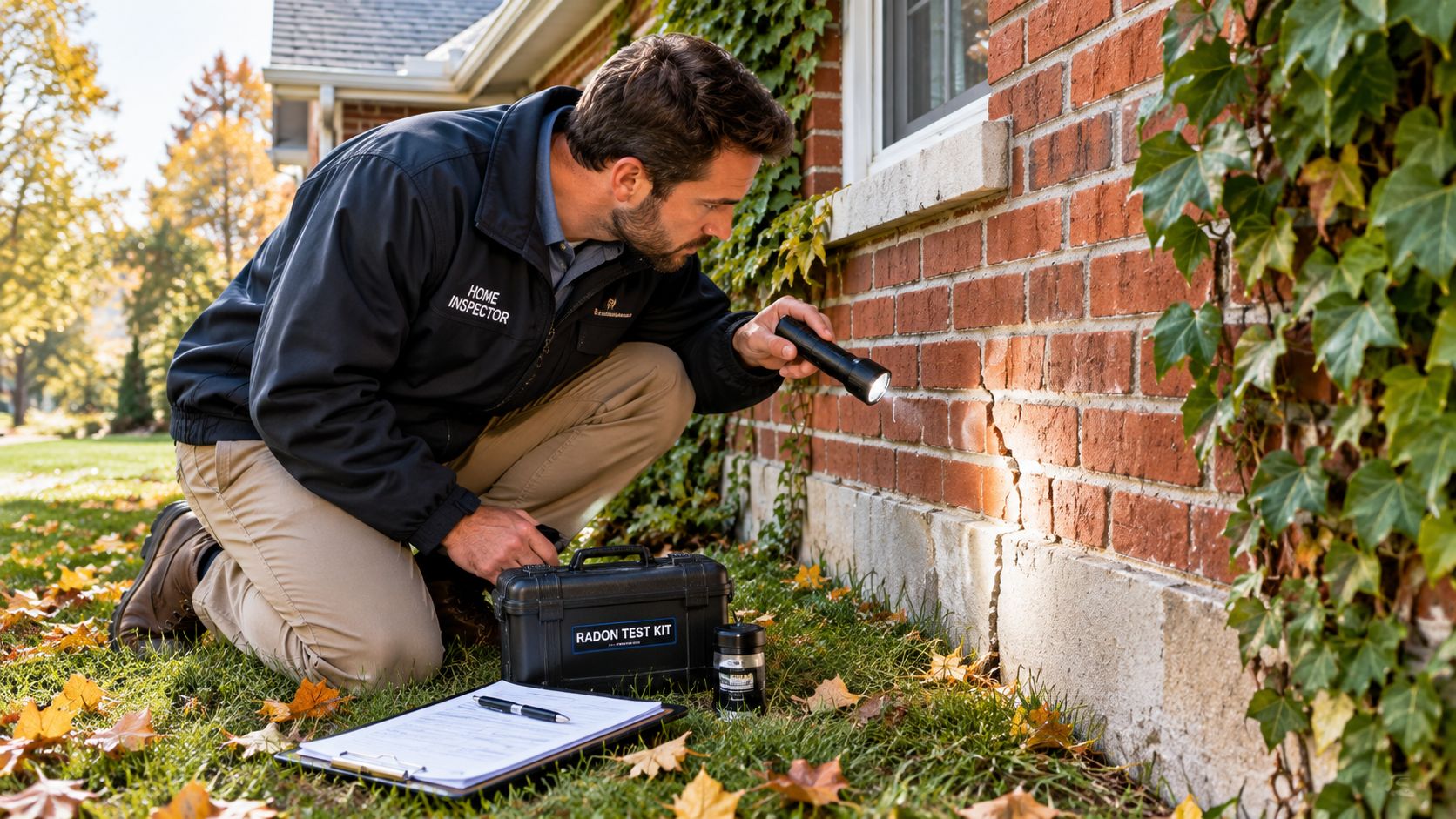
You're touring an older Columbia home, and the charm is doing a lot of work. The original woodwork looks great, the basement has been finished, and the seller points out a newer kitchen. Then you notice a downspout emptying beside the foundation, a door that sticks, and a patched area on the basement wall. None of those observations gives you a diagnosis, but together they tell you where to spend your inspection time.
Buying an older home in Columbia, Missouri, what to inspect is less about checking rooms off a list and more about following the path from outside water to the foundation, from the foundation to the structure, and from visible systems to risks a standard inspection doesn't measure. Historic and early- to mid-20th-century houses can have basements, crawlspaces, masonry, older wiring, layered remodels, and maintenance histories that deserve a slower review.
Table of Contents
- What Makes Older Columbia Homes Different Before You Inspect
- Start Outside and Below Grade Where Most Problems Begin
- Structural and Major Systems Triage That Protects Your Budget
- Specialist Tests Worth Adding for Older Homes in Columbia
- Municipal Floodplain Insurance and History Checks to Verify
- Turning Findings Into Contingencies Negotiation and Next Steps
What Makes Older Columbia Homes Different Before You Inspect
A buyer can walk through an older house and see a clean interior while missing the conditions that control the underlying risk. A fresh coat of paint may cover old patching. A finished basement may conceal drainage details. A remodeled bathroom may connect to plumbing that predates the remodel by decades.
Age doesn't automatically make a home a bad purchase. It changes the questions you need to ask. In Columbia and other Mid-Missouri communities such as Jefferson City, Fulton, Boonville, and Sedalia, older housing can reflect several generations of repairs, additions, and material changes. Freeze-thaw wear, clay soils, storms, roof drainage, and long-term moisture exposure can affect how the building performs, but none of those clues should be treated as a diagnosis by itself.
Missouri inspection guidance notes that older homes generally take more time to inspect and may cost more to evaluate because the inspector has to account for the property's age and size. Structure and maintenance history may matter as much as the purchase price, particularly when hidden system wear or deferred repairs are involved. A Columbia home inspection service can help organize those observations, but the inspection still has limits. It is a visual, non-invasive review, not a guarantee that every concealed defect has been found.
Think in systems, not rooms
A room-by-room walkthrough can make a house feel manageable, but buildings don't fail one room at a time. Water may enter at a roof edge, travel through a wall, collect near the foundation, and appear inside several feet away. An electrical concern may involve the panel, branch wiring, grounding, and a later renovation rather than one defective outlet.
I use a priority order that starts with the conditions most likely to affect safety, structure, moisture, and expensive systems. Cosmetic defects come later because peeling trim is less important than the water source that caused it.
Practical rule: An older home doesn't need to be perfect. It needs to be understood well enough for you to decide what you can manage, what needs a specialist, and what belongs in the purchase terms.
Before the inspection, gather seller disclosures, invoices, permits, records of roof or HVAC work, and any documentation for foundation or basement repairs. Those records won't replace a physical inspection, but they can explain why a wall was patched, when a system changed, or whether an addition was treated as finished living space. A clear timeline often makes the difference between a straightforward maintenance item and a question that needs further investigation.
Start Outside and Below Grade Where Most Problems Begin
The most useful inspection sequence for an older Columbia home starts outside. Grading, gutters, downspouts, roof drainage, and foundation openings often explain basement staining or damp odors better than the interior finish does. Missouri-area inspection guidance also emphasizes beginning with exterior water management, then checking the basement or foundation, and finally confirming indoor environmental risks. That exterior-first workflow is supported by regional inspection guidance.

Follow the water path
Start where roof water leaves the house. Look for gutters that are sagging, packed with debris, or disconnected from downspouts. Downspouts should discharge away from the foundation rather than create a wet zone beside the wall. Check whether soil slopes toward the house, whether splash blocks or extensions are missing, and whether a driveway or patio directs runoff toward the foundation.
You can safely observe these conditions from the ground and ask the seller how they handle maintenance. Don't climb onto a roof or enter an unsafe crawlspace to confirm a suspicion. For storm-related concerns, a practical reference on what roof damage can look like is this guide to roof inspection after hail, but a local inspector or roofing contractor should evaluate questionable coverings, flashing, or storm damage.
At the foundation, look for open cracks, displaced masonry, missing mortar, efflorescence, and areas where the wall meets the slab or floor. A crack isn't automatically structural failure. Concrete shrinks, masonry joints deteriorate, and old repairs can remain visible for years. The concern rises when a crack is accompanied by displacement, repeated patching, water entry, sloping floors, or doors and windows that bind in several parts of the house.
Confirm what the basement is telling you
Inside, compare the basement evidence with what you saw outside. White powder on masonry can indicate past or ongoing moisture movement. Damp insulation, rusted metal, stained finishes, musty odors, sump-pit activity, and floor-drain concerns deserve documentation. A finished wall may hide the condition behind it, so ask whether any moisture repairs or drainage work were completed before the renovation.
The same approach applies to crawlspaces. Look for standing water, damp soil, damaged vapor-control materials, wood deterioration, plumbing leaks, and inadequate access. Don't disturb suspected mold, asbestos-containing materials, or damaged insulation yourself. Photograph what is accessible, keep the area dry where you safely can, and ask the appropriate specialist to evaluate material that requires sampling or removal.
A practical outside-in sequence looks like this:
- Observe runoff: Check grading, gutters, downspouts, roof drainage, and foundation-adjacent soil.
- Map symptoms: Match exterior conditions with basement staining, efflorescence, odors, and drainage evidence.
- Separate clues from conclusions: Cracks and slopes identify questions, not automatic diagnoses.
- Escalate selectively: Use an engineer for suspected structural movement and a drainage or waterproofing contractor for persistent water entry.
For a closer look at recurring basement concerns in the region, buyers can also review common basement problems in Missouri homes. The goal isn't to reject every house with a crack. It's to identify the source, understand the scope, and avoid paying for a cosmetic repair that leaves the water path untouched.
Structural and Major Systems Triage That Protects Your Budget
Once water management and foundation conditions are documented, move to the systems that can affect safety and habitability. Older-home defects often cluster around structure, roofing, electrical, plumbing, HVAC, and moisture control. A beautiful kitchen shouldn't distract you from a service panel with unsafe wiring, a roof with failing flashing, or a heating system that can't be properly evaluated.
Independent inspection data reports foundation cracks in about 15% of inspected homes, and 60% of those repairs cost more than $5,000. The same source reports water damage in 23% of inspections, attic ventilation deficiencies in 51%, and electrical issues in 42%. These figures come from independent home-inspection statistics, and they reinforce a useful point: prioritize systems with safety, water, or structural consequences before finishes.
Triage the expensive and safety-sensitive items first
Foundation movement deserves correlation, not panic. Stair-step cracking in masonry, sloping floors, repeated drywall repairs, sticking doors, or separated trim can result from movement, settlement, moisture, framing changes, or ordinary age-related wear. An inspector can document the pattern and recommend an engineer when the evidence suggests a structural question. An engineer, not a buyer armed with a level, should determine whether stabilization or design work is needed.
Roofing concerns include worn coverings, exposed fasteners, damaged flashing, ponding or poor drainage, and signs of past leaks in the attic. You can look for ceiling stains and ask about roof age, but don't assume a dry day proves the roof is sound. Attic ventilation and insulation also matter because moisture and temperature conditions can affect roof performance and indoor comfort.
Electrical systems deserve careful handling. Look for missing covers, damaged wiring, overcrowded panels, extension-cord dependence, ungrounded receptacles, and amateur alterations. You can test accessible receptacles with a basic device, but don't remove a panel cover or handle wiring. An electrician should evaluate suspected overheating, obsolete components, unsafe modifications, or a service that may not support the home's current use.
| System area | What to look for | Why it matters now |
|---|---|---|
| Foundation and structure | Stair-step masonry cracks, displacement, sloping floors, sticking openings, repeated patching | These patterns may indicate movement or moisture-related damage and can justify an engineer's review |
| Roof and attic | Damaged coverings, failed flashing, stains, poor ventilation, insulation gaps | Water entry and attic moisture can affect framing, finishes, and energy performance |
| Electrical | Damaged wiring, missing covers, questionable panel alterations, unsafe receptacles | Electrical defects can create immediate safety concerns and need an electrician when access or diagnosis goes beyond observation |
| Plumbing and sewer | Leaks, corrosion, mixed materials, slow drains, low flow, evidence of prior repairs | Visible fixtures don't reveal the full condition of concealed supply or waste piping |
| HVAC and moisture control | Irregular operation, rust, condensate concerns, blocked airflow, damp insulation | System age and moisture conditions can affect reliability, comfort, and indoor air concerns |
Use safe checks, then stop at the right point
Run fixtures, observe drainage, listen for unusual equipment sounds, and note temperature differences between rooms. Don't open sealed equipment, alter controls, or attempt electrical or gas repairs during a showing. A plumber should assess corroded or mixed piping, an HVAC professional should evaluate performance and serviceability, and a specialist should investigate damage that extends beyond the inspector's visual findings.
Cosmetic repairs can wait when water is still entering, the structure is moving, or a safety system is unreliable. That ordering protects your budget because it directs follow-up money toward causes and hazards rather than appearances.
Specialist Tests Worth Adding for Older Homes in Columbia
A standard home inspection can identify clues, but it doesn't automatically measure every hidden or environmental risk. Older Columbia homes often justify targeted testing when the foundation is enclosed, the basement is finished, the sewer line is mature, or renovation history is incomplete. These add-ons aren't a reason to fear an older house. They're a way to replace assumptions with evidence.

Put radon near the top of the list
The Missouri Department of Health and Senior Services reports that radon is present in every Missouri county, and its residential testing program found that 1 in 3 homes tested had indoor radon above the EPA action level of 4.0 pCi/L. That statewide finding makes radon testing a core due-diligence item for older homes, not a luxury reserved for one neighborhood. The Missouri radon testing results provide the supporting state data.
Boone County is commonly treated as a higher-risk radon area, and older foundations can offer entry points through cracks, construction joints, porous masonry, slab edges, sump pits, floor drains, and utility penetrations. Radon testing isn't automatically included in a standard visual inspection because it requires a separate measurement.
For a transaction, a short-term test generally runs for about 2 to 7 days in the lowest livable area. If results are at or above 4.0 pCi/L, mitigation is typically recommended. Missouri guidance says homes with high levels should be addressed by a certified radon contractor. A test result tells you the current measurement under the test conditions. It doesn't tell you that every neighboring house has the same result, and a map doesn't replace testing.
Decide when other add-ons earn their place
A sewer scope is especially useful when an older house has mature trees, recurring drain problems, slow fixtures, a long lateral, or no documentation of underground work. A camera can identify blockages, deterioration, root intrusion, and damage that a visual inspection cannot see. The house may look excellent while the buried line needs attention, which is why this sewer scope guidance for historic Mid-Missouri homes is relevant to older neighborhoods.
Consider a termite inspection when you see damaged wood, mud tubes, frass, moisture, or a history of treatment. The general question of who pays for termite inspection should be settled with your agent and contract terms rather than assumed. A mold assessment or industrial hygienist may be appropriate when there is persistent odor, visible growth, recurring water intrusion, or a need for sampling. Water-quality testing can make sense when the supply source or plumbing history raises a specific concern.
A targeted test works best when a visible clue, the home's age, or the transaction terms give you a reason to order it.
Municipal Floodplain Insurance and History Checks to Verify
Some older-home risks don't appear on an inspection report. They live in maps, records, insurance terms, and renovation history. A structurally sound house can still create problems if a finished basement was altered without appropriate records, if a flood designation affects insurance, or if historic-district rules limit exterior changes.

Compare the records before you commit
Ask the city or county about floodplain mapping, permits, additions, finished areas, and open code matters. Ask the seller for records of basement finishing, structural repairs, electrical updates, roof replacement, plumbing work, and HVAC installation. Then compare those answers with what you see. A wall that appears newer than the surrounding basement, a converted porch, or a room that lacks obvious permit documentation deserves a direct question.
Insurance is a separate conversation from inspection. Request a quote early and ask how flood exposure, prior claims, roof condition, basement use, and older systems affect coverage. A plain-language overview of flood insurance considerations is available in this Duncan & Associates flood guide. It isn't a substitute for a Columbia-specific insurance quote, but it can help you prepare better questions.
Treat pre-1978 housing as its own review category
Homes built before 1978 raise lead-based paint concerns under federal disclosure rules. Buyers receive a 10-day opportunity to conduct a lead inspection or risk assessment, and that opportunity can be lost if it isn't addressed in the transaction. The relevant areas include painted surfaces, windows, trim, doors, and renovation work that may have disturbed older coatings.
This doesn't mean every pre-1978 house has an unsafe condition. It means the age places the property in a regulatory and material-risk category that deserves targeted review. Ask what work was completed, who performed it, whether painted surfaces were disturbed, and whether documentation exists.
For historic properties, also ask what changes require approval and whether replacement windows, siding, porches, masonry, or additions have restrictions. These checks are different from looking for a roof leak. Both matter, but they affect your decision in different ways, one through physical condition and the other through future cost, use, and flexibility.
Turning Findings Into Contingencies Negotiation and Next Steps
A useful inspection report doesn't tell you whether to buy the house. It gives you enough organized information to decide what happens next. Start by preserving time in the contract for the standard inspection and any likely add-ons, including radon, sewer, termite, mold, or specialist evaluations. Have your agent and attorney explain the exact contingency language because deadlines and remedies depend on the agreement.
Prioritize requests by consequence. Safety concerns, active water entry, structural questions, major electrical defects, nonfunctioning essential systems, and concealed sewer problems deserve more attention than worn paint or dated finishes. For each issue, ask four practical questions:
- What is observed: Is the finding visible, measured, or only suspected?
- What is known: Does the report identify a condition, or does it recommend another professional?
- What happens next: Should an engineer, electrician, plumber, HVAC professional, radon contractor, or other specialist evaluate it?
- What protects the decision: Is the right response a repair, credit, price adjustment, additional testing, or acceptance with a maintenance plan?
Don't ask a general inspector to price specialized structural, electrical, or environmental work. Use the inspection report to obtain focused evaluations, written scopes, and documentation. Keep photos, test results, invoices, and seller responses together so you can compare the property's condition with the terms you're negotiating.
Radon deserves a clear decision even when the rest of the inspection is reassuring. Missouri's health department says radon is present in every county, while the EPA map classifies counties by predicted average screening levels. Zone 1 means greater than 4 pCi/L, Zone 2 means 2 to 4 pCi/L, and Zone 3 means less than 2 pCi/L, as shown in the EPA Missouri radon map. Those zones don't predict the result in one specific house, so testing remains the practical answer.
Choose an inspector who explains limitations, documents accessible conditions clearly, and gives you a report you can use. For an older property in Columbia, Jefferson City, Fulton, or another Mid-Missouri community, the strongest process is simple: inspect water management first, verify structure and major systems, add targeted tests where the house warrants them, then negotiate from documented facts rather than fear.
If you're buying an older home in Columbia or nearby Mid-Missouri, Upchurch Inspection can provide a pre-purchase inspection along with services such as sewer scope, radon testing, and mold testing when those risks need separate evaluation. Schedule the inspection early enough to protect your contingency period and use the findings to decide what needs a specialist before closing.