
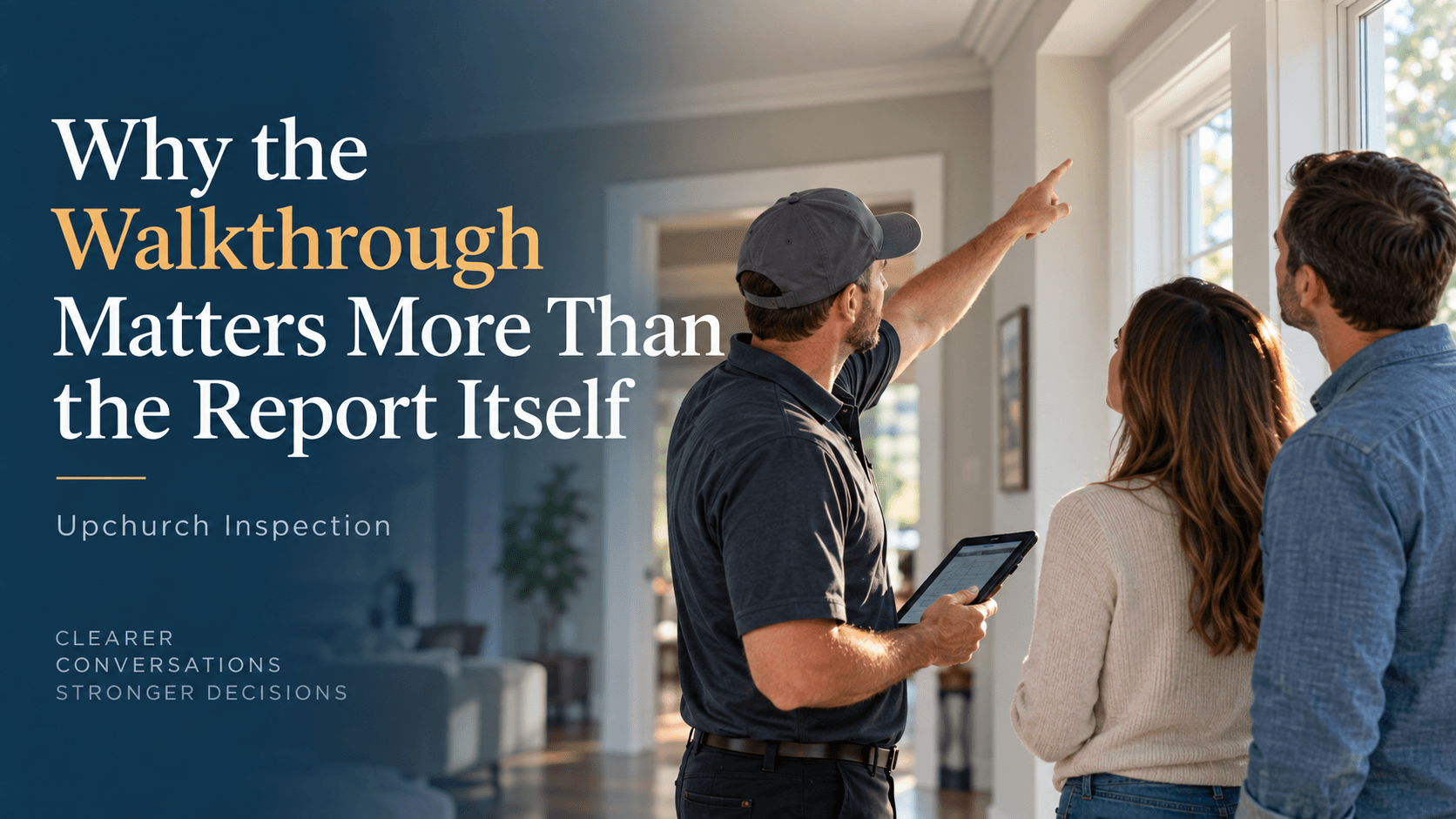
he Walkthrough Is Where Experience Shows
Anyone can read defects off a screen. Experience shows up when an inspector can explain why this defect matters here.
During walkthroughs, we draw on patterns:
- What we see repeatedly in homes of this age
- Which issues tend to escalate locally
- Which repairs usually hold and which don’t
- Where buyers typically underestimate cost or disruption
That knowledge doesn’t always translate cleanly into bullet points. It translates best through conversation.
Why Buyers Who Skip the Walkthrough Struggle Later
Buyers who don’t attend the walkthrough—or who rush through it—often struggle most with the report afterward.
They read it without context. They fixate on language without explanation. They assume everything is equally important or equally dangerous.
When something fails later, they often feel blindsided—not because the inspection missed it, but because they never fully understood what the inspection was telling them.
The walkthrough exists to prevent that disconnect.
How We Structure Walkthroughs at Upchurch Inspection
We don’t rush walkthroughs, and we don’t perform them theatrically.
We focus on:
- The systems that matter most for ownership
- The conditions that drive cost and risk
- The areas that deserve monitoring
- The difference between age-related reality and true defects
We encourage questions. We explain tradeoffs. We talk like people who inspect homes in this region every day—because we do.
Reports Last. Understanding Endures.
The report is important. It’s the record. It’s the reference. It’s the document that travels with the transaction.
But understanding doesn’t come from documents alone. It comes from explanation, repetition, and context.
Buyers who leave an inspection understanding why a house behaves the way it does are far more prepared than buyers who simply receive a thorough report.
That’s why the walkthrough matters.
An inspection isn’t just about identifying issues.
It’s about making sure the right issues are understood.
When that happens, buyers don’t just feel informed on inspection day—they feel prepared long after they’ve moved in.