
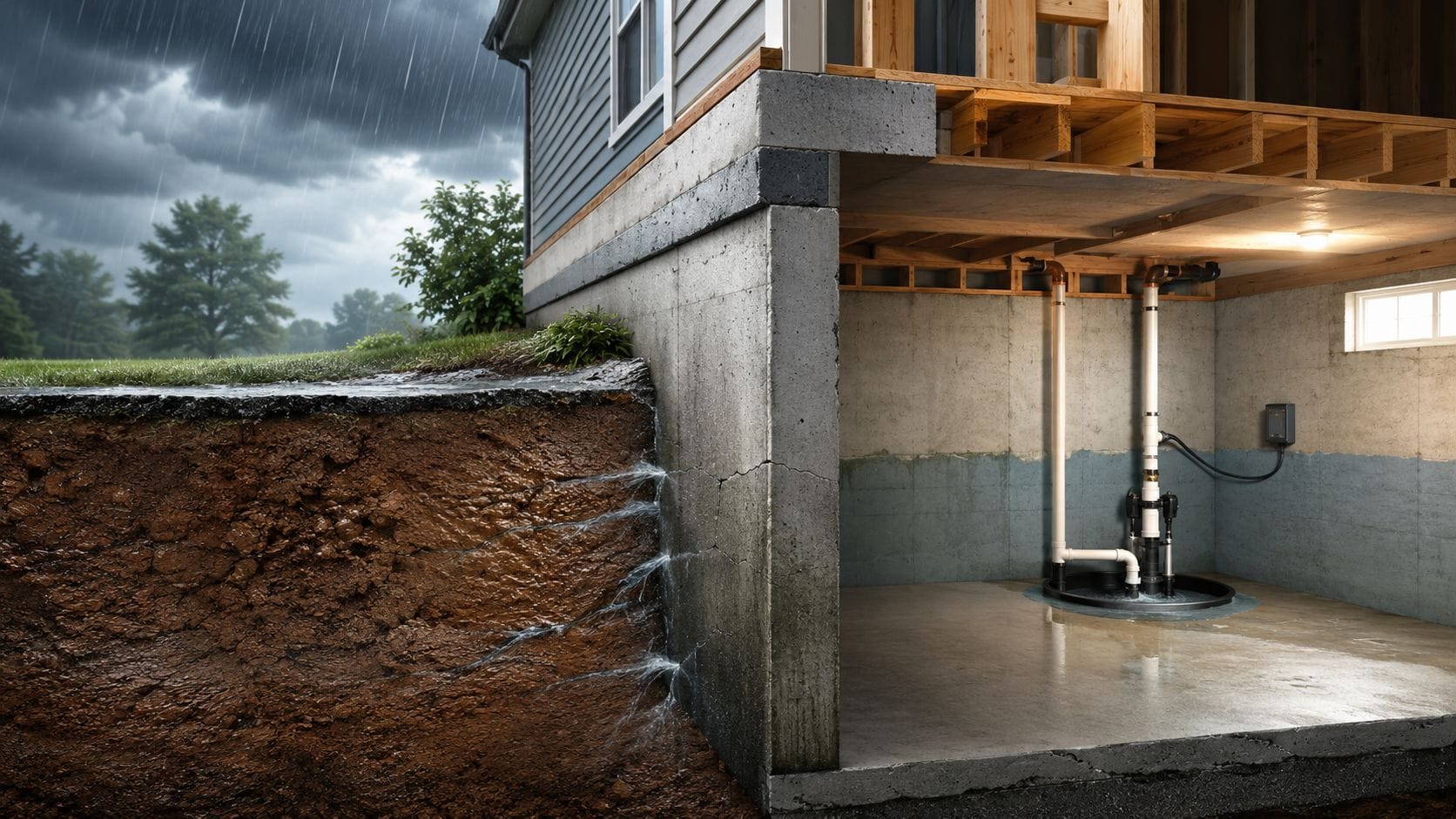
After a Missouri spring thunderstorm, the first sign may be a damp strip along the basement wall, a puddle beside the sump crock, or a musty smell rising through the stairwell. The water may look minor, but the useful question isn't only where did it appear? It's why did it get there?
In Missouri homes, basement moisture often reflects several conditions working together, including saturated soil, clay movement, roof runoff, settled grading, foundation openings, or a plumbing problem. The same crack that admits water can also create a pathway for soil gas, so a wet basement deserves a broader look than a quick patch and a coat of paint.
Table of Contents
- What a Wet Missouri Basement Usually Means
- How Water Pressure and Clay Soil Drive Missouri Leaks
- The Most Common Ways Missouri Homes Let Water In
- Reading the Clues and Telling Leak Types Apart
- What Homeowners Can Fix and What Needs a Pro
- Why Moisture and Radon Pathways Matter Together
- Bringing It All Together with the Right Inspection
What a Wet Missouri Basement Usually Means
A wet basement rarely points to one universal failure. In Cape Girardeau, Jackson, Sikeston, Poplar Bluff, Farmington, Perryville, Columbia, Jefferson City, Fulton, Boonville, Sedalia, and surrounding communities, the right diagnosis depends on how water behaves around that particular home.
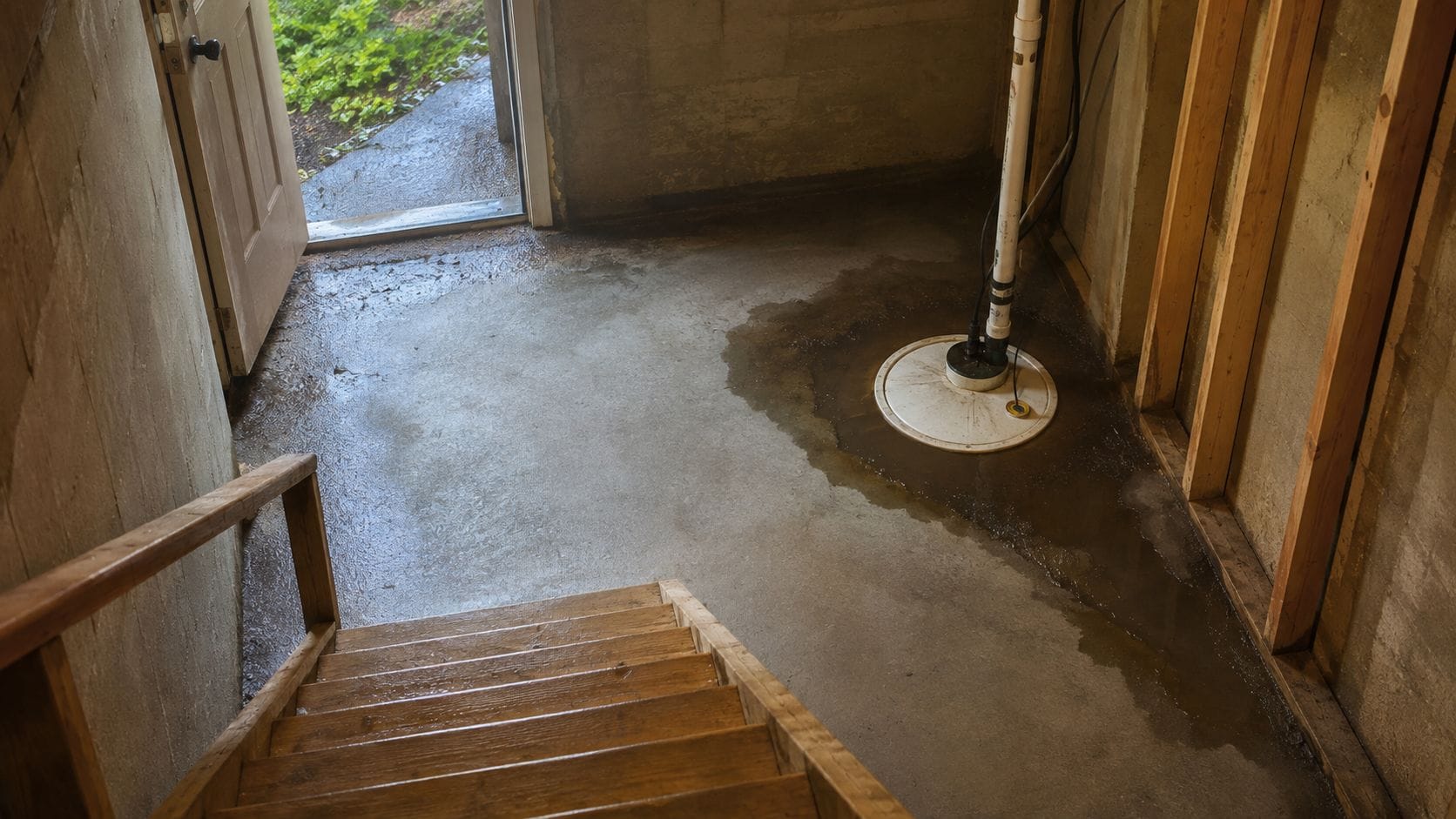
An owner might find clear water at the wall-floor joint after rain. Another might see staining beneath a basement window, while a third notices water near a floor drain only when an upstairs fixture runs. Those patterns can involve surface runoff, groundwater pressure, a sump system, a sewer or plumbing defect, or ordinary indoor humidity condensing on cool masonry.
Start with the pattern, not the patch
The timing matters. Moisture that appears after heavy rain points toward drainage or groundwater. Water that follows plumbing use deserves a plumbing investigation. A consistent damp smell without visible water may indicate ongoing humidity, a concealed leak, or old water damage.
A basement can also look dry during a showing and leak during the next storm. That matters for homebuyers and sellers, especially when finished walls conceal the foundation. If you need immediate cleanup guidance after an event, these flooded basement drying tips can help you reduce lingering moisture while you document the condition.
The practical goal is calm diagnosis. Read the basement as evidence, preserve photographs and stains before cleaning, and separate a maintenance correction from a condition that needs a drainage, plumbing, waterproofing, or structural specialist.
How Water Pressure and Clay Soil Drive Missouri Leaks
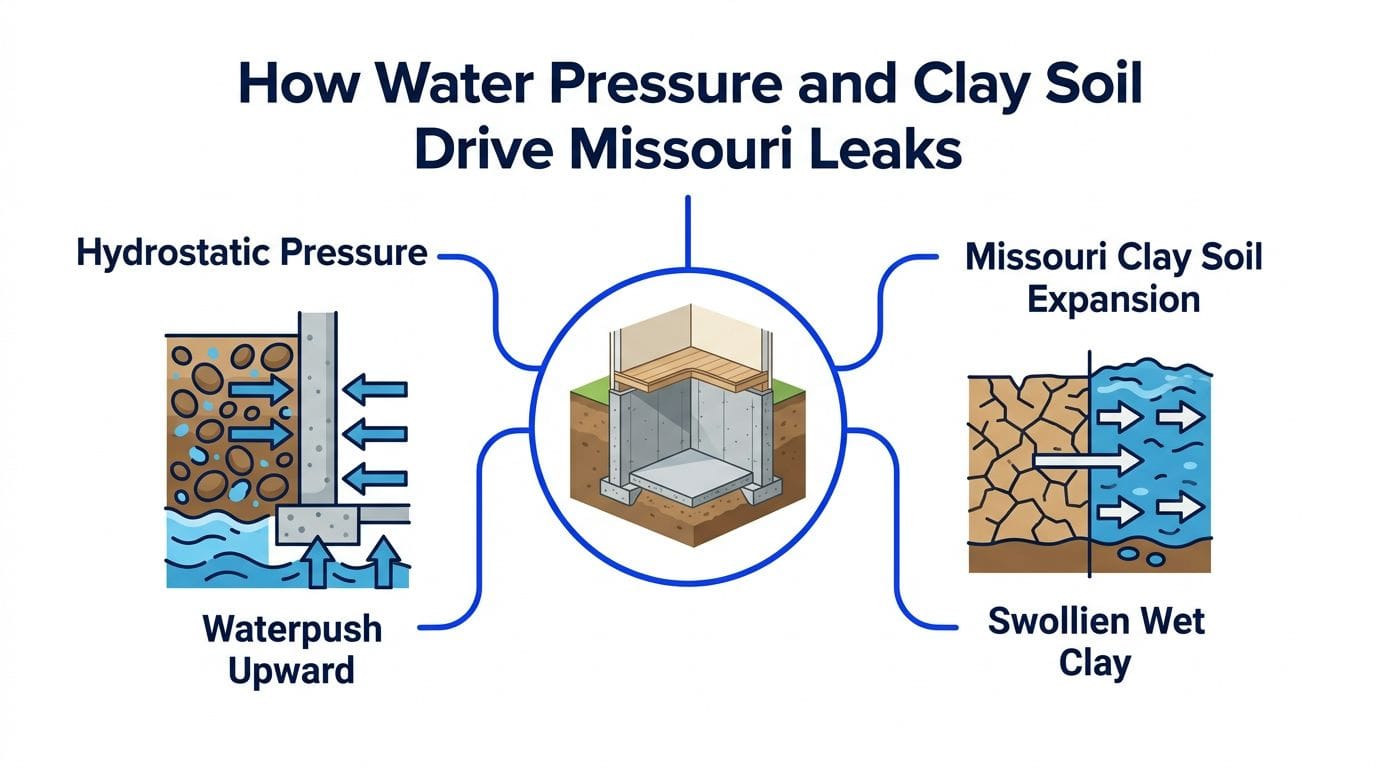
After several wet days, a Missouri basement may develop seepage even though the walls looked dry through the summer. Two conditions often work together: water pressure against the foundation and clay-rich soil that changes volume as moisture changes. The moisture clue should be read alongside cracks, masonry movement, drainage, and possible radon entry points.
Saturated soil pushes water indoors
Soil around a below-grade wall can become saturated and press against the foundation. That pressure finds weak paths, including concrete cracks, the cove joint where the wall meets the slab, porous masonry, and openings around utilities. A wall can appear sound from across the room while admitting water through a hairline crack.
Water can also travel beneath the slab and emerge at a floor crack or sump pit. Seepage may therefore start abruptly after a wet period, even when the basement has seemed dry for months. Roof runoff adds to the load when gutters overflow or downspouts discharge beside the foundation.
The guidance for leaky basements recommends practical drainage measures such as cleaning gutters, correcting grades, and using French drains to move water away from the foundation. These steps address the water source, but they do not explain every crack or movement pattern.
Clay changes the drainage path
Clay-rich ground drains slowly, swells when wet, and shrinks as it dries. That seasonal change can alter water movement beside the wall, leave or widen openings, and place stress on masonry. It does not automatically prove foundation failure.
Recurring seepage deserves closer review when it appears with stair-step masonry cracks, wall separation, or a bowing wall. Those conditions call for evaluation rather than repeated sealant repairs. Homeowners working through drainage problems can consult Modern Yard Landscapes drainage advice for additional context on managing water around expansive ground.
Sticking doors or seasonal movement may point to broader soil or foundation movement. The discussion of expansive clay foundations in Warrensburg can help frame those clues, but an inspection should still compare them with basement moisture, exterior drainage, masonry condition, and potential radon pathways before assigning a cause.
The Most Common Ways Missouri Homes Let Water In
After a hard Missouri rain, water usually follows a predictable route from roof to ground. A wet basement may reflect a maintenance defect, a buried plumbing problem, or an opening in the foundation. Inspect the exterior before assuming a dramatic structural failure.

Look above the foundation first
- Negative grading: Settled soil, mulch, or a flower bed may slope toward the house. Rainwater then collects against the wall instead of draining away.
- Gutters and downspouts: Leaves block troughs, seams overflow, and short downspouts release water beside the foundation. Without a splash block, runoff can wash out soil at the wall.
- Window wells: Leaves, snowmelt, or soil can fill a below-grade well and hold water against the window frame. A missing or damaged cover allows the same condition to return.
- Foundation openings: Cracks, utility penetrations, and gaps around pipes create direct routes through the building envelope. A stain marks an investigation point, not necessarily the full cause.
- Sump systems: A pump may fail, run without removing water, lack a dependable backup, or discharge too close to the house. A failed check valve can let water move back toward the pit.
Keep roof runoff moving away from the foundation. Homeowners can review how to protect your foundation with gutters and this gutter and downspout extension guidance for foundation protection when choosing exterior drainage work. The trade-off is straightforward: extending discharge points is often simpler than correcting a saturated soil zone, but it will not repair a cracked wall or failed drain.
Don't overlook buried plumbing
Older Missouri homes may contain aging cast iron or clay sewer laterals. Cracked pipes, offset joints, and root intrusion can send wastewater or groundwater toward the foundation. Slow drains, recurring backups, sewer odor, or water that appears when fixtures run point more toward a plumbing or sewer investigation than a waterproofing product.
Drainage clues and plumbing clues can overlap. Compare the timing, location, odor, and affected materials before selecting a repair. A thorough inspection should also consider Missouri's clay soil, seasonal movement, and possible radon pathways, because moisture may be one visible symptom of several conditions requiring review together.
Reading the Clues and Telling Leak Types Apart
Wait until conditions are safe, then document the basement before moving stored items or scrubbing stains. A photograph of the waterline, a crack, or wetness at the wall-floor joint can preserve evidence that disappears after the room dries.

Build a useful record
Write down the date, recent rainfall, wind direction, and whether the sump pump ran. Then check the exterior grading, downspout discharge, window wells, floor drains, and nearby plumbing fixtures without entering contaminated water or approaching unsafe electrical equipment.
Active seepage, fresh mineral deposits, and repeated dampness matter more than an old, dry discoloration. Beads of water or a damp band on concrete block may indicate moisture moving through porous masonry, while water around a floor drain may indicate a drain, check-valve, or sewer issue.
Practical rule: Odor is evidence, not a diagnosis. Mustiness suggests prolonged dampness, while sewer odor may involve a dry trap, a vent issue, or a damaged sewer line.
Don't disturb suspected sewage or mold. A moisture meter can help compare affected and apparently dry materials, but the reading needs context. An inspector may use moisture mapping and, when appropriate, thermal imaging to identify temperature differences that suggest moisture behind finished surfaces.
Match the clue to the next expert
Water that aligns with fixture use or repeated backups may justify a sewer scope. Water entering along a foundation crack may need a foundation or drainage evaluation. A professional inspection can narrow the source, but it shouldn't replace a licensed plumber, waterproofing contractor, or structural engineer when the evidence points into that specialty.
Preserve the pattern before cutting into drywall or the slab. The best next step is usually the one that answers the source question without hiding it.
What Homeowners Can Fix and What Needs a Pro
Start by reducing new water, not by covering the evidence. From dry ground, clean gutters, extend downspouts away from the foundation, correct settled soil, clear window wells, and inspect whether discharge water returns toward the house.
You can test a sump pump by adding water to the pit while keeping hands and cords away from electrical hazards. Watch whether the pump starts, removes water, and shuts off properly. A missing window-well cover or a small gap around a utility penetration may be reasonable maintenance items, but a temporary seal isn't proof that the surrounding drainage works.
A sensible first response
- Reduce surface water: Correct the obvious gutter, downspout, grading, and window-well problems before the next storm.
- Record the result: Keep dated photographs and receipts, then note whether the same area becomes wet again.
- Protect the room: Move belongings away from wet walls and avoid operating electrical equipment where water is present.
- Avoid concealment: Don't paint over active seepage or cover a crack before documenting it.
Interior crack filler can stop a visible trickle in some situations, but it doesn't remove pressure outside the wall. An interior trench system can collect groundwater, yet it won't correct negative grading, a blocked exterior drain, or a leaking sewer line.
Permanent work depends on the source
Persistent foundation seepage may require exterior waterproofing and footing drainage, while groundwater beneath the slab may call for interior drainage connected to a dependable sump arrangement. Surface runoff usually needs grading and gutter corrections. Supply-line or waste-line failures belong with a licensed plumber, and suspected sewer lateral damage may require a sewer contractor and scope.
Bring in a foundation or structural professional for enlarging cracks, bowed walls, uneven floors, or water at multiple locations. Seek emergency help when water is near electrical equipment, sewage is present, the level is rising rapidly, or the source can't be made safe. A pre-purchase or diagnostic inspection can document conditions, but the specialist who performs the repair should design the work within that trade.
Why Moisture and Radon Pathways Matter Together
Moisture and radon can use the same openings, but one doesn't prove the other exists. Missouri guidance explains that radon can enter through foundation gaps and cracks and accumulate indoors, while the state's health department repeats action guidance to fix homes at 4.0 pCi/L or higher and consider action at 2.0 pCi/L or higher, as described in its Missouri radon information.
Common pathways include slab cracks, foundation-wall cracks, pipe penetrations, porous concrete-block cores, open sump pits, and floor drains. Wet soil can alter pressure and airflow, but visible dampness, a musty odor, or a crack can't tell you the radon level.
Test the air separately
The EPA's Missouri radon material identifies cracked or moisture-compromised foundations as possible entry routes for soil gas and explains that shrink-swell soils can create foundation openings, as shown in its Missouri radon document. A standard radon kit can provide a safe way to test, and a certified radon contractor should handle mitigation when results are high.
Follow the test instructions and maintain normal closed-house conditions during measurement. If the result is higher than normal, arrange the appropriate follow-up measurement or professional evaluation rather than inferring a result from basement appearance.
Coordinate water and air work
Seal obvious gaps and control water, but don't treat moisture control as a substitute for air testing. A mitigation system needs to work with the sump and drainage arrangement, not compromise it. A sewer scope isn't a radon test, and thermal imaging can't replace air measurement.
A thorough inspection can evaluate foundation conditions, moisture patterns, sump setup, and visible air pathways together. For a location-specific discussion of testing and basement conditions, see radon in Jackson County, then use actual test results to set priorities.
Bringing It All Together with the Right Inspection
Not every basement clue requires emergency action. Minor efflorescence, an inactive stain, or a dry sump after storms can belong on a seasonal maintenance and monitoring list, provided the condition remains stable and the surrounding drainage works.
Active seepage, recurring sewer odor, a high radon result, a crack wider than a quarter inch, a wall that bows, or a sump pump that runs constantly deserves specialist attention. The seriousness depends on the pattern, movement, source, and effect on the building, not on one isolated mark.
Use the right tool for the question
A moisture map can show which portions of the foundation are affected. Thermal imaging may help locate temperature differences behind finished walls, but those findings require confirmation. A sewer scope can assess the buried line when backups or fixture-related water suggest a plumbing pathway.
A home inspection can evaluate visible foundation conditions, drainage, sump components, grading, gutters, and basement or crawlspace moisture clues. Radon testing addresses indoor air separately. A structural engineer, licensed plumber, waterproofing contractor, or sewer specialist may then be needed to determine the repair.
Upchurch Inspection can combine inspection reporting with moisture evaluation, thermal imaging, sewer scope, foundation and sump observations, and radon testing when those services fit the property and concern. For buyers, sellers, investors, and property managers, the value is a clearer sequence of decisions, document the evidence, identify the likely source, then send the right specialist to the right problem.
Don't finish a basement or close on a Missouri home while treating unexplained water as a cosmetic issue. Schedule an inspection before the clues disappear, especially if the basement has recurring seepage or the property sits on drainage-sensitive clay soil.
Upchurch Inspection can help evaluate basement and crawlspace moisture, drainage patterns, foundation clues, sump equipment, sewer conditions, and radon concerns as separate but related issues. Visit Upchurch Inspection to request an inspection and get a clear report that helps you decide what to monitor, maintain, or refer to a specialist.