
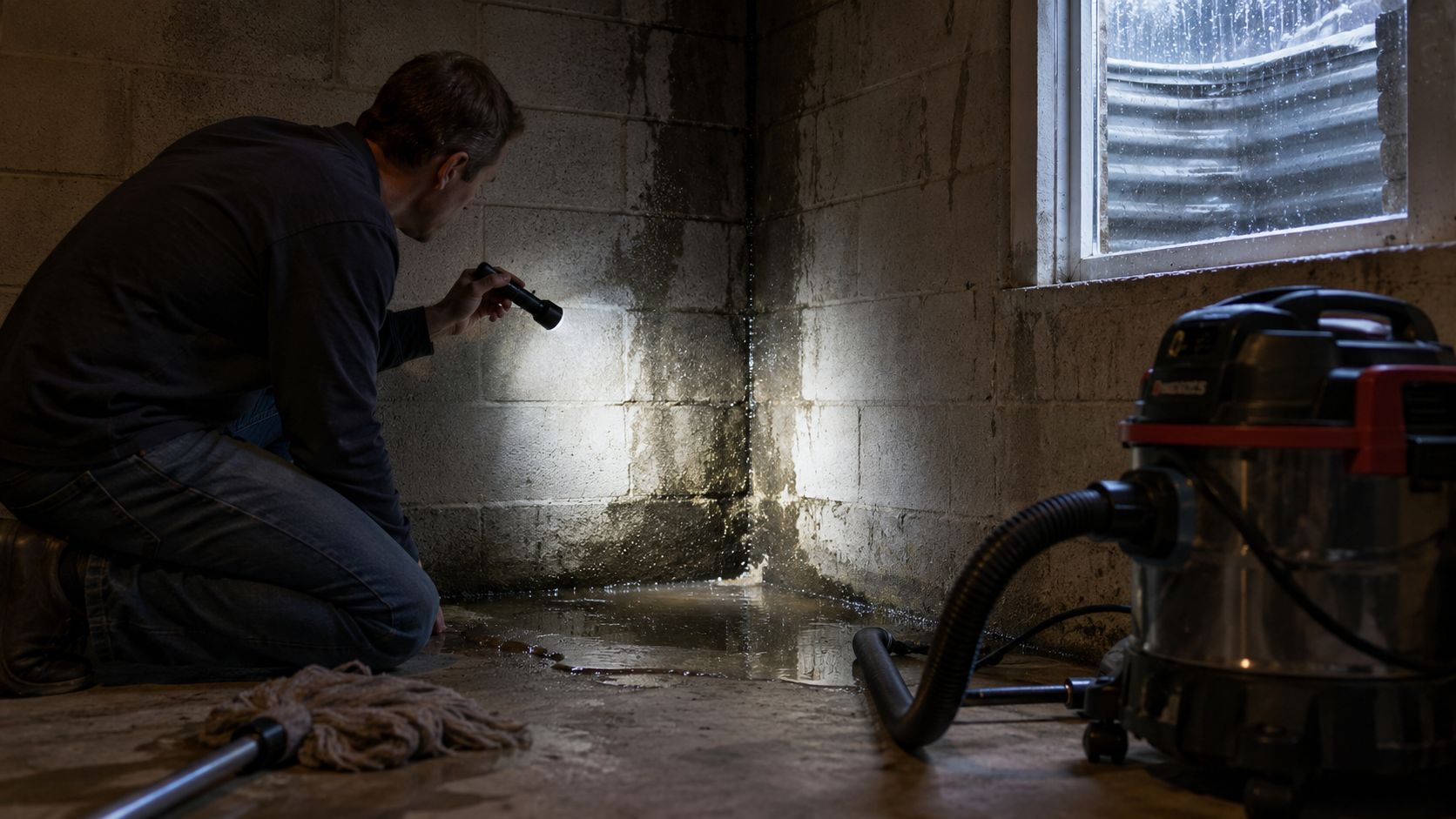
You've just come downstairs after a hard storm, flashlight in hand, and found a dark streak running down the basement wall. Maybe there's a shallow puddle where the wall meets the floor. Maybe the concrete has a white, crusty residue, or a hairline crack is slowly wetting the surface. Water coming through a basement wall after rain is unsettling, but the pattern usually gives you useful clues.
Rain-triggered seepage is different from basement dampness that stays present in dry weather. It often points to water saturating soil around the foundation, runoff collecting near the house, or a weak point that only becomes active when outside pressure rises. The practical response is a triage process: protect people and electrical systems, document what's happening, identify the entry path, use temporary measures carefully, and then address the source.
Table of Contents
- What You Are Seeing and Why Now
- First Things to Do When Water Shows Up
- Where the Water Is Most Likely Coming From
- A Simple Way to Figure Out Your Specific Problem
- Temporary Fixes and Permanent Repairs Compared
- Knowing When to Call a Professional
What You Are Seeing and Why Now
A basement leak rarely appears without leaving a pattern. A tide line several inches above the floor may indicate water moving across the wall surface. Efflorescence, the white mineral crust left behind as moisture evaporates, suggests repeated wetting. A hairline crack that darkens during a storm points to a pathway through the foundation, while pooling directly at the wall-floor seam raises questions about the cove joint, footing drainage, or pressure beneath and around the slab.
The timing matters because rainfall changes the conditions outside the foundation. According to the USDA Forest Service guidance on basement leakage, the NABB study found that 85% of basement leakage cases occurred after rainstorms. That historical finding doesn't prove the cause in every house, but it does make roof drainage, grading, gutters, downspouts, and exterior wall pathways sensible first places to investigate.
A broad historical benchmark also reports that about 98% of basements experience some form of water intrusion during their lifetime, as summarized in basement water-intrusion guidance. Treat that figure as a general lifetime-risk estimate, not a prediction about your particular home. It does show why seepage belongs on a serious maintenance and inspection list, especially in older homes across Cape Girardeau, Jackson, Sikeston, Poplar Bluff, Farmington, Perryville, Columbia, Jefferson City, Fulton, Boonville, and Sedalia.
Field observation: The location and timing of the water usually tell you more than the size of the puddle.
What the first pattern can tell you
Water high on the wall or below a basement window often sends the investigation outside, toward a gutter, downspout, window well, or negative grading. Water at the bottom of the wall can reflect pressure pushing through the cove joint. A single wet wall often suggests a localized exterior drainage defect, while moisture appearing at multiple walls can point to a broader drainage or waterproofing problem.
This doesn't automatically mean the foundation is failing. It also doesn't mean a coat of interior paint will solve it. The visible stain is the endpoint of a water path, and the repair should follow that path back toward its source.
First Things to Do When Water Shows Up
During a Mid-South storm, the first hours are for safety, documentation, and limiting damage. Do not start by sealing the wall. Keep people away from standing water near outlets, appliances, extension cords, or electrical panels. If a circuit or electrical device is wet, shut it off only when you can do so without entering water or touching wet equipment. Otherwise, leave the area and call a qualified electrician or emergency professional.
Once the electrical risk is controlled, remove standing water and begin drying. Fans and a dehumidifier can help, but only with a safe electrical setup and after active water has been removed. Damp materials can support mold growth within 24 to 48 hours, so drying should begin before you have a complete diagnosis. Guidance on wet-basement conditions from Homefixx also emphasizes prompt attention to wet materials.
Work in this order
Protect yourself first. Do not stand in water near outlets, electrical equipment, or powered appliances. If the water level is rising, leave the basement and get qualified help.
Record the event. Photograph the wall, floor, stains, cracks, efflorescence, window wells, sump basin, gutters, and downspout discharge. Note when rain began, when you first saw water, which walls are affected, and whether the seepage is increasing.
Remove water safely. A wet vacuum, pump, or mop can handle shallow water when no electrical hazard is present. Move boxes, furniture, insulation, carpet, and other porous materials away from the wet area so they can dry separately.
Check drainage components. From a safe location, inspect the sump pump, discharge line, gutters, and downspouts. Confirm that downspouts do not discharge directly beside the foundation and that the sump pump cycles when its float rises.
Avoid premature sealing. Do not cover a wet wall with paint, interior coating, or a cement patch. Those repairs can hide the entry point, trap moisture, and make it harder to distinguish fast surface runoff from slower groundwater pressure during the next storm.
Keep the evidence: A photograph taken during active rain can be more useful than a clean, dry wall photographed days later.
If the basement has finished walls, electrical systems, stored belongings, or insulation, arrange an inspection or appropriate specialist visit after the immediate water is controlled. These steps reduce damage and preserve evidence. They do not identify the exterior water source or establish whether groundwater pressure is involved.
Where the Water Is Most Likely Coming From
Rain-driven seepage usually enters through a limited number of pathways. The important distinction is whether water reaches the wall from the surface quickly or builds pressure around the foundation more slowly.
Foundation cracks may be vertical, stepped, or irregular, depending on the wall material and the forces acting on it. A poured-concrete wall can develop a narrow crack that wets during a storm. Block foundations may show dampness through mortar joints, cores, or stair-step cracking. Cracks don't automatically indicate structural failure, but horizontal cracking, displacement, or bowing deserves more careful evaluation.
The wall-floor cove joint is another common route. When saturated soil presses against the foundation, water can move toward the joint where the wall meets the slab. Hydrostatic pressure can also push moisture through wall-to-footing joints, pipe penetrations, tie-rod openings, or the slab itself. The basement water-entry overview from The Basement Guide distinguishes wall-face tracking, which more often points to cracks, exterior coating failure, or drainage, from water concentrated at the base, which more often relates to pressure, a high water table, or the cove joint.
Exterior conditions deserve equal attention
A clogged or missing gutter can send roof water down the foundation wall. A short downspout extension can discharge runoff directly beside the footing. Soil that slopes toward the house, rather than away from it, can hold water against the basement wall. Window wells may collect stormwater when their drains are blocked, damaged, or absent.
In Southeast Missouri and Mid-Missouri, clay-heavy soils can hold water against foundations rather than allowing it to drain quickly. That condition can increase pressure at cracks and cove joints, particularly after prolonged storms. Homes in Cape Girardeau, Jackson, Columbia, Jefferson City, and surrounding communities should be evaluated as individual sites, because lot grading, foundation type, drainage installation, and maintenance history vary widely.
For a practical explanation of exterior drainage and grading, see these foundation drainage and grading tips for Tennessee homeowners. The principles apply broadly, even though the linked material is written for Tennessee homeowners.
Surface water often appears during rain or soon afterward. Groundwater-driven seepage may continue after the weather clears because saturated soil remains loaded against the foundation. That distinction isn't absolute, but it helps prevent a common mistake, sealing an interior crack while leaving the drainage pressure untouched.
A Simple Way to Figure Out Your Specific Problem
The timing and location usually narrow the diagnosis before any wall is opened. Water that appears during heavy rain or soon afterward points more toward runoff, gutter overflow, downspout discharge, poor grading, splashback, or a window-well issue. Water that starts hours later, continues after the storm, or grows steadily can indicate rising groundwater or hydrostatic pressure.
Location adds another clue. Moisture at the cove joint or through a floor crack may involve drainage pressure, footing-drain performance, or water below the slab. A stain midway up the wall near a pipe penetration, tie-rod opening, or isolated crack suggests a more localized path. Wet streaks beneath a window call for an exterior inspection of the sill, well, cover, and well drain.
Mid-South homes need site-specific judgment. Clay-heavy soil in Southeast Missouri and Mid-Missouri can stay saturated after a storm, so delayed seepage may reflect groundwater pressure rather than a single surface defect. Compare the timing with the storm, then compare the location with the foundation details.
Use simple observations before opening a wall
- Angle a flashlight across the surface. Side lighting can expose hairline cracks, bubbling coatings, damp edges, and faint water channels that overhead light misses.
- Use a dry paper towel. Hold it against the suspect area briefly. A wet mark confirms active moisture there, while a dry towel cannot rule out intermittent seepage.
- Watch the wall-floor seam. Note whether water beads at the joint, runs down the wall face, or rises through the slab.
- Check the sump system. Watch the pump as the basin level changes, and confirm that discharged water is not returning toward the foundation.
- Inspect from outside. Look for standing water, settled soil, blocked window-well drains, and other conditions that can keep the wall wet.
A basement wall inspection method using timing and a plastic-sheet test can help distinguish wall seepage from indoor condensation. Observe the area during rainfall or within the first few hours afterward, then use a 12-inch plastic sheet left for 24 hours to compare moisture on the wall side with moisture on the room side.
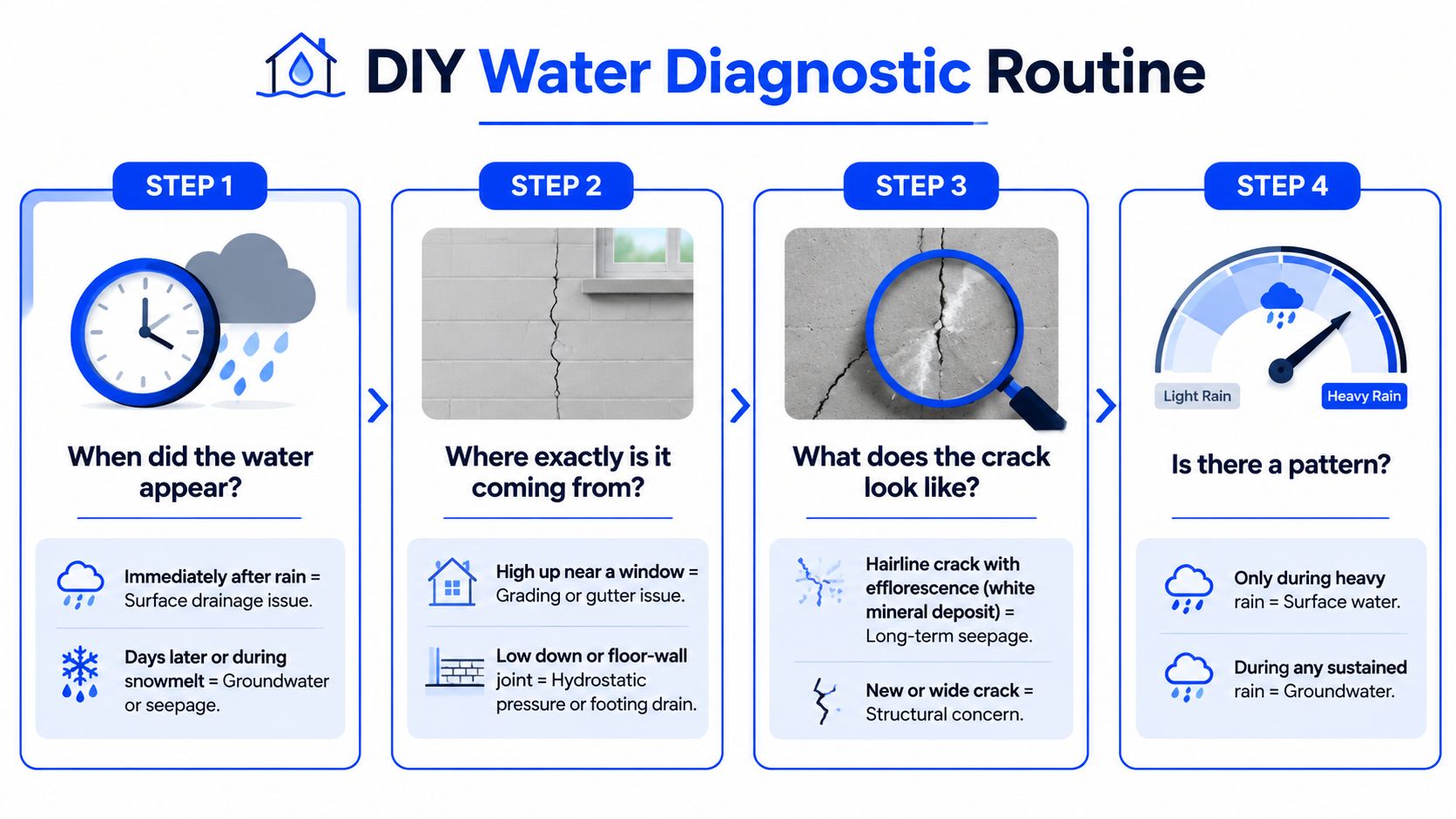
Photograph each finding with a timestamp and a wider view showing its relationship to windows, corners, utilities, and the floor. That record gives a drainage contractor, waterproofing specialist, plumber, or inspector better information than a single close-up.
If surface checks look satisfactory but water keeps returning, buried drainage may need evaluation. A camera inspection method for underground drainage pipes can reveal blockages, breaks, or disconnected sections that are hidden from view.
Temporary Fixes and Permanent Repairs Compared
A temporary measure can limit damage while the weather is unsettled or an evaluation is pending. It is useful only when matched to the water's timing and path. Runoff from a recent storm calls for surface drainage work. Seepage that continues after the ground dries points toward groundwater pressure, a saturated footing drain, or another persistent source.
What a homeowner can reasonably do
Start with the roof drainage. Extend downspouts 4 to 6 feet from the foundation and shape soil to slope away at roughly 1 inch per foot for the first 6 feet. The guidance on gutter and downspout extensions explains why this simple change often deserves attention before interior patching. Clear leaves from gutters and window-well drains, and remove debris that prevents water from leaving the property.
In Mid-South homes, intense rain can overwhelm otherwise serviceable drainage, especially where clay soil sheds water slowly or settled backfill forms a channel beside the wall. If the leak appears during rain and stops soon afterward, these exterior corrections may reduce recurrence. They will not solve water that continues during dry weather.
Inside, remove standing water, then use fans and a dehumidifier to dry surfaces. A small, accessible hairline crack may accept a carefully selected hydraulic-cement or epoxy repair after its behavior and moisture path are understood. A patch can slow visible seepage, but it cannot stop a downspout discharging at the wall or a footing drain that remains overwhelmed.
What permanent work may involve
Exterior waterproofing may include excavation, crack repair, a membrane, drainage board, and footing-drain improvements. It addresses water before it reaches the wall, but it creates more site disruption and typically costs several thousand dollars more than interior systems, as described in The Basement Guide. Interior perimeter drainage connected to a sump pump collects water after it reaches the foundation perimeter. It can suit properties with limited exterior access, though it does not waterproof the exterior soil or wall.
An isolated crack may need polyurethane or epoxy injection. A window-well problem may require a repaired drain, replacement well, or cover. Water entering at the cove joint may call for an interior drainage channel and sump arrangement rather than a surface coating.
| Solution | Type | Typical Cost | Best For |
|---|---|---|---|
| Downspout extension and minor grading | DIY maintenance | Material-dependent | Roof runoff collecting near the foundation |
| Window-well cleaning and cover adjustment | DIY maintenance | Material-dependent | Localized water below basement windows |
| Crack patch or injection assessment | DIY or professional | Varies by crack and access | An isolated, confirmed crack pathway |
| Interior perimeter drain and sump system | Professional repair | Typically less than exterior excavation | Pressure-driven seepage where exterior access is limited |
| Exterior excavation and waterproofing | Professional repair | Typically several thousand dollars more than interior systems | Repeated exterior water pressure and failed waterproofing |
Service life depends on materials, soil movement, drainage performance, installation quality, and maintenance. Choose the repair based on the diagnosed source, not the visible stain. Temporary work controls symptoms. Permanent work lasts longer when it addresses the path water is taking.
Knowing When to Call a Professional
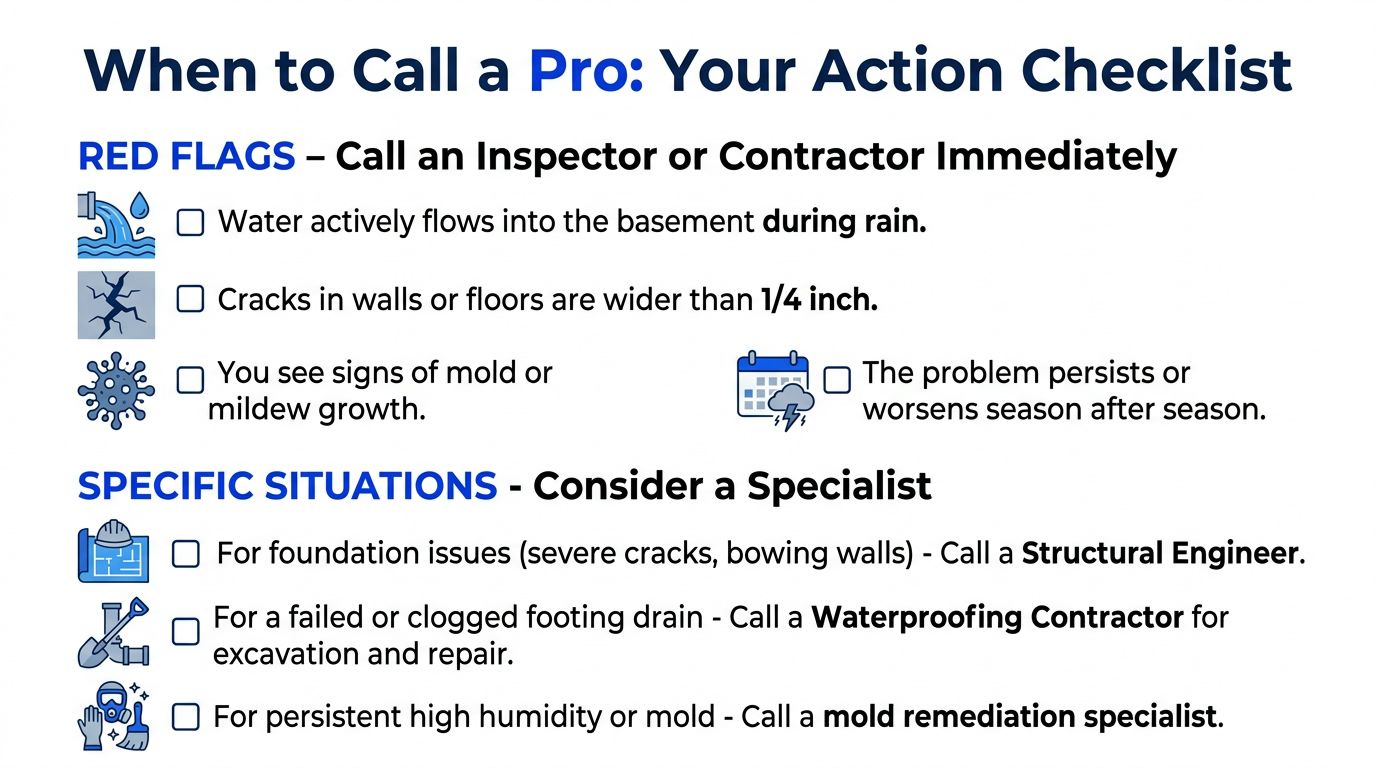
Stop DIY work and arrange an evaluation when water appears with horizontal cracks, bowing walls, recurring mold, water rising through the floor, or visible foundation movement. The checklist below includes a crack wider than 1/4 inch as a warning sign, but width alone cannot diagnose a structural problem. Movement, displacement, length, location, and changes over time also matter.
Match the specialist to the symptom
- Structural movement: A structural engineer should assess bowing walls, severe cracks, displacement, or seepage linked with foundation movement.
- Weather-independent water: A plumber can investigate water that continues regardless of rain, particularly near supply lines, drains, sewer connections, or mechanical equipment.
- Surface drainage: A drainage contractor can address grading, gutter discharge, window-well drainage, and runoff from the yard.
- Pressure-driven seepage: A basement waterproofing specialist can assess footing drains, exterior membranes, interior perimeter systems, and sump-pump requirements.
- Persistent biological growth: A mold-remediation specialist should become involved when mold or mildew returns after the moisture source has been addressed.
Clay-rich soils occur across parts of the Mid-South. They can shrink during dry periods and swell when saturated, increasing pressure on foundation systems. That pattern may contribute to movement, but it does not prove that clay caused a specific leak. Prolonged rain can also raise local groundwater conditions. If storm-related power loss is a concern, ask whether the sump system needs a battery backup.
Exterior excavation may require permits or utility-location procedures set by the local municipality. Before digging around a home in Missouri or Tennessee, ask the contractor who handles permits, utility marking, site restoration, and drainage discharge.
Vet the proposed repair
Request proof of insurance, references involving similar foundation types, a written scope of work, and warranty terms that distinguish materials from labor. The scope should identify the suspected entry path, planned work, exclusions, cleanup responsibilities, and what happens if water later appears elsewhere.
A qualified inspection can document moisture staining, standing water, foundation cracks, and sump or drainage conditions. It should also identify which areas were inaccessible rather than claiming to confirm concealed defects. Upchurch Inspection can evaluate visible basement and crawlspace evidence of water intrusion, use moisture meters on suspicious surfaces, and report observed foundation or drainage concerns. Visit Upchurch Inspection to schedule an inspection that connects what you see after rain with an appropriate specialist or repair plan.