
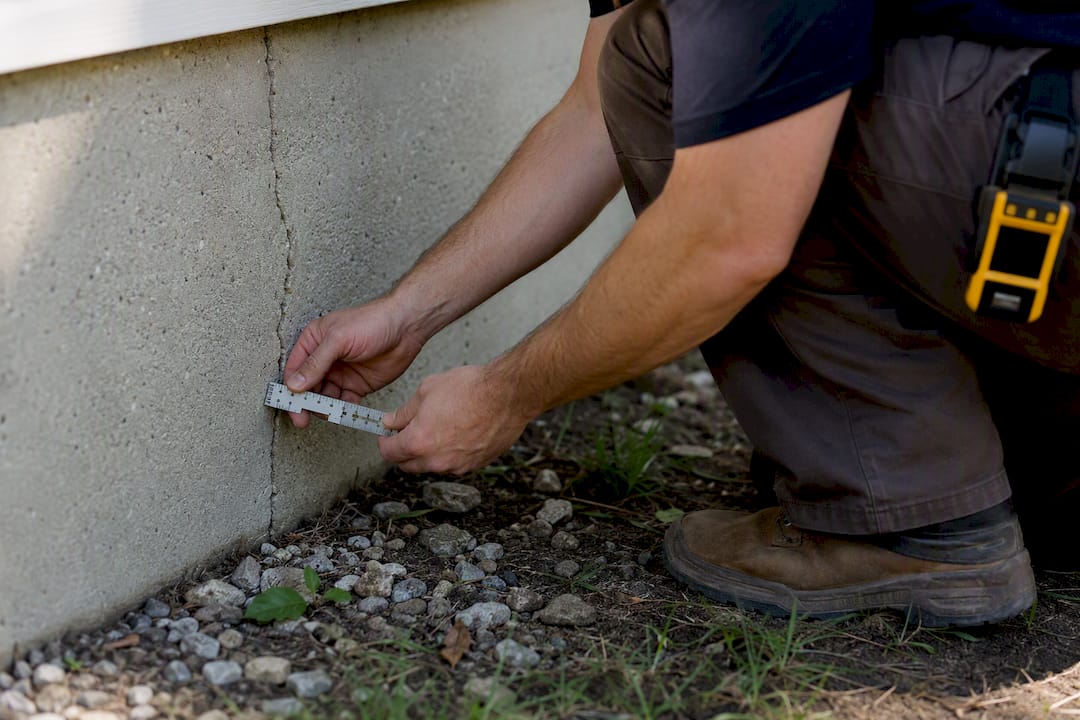
Expect to pay somewhere between $300 and $1,200 for a foundation inspection, depending on who does it and how deep they go. A home inspector checking the foundation as part of a full inspection runs $300 to $600. A standalone foundation-focused inspection lands around $300 to $800. A licensed structural engineer, the person you call when something looks genuinely wrong, typically charges $400 to $1,200 or more for a stamped report with drawings.
Here’s the one piece of advice that matters more than any price range: if you see active structural movement, stop shopping by price and call an engineer.
- Home inspector (foundation as part of full inspection): $300–$600
- Standalone foundation inspection: $300–$800
- Structural engineer evaluation: $400–$1,200+
- Fastest turnaround: inspector reports same week; engineer reports often take 3–10 business days
- Red flag rule: stair-step cracks, racking doors, or sudden new movement mean call the engineer, not the cheapest inspector
Key Takeaways
Foundation inspection cost depends on who performs it: general inspectors run $300 to $600, standalone foundation checks run $300 to $800, and structural engineers run $400 to $1,200 or more for a stamped report.
| Point | Details |
|---|---|
| Know your price tier | General inspectors, foundation specialists, and structural engineers charge different rates for genuinely different scopes of work. |
| Watch for active movement | Stair-step cracks, new gaps at corners, and worsening floor slope mean call an engineer, not just another inspector. |
| Budget for escalation | Set aside room in your contingency window for a possible follow-up engineer referral if the inspector finds a gray-area issue. |
| Use the report as leverage | A written report, especially a stamped engineer letter, gives you real negotiating power for repairs, credits, or a price reduction. |
| Verify credentials first | Confirm state licensing and, for engineer work, a Professional Engineer designation before paying for foundation-specific inspections. |
| Work with a Mid-South specialist | Upchurchinspection performs detailed foundation and structural evaluations across Tennessee, Arkansas, Mississippi, and Kentucky, backed by inspectors qualified above state minimums. |
Table of Contents
- Foundation Inspection Cost Ranges You’ll Actually See
- What a Foundation Inspection Covers (and What It Doesn’t)
- What Drives Foundation Inspection Prices Up or Down
- When You Actually Need a Structural Engineer
- Using the Report to Negotiate, Get Credits, or Walk
- Who We Are and Why This Matters to Us
- How Long a Foundation Inspection Actually Takes
- Hidden Costs That Show Up After the Quote
- Comparing What You Get by Provider Type
- Why Some Inspections Get More Expensive Than Quoted
- Checking an Inspector’s Credentials Before You Pay
- Deciding When an Engineer’s Fee Actually Pays for Itself
- Get a Straight Answer on Your Foundation Before You Close
- Sources
Foundation Inspection Cost Ranges You’ll Actually See
Most of the confusion around foundation inspection cost comes from people comparing three different services as if they were one. They’re not, and the price tags reflect that.
A standard home inspection that includes a foundation walkthrough typically runs $300 to $500 for a median-size home, sometimes pushing to $600 on larger or older houses. That fee covers the whole house, not just the foundation, so the inspector is spending maybe 20 to 30 minutes on foundation-specific observation. Consumer guides put the average foundation-focused inspection at around $600, which tracks with what we see across Memphis and the Mid-South on typical slab and crawlspace homes.
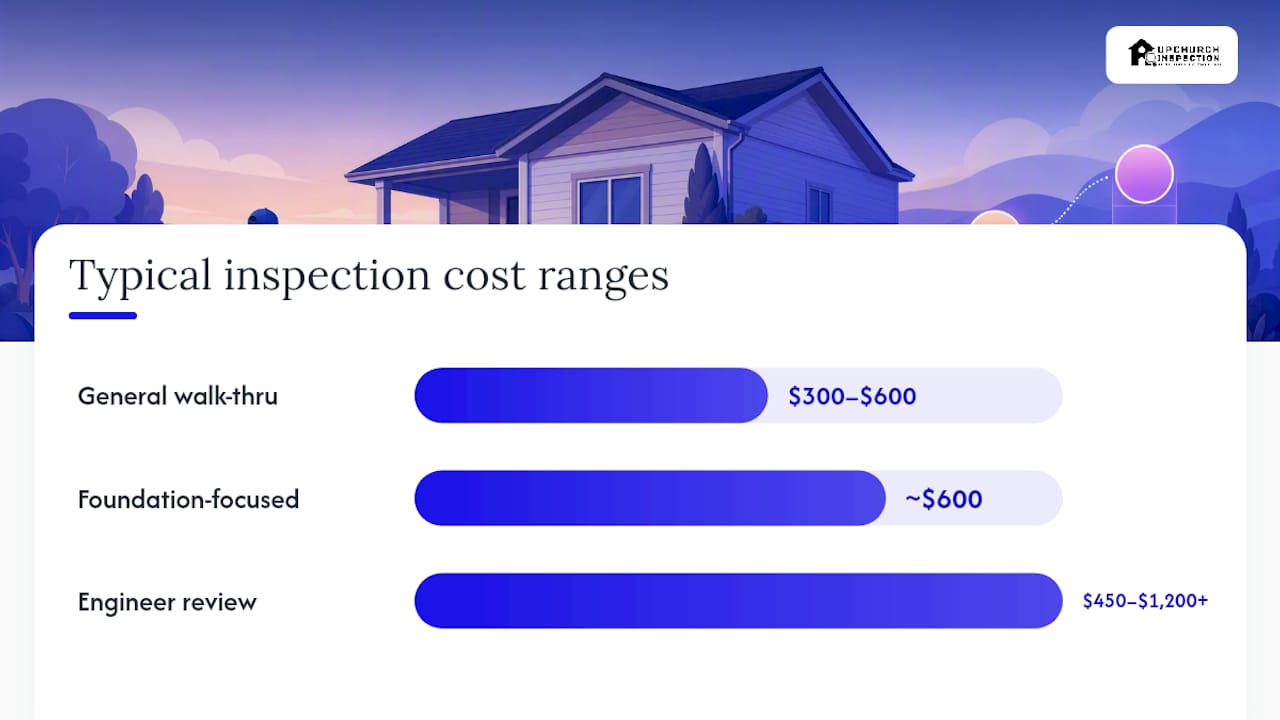
Statistic to remember: Angi’s consumer data lists standalone engineering reviews at $450 to $1,200, while a separate structural-engineering source pegs a standard report closer to $400 to $800. Both ranges are real. The variable is deliverables, not fraud or inconsistency.
Here’s how that plays out on real house types:
- Small slab-on-grade home, 1,200–1,600 square feet: Expect the low end, $300–$450, for either a general inspection or a focused foundation check.
- Crawlspace home with moderate access: $400–$650 is typical, since the inspector needs to physically get under the house.
- Large masonry basement house with finished lower level: $700–$1,200+, especially if a basement waterproofing or structural review is bundled in.
What a Foundation Inspection Covers (and What It Doesn’t)
A general home inspector and a structural engineer are not doing the same job, even when both walk away calling it a “foundation inspection.” Knowing the difference before you pay for one keeps you from either overpaying for peace of mind you didn’t need, or underpaying for a diagnosis you actually needed.
- Visual crack assessment. The inspector looks at cracks in the slab, block, or poured wall and notes width, direction, and pattern. A hairline vertical crack in a poured wall is usually shrinkage. A stair-step crack running through block joints is a different animal.
- Grading and drainage observation. Downspouts dumping against the foundation, negative grade sloping toward the house, standing water after rain. These get flagged because they’re often the actual cause behind foundation movement, not a symptom of the foundation itself.
- Interior indicators. Sticking doors, gaps at baseboards, sloped floors measured with a level. These are clues, not proof.
- Moisture observation. Musty smell, efflorescence on block, damp subfloor insulation in a crawlspace.
What a general inspection does not include: soil borings, invasive probes into the foundation material, or structural load calculations. Those belong to a structural engineer’s evaluation, which produces a stamped letter with actual analysis instead of a narrative description with photos.
What Drives Foundation Inspection Prices Up or Down
Foundation type sets the floor. A slab home in a flat subdivision is the cheapest and fastest to check. A pier-and-beam or crawlspace home takes longer because someone has to physically get under it, and a full basement with finished walls adds time because visual access to the actual foundation material is limited.
Several factors push the cost of a foundation evaluation above the baseline:
- Access and safety. An 18-inch crawlspace with standing water or no clear entry point takes longer and sometimes requires confined-space gear.
- Home footprint. A 4,500 square foot house has more linear footage of foundation to walk and photograph than an 1,100 square foot cottage.
- Required deliverables. A narrative report with photos costs less than a stamped letter with calculations and drawings, because the engineer is assuming legal liability for the second one.
- Site conditions. Steep lots, retaining walls, known expansive clay soils (common in parts of West Tennessee and North Mississippi), or a history of drainage complaints all add scope.
Pro Tip: Ask any quote what’s actually included before you compare price. A $300 quote that skips the crawlspace because “access was limited” isn’t a bargain, it’s an incomplete inspection you paid for anyway.
When You Actually Need a Structural Engineer
Most foundation cracks are cosmetic, tied to normal concrete shrinkage or seasonal soil movement, and don’t need an engineer at all. The trick is knowing which ones do. A structural engineer becomes necessary when a property shows clear signs of structural compromise, and lenders or local building departments often require that stamped report before they’ll approve permits for repair work.
Call for an engineer, not just another inspector, when you see:
- Stair-step cracking through block or brick veneer, especially wider at one end
- Gaps opening at wall/ceiling corners or where trim meets drywall
- Floors that have visibly and measurably sloped, not just “feel uneven”
- New vertical movement that’s gotten worse since a prior inspection or since you moved in
Home inspectors identify symptoms. Structural engineers diagnose the cause and design the fix, which is why their report carries a stamp and yours doesn’t. The $400 to $800 fee for that engineer’s report is nothing compared to what you’re protecting against. Piering or underpinning repair projects commonly run $10,000 to $40,000 or more. Spending a few hundred dollars to find out whether you’re facing that bill, or facing nothing at all, is one of the better-value decisions in a real estate transaction.
Using the Report to Negotiate, Get Credits, or Walk
The inspection report only has value if you know what to do with it once it lands in your inbox.
- Order it during your inspection contingency window, which is usually 7 to 14 days after contract acceptance depending on your state and contract language. Waiting too long can forfeit your right to negotiate.
- The buyer typically pays for both the general inspection and any follow-up engineer evaluation, since it’s the buyer’s due diligence.
- Present findings in writing, attaching the engineer’s letter if you got one. A stamped report carries far more weight with a seller’s agent than a verbal description of cracks.
- Choose your negotiation lane: ask the seller to complete repairs before closing, request a credit into escrow so you control the repair contractor, negotiate a price reduction, or walk away if the numbers don’t work.
- Request supporting documents from the seller if repairs were already done: scope of work, contractor estimates, permits pulled, and any warranty paperwork.
A pre-purchase inspection exists specifically to prevent the kind of surprise that costs tens of thousands after closing, when you have zero leverage left.
Who We Are and Why This Matters to Us
Upchurchinspection has been performing residential and commercial evaluations across the Mid-South long enough to know that foundation questions are the number one thing that stalls a closing. Our inspectors carry qualifications that exceed Tennessee’s state standards, and we don’t just check a box on the foundation, we look at how it interacts with drainage, plumbing, and the structural framing above it.
- We inspect plumbing, electrical, and structural systems as an integrated evaluation, not isolated checklist items.
- We offer engineer’s foundation evaluations and settlement assessments when field findings warrant escalation beyond a standard inspection.
- Holly, who writes the editorial perspective in this piece, brings a background in property evaluation standards and is available through our office for readers who need guidance on specialty inspection scope.
How Long a Foundation Inspection Actually Takes
Scheduling is usually the fastest part. Most inspectors can get you on the calendar within 2 to 5 business days, sometimes next-day if you’re flexible and it’s not peak spring buying season, which in the Mid-South tends to run March through June.
The on-site portion for a foundation check bundled into a general home inspection takes 30 to 60 minutes out of a 2 to 4 hour total inspection. A standalone, foundation-focused visit runs similar, sometimes a bit longer if crawlspace access is difficult or the inspector wants extra time documenting crack patterns with photos and measurements.
Report delivery is where the timelines split. A general inspector using modern reporting software typically delivers a full report within 24 hours, sometimes same-day. A structural engineer’s stamped report takes longer, usually 3 to 10 business days, because the engineer is running calculations, possibly requesting additional site visits, and taking on legal liability for what they sign. If your closing timeline is tight, ask upfront about report turnaround before you book, not after. We’ve seen closings slip by a week simply because nobody asked the engineer how long their queue was.
If the inspector finds something during the walkthrough that needs a second look, like a crack pattern they want an engineer to weigh in on, add another 3 to 7 days to get that referral scheduled and completed. Budget for that possibility in your contingency window instead of finding out about it on day 12 of a 14 day window.
Hidden Costs That Show Up After the Quote
The number you’re quoted on the phone isn’t always the number on the invoice. A few line items catch buyers off guard.
Travel fees. If you’re outside an inspector’s normal service radius, tack on $50 to $150. This matters more in rural counties around Memphis where the nearest qualified inspector might be 40 minutes out.
Re-inspection fees. If repairs were made after an initial finding and you want someone to verify them before closing, that’s typically a separate charge, often $100 to $250, since it’s a second trip.
Specialized testing. Moisture meters and thermal imaging are often included in a standard visit, but mold testing or a sewer scope, both relevant if the foundation issue involves water intrusion, get quoted separately and can add $150 to $400 each.
Report writing time for complex findings. A clean report with no issues gets written fast. A property with multiple crack locations, photo documentation, and narrative explanation takes longer, and some engineers bill that extra time, especially if you request revisions or additional detail after the fact.
Confined space or lift equipment. Rare on residential jobs, but a commercial property with elevated foundation elements or a crawlspace requiring a harness setup can add a real line item.
Ask for an itemized quote before booking. A vague verbal number over the phone is how buyers end up disputing an invoice after the fact.
Comparing What You Get by Provider Type
The price gap between a general inspector and a structural engineer isn’t arbitrary, it reflects a genuinely different scope of work and liability.
A general home inspector charges the least, $300 to $600 as part of a full inspection, because they’re delivering a visual, non-invasive walkthrough with photos and a narrative report. They flag concerns; they don’t diagnose engineering causes.
A specialized foundation inspector, sometimes a separate trade focused specifically on foundations and drainage, sits in the middle at $300 to $800. They often spend more time on measurements, moisture readings, and crack documentation than a generalist would, but they still don’t issue a stamped engineering opinion.
A structural engineer costs the most, $400 to $1,200 or more, because they carry professional liability, run actual calculations, and issue a document that lenders and permitting offices treat as authoritative. If your lender is asking for engineering sign-off before closing, or you need a permit for repair work, only the engineer’s stamped report satisfies that requirement. If your lender’s underwriting is raising conditions tied to the property itself, it’s worth understanding what documentation lenders commonly require before you’re scrambling during a tight closing window.
Paying for the wrong tier wastes money either way: overpaying an engineer for a cosmetic crack, or underpaying a generalist when you actually needed calculations.
Why Some Inspections Get More Expensive Than Quoted
The initial quote assumes a routine visit. Costs escalate when the inspector finds something that requires a second opinion.
The most common trigger is a crack pattern or moisture reading that falls into a gray zone, not obviously cosmetic, not obviously an emergency. At that point, a responsible inspector recommends escalation to an engineer rather than guessing, and that referral adds a second fee on top of the first.
Other escalation triggers include discovering active water intrusion that suggests a French drain or sump system failure, finding termite or wood-destroying insect damage near foundation-adjacent framing that needs a separate pest inspection, or uncovering a prior repair, like old pier jacks or patched cracks, with no documentation, which often prompts a request for the seller’s repair history and sometimes a second engineering opinion to confirm the fix held.
None of this means the original quote was wrong. It means the property told the inspector something during the visit that the phone conversation couldn’t have predicted. Budget mentally for the possibility of a follow-up fee, especially on older homes or homes with any known history of foundation work.
Checking an Inspector’s Credentials Before You Pay
Not every inspector calling themselves qualified to assess a foundation actually is. A few checks take five minutes and can save you from paying for a shallow report.
Verify state licensing directly, not just a badge on their website. Tennessee, Arkansas, Mississippi, and Kentucky all maintain licensing boards or registries for home inspectors, and a legitimate inspector will give you their license number without hesitation.
Ask specifically about foundation experience, not just general inspection volume. Someone who’s inspected 2,000 homes but rarely flags anything beyond “monitor” language may not be the right fit if you already suspect an issue.
For engineer-level work, confirm they’re a licensed Professional Engineer (PE) in your state, since that’s the credential that makes their report legally stampable and acceptable to lenders and permit offices.
Request a sample report before booking. A vague, checkbox-style report with no photos is a red flag regardless of price. A thorough report, even a moderately priced one, documents specific locations, measurements, and clear language distinguishing observed cosmetic issues from areas recommended for further review.
Cheap and shallow costs you more later. Expensive and vague is just as bad. You want documented, specific, and licensed.
Deciding When an Engineer’s Fee Actually Pays for Itself
The conventional advice on foundation cracks treats every one as either “nothing to worry about” or a five-alarm fire, and neither framing is honest. Most cracks buyers panic about are ordinary shrinkage or minor settling, and most buyers who skip an engineer entirely are making a fine decision. The judgment call is narrower than people think: it’s not about crack width in isolation, it’s about pattern, location, and whether it’s changing.
Where I think the standard advice falls short is treating the engineer’s fee as a last resort instead of a clarifying tool. A $400 to $800 report isn’t an admission that something is badly wrong. It’s often the cheapest way to confirm nothing is wrong, which is worth just as much as catching a real problem. Buyers who wait until they’re terrified to call an engineer have usually already lost negotiating leverage.
Prioritize getting a clean read on crack pattern and movement history before you decide anything else. Everything downstream, negotiation, repair scope, walk-away decisions, depends on getting that diagnosis right the first time.
Get a Straight Answer on Your Foundation Before You Close
You’ve seen the price ranges and the red flags. What you actually need now is someone local who can walk your specific property and tell you which category it falls into, cosmetic, monitor, or escalate. Upchurchinspection handles that call every week across Tennessee, Arkansas, Mississippi, and the surrounding Mid-South, and unlike a quick phone estimate, our reports document exact crack locations, moisture readings, and drainage conditions so you’re negotiating from evidence, not guesswork.
If you’re weighing whether your situation needs a standard inspection or warrants pulling in engineering-level review, our specialized inspection options walk through what each service actually covers. Reach out to schedule an inspection before your contingency window closes, not after.
Sources
- Structural Engineer vs Home Inspector: Which Do You Need?
- Key Differences Between Home Inspectors and Structural Engineers — Resolve Engineering
- Home Inspection Structural Engineer: A Clear Guide – InspectandTest
- How to inspect your foundation — Angi (excerpt)
- Foundation Inspection in Residential Construction | National Home Inspection Authority