Not every home needs every specialized inspection. The goal of specialized inspections is not to add unnecessary services, but to target specific risks that are not fully evaluated during a standard home inspection. Knowing which specialized inspections make sense for a particular property helps homeowners and buyers focus their time, budget, and attention where it matters most.
Across the Mid-South, the need for specialized inspections often depends on property age, construction type, location, and transaction goals rather than a one-size-fits-all checklist.
Start With the Property, Not the Add-Ons
The most effective way to choose specialized inspections is to consider the characteristics of the home itself.
Key factors include:
- Age of the home
- Foundation type (slab, crawlspace, basement)
- Sewer or septic connection
- Water source (municipal or private well)
- Manufactured vs. site-built construction
- Evidence of prior repairs or renovations
Homes in older neighborhoods around Memphis, Jackson (TN), Cape Girardeau, and Elizabethtown often benefit from different add-ons than newer construction near Nashville or expanding areas around Little Rock.
When Environmental Testing Makes Sense
Environmental testing is most useful when conditions or history suggest potential exposure risks.
Common examples include:
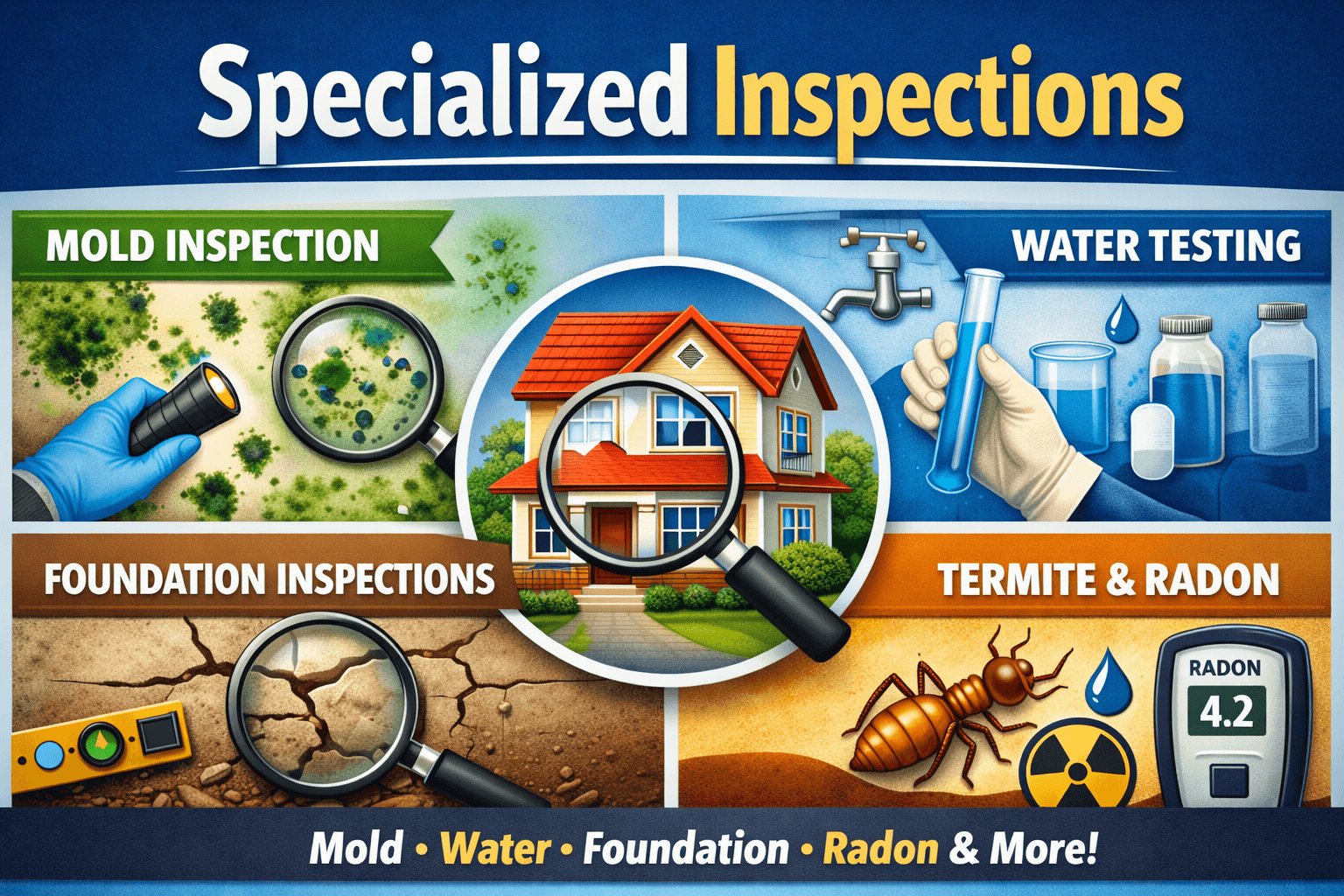
- Mold or moisture inspections when staining, odors, or past water intrusion are present
- Radon testing in areas with known variability or during real estate transactions
- Water testing for homes on private wells or with older plumbing systems
These inspections help identify conditions that are not visible but can affect health, comfort, or long-term maintenance.
Structural and Engineering-Related Evaluations
Structural concerns do not automatically require an engineer, but some conditions warrant further evaluation beyond a visual inspection.
Specialized evaluations may be appropriate when inspectors observe:
- Significant cracking or movement patterns
- Altered framing, trusses, or load-bearing walls
- Foundation settlement or displacement
- Prior structural repairs without documentation
In these cases, inspectors document conditions and collect field data, which may then be reviewed by a licensed engineering firm that provides analysis and formal conclusions.
Sewer Scoping and Underground Unknowns
Sewer scope inspections are often recommended when the underground sewer line represents a major unknown.
They are especially useful for:
- Older homes with original sewer lines
- Properties with mature trees
- Homes with slab foundations
- Buyers seeking full visibility before closing
Because sewer repairs can be disruptive and expensive, scoping helps reduce uncertainty in one of the home’s least visible systems.
Manufactured Homes and Specialized Requirements
Manufactured homes almost always benefit from specialized inspection considerations. These homes involve unique factors related to:
- Foundation and support systems
- Anchoring and tie-downs
- Moisture control beneath the home
- Financing and documentation requirements
In many Mid-South communities, specialized manufactured home inspections help identify issues that affect both performance and lender acceptance.
Real Estate Transactions vs. Long-Term Ownership
The purpose of the inspection also matters. During a real estate transaction, specialized inspections often focus on risk reduction and documentation. For homeowners planning to stay long-term, inspections may focus more on maintenance planning and future upgrades.
Understanding your goal helps determine which services provide the most value.
How Inspectors Help Guide the Decision
Inspectors do not upsell unnecessary services. Their role is to:
- Identify conditions that suggest further evaluation
- Explain why certain inspections may be beneficial
- Help clients prioritize based on risk and relevance
- Coordinate additional evaluations when appropriate
This guidance is based on observation, experience, and regional knowledge—not assumptions.
Final Thoughts
Choosing the right specialized inspection is about understanding the home, not checking every box. The most valuable inspections are those that address specific unknowns and reduce meaningful risk.
For homeowners and buyers throughout the Mid-South, a thoughtful, targeted approach to specialized inspections provides clearer information, better planning, and greater confidence—without unnecessary complexity or expense.