Heave pushes a foundation up, usually because moisture is expanding clay soil underneath it. Settlement drops a foundation down, usually because the soil beneath it is compressing under load or losing bearing capacity. Getting this backward matters because the fix is different, the warranty language is different, and the cost can swing wildly depending on which one you’re actually dealing with. Groups like the Foundation Performance Association built formal diagnostic guidelines around exactly this confusion, because contractors misdiagnose it constantly.
TL;DR:
- Proper diagnosis relies on elevation surveys, moisture history, and site conditions, as cracks alone can be misleading for identifying movement type.
- Heave is caused by expanding clay soil from added moisture, while settlement results from soil compression or loss of bearing capacity, often from construction or poor compaction.
- Warning signs include spider-web cracks and doming indicating heave, or linear cracks and door binding pointing to settlement, with patterns and adjacent conditions offering diagnostic clues.
- Repair strategies differ: foundation underpinning addresses settlement, but heave often requires drainage and moisture control improvements, and warranties generally exclude future upward movement.
- Early intervention with inspections is crucial if cracks widen, doors stick suddenly, or water intrusion is visible, to avoid misdiagnosis and ineffective or harmful repairs.
Table of Contents
- Heave, Settlement, and Subsidence: What Each Term Actually Means
- What Causes Heave, Settlement, and Subsidence in the First Place
- Signs and Symptoms That Point to Heave or Settlement
- How Professionals Actually Diagnose Foundation Movement
- Repair Options, Trade-Offs, and What Warranties Actually Cover
- When to Call an Inspector or Structural Engineer
- What Homeowners Get Wrong About Foundation Movement
- Sources
Heave, Settlement, and Subsidence: What Each Term Actually Means
Let’s clear up the vocabulary first, because a lot of homeowners use these words interchangeably and they’re not the same thing.
Heave is upward movement of the soil supporting your foundation. It happens when water gets added to unsaturated expansive clay sitting in what engineers call the “active zone,” the layer of soil close enough to the surface to react to seasonal moisture swings. That clay absorbs water, swells, and pushes upward on whatever sits on top of it. In West Tennessee and parts of Arkansas, we deal with this constantly because the clay content in the soil here is genuinely high.
Settlement is the opposite direction. It’s downward movement caused by the soil compressing under load, or by the soil simply losing its ability to bear the weight placed on it. Settlement isn’t picky about soil type either. It shows up in sandy fill, poorly compacted backfill, silts, and clay alike, whenever the load exceeds what that particular soil can hold.
Subsidence gets lumped in with the other two, but it’s its own animal. Subsidence is shrinkage from moisture withdrawal, most often tied to large trees pulling water out of the soil near a foundation during dry stretches. The ground literally shrinks away from the structure rather than compressing under it.
- Heave: soil expands upward from added moisture
- Settlement: soil compresses downward from load or bearing loss
- Subsidence: soil shrinks from moisture loss, often tree-driven
What Causes Heave, Settlement, and Subsidence in the First Place
The soil report and the site history usually tell you more than the crack pattern does. Here’s what drives each type of movement.
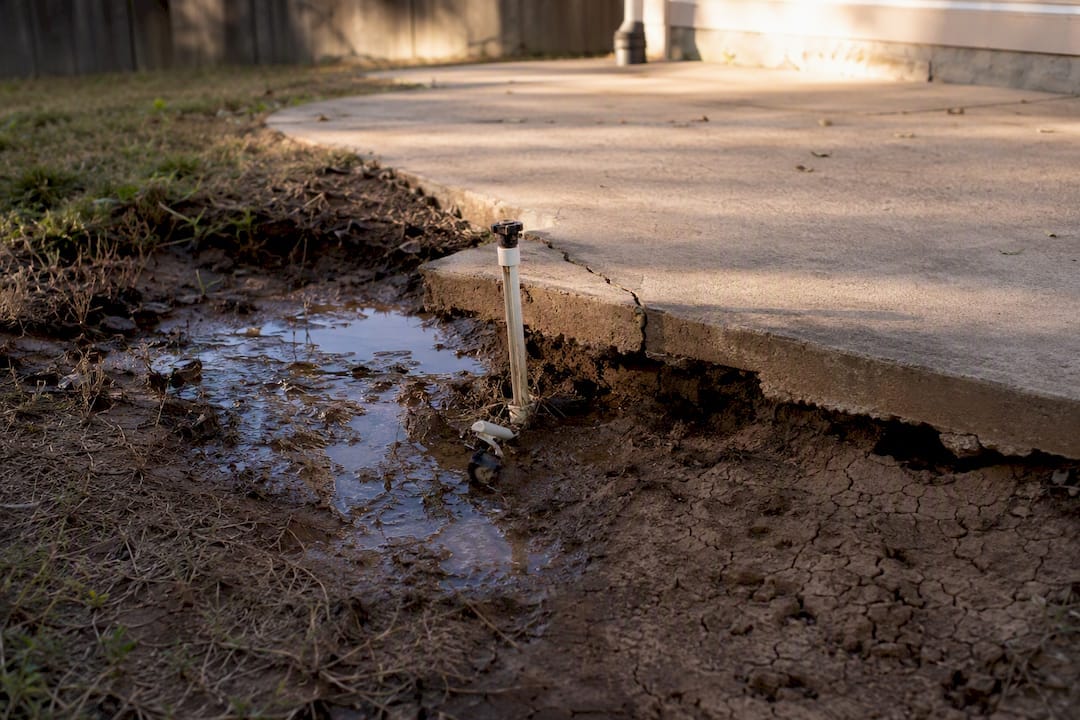
High plasticity index clay is the main culprit behind heave. A high PI means the clay has a strong appetite for water and swells significantly when it gets some. Add a broken sprinkler line, a downspout dumping next to the foundation, or a wet spring, and that clay pushes up unevenly, lifting one section of slab while another stays put.
Settlement tends to trace back to construction shortcuts or site conditions nobody accounted for. Poor compaction under a footing, unstable engineered fill, silty soil that liquefies when saturated, or perched water sitting on a dense clay layer, any of these can let a foundation sink once real weight lands on it.
Vegetation and long-term drying drive subsidence, particularly mature oaks or sweetgums planted too close to a slab. Roots draw moisture out of the clay for years before anyone notices the slab has dropped along that side of the house.
- Plumbing leaks under a slab can flip the moisture balance fast, sometimes in weeks rather than seasons
- Grading that slopes toward the foundation instead of away from it feeds heave-prone clay exactly what it wants
- Downspouts discharging within a few feet of the foundation create the same problem in miniature, every time it rains
Grading and drainage choices around a foundation influence which of these mechanisms you end up fighting for the life of the house.
Signs and Symptoms That Point to Heave or Settlement
A single crack tells you almost nothing on its own. What matters is the pattern, and where that pattern shows up relative to the rest of the slab.
- Intersecting, spider-web style cracking in a slab, especially cracks that seem to radiate from a central point, usually points to heave. Combine that with adjacent flatwork, like a patio or garage slab, that has visibly lifted, and heave becomes the likely diagnosis.
- Single, linear cracks running in one direction, or stair-step cracking through masonry joints, lean toward settlement. This is especially true where the crack sits under a heavily loaded wall or beam.
- Doming in the middle of a slab, where the center is noticeably higher than the perimeter, is a heave signature. A sagging or dipping section, by contrast, points to settlement or localized bearing loss.
- Doors and windows binding happens with both conditions, but the direction of the bind is a clue. Heave often makes doors stick at the top of the frame; settlement more often makes them stick at the bottom or won’t latch because the frame has racked downward on one side.
- Sticky doors that got sticky fast, within a season or right after heavy rain, lean heave. Doors that have gotten progressively worse over years point toward slow settlement.
Pro Tip: Grab a 4 or 6 foot level and check your slab in a few spots before you call anyone. A high spot in the middle of the room is a very different story from a low spot near an exterior wall, and that single observation will save you time explaining the problem to whoever shows up.
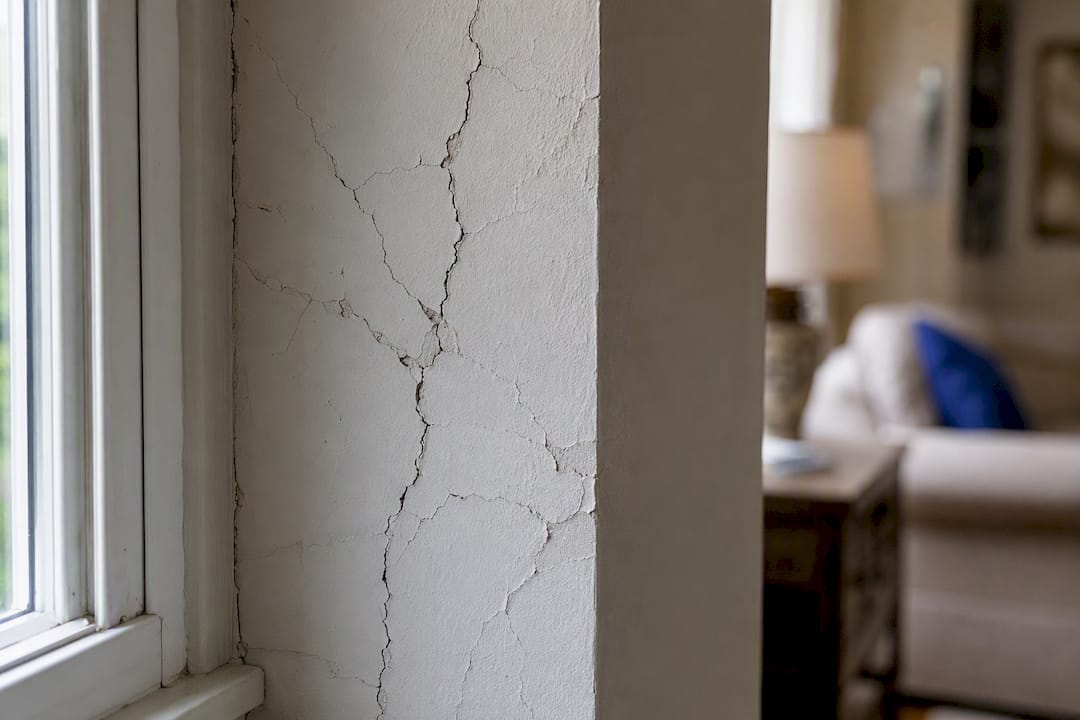
Similar-looking cracks can come from opposite mechanisms, which is exactly why pattern-plus-context beats any single symptom. A linear drywall crack that looks alarming might be ordinary settling, while a hairline crack near a doorway that’s part of a larger web pattern could be the early sign of active heave.
How Professionals Actually Diagnose Foundation Movement
A good diagnosis starts cheap and gets more expensive only if the cheap steps don’t answer the question.
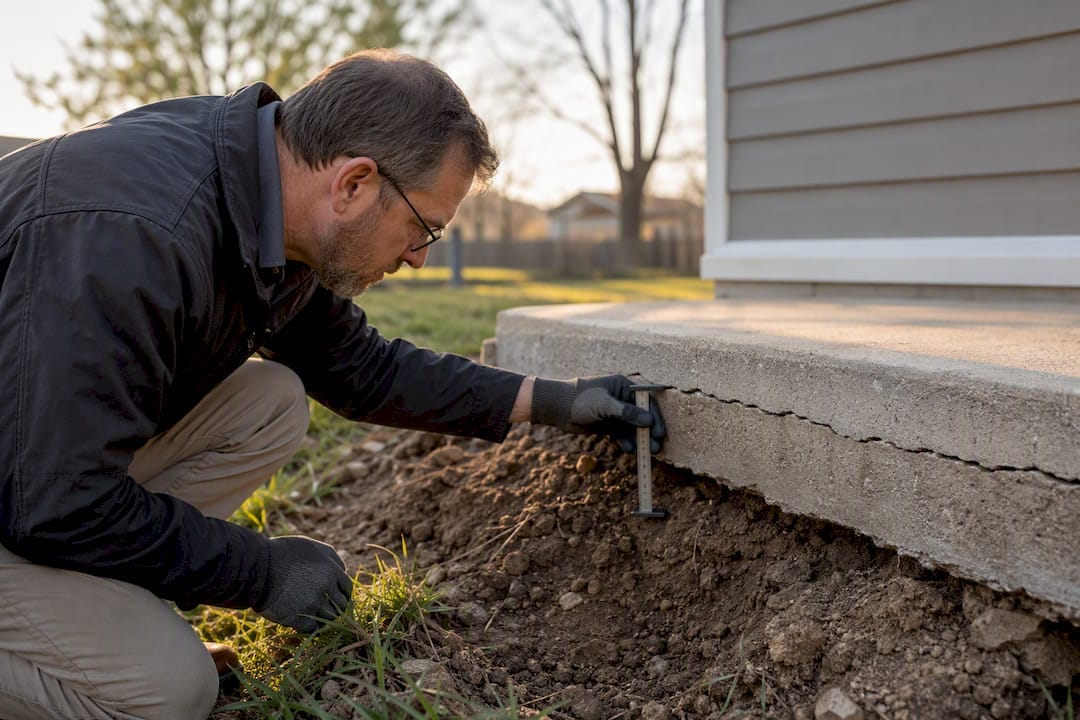
- Relative elevation survey. We use a manometer or laser level to map high and low points across the slab against fixed benchmarks. This single step often does more to identify the movement type than anything else, because it shows you the actual shape of the problem instead of guessing from cracks alone.
- Moisture and plumbing history review. We ask about recent leaks, irrigation habits, drainage changes, and check crawlspaces or slab penetrations for signs of water intrusion. A slow slab leak that’s gone unnoticed for months is a common hidden driver of localized heave.
- Vegetation and drainage assessment. Large trees near the foundation, downspout placement, and grading direction all get logged, since they explain why moisture conditions changed in the first place.
- Soil testing when warranted. Plasticity index testing and penetrometer readings tell you how reactive the clay is and how it compares to bearing capacity assumptions used when the house was built.
- Escalation to a Level C forensic investigation. When the elevation data, moisture history, and soil information don’t add up to a clear answer, or when the movement is significant enough to justify structural repair, a Level C investigation brings in document review, detailed interviews, and targeted testing that a routine inspection walkthrough simply doesn’t cover.
Misdiagnosis happens constantly at the walkthrough level because a contractor sees a crack, assumes settlement, and quotes piers without ever checking whether the soil is actually expanding upward. That’s an expensive mistake to make.
Repair Options, Trade-Offs, and What Warranties Actually Cover
Settlement repair is usually the more straightforward job. Underpinning with helical piers, push piers, or slab piers gives the foundation new bearing support below the compromised soil, and lift-and-level techniques can often restore a sunken section close to its original elevation.
Heave is a tougher problem to solve permanently. You’re fighting soil that wants to expand, and unless the whole foundation gets lifted above the soil’s full heave potential, most contractors won’t warranty against future upward movement. This is a well-documented limitation in forensic foundation engineering, not a sign you hired the wrong company.
- Drainage correction, regrading away from the foundation, and downspout extensions reduce the moisture swings that drive heave
- Moisture barriers and controlled watering programs can stabilize clay around a foundation in dry regions prone to shrink-swell cycles
- Tree root management or removal addresses subsidence at its source, though results take time to show up
- Plumbing repairs should happen before any structural repair begins; fixing a slab and leaving an active leak underneath it wastes money
Pro Tip: Ask any contractor bidding on foundation work exactly what their warranty excludes, not just what it covers. If a company won’t put a specific answer on paper about heave versus settlement coverage, that’s a real signal about how carefully they diagnosed your situation.
For deeper foundation designs specified in expansive soil zones, engineered foundation systems sometimes get built deeper specifically to reach more stable bearing material below the active zone.
When to Call an Inspector or Structural Engineer
Some situations don’t wait for a scheduled inspection. Call someone sooner rather than later if you notice cracks widening week to week, any offset greater than a quarter inch across a crack, doors that went from sticky to unusable in a short window, or any hint of a plumbing leak near or under the slab.
A standard inspection gives you a symptom map, an elevation baseline, and a moisture and plumbing check, enough to tell you whether you’re looking at a cosmetic issue or something that needs engineering input. That’s the service level most homeowners need first.
- Rapid or accelerating movement in any direction
- Cracks with visible vertical or horizontal offset
- New sticking doors or windows across multiple rooms at once
- Visible water staining, mold, or musty odor near foundation walls
When the data doesn’t add up, or the movement is significant enough to affect structural integrity, that’s when a structural evaluation from a licensed engineer becomes the right next step rather than another opinion from a repair contractor with piers to sell.
What Homeowners Get Wrong About Foundation Movement
The biggest mistake I see is treating “the foundation moved” as a single problem with a single fix. It’s not. Heave and settlement have opposite mechanisms, and a repair strategy built for one does nothing useful, sometimes actively harmful, for the other. I’ve seen piers installed under a slab that was heaving, which does nothing to stop clay from swelling somewhere else on the same foundation.
Conventional advice tells homeowners to “get a quote” when they see cracking. That’s backward. Get a diagnosis first, quotes second. A quote without an elevation survey and moisture history behind it is a guess dressed up as an estimate.
If you take one thing from this article, prioritize the elevation check. It’s the cheapest, fastest way to know whether you’re dealing with a high spot or a low spot, and that single data point points every other decision in the right direction.
— Holly
Foundation movement doesn’t get less confusing by waiting on it. If you’re seeing cracks, sticking doors, or uneven flatwork and want a straight answer about which direction your house is actually moving, scheduling a regular inspection gets you an elevation baseline, a moisture and plumbing review, and a clear next step, whether that’s monitoring, a drainage fix, or a referral to a structural engineer. Upchurchinspection covers residential and commercial properties across Tennessee, Arkansas, Mississippi, Missouri, and Kentucky, and we’d rather tell you it’s nothing than let you pay for piers you don’t need.