

An annual property inspection is the single most cost-effective maintenance decision a landlord can make. A professional inspection runs $75–$150, while the repairs it prevents average $2,000–$5,000. That math alone should settle the debate. But the financial case is only part of it. Yearly inspections create the documented paper trail that defends deposit deductions, supports insurance claims, and keeps you on the right side of habitability law. Standards like the ICC Property Maintenance Code and HUD Housing Quality Standards (HQS) exist precisely because deferred maintenance compounds quietly until it becomes a crisis.
- Catch small defects before they cascade into expensive failures
- Build a dated, photo-backed record for deposit disputes and insurance claims
- Verify safety devices (smoke detectors, CO alarms, GFCI outlets) are functional
- Confirm lease compliance and habitability before problems become liability
- Establish a maintenance baseline that protects long-term property value
Pro Tip: Schedule your annual inspection at the same time each year, ideally in spring or early fall, so seasonal issues (roof damage from winter, drainage problems from spring rain) are still visible and fresh.
Key Takeaways
Annual property inspections are the most cost-effective tool a landlord has for catching small defects early, maintaining insurance compliance, and building the documented record that defends deposit deductions and supports claims.
| Point | Details |
|---|---|
| Inspection ROI | A $75–$150 inspection prevents repairs averaging $2,000–$5,000, making it one of the highest-return line items in property operating costs. |
| Documentation standard | Timestamped photos and a written report from each inspection are what make deposit deductions and insurance claims defensible. |
| Cadence by risk | Annual is the baseline; semi-annual for long tenancies; quarterly for higher-risk or older properties. |
| Escalate red flags | Horizontal foundation cracks, recurring mold, electrical hazards, and significant roof deterioration require a licensed specialist, not just a maintenance call. |
| Upchurchinspection | Provides written, photo-backed annual inspection reports with prioritized repair lists, serving landlords across Tennessee, Arkansas, Mississippi, Missouri, and Kentucky. |
Table of Contents
- What an annual inspection is, and how it differs from other inspection types
- Key benefits of running annual inspections
- What to inspect during an annual visit
- Best practices for scheduling, notifying tenants, and following up
- Where annual inspections fit in a full inspection program
- How inspections affect insurance, deposits, and legal compliance
- How long inspections take and what they cost
- When a standard annual inspection isn’t enough
- An inspector’s perspective on what annual inspections actually reveal
- Upchurchinspection provides the documentation landlords need
- Sources
What an annual inspection is, and how it differs from other inspection types
A property maintenance inspection, to use the industry term, is a scheduled, documented walkthrough focused on condition, safety, and lease compliance. It is not a pre-purchase inspection, which evaluates a property for a buyer’s decision and follows a different scope. It is not a move-in or move-out inspection, which establishes condition at the start or end of a tenancy. The annual inspection sits between those two: it monitors an occupied property during the tenancy lifecycle.
Understanding the difference matters because landlords sometimes skip annual inspections thinking the move-in report covers them. It does not. A move-in report is a snapshot from Day 1. An annual inspection is the update that shows what changed, what was maintained, and what needs attention before it worsens.
| Inspection Type | Purpose | Timing | Who Should Attend |
|---|---|---|---|
| Move-in | Establish baseline condition | Before tenant occupies | Landlord and tenant |
| Annual / periodic | Monitor condition, safety, compliance | Once or twice yearly | Landlord or inspector |
| Move-out | Document changes from baseline | After tenant vacates | Landlord and tenant |
| Pre-purchase | Evaluate for a buying decision | Before closing | Buyer and inspector |
Annual inspections also do not replace specialist evaluations. If you find foundation movement or active moisture intrusion, the annual inspection flags it. A licensed structural engineer or remediation specialist then evaluates it. These are different tools for different jobs.
Key benefits of running annual inspections
The benefits of regular inspections for property owners fall into four categories: financial, safety, legal, and relational. Each one compounds the others.
1. Early repair savings. Small problems are cheap. A failing wax ring under a toilet costs $30 to fix. Left alone for 18 months, the resulting subfloor rot costs $800 to $3,000. Catching a slow roof leak before it reaches the ceiling drywall is the same story. The inspection ROI is straightforward: a $75–$150 inspection that prevents a $2,000–$5,000 repair pays for itself many times over.

2. Safety device verification. Smoke detectors, carbon monoxide alarms, and GFCI outlets degrade or get disabled. Tenants sometimes remove batteries. An annual walkthrough confirms these devices work, which matters both for tenant safety and for your liability exposure if something goes wrong.

3. Insurance compliance. Some policies expect evidence of routine maintenance and inspections. When neglect is evident, insurers may deny or reduce claims. A dated inspection report showing you identified and addressed issues is the documentation that keeps claims from being disputed on maintenance grounds.
4. Deposit defensibility. Without a documented record of condition during the tenancy, deducting from a security deposit is difficult to defend. A photo-backed inspection report with timestamps gives you the before-and-after evidence that holds up in small claims court.
5. Tenant behavior. Properties that are regularly inspected tend to be better maintained by tenants. When tenants know the landlord is attentive, they are more likely to report problems early and less likely to let conditions deteriorate. That translates directly to lower move-out repair costs.
What to inspect during an annual visit
A thorough annual checklist aligned with ICC Property Maintenance Code and HUD HQS covers three areas: interior room-by-room, major systems, and exterior. The tables below break each area into specific items with a condition-priority framework.
Interior: room-by-room
| Area | What to Check | Priority If Deficient |
|---|---|---|
| Kitchen | Plumbing under sink, exhaust fan, appliance operation, GFCI outlets | Safety / Repair Now |
| Bathrooms | Caulk/grout, exhaust ventilation, GFCI, supply valves, toilet stability | Repair Now / Monitor |
| Bedrooms | Smoke/CO detectors, window operation and locks, egress clearance | Safety |
| Living areas | Floors, walls, ceilings for moisture staining, door hardware, HVAC filter | Monitor / Cosmetic |
| Basement / crawlspace | Moisture, efflorescence, insulation, sump pump, pest signs | Repair Now / Specialist |
Major systems
| System | Key Inspection Points | Red Flag |
|---|---|---|
| HVAC | Filter condition, airflow, age, last service date | No service record, age over 15 years |
| Plumbing | Supply pressure, drain speed, water heater age and anode rod | Corrosion, slow drains, older age |
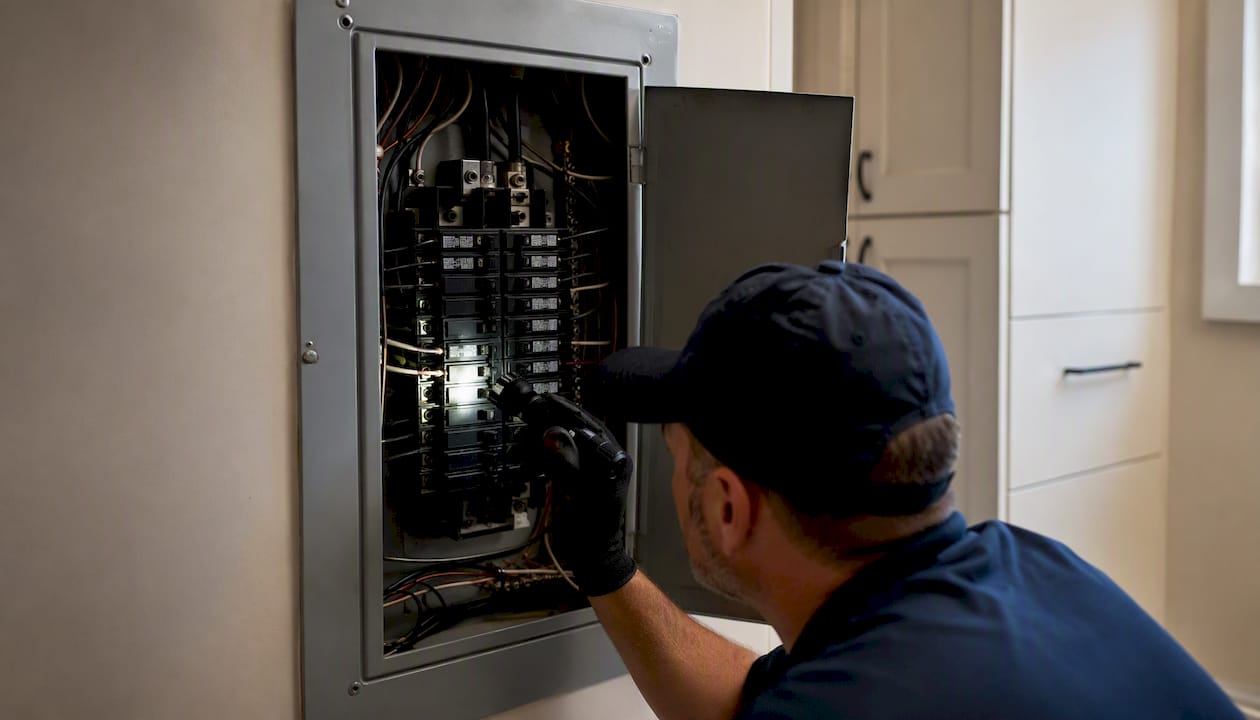
| Electrical | Panel labeling, breaker condition, visible wiring, GFCI/AFCI function | Double-tapped breakers, aluminum wiring, burning smell |
| Roof / attic | Shingle condition, flashing, attic ventilation, insulation, moisture staining | Active leaks, daylight visible, sagging decking |
| Foundation | Crack patterns, settlement, moisture intrusion | Horizontal cracks, bowing walls, active water |
Exterior
| Area | What to Check | Priority If Deficient |
|---|---|---|
| Roof and gutters | Shingle loss, gutter attachment, downspout discharge | Repair Now |
| Grading and drainage | Slope away from foundation, standing water | Repair Now |
| Exterior envelope | Siding, trim, caulking, paint condition | Monitor / Repair Now |
| Decks and porches | Ledger attachment, post bases, railing stability | Safety |
| Vegetation | Trees near roof, shrubs against foundation | Monitor / Remove |
Pro Tip: When documenting findings, label each photo with the room, date, and a brief condition note (“master bath, under-sink supply valve, active drip, 2026-04-15”). That format is immediately usable for insurance claims and deposit disputes without any reorganization.
Best practices for scheduling, notifying tenants, and following up
Scheduling frequency should match the risk profile of the property, not just the calendar. Annual interior inspections are the standard baseline, with semi-annual checks appropriate for long-term tenancies where deferred maintenance accumulates quietly. Higher-risk properties, including older buildings, units with a history of moisture issues, or tenants who rarely report problems, warrant quarterly walkthroughs.
Legal notice and tenant rights. Every state sets its own minimum notice period for landlord entry. Most require 24 to 48 hours written notice for non-emergency inspections. Document the notice you gave, the date and time of entry, and who was present. This is not optional paperwork; it is the record that protects you if a tenant later disputes the visit. Check your state’s landlord-tenant statute before scheduling, and consult local counsel for complex situations.
- Give written notice (text, email, or letter) and keep a copy
- State the date, approximate time window, and purpose of the visit
- Offer to reschedule once if the tenant has a genuine conflict
- Never enter without notice except in a documented emergency
Documentation workflow. Walk the property with a checklist and a phone camera. Photograph every deficiency and several “good condition” areas as well. Good-condition photos matter as much as deficiency photos when defending a deposit deduction later. After the visit, compile findings into a written report organized by area, with condition notes and a priority rating: repair now, monitor, or cosmetic. Send a copy to the tenant.
Follow-up on repairs. Triage safety items first. Anything affecting habitability, fire safety, or structural integrity gets scheduled within days, not weeks. Maintenance items get estimated and booked within a reasonable window. Keep repair receipts and contractor invoices organized by property and date. That file is what your insurance adjuster and your attorney will want if a claim or dispute arises.
Where annual inspections fit in a full inspection program
No single inspection type covers the entire tenancy lifecycle. A well-managed property runs several inspection types in a coordinated cadence. Pairing one interior annual inspection with seasonal exterior checks catches what each season reveals: fall exposes gutter and heating issues, spring shows roof and drainage damage from winter.
| Inspection Type | When | Purpose | Notice Required |
|---|---|---|---|
| Move-in | Before occupancy | Establish condition baseline | N/A (pre-tenancy) |
| Annual interior | Once per year | Monitor condition, safety, compliance | 24–48 hrs (state law) |
| Seasonal / drive-by | 2–4 times per year | Exterior condition, lease compliance | Varies (exterior only may not require entry) |
| Move-out | After vacancy | Document changes from baseline | N/A (post-tenancy) |
| Pre-purchase | Before acquisition | Full evaluation for buying decision | Negotiated with seller |
Drive-by inspections, which cover exterior condition without requiring entry, are a low-friction way to monitor between annual visits. They catch unauthorized vehicles, visible property damage, and lease violations like unapproved pets or structures without triggering the formal notice-and-entry process.
How inspections affect insurance, deposits, and legal compliance
Insurance companies are not obligated to pay claims when deferred maintenance is the proximate cause of a loss. A landlord who cannot show routine inspection and maintenance records is in a weak position when an adjuster questions whether a roof leak or electrical failure was a sudden event or a known, unaddressed condition. Documented inspection reports shift that conversation in your favor.
For security deposits, the legal standard in most states requires landlords to show that damage exceeds normal wear and tear. That showing requires evidence. A signed move-in report, dated mid-lease inspection photos, and repair receipts form the three-part record that makes deposit deductions defensible. Without all three, a tenant who disputes a deduction in small claims court often wins on documentation alone, regardless of the actual condition of the unit.
What to keep in your property file:
- Signed move-in inspection report (tenant and landlord signatures)
- Annual inspection reports with timestamped photos
- Written repair estimates and completed invoices
- Copies of all tenant notices (entry, repair, lease violation)
- Any specialist reports (mold, structural, electrical)
State habitability laws vary, but most require landlords to maintain functioning heat, plumbing, electrical systems, and weatherproofing. Annual inspections are how you verify compliance before a tenant complaint or a housing authority visit forces the issue. For complex habitability disputes or lease termination situations, consult a licensed attorney in your state.
How long inspections take and what they cost
A single-family home typically takes 45–90 minutes for a thorough annual inspection. A comprehensive building-level inspection runs 60–90 minutes under ICC and HUD HQS checklist standards. Multi-unit properties add time per unit, with efficiency gains as the inspector moves through identical floor plans.
Factors that affect cost and time:
- Unit size and age of systems (older systems require more careful evaluation)
- Scope of specialty testing: thermal imaging, mold sampling, sewer scope, or radon add both time and cost
- Whether the inspector provides a written, photo-backed report (some flat-fee services do not)
- Travel distance, particularly for rural or scattered-site portfolios
| Inspection Scope | Typical Time | Typical Cost Range |
|---|---|---|
| Single-family annual | 45–90 minutes | $75–$150 |
| Multi-unit (per unit) | 20–45 minutes | Varies by portfolio size |
| With thermal imaging | Add 30–60 minutes | Add $75–$150 |
| With mold sampling | Add 15–30 minutes | Add $75–$150 |
One practical note on report age: inspection findings lose relevancy over time. If you are evaluating a property for a financing or insurance decision and the most recent inspection is several months old, get a fresh one. Conditions change, especially in properties with active tenants or seasonal exposure.
When a standard annual inspection isn’t enough
Most annual inspections surface maintenance and safety items that a competent landlord or contractor can address. Some findings, though, require a licensed specialist or engineer. Knowing the threshold matters.
Red flags that warrant specialist evaluation:
- Recurring moisture or visible mold after prior remediation
- Foundation cracks that are horizontal, stepped, or wider than 1/4 inch, or walls that bow inward
- Significant roof deterioration with decking deflection or active interior leaks
- Electrical hazards: burning smells, sparking, warm panels, or aluminum branch wiring in post-1972 construction
- Structural cracks that exceed typical settlement patterns or that have changed since the last inspection
- HVAC systems with no service history and age beyond expected service life (typically 15–20 years for most equipment)
When you see any of these, the annual inspection report documents the finding and triggers the next step. It does not replace the specialist’s evaluation.
A professional inspection report gives you a prioritized, documented starting point. When a finding exceeds the scope of routine maintenance, that report is what you hand to a structural engineer, a licensed electrician, or a remediation contractor. The inspection does not diagnose the full extent of a structural problem or a hidden moisture system — it tells you that a specialist needs to. Acting on that signal early is what separates a manageable repair from a catastrophic one.
For new-construction properties still under builder warranty, a warranty inspection before the warranty period expires is a separate and equally important step. Builder warranties typically run 12 months, and defects found at month 11 are still covered.
An inspector’s perspective on what annual inspections actually reveal
The most common thing we see in annual inspections is deferred maintenance that the landlord did not know about and the tenant did not report. Not because anyone was hiding it, but because a slow drain or a hairline crack in caulk does not feel urgent until it is. A bathroom exhaust fan that stopped working six months ago is now showing early moisture staining on the ceiling. That staining is not mold yet, but it will be if nothing changes. Catching it at the staining stage costs a tube of caulk, a new fan, and an afternoon. Catching it at the mold stage costs remediation, drywall replacement, and potentially a habitability dispute.
We have also walked properties where a tenant reported nothing for two years, and the annual inspection found a water heater with a corroded anode rod, a dryer vent disconnected inside the wall cavity, and a GFCI outlet in the kitchen that had been wired incorrectly since installation. None of those were the tenant’s fault. All of them were fixable. The dryer vent, in particular, is a fire risk that shows up more often than most landlords expect.
For landlords in Memphis and West Tennessee specifically, three regional risks show up repeatedly: moisture intrusion from the clay-heavy soil and high seasonal humidity, aging HVAC systems that were undersized or poorly maintained from the start, and termite activity that goes undetected until it has compromised framing. Annual inspections do not replace a termite bond or a dedicated HVAC service contract, but they are the consistent check that catches early signs before those systems fail on a Friday night in August.
Separating cosmetic from structural is the judgment call that matters most. A hairline crack in drywall near a door corner is almost always settlement or seasonal movement. A crack in a masonry foundation wall that runs horizontally and is wider at one end than the other is a different conversation entirely. We do not want landlords to panic at every crack, but we also do not want them to dismiss findings that warrant a second look from a structural engineer. The annual inspection report should tell you which is which.
Upchurchinspection provides the documentation landlords need
Landlords who manage more than one or two units know that the paperwork side of inspections is where most DIY efforts fall apart. Photos taken on a phone without labels, notes scribbled on a legal pad, and no formal report structure leave you with documentation that looks thin in a dispute. Upchurchinspection’s annual maintenance inspections produce a written, photo-backed report with timestamped findings organized by area, a prioritized repair list, and documentation formatted for insurance claims and deposit disputes.
Services include annual maintenance inspections, thermal imaging for moisture and energy loss detection, mold testing, and commercial property inspections across Tennessee, Arkansas, Mississippi, Missouri, and Kentucky. Inspectors exceed state licensing standards, and every report is built to hold up under scrutiny, whether that scrutiny comes from a tenant, an insurer, or a property manager reviewing the portfolio.
To schedule an inspection or learn more about protecting your investment with regular inspections, contact Upchurchinspection directly. For landlords managing apartment portfolios, the apartment building inspection guide covers the additional scope and cadence considerations that apply at scale.
Sources
The following resources support the guidance in this article and are worth bookmarking for ongoing property management reference.