
INSPECTION FINDINGS · FROM OUR INSPECTION RECORDS
Roof leaks often become a discussion about the roof covering, but our inspection photographs frequently point to a transition. This collection includes patched chimney flashing, a gap between metal roofing and a low-slope membrane, an uneven plumbing-vent boot, an improvised flashing detail, detached siding-transition flashing and canopy flashing pulling away from the wall. Each is a place where separate materials have to work together.
The presence of sealant is not, by itself, proof of an unsuccessful repair. In the chimney example, it documented prior work and supported a recommendation for closer evaluation of the flashing. In the other examples, visible gaps, lifted edges or detached material gave the report a more specific condition to describe.
Photographs and documented observations
A patched chimney flashing detail
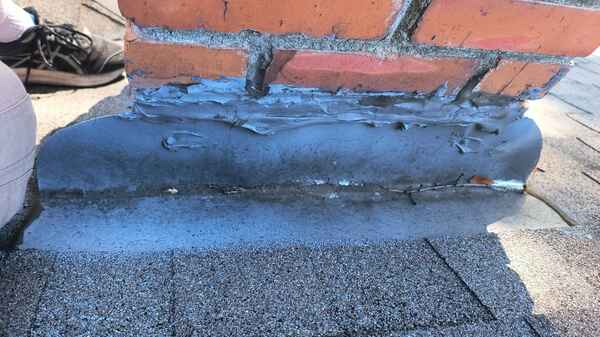
We found sealant around the base of the chimney where it met the roof. The patch showed someone had worked on the joint before. We flagged the flashing for a roofer to evaluate.
A gap where two roofs meet
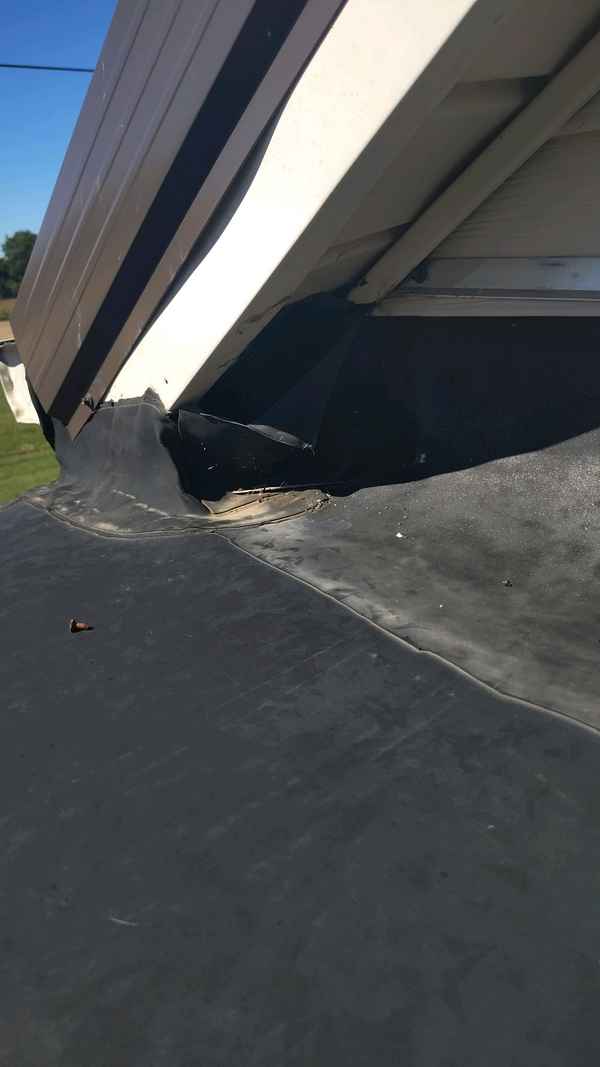
We found open gaps and lifted edges at the transition from metal roofing to a low-slope membrane. We recommended that a roofer repair the transition so it can shed water.
A raised plumbing vent boot
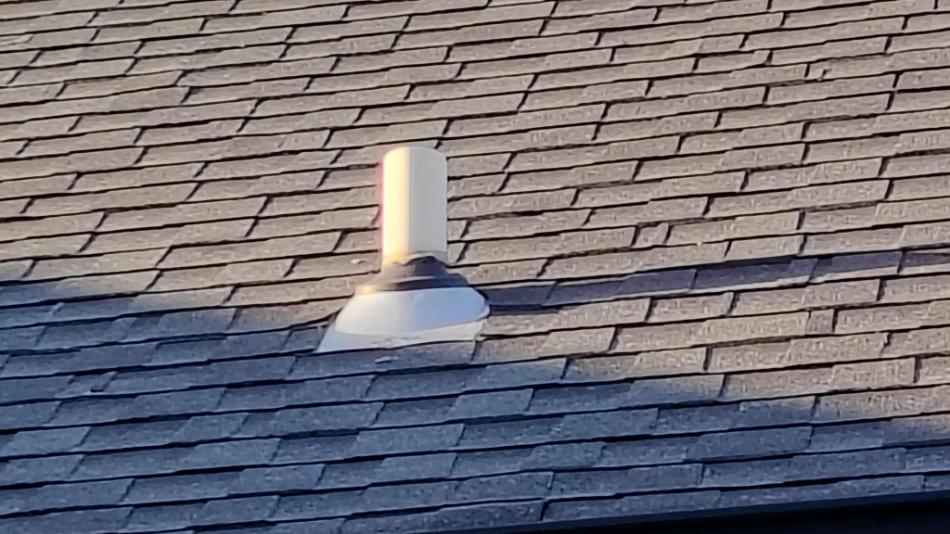
The flashing at a plumbing vent was raised and uneven, with gaps visible around the boot. That left a potential path for water at the roof penetration. We flagged it for roofing follow-up.
An improvised roof flashing detail
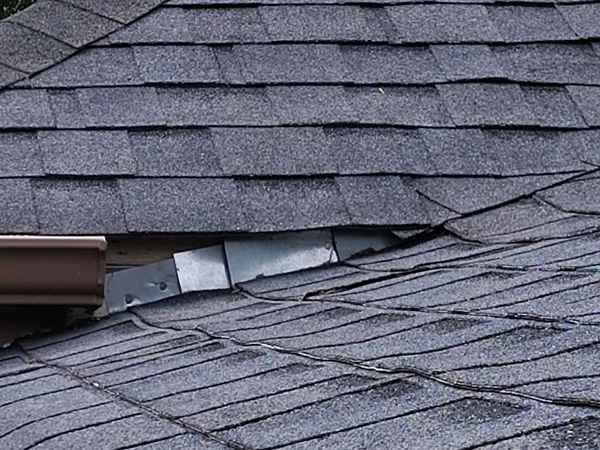
The roof inspection revealed an improper flashing installation at this transition. We recommended a roofing contractor evaluate the flashing and make the needed repairs.
Bent flashing at a siding transition
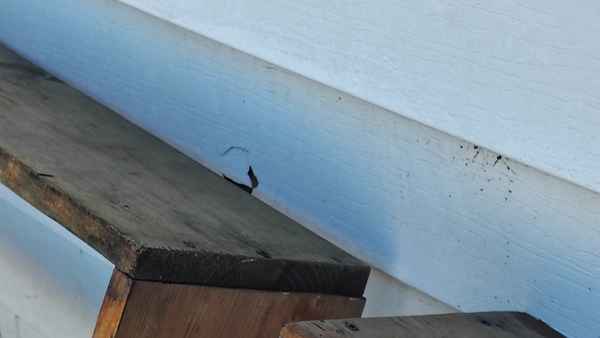
The metal flashing between two siding materials was bent and detached. The open seam could allow water behind the siding. We recommended repairing the transition so it sheds water.
The canopy flashing was pulling away
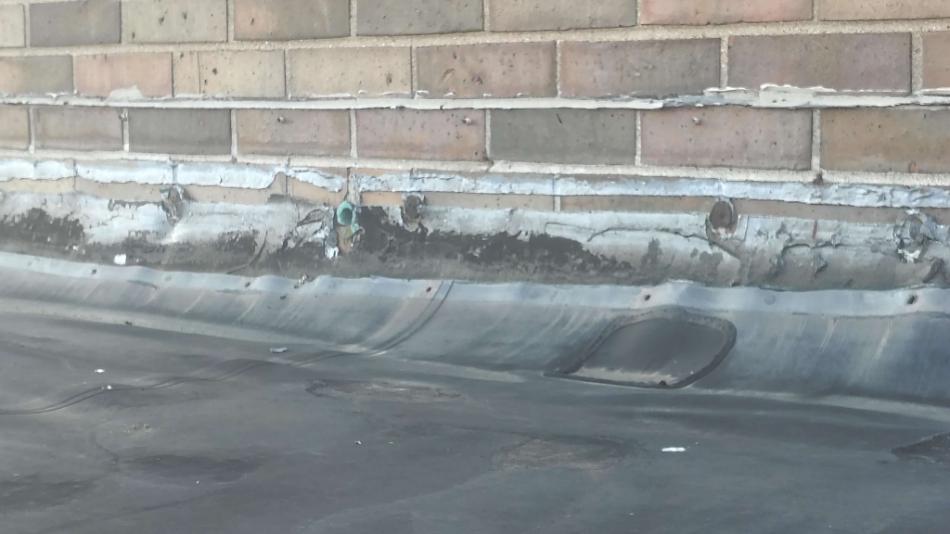
On a church campus, we found that the roof membrane and flashing over a drop-off canopy had deteriorated. The flashing was pulling away from the masonry, and patching at the edges had not restored a reliable seal. We flagged the roof assembly for evaluation.
A patch is evidence, not a repair history
An inspector generally cannot tell from a bead of sealant who installed it, what was beneath it or whether the underlying assembly was rebuilt. The useful observation is the visible condition and its location. That keeps the report defensible while giving a roofer enough information to investigate the junction.
Ask how the transition will shed water
The follow-up should identify how the adjoining materials will be integrated and which damaged components need replacement. Simply adding more patch material may not answer that question. The original recommendations called for roofing or exterior-contractor evaluation, and these photographs preserve the exact transitions that needed attention.
Related inspection insights
For related context, read Window Flashing: Why the “Tape” Behind Your Siding Is Your Only Defense and Commercial Roof Inspections and Drainage: Why Leaks Are Only Part of the Problem.
Learn more about our home inspection services and the way we document building conditions for buyers and property owners.
By Wesley Upchurch. This article draws on documented inspection observations and photographs. Images show conditions at the time of inspection; later repairs are not established unless stated. Property addresses and client details are omitted.