
INSPECTION FINDINGS · FROM OUR INSPECTION RECORDS
A basement does not have to be flooded during the inspection to show evidence worth investigating. In these examples, we recorded a streak below a pipe penetration, staining consistent with past standing water, discoloration on another wall and a sump pump that was not properly seated. The value of the inspection is in locating those clues and explaining what they do and do not establish.
The photographs of stains are historical evidence of a condition at the surface. They cannot tell us how often water entered, how deep it became or whether an earlier repair solved the source. The sump-pump finding is a separate equipment and installation concern that needs its own evaluation.
Photographs and documented observations
Staining below a pipe opening
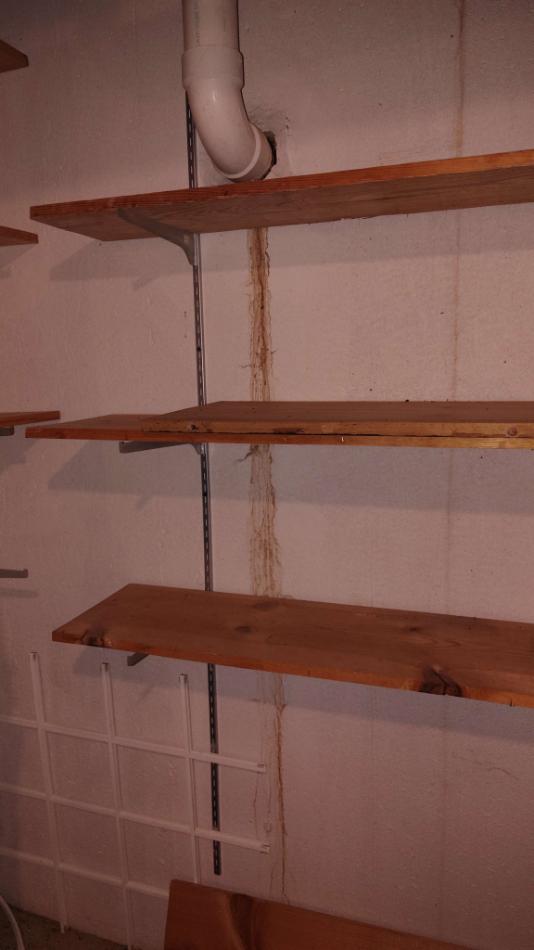
We found a streak running down a basement foundation wall below a pipe penetration. Its location gave us a specific area to investigate for moisture entry. We recommended evaluating and properly sealing the penetration.
Clues to past basement water
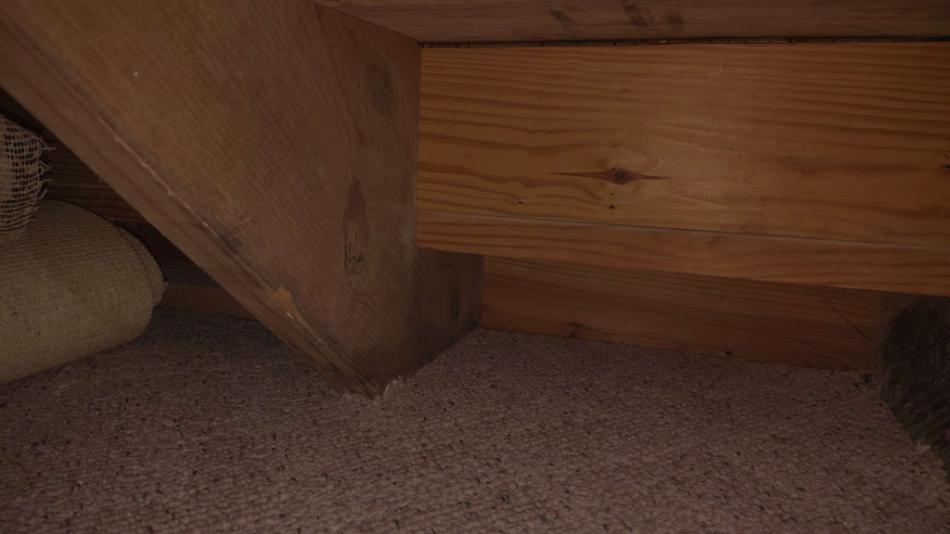
We documented staining at the foundation wall and nearby framing. The pattern was consistent with water having stood in the area before. We flagged it for follow-up on where the water came from.
Moisture marks on a basement wall
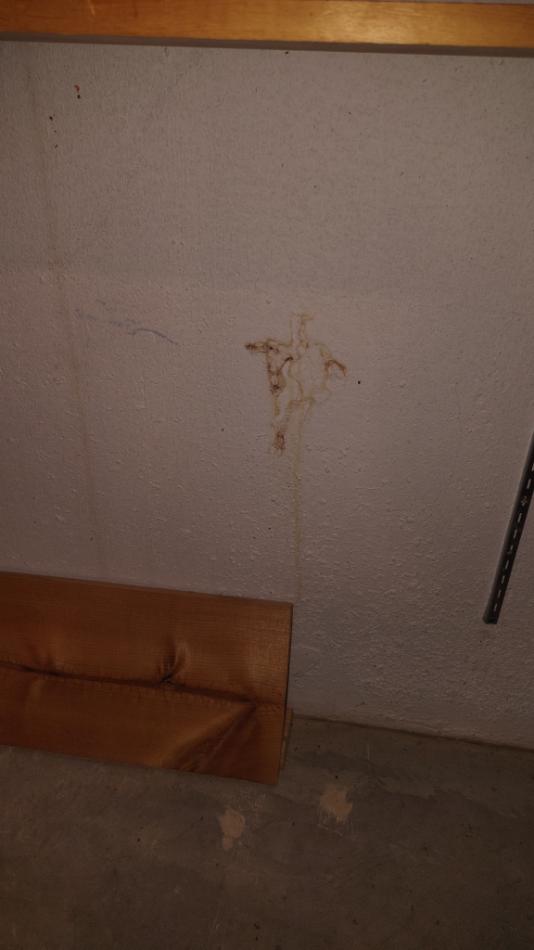
We saw discoloration and streaking on a basement wall. The marks helped identify where to start looking for a moisture source. We flagged the area for further investigation.
A sump pump that wasn’t properly seated
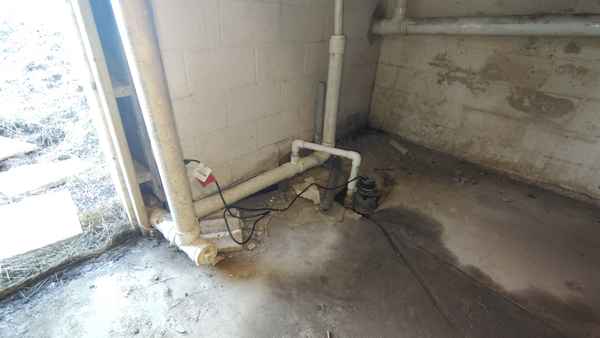
The sump setup was improperly seated. The report flagged the installation because the pump needs to stay in position to handle incoming water.
A stain can narrow the investigation
The streak below the pipe opening gave a contractor a particular penetration to inspect. Other marks were less specific and called for broader investigation of moisture entry. That difference belongs in the report. It is more useful than either dismissing all staining as old or presenting every mark as proof of an active leak.
Ask for a supported explanation
When a seller says the problem was repaired, the inspection photographs help identify which problem is being discussed. Documentation of the work, its location and any subsequent water entry is useful. A wall freshly coated after the inspection cannot establish whether the underlying entry route was corrected. The follow-up needs to answer that question before the appearance of the finish becomes the main topic.
Related inspection insights
For related context, read How to Reduce Basement Moisture Missouri and Water Coming Through Basement Wall After Rain.
Learn more about our home inspection services and the way we document building conditions for buyers and property owners.
By Wesley Upchurch. This article draws on documented inspection observations and photographs. Images show conditions at the time of inspection; later repairs are not established unless stated. Property addresses and client details are omitted.