
If you just had an offer accepted, your first call should be to an inspector, not your moving company. The CFPB recommends scheduling a home inspection promptly after an accepted offer so there’s enough time to resolve issues within the contract’s inspection contingency. For landlords and property managers, the same urgency applies at different trigger points: turnover, lease renewal, and annual maintenance cycles.
Here are the first three actions for each audience:
Homebuyers:
- Book a licensed inspector promptly after offer acceptance
- Confirm utilities are on and all areas of the home will be accessible
- Add the inspection date to your calendar with a contingency deadline reminder
Landlords:
- Set a recurring annual or semi-annual inspection date for each rental unit
- Verify your state’s notice requirements before scheduling tenant-occupied units
- Create a simple tracking log: property address, inspection date, findings, follow-up due
Property managers:
- Map every property in your portfolio against its last inspection date
- Identify which units are overdue and prioritize those first
- Assign responsibility for scheduling, access coordination, and report filing
Spring and early fall are the busiest seasons for inspectors across Tennessee, Arkansas, and Mississippi. Book qualified inspectors early because competent professionals fill their calendars quickly during peak real estate season. A week’s delay can mean losing your contingency window entirely.
Key Takeaways
Scheduling the right inspection at the right time, with the right inspector, is the single most reliable way to protect a real estate investment from costly surprises.
| Point | Details |
|---|---|
| Book immediately after offer acceptance | The CFPB recommends scheduling promptly so issues can be resolved within the contract contingency window. |
| Verify credentials before booking | Confirm state license, InterNACHI or ASHI membership, and E&O insurance; always request a sample report. |
| Give proper written notice for rentals | 24-hour written notice is the most common U.S. legal standard; state and local rules vary and must be checked. |
| Use a five-tier prioritization framework | Sort findings by safety, structural, systems, maintenance, and cosmetic to focus negotiation and repairs correctly. |
| Upchurchinspection serves the full Mid-South | Pre-purchase, commercial due diligence, thermal imaging, mold testing, and multi-unit inspections across TN, AR, MS, MO, and KY. |
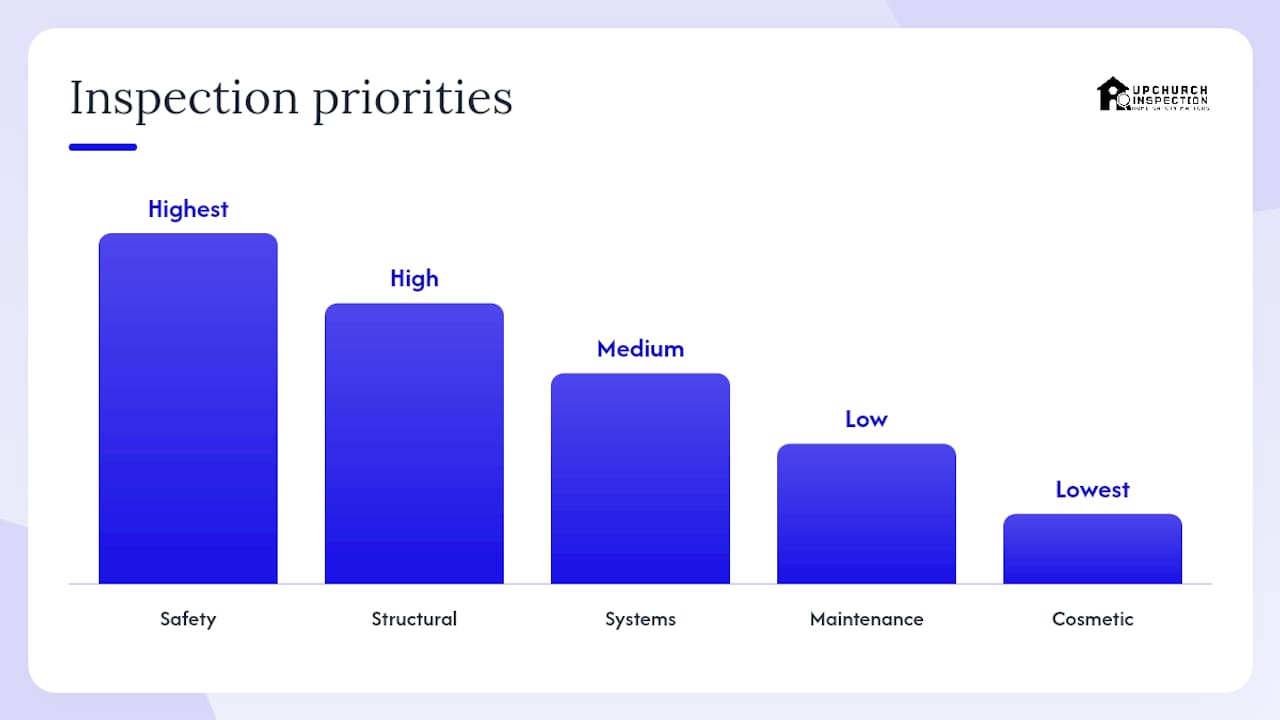
Table of Contents
- What types of inspections should you schedule and when?
- How do you find and choose the right inspector?
- What are the notice and access rules for rental property inspections?
- How do you build a repeatable scheduling workflow?
- What should you do on the day of inspection?
- How do you act on inspection findings after the inspection?
- How do you scale inspections across multi-unit and commercial portfolios?
- Ready-to-use templates for scheduling and tracking
- What experienced inspectors know that scheduling guides don’t tell you
- Upchurchinspection covers the full range of inspections you need
- Sources
What types of inspections should you schedule and when?
Not every inspection serves the same purpose, and confusing them leads to either over-spending or missing something that matters. Here’s how the main types break down, along with practical timing guidance.
A standard home inspection covers structure, roof, plumbing, electrical, and HVAC and typically runs two to three hours for a single-family home. Buyers pay for the inspection in most transactions. The appointment length grows with square footage, age, and complexity, so a 3,500-square-foot home built in 1965 will take longer than a newer 1,800-square-foot build.
Specialty tests to layer in: These are not part of a standard inspection scope and need to be scheduled separately or added as a specific request at booking.
- Radon testing: Schedule simultaneously with the main inspection; results take 48–72 hours for short-term tests
- Mold testing: Add when there’s visible staining, musty odors, or a history of water intrusion
- Sewer scope: Strongly recommended for homes over 20 years old or with mature trees near the sewer line
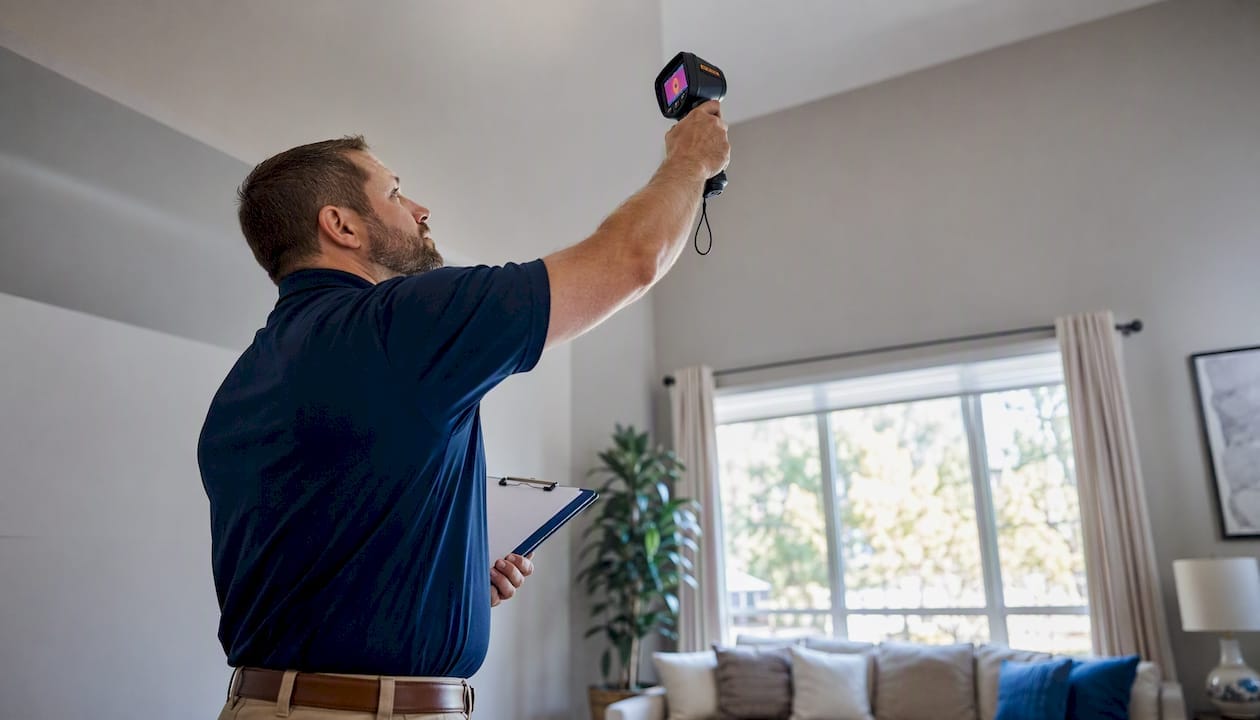
- Thermal imaging: Useful for detecting moisture behind walls and insulation gaps; schedule as an add-on to the main inspection
- Structural engineer review: Needed when the general inspector flags foundation movement, significant cracking, or load-path concerns
For commercial properties, schedule inspections at high-risk transaction points: pre-acquisition, refinancing, lease transitions, before or after capital projects, and post-disaster. Routine lifecycle inspections between those events prevent deferred maintenance from compounding into larger capital problems.
New construction buyers should also schedule an 11-month warranty inspection before their builder’s one-year warranty expires. That window is the last chance to get defects corrected at the builder’s cost.
How do you find and choose the right inspector?
Credentials matter, but they’re the floor, not the ceiling. Start with these verification steps before you book anyone.
Credentials to verify:
- State license (required in most states; check your state’s contractor licensing board)
- InterNACHI or ASHI membership, which requires ongoing education and adherence to published standards of practice
- Errors-and-omissions (E&O) insurance plus general liability coverage
- Specific certifications for specialty work (mold, radon, commercial inspections)
Questions to ask on first contact:
- What does your inspection scope include, and what is explicitly excluded?
- Can you send me a sample report from a similar property type?
- What is your turnaround time for the written report?
- Will you be the inspector on-site, or does your company assign someone else?
- What are your fees, and what add-ons cost extra?
- Are you available within my contingency window?
The sample report question is one most buyers skip, and it’s the most revealing. A report that lists “functional” next to every item without description or photos tells you almost nothing useful. You want narrative observations, photos, and clear severity language.
When to hire a specialist instead of a generalist:
A general inspector is trained to identify conditions that warrant further evaluation, not to engineer solutions. When a general inspection flags foundation movement, active roof leaks, or significant electrical panel concerns, the appropriate next step is a licensed structural engineer, roofing contractor, or master electrician, not a second general inspection. Sewer scopes require a plumber or dedicated sewer inspection service with camera equipment. Mold and radon testing require certified specialists.
Pro Tip: If you own or manage multiple properties, building a long-term relationship with one inspector or firm pays dividends. An inspector who has visited a building before will notice when a crack has grown, when a previously flagged repair was never completed, or when a system is approaching end of service life. That trend detection is something a first-time visitor simply cannot provide.
What are the notice and access rules for rental property inspections?
Landlords operating in the U.S. face a legal baseline that most states follow: 24-hour written notice is the most common standard for routine landlord entry, and entries generally must occur during reasonable business hours, typically defined as 8:00 AM to 6:00 PM or 9:00 PM depending on the jurisdiction. Emergencies are the exception, not the rule.
State and local variations are significant. Some states require a longer notice period for entry. Others allow less notice for specific circumstances. Municipal rental licensing programs add another layer: some cities require landlords to obtain certificates of inspection as a condition of their rental license, and certain municipal programs may only require a certificate once every three years, with sampling rules that limit how many units in a large building must be inspected per cycle. If you own rental property in Memphis, Shelby County, or across the Mid-South, check your local municipal code directly, because city ordinances frequently impose requirements beyond state law.
How to deliver notice properly:
- Written notice is safest in every jurisdiction; email with read receipt or posted notice on the unit door both work
- Include the date, approximate time window, purpose of entry, and the name of the inspector or contractor
- Keep a copy of every notice you deliver, dated and signed if possible
Here is a short written notice template you can adapt:
Notice of Inspection
Date: [Date of Notice]
To: [Tenant Name(s)]
This notice is to inform you that an inspection of the rental property at [Property Address] is scheduled for [Date of Inspection] between [Start Time] and [End Time]. The purpose of this entry is [routine maintenance inspection / move-out inspection / municipal compliance inspection]. The inspection will be conducted by [Inspector Name / Company Name]. Please ensure all areas of the unit are accessible. If you have questions, contact [Landlord/Manager Name] at [Phone/Email].
Thank you for your cooperation.
This template is a general starting point. Verify your state and local notice requirements before use, and consult a licensed attorney if you have questions about tenant rights in your jurisdiction.
How do you build a repeatable scheduling workflow?
A one-time inspection is easy to arrange. A sustainable scheduling program across multiple properties requires a process, not just good intentions. Here’s a numbered workflow that works for both single-property buyers and portfolio managers.
- Create your inspection schedule. For buyers, this is a single event tied to your contract contingency. For landlords and managers, map every property against inspection type, last inspection date, and next due date. Build this into a spreadsheet or property management platform from day one.
- Assign responsibility. Someone specific needs to own each inspection: booking the inspector, coordinating tenant access, confirming utilities, and receiving the report. Ambiguity here causes inspections to fall through the cracks.
- Confirm access and logistics. At least 48 hours before the inspection, verify that all areas are accessible, utilities are on, and the tenant (if applicable) has received proper notice. Confirming access and utilities in advance reduces on-site delays and prevents missed items.
- Track status. Use a simple log: property address, inspection type, scheduled date, inspector name, report received date, and follow-up due date. A shared Google Sheet works for small portfolios; a CMMS (Computerized Maintenance Management System) like Buildium, AppFolio, or Yardi handles larger ones.
- Automate reminders, not decisions. Calendar reminders for annual inspection due dates, contingency deadlines, and follow-up repair checks are worth automating. The actual review of findings, prioritization of repairs, and contractor selection require human judgment.
- Follow up on findings. Every inspection that produces a finding needs a follow-up action: a repair order, a contractor quote, a re-inspection date, or a documented decision to defer. Inspections without follow-up are just paperwork.
Sample cadence examples:
- Single-family purchase: Inspection booked Day 2 after offer acceptance, completed Day 5, report reviewed Day 6, repair requests submitted Day 7, re-inspection (if needed) Day 14.
- Rental turnover: Move-out inspection within 48 hours of tenant departure, findings documented for security deposit, maintenance completed, move-in inspection before new tenant occupancy.
- Apartment portfolio (20 units): Annual inspections staggered across 12 months, four to five units per month, with a CMMS tracking each unit’s status and flagging overdue items.
For property managers overseeing multiple buildings, the role of inspections in your management workflow extends well beyond compliance. It’s how you catch deferred maintenance before it becomes a capital emergency.
What should you do on the day of inspection?
Preparation on inspection day directly affects what the inspector can and cannot evaluate. A locked crawl space, a tripped breaker, or a dog blocking the attic hatch all result in gaps in the report, and those gaps become your problem later.
Before the inspector arrives:
- Confirm all utilities are active: gas, electric, and water must be on for a complete inspection
- Unlock all access points: attic hatch, crawl space entry, electrical panel, outbuildings, and gate locks
- Secure pets in a crate or off-site
- Clear access to the water heater, HVAC equipment, and electrical panel
- Have seller disclosures, previous inspection reports, and any available maintenance records on hand
Who should attend:
Buyers benefit significantly from attending their inspection in person. Inspectors can point out system locations, maintenance items, and safety concerns in real time, which improves post-inspection decision-making far more than reading a report alone. You’ll learn where the main water shutoff is, which breakers are labeled incorrectly, and what that stain on the basement wall actually looks like up close.
Landlords and property managers don’t need to be present for every routine inspection, but attending the first inspection on a newly acquired property or after a significant repair is worth the time. It gives you direct context for the findings.
Duration expectations:
A standard single-family home runs two to three hours. Add time for larger square footage, older construction, crawl spaces, multiple HVAC systems, or specialty add-ons like thermal imaging. Commercial inspections vary widely, from three hours for a small retail space to a full day or more for a large multi-tenant building. Plan your schedule accordingly and avoid booking anything immediately after the inspection, because a thorough inspector won’t rush.
How do you act on inspection findings after the inspection?
The report is not a verdict. It’s a list of conditions, and your job is to sort them by severity and decide what to do with each one. We use a five-tier prioritization framework:
- Safety hazards (active electrical issues, gas leaks, structural instability, carbon monoxide risks): Address immediately, before closing or occupancy.
- Structural deficiencies (foundation movement, compromised load-bearing members, roof decking failures): Require specialist evaluation and cost estimates before proceeding.
- Major system failures (HVAC at end of service life, failed water heater, plumbing leaks): Factor into negotiation or budget for near-term replacement.
- Maintenance items (caulking, minor drainage grading, worn weatherstripping): Plan for routine upkeep; these are not deal-breakers.
- Cosmetic issues (paint, minor surface damage, dated fixtures): Note for your own records; rarely worth negotiating over.
For buyers: Use safety and structural findings as the basis for repair requests or price credits. Asking a seller to fix every item on a 40-point report is unrealistic and often counterproductive. Focus your negotiation on items in tiers 1 through 3. If significant repairs are agreed upon, schedule a re-inspection before closing to confirm the work was completed correctly. Document everything in writing through your agent. For guidance on reading and applying your report, see how to interpret inspection findings before you sit down with your agent.
For managers: Convert findings directly into work orders. Assign each item a priority level, a responsible contractor, and a completion deadline. Re-inspect after major repairs, particularly for moisture-related work, structural repairs, or anything that affects habitability. Keep documentation on file: lenders, municipalities, and future buyers will ask for it.
A useful field principle: an inspection report is a lever for negotiation and a source for a prioritized maintenance plan, not a reason for panic over routine maintenance items. A 20-year-old HVAC system that’s still functioning is a negotiating point, not a crisis.
How do you scale inspections across multi-unit and commercial portfolios?
Portfolio-scale inspection programs require a different logic than single-property scheduling. You’re managing risk across many units simultaneously, and the goal is systematic coverage, not perfection on any single visit.

Sampling rules and full-sweep requirements:
Municipal inspection programs often allow sampling for large properties, meaning not every unit must be inspected in every cycle. Some programs limit required inspections to once every three years, with sampling rules that apply to larger buildings. However, if a sampled unit reveals significant deficiencies, many programs require expanding the inspection to additional units or the entire building. Know your local rules before assuming sampling applies.
The ComSOP standard for commercial properties defines the walk-through survey and inspection process, clarifies inspector responsibilities for access and documentation, and sets baseline expectations for reporting scope. For multi-tenant commercial buildings, this standard is the professional baseline your inspector should be working from.
Operational logistics for multi-unit scheduling:
- Stagger inspections across months rather than inspecting all units simultaneously; this reduces tenant disruption and gives you time to act on findings before the next round
- Provide written notice to all tenants at least 24 hours in advance, even when local law allows less
- Coordinate with your maintenance team so repairs identified in early units can be addressed before later units are inspected
- Keep a master log tracking each unit’s last inspection date, findings summary, and next scheduled date
Aligning inspection cadence with capital planning:
Estimated Useful Life (EUL) and Remaining Useful Life (RUL) are the two concepts that connect inspection findings to your capital budget. EUL is the industry baseline for how long a system or component typically lasts. RUL is the inspector’s field-informed estimate of how much life remains in the specific system you’re looking at. Deferred maintenance consistently shortens RUL compared with EUL, which means a roof that should last 20 years may have only 8 years left if it hasn’t been maintained. Use both figures in your reserve forecasting.
Commercial inspections should be scheduled at high-risk transaction points and tied to operational objectives, with prioritized findings and cost-to-remedy estimates informing both negotiation and capital budgeting. For investors acquiring multi-unit properties, understanding systemic defects before closing is the difference between a sound investment and an expensive surprise. See our guide on multifamily systemic defects for specific examples of what gets missed without a thorough pre-acquisition inspection.
Pro Tip: Retaining the same inspector or firm across multiple inspection cycles for a given building gives you something a rotating roster cannot: trend data. An inspector who visited 18 months ago and sees the same crack has grown, or that a previously flagged repair was never completed, provides a qualitatively different level of insight. For large portfolios, that continuity is worth paying a modest premium.
Ready-to-use templates for scheduling and tracking
These templates are designed to be copied directly into a phone note, spreadsheet, or property management platform.
Written notice template
Notice of Entry for Inspection
Date: [Date Delivered]
To: [Tenant Name(s)] at [Property Address, Unit #]You are hereby notified that the landlord or authorized agent will enter the above premises on [Date of Entry] between [Start Time] and [End Time] for the purpose of [routine inspection / move-out inspection / municipal compliance inspection / maintenance inspection]. The inspection will be conducted by [Inspector Name / Company Name, License #].
Please ensure all areas of the unit are accessible. Contact [Landlord/Manager Name] at [Phone/Email] with any questions.
Check your state and local statutes for required notice periods before delivering this notice.
Inspection day checklist
Copy this into a phone note before every inspection:
- [ ] Utilities confirmed on (gas, electric, water)
- [ ] All access points unlocked (attic, crawl space, panel, outbuildings)
- [ ] Pets secured or removed
- [ ] Seller disclosures and prior reports on hand
- [ ] Maintenance records available (HVAC service, roof repairs, permits)
- [ ] Inspector’s contact number saved
- [ ] Contingency deadline noted in calendar
Sample tracking row
Use one row per inspection in a spreadsheet:
| Property Address | Inspection Type | Date Scheduled | Inspector Name | Report Received | Follow-Up Due | Status |
|---|---|---|---|---|---|---|
| [Property Address] | Annual maintenance | [Date of Inspection] | [Inspector] | [Date of Inspection] | [Date] | Repairs pending |
Add a “Notes” column for brief findings summaries. Review the tracker monthly and flag any row where the follow-up due date has passed without a status update.
What experienced inspectors know that scheduling guides don’t tell you
Most scheduling guides treat an inspection like a one-time transaction: book it, complete it, move on. That framing misses the most valuable part of a well-run inspection program, which is what you learn over time.
We see it consistently: a property that gets inspected annually by the same firm reveals patterns that a single visit never would. A small crack in a foundation wall that was documented two years ago and has since grown two inches is a structural conversation. The same crack seen for the first time is just a note in a report. That distinction matters enormously for capital planning, and it’s why we advocate for retained-inspector relationships on any property you plan to hold for more than a few years.
The most common scheduling mistakes we see are late booking (losing the contingency window), inadequate access preparation (locked panels, utilities off, no one to let the inspector in), and skipping specialists when a general inspection flags something that needs one. A general inspector who notes “evidence of moisture intrusion at the northeast foundation wall” is telling you to call a waterproofing specialist or structural engineer, not to repaint the wall and move on.
One more thing worth saying plainly: prioritize safety and documentation over cosmetic concerns every time. A cracked tile and a double-tapped breaker are not equivalent findings, but both show up in reports. Know the difference before you start negotiating.
Upchurch Inspection covers the full range of inspections you need
When you’re ready to book, Upchurch Inspection covers residential and commercial inspections across Tennessee, Arkansas, Mississippi, Missouri, and Kentucky. The inspectors exceed state licensing standards and deliver detailed reports on structural, electrical, plumbing, HVAC, roof, and foundation conditions, with clear severity language that tells you what to act on now and what to monitor.
Services include pre-purchase and pre-listing inspections, commercial due diligence inspections, thermal imaging, mold testing, sewer scope, multi-unit portfolio inspections, and re-inspections after repairs. For buyers working within a tight contingency window, the team prioritizes scheduling to keep your transaction on track. For managers and investors, commercial inspection services extend to large multi-tenant buildings, retail, and mixed-use properties.
Schedule your inspection at Upchurch Inspection or call to confirm availability for your property type and timeline.
Sources
These are the primary sources worth bookmarking for legal rules, professional standards, and inspection scope guidance.
- Schedule a home inspection – Consumer Financial Protection Bureau
- International Standards of Practice for Inspecting Commercial Properties (ComSOP) | CCPIA
- InterNACHI education resources
- Consumer Guide: Home Inspections | NAR (National Association of Realtors)
- What is a Commercial Property Inspection? | Rimkus
- Home Inspection Process: A step-by-step buyer’s guide – InspectandTest
This article is general information, not a substitute for advice from a qualified lawyer. Consult a qualified legal professional about your own circumstances before acting on anything here.