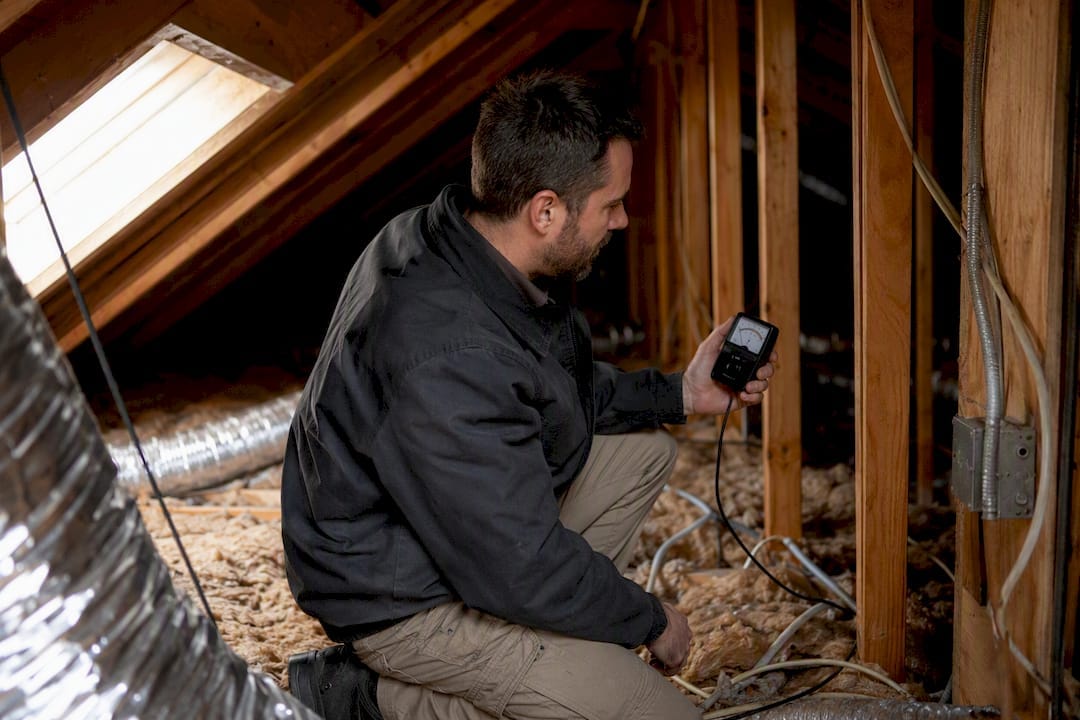
Most home inspections generally take a few hours on-site for an average single-family house. Condos and smaller units typically finish within an hour or so. Larger or more complex properties, such as those with multiple systems, a pool, or detached buildings, can take considerably longer. Add-ons extend the overall time.
- Radon test setup: 5 to 10 minutes
- Sewer scope: 45 to 60 minutes
- Mold sampling: 15 to 30 minutes
- Well inspection: 30 to 45 minutes
Pro Tip: Ask your inspector for a rough time estimate when you book, not the morning of. It changes how you plan the rest of your day.
Reports typically land in your inbox within 24 to 72 hours, sometimes same day depending on the company and how complicated the property turned out to be.
Key Takeaways
Inspection duration depends primarily on property size, age, accessibility, and add-on testing, not on the inspector’s speed alone.
| Point | Details |
|---|---|
| Base time varies by size | Condos run 60 to 90 minutes; average homes take two to three hours; large homes need four-plus. |
| Add-ons extend the clock | Radon (5 to 10 min), sewer scope (45 to 60 min), mold sampling (15 to 30 min), and well tests (30 to 45 min) stack on top. |
| Access matters most | Clear attics, unlock panels, and move clutter before the inspector arrives to avoid delays. |
| Reports arrive fast | Standard turnaround runs 24 to 72 hours, with same-day delivery common for straightforward properties. |
| Upchurchinspection plans for real time | Appointments across the Mid-South are scheduled around actual property size and condition, not a fixed slot. |
Table of Contents
- What Does a Home Inspection Actually Cover?
- Is a Home Inspection Required to Buy a House?
- Who Inspects Your Home, and Does Their Experience Change the Clock?
- How Long Does an Inspection Take by Property Size?
- What Actually Changes Inspection Length
- What to Expect During the Walkthrough
- How Fast Will You Get the Written Report?
- Why Extra Time on Site Usually Pays Off
- What the Data Actually Tells Buyers to Prioritize
- Sources
What Does a Home Inspection Actually Cover?
A general home inspection is a visual, non-invasive look at the systems you can actually access. That means the roof, the structure, HVAC, plumbing, electrical, and the interior get checked from where an inspector can safely see and reach them. ASHI’s Standards of Practice and InterNACHI’s Standards both define this scope, and it’s why inspections take hours, not days.
What’s excluded matters just as much:
- No destructive testing (nobody’s cutting into walls)
- No code compliance verification (that’s a building department’s job)
- No moving furniture, appliances, or personal belongings to check behind them
That boundary is a feature. It keeps the inspection efficient and repeatable, and it’s why our visual scope explanation exists, so buyers know what they’re paying for before the inspector shows up.
Is a Home Inspection Required to Buy a House?
No, but skipping one is a bad bet. Inspections are optional in nearly every U.S. transaction, yet buyers order them routinely because the cost is small compared to what a bad foundation or dead HVAC unit costs later.
- Lenders occasionally require specific inspections (termite letters are common in the South)
- Home warranty programs sometimes mandate an inspection for coverage eligibility
- Most purchase contracts include an inspection contingency window, often 7 to 10 days, which forces scheduling to happen fast
Who Inspects Your Home, and Does Their Experience Change the Clock?
Tennessee and most states require inspector licensing, but licensing sets a floor, not a ceiling. National groups like ASHI and InterNACHI layer on additional credentialing, and ASHI Certified Member status requires a demonstrated volume of completed inspections, not just a passing exam score.
Experience shows up in pacing. A newer inspector might rush through an attic to stay on schedule; an experienced one knows exactly where to look for staining, undersized framing, or rodent damage and spends the extra ninety seconds there. Documentation habits matter too. Inspectors who shoot detailed photos and write annotated notes on-site, rather than reconstructing everything from memory later, take longer at the property but hand you a report you can actually use.
- Ask whether the inspector photographs every deficiency
- Ask if they walk you through findings in person before leaving
- Confirm their credential (state license, ASHI, or InterNACHI membership) before booking
Pro Tip: A slower inspector isn’t necessarily a worse one. Thoroughness and speed trade off, and for a 40-year-old house, you want thoroughness.
How Long Does an Inspection Take by Property Size?
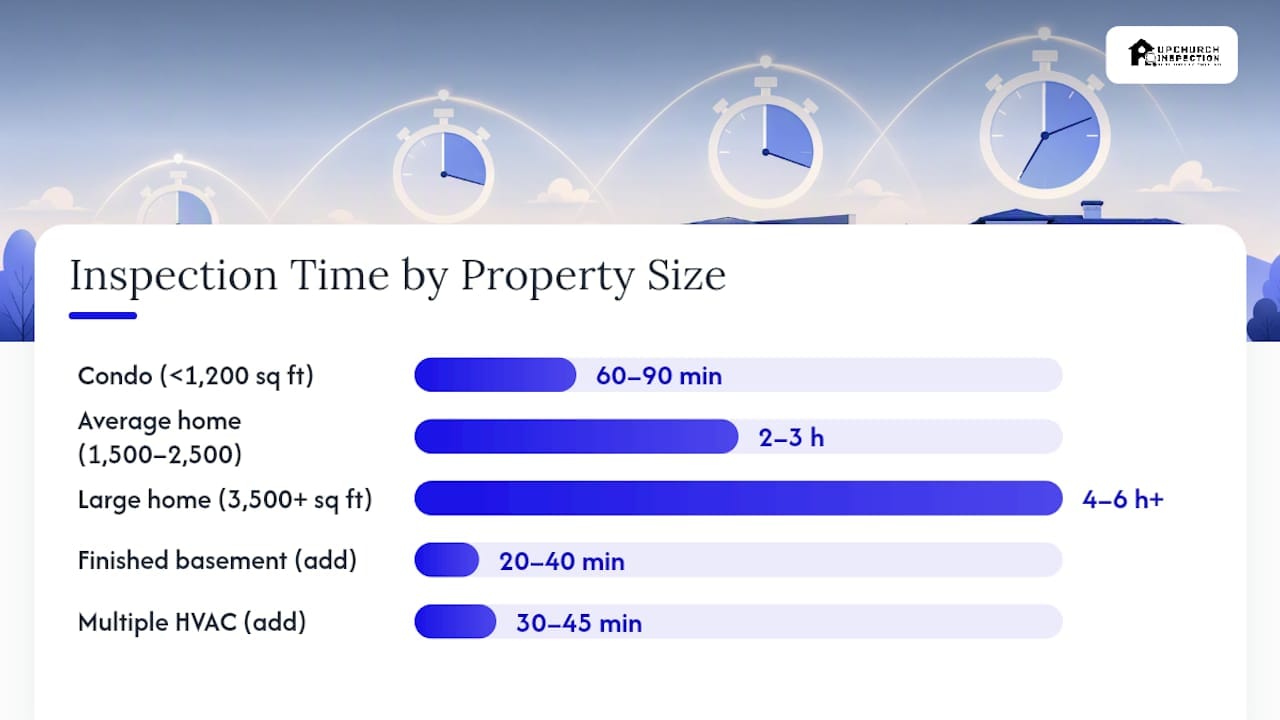
Square footage drives most of the variation, but features add time independently of size.
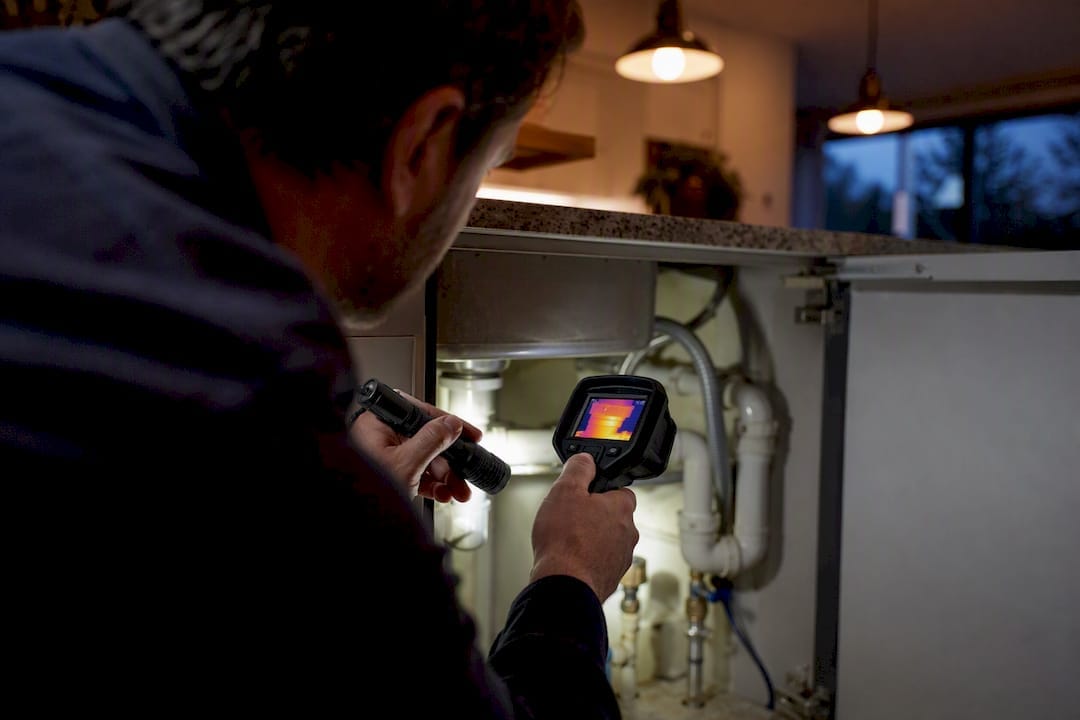
Condos and small units (under 1,200 sq ft): 60 to 90 minutes. Fewer systems, no roof access in most cases, no crawlspace or attic in many buildings.
Average single-family homes (1,500 to 2,500 sq ft): Two to three hours covers the roof, attic, crawlspace or basement, one HVAC system, and standard plumbing and electrical panels.
Large or complex homes (3,500+ sq ft): Four to six hours or more. More square footage means more outlets, more HVAC registers, more roof plane to walk, and often multiple HVAC zones instead of one.
Individual features tack on predictable chunks of time:
- Finished basement: add 20 to 40 minutes
- Multiple HVAC zones (two systems instead of one): add 30 to 45 minutes
- Difficult attic access (pull-down stairs, low clearance): add 15 to 20 minutes
- Detached garage or outbuilding: add 20 to 30 minutes
- In-ground pool with equipment: add 20 to 30 minutes
A 4,000-square-foot home with a finished basement, two HVAC systems, and a pool can easily push past five hours. That’s not the inspector padding time. That’s the actual square footage and system count of the property.
What Actually Changes Inspection Length
Five things move the needle more than anything else, and buyers have some control over three of them.
- Size and system count. More square footage means more outlets, vents, windows, and fixtures to physically check. This one you can’t change.
- Age and condition. Older homes in Memphis and West Tennessee, especially anything pre-1970, often have outdated wiring, undersized electrical panels, or settled foundations that require slower, more deliberate evaluation.
- Accessibility and clutter. A garage stacked floor to ceiling with boxes, a locked electrical panel, or a padlocked shed costs real time. Clear these before the inspector arrives.
- Inspector documentation style. Detailed photo-and-note inspectors run longer than checklist-only inspectors, but the report quality difference is significant.
- Add-on testing. Radon, sewer scope, mold, and well tests each add their own block of time on top of the base inspection.
Sellers and buyers can control the third factor entirely. Clear the attic hatch. Unlock the electrical panel cover. Move boxes away from the water heater. None of that requires money, just planning ahead.
What to Expect During the Walkthrough
Inspections follow a fairly consistent sequence: major systems first (HVAC, water heater, electrical panel), then attic and crawlspace or basement, then exterior grading and roof, then a final interior walkthrough.
- Arrive near the end, not the beginning. Systems testing requires focus, and interrupting an inspector mid-test on a furnace or panel slows things down for everyone.
- Take your own notes during the final walkthrough. This is where the inspector explains findings in plain language and answers direct questions.
- Ask specific questions, “Is this crack cosmetic or structural,” rather than open-ended ones that eat time without adding clarity.
- Flag anything that concerns a specialist referral. A hairline foundation crack might warrant an engineer’s evaluation rather than a guess on-site, and that decision affects your closing timeline, not the inspection day itself.
Pro Tip: If the inspector recommends a specialist for something structural, don’t treat it as a red flag on the whole house. It’s often just the correct next step, one visual inspection can’t diagnose everything definitively.
How Fast Will You Get the Written Report?
Most inspection companies deliver reports within 24 to 72 hours, and plenty deliver same-day for straightforward properties. Complex reports with multiple add-ons take longer because lab results for mold sampling or radon canisters need processing time before anyone can compile a complete document.
- Standard single-family report: 24 to 48 hours
- Reports including radon or mold lab work: 48 to 72 hours, dependent on lab turnaround
- Same-day reports: increasingly common for straightforward properties without add-ons
If you’re on a tight contingency deadline, ask about turnaround before you book, not after. Some inspectors will prioritize your report for an additional fee; most won’t offer it unless you ask directly. Our guide to reading inspection reports walks through what to do once it lands in your inbox.
Why Extra Time on Site Usually Pays Off
We’ve walked into 1960s Memphis ranch homes where a fifteen-minute detour into the crawlspace turned up standing water and joist rot that a rushed inspection would have missed entirely. That’s not a scare story, it’s a Tuesday. Older housing stock in West Tennessee and the Mid-South comes with real moisture and foundation variability, and the inspectors who slow down in the right spots catch things that matter.
- Structural issues often hide behind cosmetic patches, not obvious cracks
- Moisture problems in crawlspaces rarely announce themselves without direct inspection
- HVAC systems near end of service life often show warning signs (rust, unusual noise, uneven cooling) well before failure
A twenty-minute crawlspace inspection that finds active moisture intrusion is worth more to a buyer than an hour saved on the overall appointment. The defects that cost the most money are the ones a rushed walkthrough skips.
When something looks off structurally, we recommend engineer follow-up rather than guessing. That adds days to your process, not hours, but it beats finding out after closing.
What the Data Actually Tells Buyers to Prioritize
Here’s the thing most articles on this topic skip past: duration itself isn’t the useful number. The useful number is what happens during that duration. A two-hour inspection that skips the crawlspace because access was blocked isn’t better than a three-hour inspection that gets into every corner of the house.
Conventional advice tells buyers to “budget two to three hours” and leave it there. That’s fine as far as it goes, but it trains buyers to treat time as the metric that matters, when access and documentation quality matter more. A fast inspection on a cluttered property usually means the inspector couldn’t get somewhere, not that the house is simple.
If you take one thing from this article, prioritize clearing access before the inspector arrives, over worrying about the clock. Unlock the panel. Move the boxes off the attic hatch. Ask your inspector, before booking, how they document findings. Those three moves affect the quality of what you learn far more than whether the appointment runs two hours or three.
— Holly
Book an Inspection That Matches Your Timeline
Upchurchinspection runs residential and commercial inspections across Tennessee, Arkansas, Mississippi, Missouri, and Kentucky, and we tell clients upfront what to expect for time. Condos typically run 60 to 90 minutes, average single-family homes fall in the two to three hour range, and larger or older properties in the Memphis and West Tennessee market often need four hours or more given the housing stock’s age. We build in the time it takes to actually check the crawlspace, not skip it. Reports go out within our standard turnaround window, and if you need radon, sewer scope, mold sampling, or a well inspection added, we’ll tell you the added time at booking instead of surprising you on-site. Review the benefits of a regular inspection and schedule your appointment with a clear sense of how your day will go.