
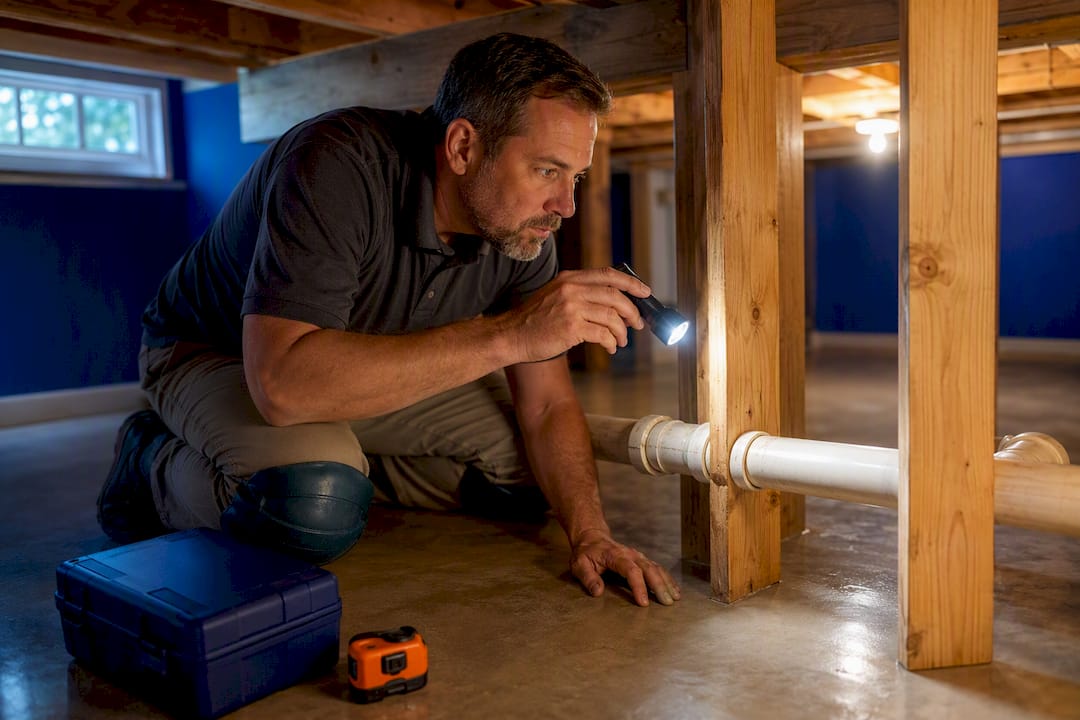
A Mississippi home inspection is a visual, non-invasive check of the house’s major systems and visible structure: roof, foundation, plumbing, electrical, HVAC, and more, performed to ASHI and InterNACHI standards. It tells you the condition of what’s in front of the inspector on inspection day. It does not include specialty testing like radon, termite, sewer scope, or mold sampling. Those get ordered separately, and for good reason.
TL;DR:
- Most Mississippi home inspections last 2 to 4 hours, depending on house size, age, and accessible crawlspace or attic areas.
- The inspection covers visible systems such as roof, foundation, electrical, plumbing, HVAC, and interior, but excludes destructive testing and specialty assessments.
- It is essential to prepare by ensuring utilities are active, access points are unlocked, and clutter is cleared from key areas before the inspector arrives.
- Inspection reports will identify safety hazards, structural concerns, and major system failures, with photographs and recommended next steps, within 24 to 48 hours.
- Licensing verifies inspector competency but does not guarantee quality; always review sample reports and confirm they carry proper insurance before hiring.
Table of Contents
- What a Standard Mississippi Home Inspection Covers
- What’s Excluded and When You Need a Specialist
- How to Prepare for Inspection Day
- What Happens on Inspection Day and When You Get the Report
- Turning the Report Into Negotiating Leverage
- Mississippi Licensing Rules for Home Inspectors
- The Legal Framework Behind Mississippi Inspections
- Do Sellers Have to Disclose What the Inspection Finds?
- Is a Home Inspection Actually Required in Mississippi?
- What Separates a Useful Report From a Checklist
- Book a Mississippi Inspection With Upchurch Inspection
- Sources
What a Standard Mississippi Home Inspection Covers
An inspector walks through your house the same way every time, whether it’s a 1950s brick ranch in Jackson or a newer build outside Southaven. The process follows the InterNACHI Standards of Practice or the ASHI Standards of Practice, which define a home inspection as a non-invasive, visual examination of readily accessible systems and components. That phrase, “readily accessible,” matters more than most buyers realize. It means the inspector isn’t cutting into drywall, pulling up flooring, or moving furniture to see what’s behind it. They’re looking at what’s visible, operating what’s operable, and flagging what doesn’t look right.
Here’s the rundown of what actually gets covered on a typical inspection day:
- Roof: covering materials, flashing, gutters, visible signs of leaking or sagging decking
- Exterior: siding, trim, grading, drainage, walkways, and the condition of exterior doors and windows
- Foundation and structure: visible cracking, settlement signs, crawlspace or basement condition where accessible
- Plumbing: visible pipes, water heater, fixtures, and functional flow and drainage at sinks, tubs, and toilets
- Electrical: panel condition, breaker labeling, visible wiring, outlets, and GFCI/AFCI protection where required
- HVAC: age, function, and condition of heating and cooling equipment, tested through normal operating controls
- Interior: walls, ceilings, floors, doors, windows, and stairs
- Insulation and ventilation: attic insulation levels and attic/crawlspace ventilation where visible
- Garages and built-in appliances: door operation, safety sensors, and major kitchen appliances that are permanently installed
The inspector isn’t guessing at any of this. They operate normal controls (turning on the HVAC, running water at every fixture, testing outlets), open readily openable access panels, and photograph what they find. The ASHI Standards of Practice lay out exactly which systems fall inside that scope, and it’s worth reading if you want to know precisely what you’re paying for in the role of inspections in home builds.
A rough field statistic worth knowing: according to ASHI, most single-family home inspections run 2 to 4 hours, and that window is almost entirely dictated by house size, age, and how much of the crawlspace or attic is actually reachable.
What gets flagged most often? Active moisture stains around plumbing penetrations, double-tapped breakers in an older panel, foundation cracks wider than a hairline with visible displacement, and drainage that pools against the foundation instead of running away from it. None of these are automatically deal-killers. They’re data points. Whether a foundation crack is cosmetic settling or a structural concern depends on width, direction, and whether it’s still moving, which is a judgment call the inspector makes on-site and documents with a photo and a note. Our Standards of Practice page breaks down the full system list if you want the granular version before booking.
What’s Excluded and When You Need a Specialist
A home inspection is broad, not deep. It’s designed to catch the obvious and the moderately hidden, not to diagnose everything a house could possibly have wrong with it. The ASHI Standards of Practice are explicit that inspectors are not required to perform engineering evaluations or access areas that aren’t readily accessible, and that distinction protects both the inspector and you from false confidence.
Standard exclusions include:
- No destructive testing (no cutting drywall, pulling insulation, or removing built-in fixtures)
- No engineering analysis of load calculations or structural design
- No entry into areas with less than 24 inches of clearance, standing water, or no safe access point
- No specialty testing for radon, wood-destroying insects, mold spores, sewer line condition, asbestos, or lead paint unless specifically added
If a crawlspace has 12 inches of clearance and standing water, that gets documented as a limitation, not skipped silently. Same with a locked outbuilding or a panel with the cover screwed shut. These limitations show up in the report and matter to your negotiation, because an “unable to evaluate” note is a request for more information, not a clean bill of health.
Pro Tip: If your Mississippi property backs up to older municipal sewer lines or sits on a septic system, add a sewer scope. It’s cheap next to what a collapsed lateral line costs to repair after closing.

Our guide on choosing the right specialized inspection walks through which add-ons make sense for which property types.
How to Prepare for Inspection Day
Preparation isn’t about hiding problems. It’s about making sure the inspector can actually test everything, so you get a report that reflects the house instead of a list of “could not verify” entries.
- Turn on all utilities. Electricity, gas, and water all need to be active. An inspector can’t test the HVAC without power, can’t check the water heater without gas, and can’t run fixtures without water pressure.
- Clear and unlock access points. Attic hatch, crawlspace entry, electrical panel, water heater closet, HVAC equipment, garage, and any outbuildings need clear, unobstructed access.
- Gather your paperwork. Maintenance records, permits for any additions or renovations, appliance manuals, and a written list of anything you’ve already noticed (a slow drain, a breaker that trips) help the inspector focus.
- Handle the obvious stuff first if you’re selling. Burned-out bulbs, a dead smoke detector battery, a leaky faucet washer, these cost almost nothing to fix and they keep minor items from crowding out the findings that actually matter.
A few more things worth doing before the inspector’s truck pulls up:
- Move vehicles and stored items away from the electrical panel and HVAC condenser
- Trim back vegetation touching the siding or blocking exterior outlets
- Confirm pilot lights are lit on gas appliances
Timing tip: schedule the inspection as early as possible inside your contract’s inspection contingency window. If something significant turns up, you want time left to negotiate, get a second opinion, or walk away, not three days before the deadline. Our buyer’s preparation guide has a longer checklist if you’re working through this for the first time.
What Happens on Inspection Day and When You Get the Report
Most single-family inspections in Mississippi generally take several hours, with longer durations expected for older homes, larger square footage, multiple HVAC systems, or complex crawlspaces. A 1,400-square-foot house built in the 1990s moves faster than a 3,800-square-foot property with three HVAC units and a partially finished basement.
You don’t need to shadow the inspector for the entire visit. NAR’s consumer guide recommends buyers show up for at least the last 30 to 60 minutes, when the inspector walks through findings room by room. That’s when you learn where the main water shutoff is, where the electrical panel lives, and what each flagged item actually looks like in person rather than as a line item on page nine. Ask questions during that walkthrough. Don’t operate equipment yourself or interfere with tests already in progress; let the inspector run the process and narrate it.
A solid report includes:
- A one-page summary highlighting the priority items
- Photographs tied to each finding, not just a text description
- Severity or priority notes distinguishing safety hazards from maintenance items
- Recommended next steps, including where a specialist evaluation is warranted
Reports commonly land in your inbox within 24 to 48 hours of the inspection. Watch for two specific phrases inside: “unable to evaluate” (something blocked the inspector from testing it) and “further evaluation recommended” (the inspector saw something outside their scope and wants a specialist to weigh in). Neither phrase means disaster. Both mean you have follow-up work to do before you can call the picture complete.
Turning the Report Into Negotiating Leverage
The report is a document for making decisions, not a punch list to fix everything before you’ll consider closing. The first job is sorting findings into two piles: material defects and safety hazards on one side, cosmetic and maintenance items on the other. A cracked GFCI outlet cover is cosmetic. Ungrounded outlets throughout the kitchen are a safety hazard. Learning to tell those apart, or trusting your inspector’s severity notes to do it for you, is what keeps negotiations focused instead of turning into a fight over paint color.
Prioritize negotiation around:
- Safety hazards (exposed wiring, gas leaks, missing smoke detectors, unsafe stair railings)
- Structural issues affecting occupancy or insurability
- Major system failures (HVAC at end of life, a roof with active leaks, a failing water heater)
Cosmetic items and normal wear rarely justify reopening negotiations, and pushing too hard on minor stuff can sour a deal that’s otherwise solid. When a finding sits outside the inspector’s scope (foundation movement, questionable structural framing, a suspicious electrical panel), that’s your cue to bring in a licensed plumber, electrician, or structural engineer before you finalize anything. Common outcomes from there: repairs completed before closing, a credit at the table, a price reduction, or in rare cases, walking away. Document everything in writing. Our guide to reading inspection reports covers how to interpret severity language so you’re not overreacting to a routine maintenance note.
Pro Tip: Get repair estimates in writing from a licensed contractor before you negotiate a credit amount. “It’ll probably cost around $3,000” doesn’t hold up nearly as well at the closing table as an actual quote.
Mississippi Licensing Rules for Home Inspectors
Mississippi requires home inspectors to be licensed through the state, and that licensing framework is what separates a professional inspection from a buddy walking through with a flashlight. A licensed inspector has met the state’s education and examination requirements, carries the credentials the industry expects, and operates under a defined Standards of Practice, typically ASHI’s or InterNACHI’s, that spells out exactly what gets inspected and how findings get documented.
For you as a buyer or seller, the license itself is a baseline, not a guarantee of quality. Two licensed inspectors can produce very different reports: one might give you three vague pages of checkboxes, while another delivers a detailed narrative with photos, severity ratings, and clear next steps. Before booking anyone, ask to see a sample report. That single document tells you more about what you’re actually going to receive than any conversation about credentials will.
It’s also worth asking whether the inspector carries errors and omissions insurance. Licensing covers competency standards; insurance covers you if something material genuinely gets missed. A reputable Mid-South inspector will answer both questions without hesitation, because they’ve been asked before and they know the answer builds confidence rather than doubt. If an inspector dodges the question or seems annoyed you asked, that’s information too.
The Legal Framework Behind Mississippi Inspections
Home inspections in Mississippi operate at the intersection of state licensing law and the private contract between buyer and seller. The state sets who can legally call themselves a licensed home inspector and what standards they must follow, but the decision to order an inspection at all, and what happens with the results, is governed by the purchase agreement, not a state mandate.
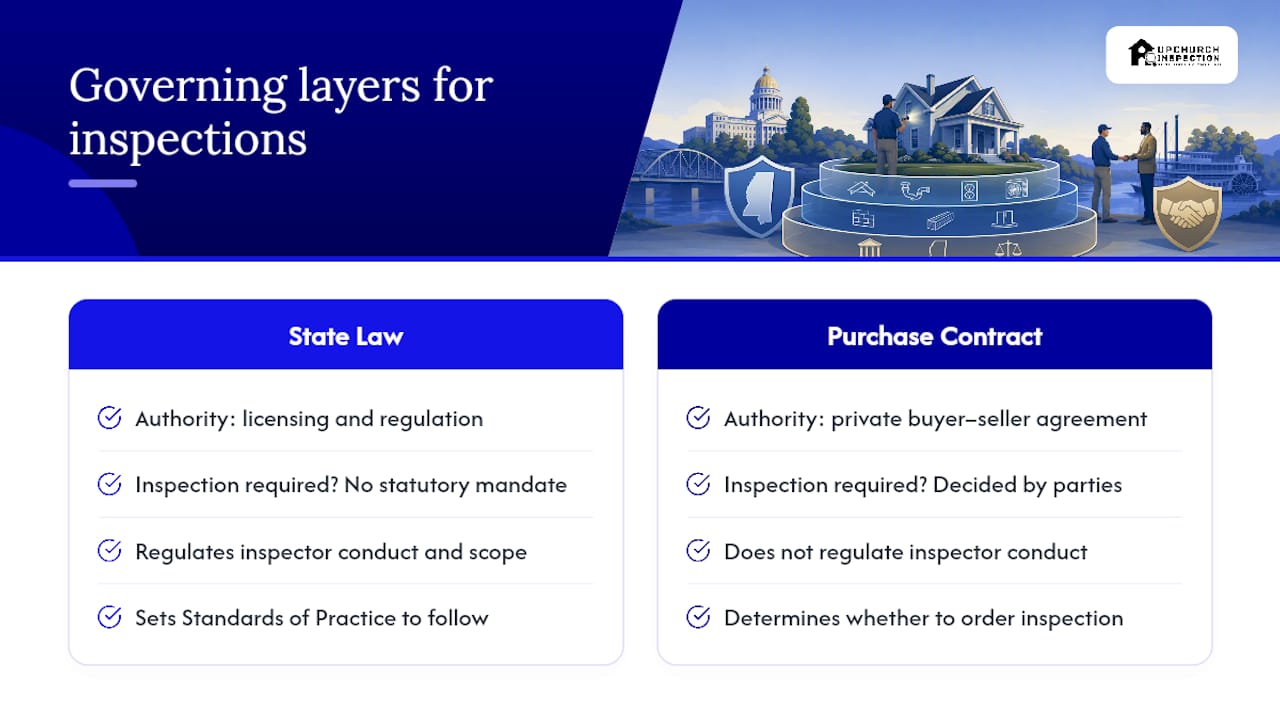
That distinction trips people up. The state doesn’t require an inspection to happen before a house changes hands. What it regulates is the conduct of the person performing that inspection once you hire one: they must operate within their licensed scope, follow a recognized Standards of Practice, and report findings honestly. Contract-level protections, like the inspection contingency period most Mississippi purchase agreements include, come from what your real estate agent and attorney negotiate into the deal, not from a statute.
This is where the ASHI and InterNACHI frameworks earn their keep. Because Mississippi inspectors typically operate under one of these two nationally recognized standards, you get a consistent baseline of what “inspected” means regardless of which licensed inspector you hire. That consistency is valuable in a state where inspection quality can otherwise vary widely between a rural single-inspector operation and a larger regional firm covering multiple counties.
Do Sellers Have to Disclose What the Inspection Finds?
Mississippi follows a caveat emptor framework for residential real estate, meaning sellers generally aren’t required to proactively disclose every known defect the way some states mandate through a standardized seller disclosure form. That said, sellers can’t actively conceal known material defects or make false statements when directly asked, and misrepresentation still carries legal risk.
Here’s where it gets specific to your transaction: once you’ve had your own inspection performed, those findings belong to you. There’s no blanket state requirement forcing you to hand your inspection report to the seller or to future buyers if the deal falls through. However, if you cancel a contract based on inspection findings and the property goes back on the market, some agents and attorneys advise disclosing known material defects to avoid future liability, even where the letter of the law doesn’t strictly demand it.
Sellers ordering a pre-listing inspection face a similar calculus. A pre-listing report isn’t legally required, but once you know about a problem (a failing HVAC compressor, active roof leak, foundation movement), sitting on that knowledge and hoping the buyer’s inspector misses it is a real legal exposure, not a savvy negotiating tactic. Full disclosure of known material issues, paired with either fixing them or pricing the house accordingly, tends to produce cleaner closings with fewer surprises for everyone at the table.
Is a Home Inspection Actually Required in Mississippi?
No. Mississippi law does not mandate a home inspection as a condition of closing a residential real estate sale. You could legally buy a house sight-unseen structurally and never trigger any state requirement to have it inspected.
That said, “not required” and “not necessary” are two very different things. Lenders may require specific inspections for certain loan types (an FHA or VA appraisal includes some property condition checks, though these are not substitutes for a full home inspection). Beyond that, the inspection contingency is one of the most valuable pieces of leverage a buyer has in a purchase agreement, and it’s optional only in the sense that you have to choose to include it.
Waiving an inspection to make an offer more competitive happens, especially in tighter markets, but it means walking into ownership with zero professional documentation of the roof’s remaining life, the HVAC’s condition, or whether the electrical panel is safe. For most buyers, that’s a real gamble against a relatively small upfront cost. Sellers, meanwhile, aren’t required to allow an inspection at all, though refusing one is a significant red flag that tends to scare off serious buyers fast. The practical norm across Mississippi real estate transactions is that inspections happen almost every time a mortgage is involved, driven by buyer preference and lender comfort rather than any state statute forcing the issue.
What Separates a Useful Report From a Checklist
We’ve reviewed enough inspection reports over the years to know the difference between one that helps you make a decision and one that just covers the inspector. A useful report doesn’t bury a cracked heat exchanger in the same font and format as a loose cabinet hinge. It tells you what’s urgent, what’s on a clock, and what can wait.
When you’re evaluating a Mississippi or Mid-South inspector, ask to see a sample report before you book. Look for clear photos tied to specific findings, plain-language severity notes instead of vague checkboxes, and a one-page summary you could hand to a contractor for a quote without translation. Ask what specialty tests they offer directly versus what gets referred out, and confirm their credentials and insurance upfront. A seasoned inspector answers these questions without hesitation, because they already know what a good report looks like.
— Holly
Book a Mississippi Inspection With Upchurch Inspection
If you’re comparing inspectors across the Mid-South, the real differentiator isn’t the checklist, it’s what you get back afterward. Upchurchinspection is the inspection partner for Mississippi buyers, sellers, and agents who want a report that actually holds up at the negotiating table: clear photos, severity notes that separate safety issues from cosmetic wear, and system-level detail on plumbing, electrical, HVAC, and structure rather than a generic pass/fail checklist. Our inspectors work residential and commercial properties across Tennessee, Arkansas, Mississippi, Missouri, and Kentucky, and we offer specialty add-ons like thermal imaging and mold testing when a property calls for a closer look.
Before you book anyone, ask to see a sample report side by side with what you’re used to seeing. Then request your inspection, confirm which specialty tests fit your property, and schedule it early inside your contingency window so you have room to act on whatever we find.