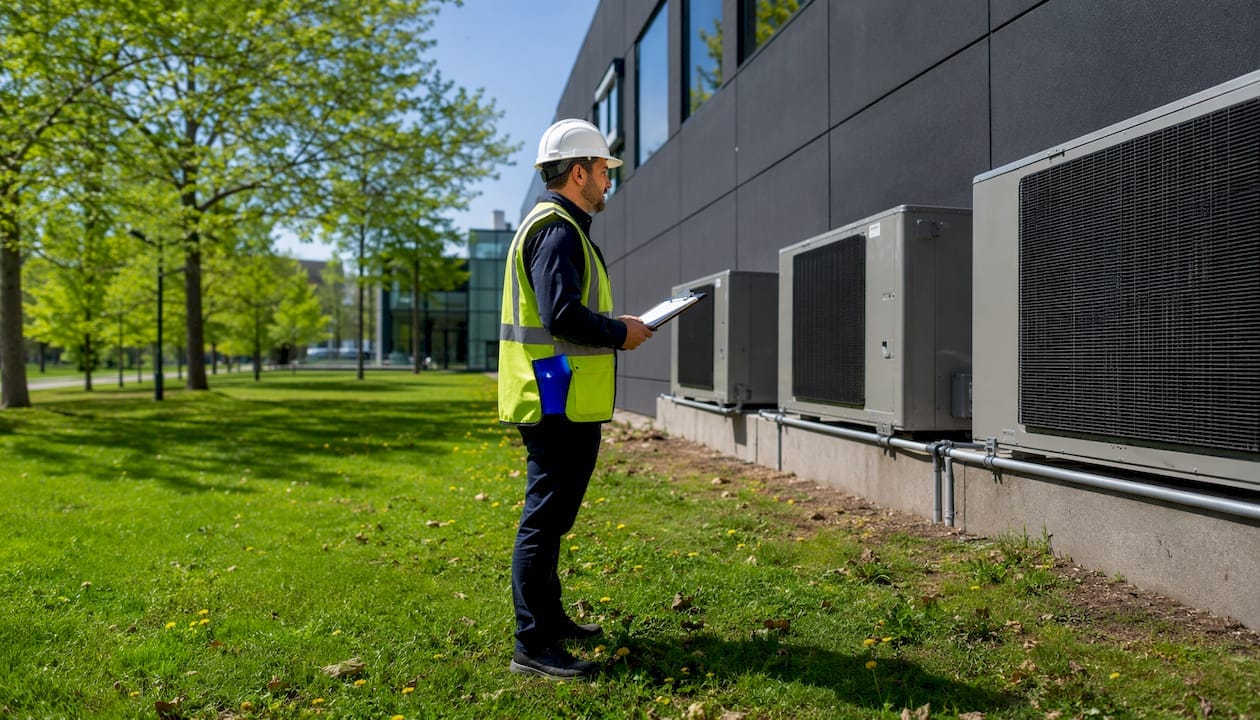
A commercial inspection is a structured, non-invasive evaluation of a commercial property’s physical condition, conducted through a visual walk-through survey, document research, and a written report. The goal is straightforward: give buyers, investors, lenders, and business owners the information they need to make sound decisions about purchasing, selling, or maintaining a building. Properties covered range from office buildings and retail strip malls to warehouses, restaurants, and mixed-use facilities.
What defines a commercial inspection, per the Certified Commercial Property Inspectors Association (CCPIA):
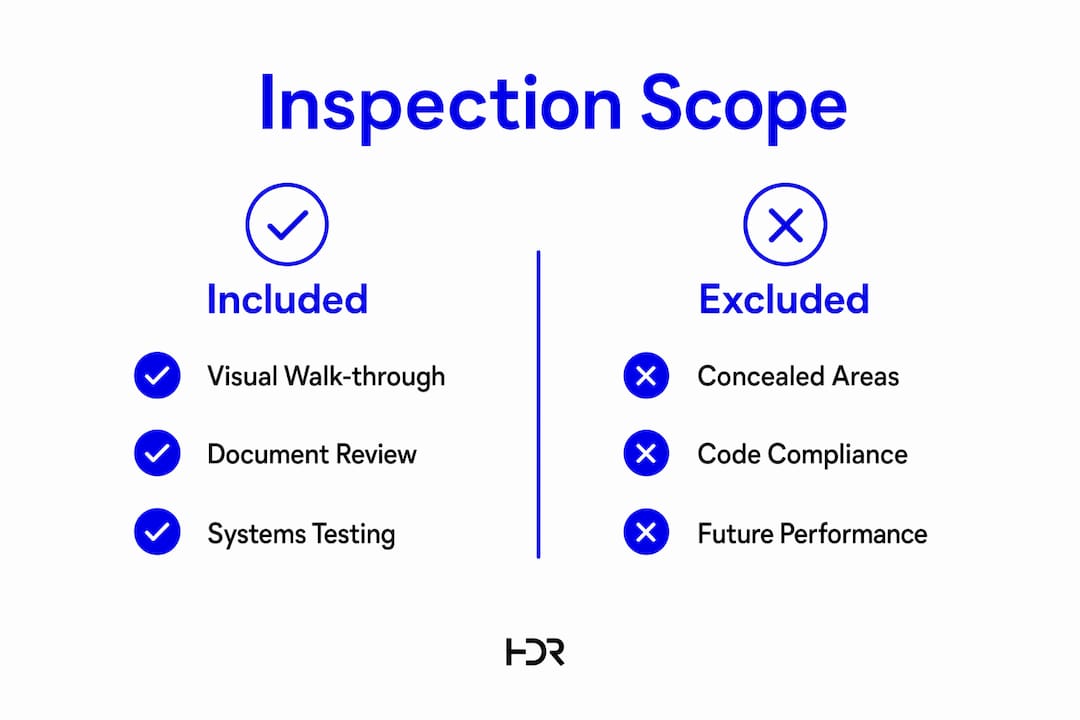
- A visual walk-through of accessible systems and components
- Research through document review and personnel interviews
- A written report describing findings and their likely significance to the client
- Observations on major building systems: roofing, structure, plumbing, electrical, HVAC, and interior and exterior surfaces
- Opinions of probable cost where relevant to financial decision-making
- Scope defined by agreement between inspector and client before work begins
The report does not certify code compliance or predict future performance. It describes conditions as observed on the day of inspection, giving clients a factual baseline for negotiation, budgeting, or further investigation.
What does a commercial property inspection actually cover?
Commercial inspections evaluate a building’s major systems and structural components. The exact scope varies by property type, size, and what the client needs, but the core systems are consistent across most engagements.
Systems typically evaluated:
- Roofing: Membrane condition, drainage, flashing, penetrations, and signs of ponding or prior repairs
- Foundation and structure: Visible cracks, settlement, load-bearing wall condition, and evidence of movement
- Plumbing: Supply and drain lines, water pressure, fixture condition, and signs of leaks or corrosion
- Electrical: Service panels, wiring type, grounding, and visible safety concerns
- HVAC: Equipment age, condition, operation, and evidence of deferred maintenance
- Exterior: Cladding, windows, doors, parking areas, and site drainage
- Interior: Floors, ceilings, walls, and evidence of moisture intrusion or structural distress
What is generally out of scope:
- Environmental hazards (asbestos, mold, lead paint)
- Full code compliance audits
- Concealed or inaccessible systems
- Phase I or Phase II environmental assessments
The ASTM E2018-15 standard, recognized by the North American Association of Home Inspectors (AHI) and widely required by institutional lenders, adds document review and management interviews to the baseline visual survey. That research phase can surface permit histories, prior code violations, and maintenance records that a walk-through alone would miss.
| Scope element | Included | Excluded |
|---|---|---|
| Visual walk-through | Yes | Concealed areas |
| Document review | Yes (per ASTM/CCPIA) | Third-party product recalls |
| Personnel interviews | Yes | Legal compliance opinions |
| Environmental testing | No | Phase I/II assessments |
| Code compliance audit | No | Zoning determinations |
How the commercial inspection process works
The commercial inspection process follows a defined sequence, though timelines and deliverables vary by property size and scope agreement.
- Scope negotiation: Inspector and client agree in writing on which systems, areas, and standards apply before any site visit occurs.
- On-site walk-through: The inspector conducts a visual survey of accessible systems, documenting observations with notes and photographs.
- Document research: Review of building permits, prior inspection reports, maintenance logs, certificates of occupancy, and any available code violation notices.
- Interviews: Conversations with building managers, tenants, or owners to surface known issues or recent repairs.
- Report drafting: Findings are compiled into a written report, including photographs, system narratives, and, where applicable, opinions of probable cost.
- Report delivery: The client receives the final document, typically within two to three weeks of the site visit for larger properties.
| Phase | Typical duration | Key deliverable |
|---|---|---|
| On-site walk-through | Half day to multiple days | Field notes and photographs |
| Document review and interviews | Several days to one week | Research findings |
| Report drafting and delivery | Two to three weeks total | Written Property Condition Report |
Commercial reports are technical documents built for financial decision-makers. They typically include an executive summary, system-by-system narratives, photographs, and Opinions of Probable Cost (OPC) that quantify expected capital expenditures. That OPC section is what separates a commercial report from a residential one: it translates physical conditions into dollar figures a lender or investor can actually use.

How commercial inspections differ from residential ones
The gap between residential and commercial property inspections is wider than most people expect. Scope, clients, systems, and reporting standards all shift substantially.
Residential inspections follow a standardized checklist: roof, structure, electrical, plumbing, HVAC, interior, exterior. The process is repeatable because the buildings are similar. Commercial scope is negotiated per engagement. A small retail storefront has different needs than a 200,000-square-foot warehouse, and the inspector and client define those boundaries before the job starts.
The clients are different too. Residential buyers want to know if the house is safe and what needs fixing. Commercial clients, typically investors, lenders, or asset managers, want capital expenditure projections, deferred maintenance estimates, and risk data they can hand to an attorney or underwriter.
| Dimension | Residential | Commercial |
|---|---|---|
| Typical client | Homebuyer or seller | Investor, lender, asset manager |
| Governing standard | State SOP | ASTM E2018 or negotiated scope |
| Scope | Standardized | Customized per property and client |
| Report style | Defect-focused with photos | Executive summary with cost projections |
| Typical fee | Commercial inspection fees usually range from $1,500 to over $10,000 depending on property size and complexity. | Residential inspection fees are typically lower, reflecting a simpler scope and smaller scale. |
| On-site time | 2–4 hours | Half day to multiple days |
Systems are more complex on the commercial side. Three-phase electrical services, rooftop HVAC units, commercial-grade plumbing, fire suppression systems, elevators, and building automation controls are common in commercial buildings and largely absent from residential work. Inspectors need specialized knowledge to evaluate them accurately.
Commercial property inspection vs. commercial vehicle inspection
These two types of inspections share a name and nothing else. Confusing them is more common than you might think, especially when someone searches broadly for “commercial inspection.”
A commercial vehicle inspection is a safety and compliance check for trucks, buses, and other commercial motor vehicles. The Federal Motor Carrier Safety Administration (FMCSA) mandates these inspections under 49 CFR 396, requiring drivers to complete post-trip Driver Vehicle Inspection Reports (DVIRs) after each day’s operation and requiring every commercial vehicle to undergo a full periodic inspection at least once every 12 months.
Key differences at a glance:
- Purpose: Vehicle inspections verify transport safety and regulatory compliance. Property inspections assess building condition and investment risk.
- Regulatory body: FMCSA governs vehicle inspections. CCPIA and ASTM E2018 define standards for commercial property inspections.
- Frequency: Vehicle inspections occur daily (DVIRs) and annually (periodic). Property inspections occur at transaction or due diligence milestones.
- Output: Vehicle inspections produce compliance reports and out-of-service orders. Property inspections produce condition reports with cost projections.
- Industry: Transportation and logistics versus commercial real estate.
The two disciplines serve entirely different industries, involve different regulatory frameworks, and require different training. If you are buying a building, you need a property condition assessment, not a vehicle safety check.
What experienced inspectors actually find in commercial buildings
Scope agreements and checklists set the framework, but real inspection judgment comes from knowing what to look for and what it actually means when you find it.
“The objective of an inspection is to provide written communication describing the issues discovered from observations made and research conducted by the inspector, which, in the inspector’s opinion, are likely to be of interest to his/her client, and to enhance the client’s information and knowledge about the commercial property to improve decision-making for buying, selling, maintaining or improving the property.” — CCPIA Standards of Practice 2022
Roofing is where we see the most deferred maintenance in commercial buildings across the Mid-South. Flat and low-slope membrane roofs develop ponding water, failed seams, and deteriorated flashing that are easy to miss from the ground. Left unaddressed, a compromised membrane leads to deck rot, insulation saturation, and interior damage that costs far more to remediate than the original repair would have. We document these conditions with photographs and note whether a specialist roofing contractor should evaluate before closing.
HVAC systems in commercial buildings often involve multiple rooftop units serving different zones. When one unit is near the end of its service life, it tends to pull harder on adjacent units to compensate, a domino effect that can accelerate failures across the system. We note equipment age, visible condition, and whether maintenance records support the claimed service history.
Inspectors clarify physical conditions but do not certify legal compliance or suitability for a specific use. That distinction matters in practice. A building may have electrical panels that function but do not meet current code. The inspector reports the condition; a licensed electrician or engineer determines the required remediation. Clients who understand this boundary get more value from the report and avoid misreading findings as legal clearance.
Pro Tip: Define the scope in writing before the inspection begins. A vague agreement leads to gaps in coverage and disputes about what was or was not included. The more specific the scope document, the more useful the final report.
What qualifications should a commercial inspector have?
Commercial inspections require knowledge that goes well beyond a residential license. Most states do not issue a separate commercial inspection license, but that does not mean any inspector is qualified for the work.
Inspectors performing commercial property assessments should demonstrate familiarity with ASTM E2018-15 and CCPIA standards, experience evaluating commercial-grade building systems, and the ability to coordinate with licensed specialists when systems fall outside their direct expertise. For formal Property Condition Assessments required by lenders, ASTM E2018 typically expects the field observer to have engineering or architectural credentials or equivalent documented experience.
The AHI designates the Certified Commercial Project Manager (CCPM) as the professional responsible for managing the assessment, coordinating specialists, and signing off on the final Property Condition Report. When a building involves elevators, structural engineering questions, or environmental concerns, the general inspector’s role is to identify the need for specialist involvement, not to perform that evaluation themselves. Knowing the limits of your own scope is part of the qualification.
Upchurch Inspection’s inspectors hold qualifications that exceed state minimums, with direct experience across office, retail, and industrial properties in the Memphis and West Tennessee market. That local knowledge matters: building practices, common defects, and regional climate conditions all affect what we find and how we report it.
How inspection findings affect commercial property transactions
A commercial inspection report rarely ends a deal, but it almost always changes one. The findings give buyers and their attorneys a factual basis for negotiating price, requesting repairs, or deciding to walk away from a property with problems that exceed the investment thesis.
Opinions of Probable Cost in the report translate physical deficiencies into capital expenditure estimates. A buyer who learns that the HVAC system needs replacement within three years, or that the roof membrane has reached the end of its service life, can factor those costs into the purchase price or request seller credits. Lenders use the same data to assess collateral risk before committing financing.
For investors managing existing portfolios, periodic inspections surface deferred maintenance before it compounds. A regular inspection schedule helps prioritize capital spending, document building condition for insurance purposes, and identify safety concerns before they become liability issues. The report also creates a paper trail that supports asset valuation during refinancing or resale.
What commercial inspections do not cover
Understanding the limits of a commercial inspection is as important as understanding its scope. Clients who expect more than the inspection delivers tend to misread reports and make decisions based on assumptions the inspector never made.
Commercial inspections are non-invasive visual surveys. Inspectors do not open walls, test soil, sample air quality, or perform destructive testing. If a condition is concealed or inaccessible, it cannot be reported. The inspection reflects conditions as observed on a single day, not a prediction of future performance.
Specific exclusions common across CCPIA, AHI, and ASTM E2018 standards include:
- Environmental assessments (asbestos, mold, lead, PFAS contamination)
- Code compliance determinations
- Structural engineering calculations
- Adequacy or efficiency ratings for building systems
- Legal suitability for a specific use or occupancy
- Concealed or inaccessible components
When a condition warrants deeper investigation, a qualified inspector says so clearly in the report and recommends the appropriate specialist. That referral is not a failure of the inspection. It is the inspection working as intended. Specialized inspections by engineers, environmental consultants, or roofing contractors fill the gaps that a general property condition assessment cannot address.
Key Takeaways
A commercial inspection is a structured, non-invasive evaluation of a building’s physical condition that informs buying, selling, and maintenance decisions through a visual survey, document research, and a written report with opinions of probable cost.
| Point | Details |
|---|---|
| Defined scope matters | Scope is negotiated before the inspection begins; vague agreements create gaps in coverage. |
| Standards govern the process | CCPIA and ASTM E2018-15 define baseline expectations for commercial property assessments. |
| Reports serve financial decisions | Commercial reports include executive summaries and Opinions of Probable Cost for investors and lenders. |
| Fees reflect complexity | Commercial inspection fees typically range from $1,500 to over $10,000, depending on size and scope. |
| Inspections have firm limits | Environmental testing, code compliance, and concealed systems fall outside the inspection scope. |
FAQ
What does a commercial inspection consist of?
A commercial inspection consists of a visual walk-through survey, document research (including permits and maintenance records), personnel interviews, and a written report with photographs and opinions of probable cost, per CCPIA and ASTM E2018-15 standards.
What is the difference between residential and commercial inspection?
Commercial inspections have a negotiated, flexible scope covering complex systems like three-phase electrical and multi-zone HVAC, and produce technical reports with capital expenditure projections. Residential inspections follow a standardized checklist and produce defect-focused reports for homebuyers.
What is the meaning of commercial vehicle inspection?
A commercial vehicle inspection is a federally mandated safety and compliance check for trucks and buses, governed by FMCSA under 49 CFR 396. It is entirely separate from a commercial property inspection, which evaluates building condition for real estate transactions.
Does a commercial inspection certify code compliance?
No. Commercial inspectors report physical conditions as observed but cannot certify legal compliance or suitability for a specific use, per AHI and CCPIA standards. Code determinations require a licensed engineer or the local authority having jurisdiction.