
What is a property condition assessment and why does it matter in Memphis?
A Property Condition Assessment (PCA) is a structured, ASTM E2018-24 guided inspection of a commercial or residential property’s physical state. The goal is straightforward: identify material physical deficiencies and produce cost opinions so buyers, investors, and lenders can make decisions grounded in real numbers, not assumptions.
Memphis presents specific challenges that make PCAs more than a formality. The city’s humid subtropical climate accelerates roofing deterioration, promotes moisture intrusion in crawl spaces and masonry, and puts HVAC systems under stress that shortens their service life. Older building stock in neighborhoods like Midtown, South Memphis, and the Medical District often carries decades of deferred maintenance that a casual walkthrough won’t reveal.
A PCA serves three core functions for Memphis investors and buyers:
- Risk quantification: Converts physical observations into dollar estimates for immediate repairs and longer-term capital expenditures
- Negotiation leverage: Documented deficiencies give buyers a factual basis for price adjustments or seller concessions
- Financing support: Lenders frequently require a PCA conforming to ASTM E2018-24 before approving commercial acquisition loans
Upchurchinspection delivers investor-focused PCAs across Memphis and the broader Mid-South market, with inspectors whose qualifications exceed Tennessee state minimums and whose reports go well beyond a basic defect checklist.
Standards and scope covered in Memphis property condition assessments
The ASTM E2018-24 baseline
The ASTM E2018-24 standard is the accepted national baseline for PCAs in the United States. It defines the framework for the walk-through survey, document review, management interviews, and preparation of the Property Condition Report (PCR), including cost opinions for observed deficiencies. Lenders routinely require conformance with this standard as a condition of financing commercial transactions.
What gets inspected
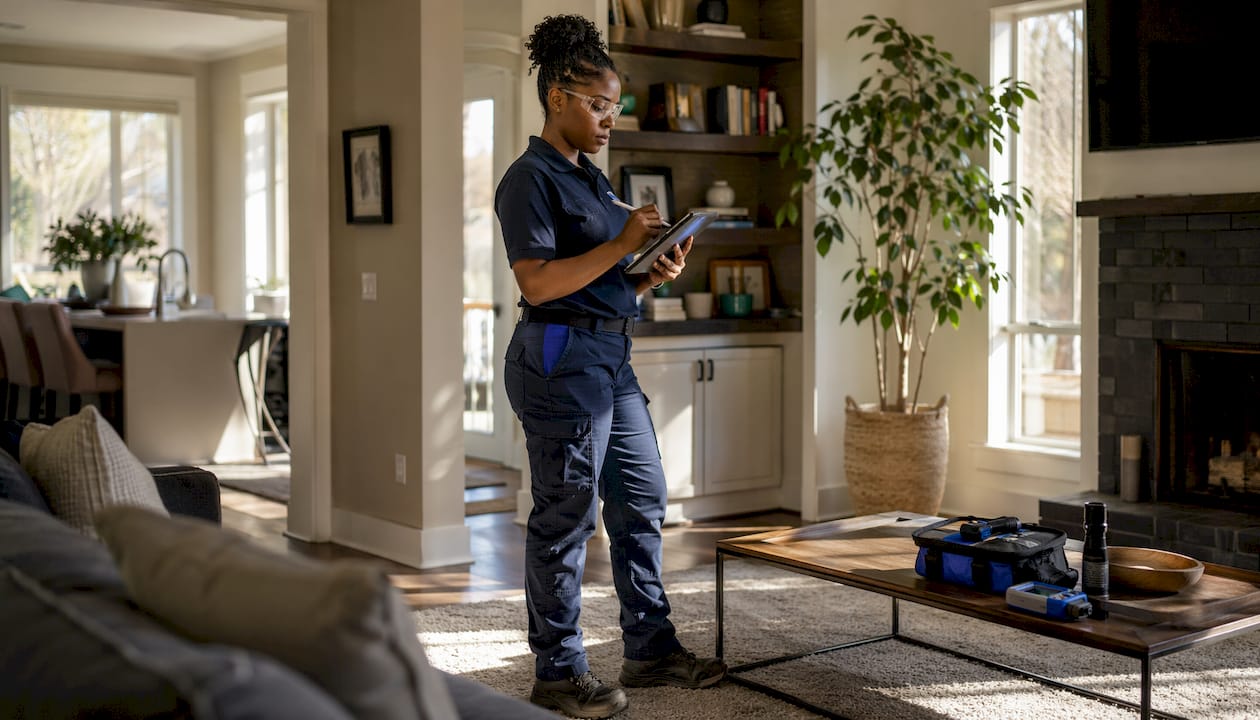
A standard PCA covers the primary building systems that drive capital expenditure risk. For Memphis properties, we inspect:
- Structural systems: Foundation, framing, load-bearing walls, and signs of settlement or movement
- Roofing: Age, membrane or shingle condition, flashing, drainage, and evidence of prior repairs
- Exterior envelope: Facades, cladding, windows, doors, sealants, and waterproofing
- Plumbing: Risers, fixtures, water pressure, visible corrosion, and drainage function
- Electrical: Panels, wiring type, capacity, safety compliance, and code concerns
- HVAC: Unit age, condition, remaining service life, and distribution system integrity
- Site improvements: Paving, grading, drainage, and retaining structures
For properties with multiple buildings on a single parcel, ASTM E2018 intends all improvements to be addressed cohesively in one PCR.
Scope variations and exclusions
Commercial PCAs are not one-size-fits-all. Scope varies based on property type, age, and client risk tolerance, so a 1960s warehouse in Frayser warrants a different level of scrutiny than a recently built office building in East Memphis. Environmental concerns, including Phase I Environmental Site Assessments, fall outside the PCA scope and require separate contracts. Specialized roof or sewer inspections may also need to be negotiated independently within the due diligence window.
How a PCA is performed and what the timeline looks like in Memphis
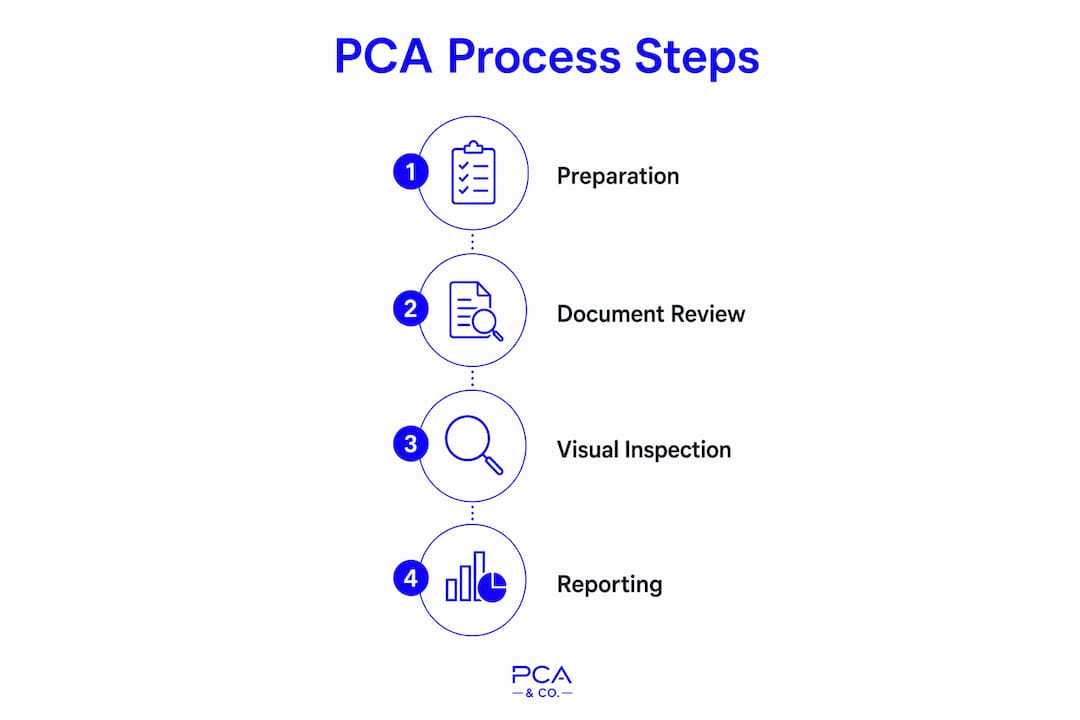
The four-step process
A PCA follows four interconnected components, each informing the others:
- Document review and interviews: We request available records including prior inspection reports, maintenance logs, permits, and capital improvement history. On-site interviews with property managers or maintenance staff often surface issues that aren’t visible during a walkthrough.
- Walk-through survey: The field observer conducts a visual, non-invasive inspection of all accessible areas. Systems are reviewed on a sampling basis rather than exhaustively tested. The focus is on age, observable condition, and estimated remaining useful life, not whether every unit is functioning at that moment.
- Cost estimation: Each identified deficiency is categorized as immediate, short-term, or a longer-term reserve item. Each category receives an opinion of probable cost so investors can model cash flow and budget accordingly.
- Property Condition Report: Findings compile into a written PCR with narrative descriptions, photographs, and cost tables. The report flags areas where specialist follow-up may be warranted, such as foundation evaluation or sewer scoping.
Why visual-only inspection is the standard practice: A question we hear often is, “How do you know the HVAC is working if you don’t test it?” The honest answer is that the age and visible condition of a rooftop unit tells an investor far more than a functional test at a single point in time. A 25-year-old unit near the end of its service life is a capital expenditure risk regardless of whether it runs on the inspection day.
Timeline and cost considerations
PCA timelines typically range from a few days to several weeks, depending on property complexity, the depth of document review required, and whether specialist subconsultants are involved. A small retail strip center in Bartlett may yield a report within a week. A large industrial facility or multi-tenant apartment complex in Memphis proper will take longer, particularly if the document review uncovers gaps that require follow-up.
On cost: commercial PCAs can vary widely depending on the size and complexity of the property being assessed. That fee reflects on-site time, document review, and a significantly more detailed report than a standard home inspection. For investors putting six or seven figures into a Memphis property, the cost of a thorough PCA is a small fraction of the risk it mitigates.
How to identify a trustworthy PCA provider in Memphis
Not every inspector who offers a “commercial inspection” is equipped to deliver a true PCA. The difference matters, especially when a lender or institutional partner requires ASTM E2018-24 conformance.
When evaluating providers, look for:
- Technical credentials: Qualified inspectors typically hold engineering or architectural credentials and have documented experience with ASTM E2018-24. A general home inspection license alone does not qualify someone for formal PCA work.
- Insurance and liability coverage: Errors and omissions insurance is non-negotiable for commercial work. Verify it before signing an engagement letter.
- Report quality: Ask for a sample report. A credible PCR includes an executive summary, system-by-system narratives, cost opinions organized by timeframe, and photographs. A report that reads like a residential defect list is not a PCA.
- Local market knowledge: Memphis has specific building stock characteristics, local code history, and climate-driven failure patterns that a provider unfamiliar with the Mid-South may miss entirely. Understanding commercial property risks unique to West Tennessee is part of doing the job right here.
- Clear communication: A good provider explains findings in plain language, not just technical jargon, and remains available after report delivery to answer questions.
Pro Tip: Ask any prospective PCA provider to confirm in writing whether their report will conform to ASTM E2018-24 or not. Ambiguity on that point creates liability for you, not them.
Upchurchinspection’s commercial inspection services are built around inspectors with qualifications that go beyond state minimums, detailed reporting that addresses major systems, and direct knowledge of Memphis and the surrounding Mid-South market.
How to read your PCA report and what to do next
Understanding the PCR structure
A Property Condition Report typically opens with an executive summary that gives you the bottom line: the property’s overall condition, the most pressing deficiencies, and the total estimated cost to address them. That summary is written for financial decision-makers, not contractors, so it should be readable without a technical background.
The body of the report works through each building system in detail. Each section describes what was observed, its current condition, estimated remaining service life, and any recommended follow-up. Reports discuss property type, condition, compliance issues, and potential risks to support investment decisions. Cost opinions are grouped into immediate needs, short-term priorities (typically within one year), and longer-term reserve items.
Separating critical issues from cosmetic conditions
Not every finding in a PCR carries the same weight. Cosmetic wear, minor surface cracks, and routine maintenance items are different from deferred maintenance on aging mechanical systems or evidence of moisture intrusion in the structural frame. We flag these differently in our reports, and you should read them differently. A 20-year-old roof with granule loss and soft spots is a near-term capital expenditure. Faded paint on an exterior wall is not.
Next steps after receiving your report
Once you have the PCR in hand, the practical steps are:
- Consult specialists for flagged items: If the report recommends further investigation of the foundation, electrical system, or roof, schedule those specialist reviews before your due diligence period closes. Upchurchinspection can point you toward appropriate follow-up resources.
- Prioritize and budget: Use the cost opinions to build a realistic capital expenditure budget. Immediate items affect your offer price or closing conditions. Reserve items inform your hold-period financial model.
- Negotiate with documentation: A well-documented PCR gives you factual leverage in price negotiations or requests for seller repairs. Vague concerns don’t move sellers; specific cost opinions do.
- Retain the report: PCRs have ongoing value. They establish a baseline condition at the time of acquisition and support future financing, insurance, or resale discussions.
For guidance on reading inspection reports and translating findings into decisions, Upchurchinspection provides support beyond the report itself.
Legal and financial significance in Memphis transactions
In Tennessee commercial transactions, a PCR can directly affect purchase price, repair escrow requirements, and lender conditions. If a seller has disclosed a known defect and the PCR confirms it, that documentation protects the buyer. If the PCR surfaces an undisclosed issue, it creates grounds for renegotiation or, in some cases, contract termination. Treat the PCR as a legal document, not just a maintenance checklist.
Key Takeaways
A Property Condition Assessment following ASTM E2018-24 is the most reliable tool Memphis investors and buyers have for quantifying physical risk before closing on a commercial or residential property.
| Point | Details |
|---|---|
| ASTM E2018-24 is the standard | All credible PCAs in the U.S. follow this framework for walkthroughs, document review, and cost opinions. |
| Visual inspection is intentional | Inspectors assess age and condition on a sampling basis; exhaustive testing is outside the standard scope. |
| Timelines vary by complexity | Simple properties may yield reports in days; large or complex Memphis properties can take several weeks. |
| Cost reflects scope | Commercial PCA costs vary widely depending on property size and assessment depth. |
| Local knowledge changes outcomes | Memphis climate and building stock require a provider with direct Mid-South experience to catch what others miss. |
FAQ
What is a Property Condition Assessment?
A PCA is a structured, ASTM E2018-24 guided inspection of a property’s physical condition, covering major building systems through a visual walk-through, document review, and management interviews, resulting in a written report with cost opinions for identified deficiencies.
How is a PCA different from a standard home inspection?
A home inspection focuses on identifying defects for a residential buyer, while a PCA is oriented toward financial risk management, estimating remaining service life and capital expenditure needs for investors and lenders rather than cataloging every minor repair.
Does a PCA cover environmental issues like mold or asbestos?
No. Environmental concerns fall outside the ASTM E2018-24 scope and require separate assessments, such as a Phase I Environmental Site Assessment or dedicated mold testing, which can be contracted independently during the due diligence period.
How long does a PCA take in Memphis?
Timelines range from a few days to several weeks depending on property size, complexity, and the depth of document review required. Large multi-tenant or industrial properties in Memphis typically take longer than smaller retail or office spaces.
What should I look for in a Memphis PCA provider?
Prioritize inspectors with engineering or architectural credentials, documented ASTM E2018-24 experience, errors and omissions insurance, and local knowledge of Memphis building stock and climate-related failure patterns.