
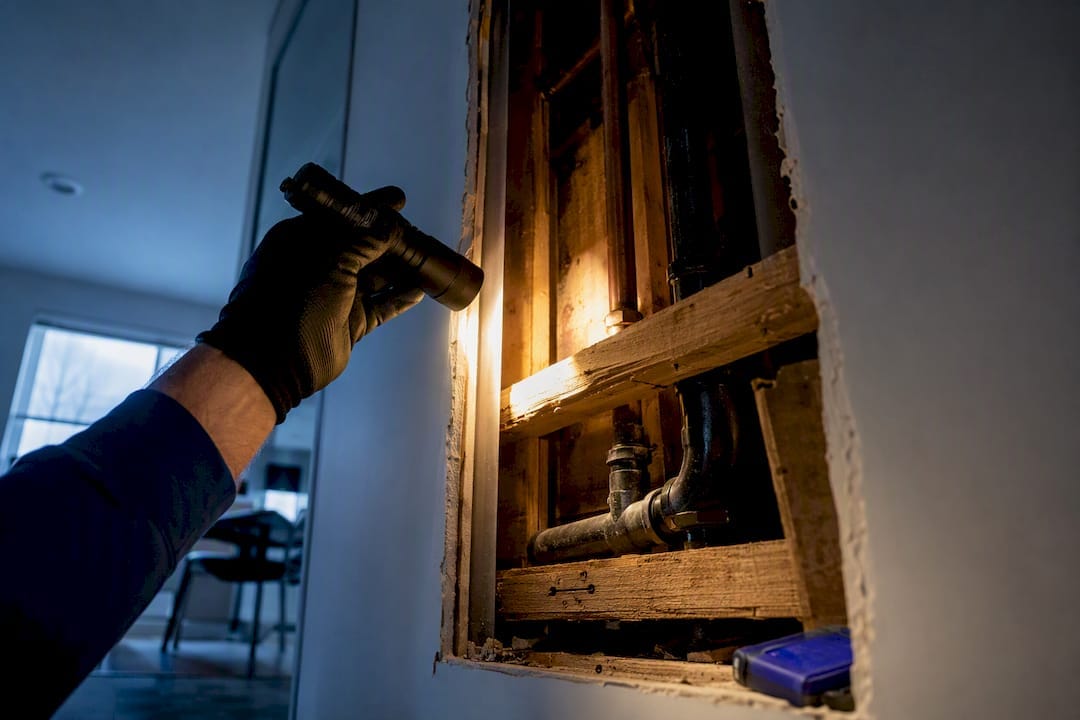
A material defect is a condition in a property that meaningfully hurts its value, poses an unreasonable safety risk, or would likely change a reasonable buyer’s decision to purchase or the price they’d offer. That’s the material defect definition inspectors and courts work from. It can be visible (patent) or hidden (latent), and once you know which one you’re dealing with, everything about disclosure duties and legal exposure follows from there.
TL;DR:
- A material defect must significantly lower property value, pose safety risks, or influence a reasonable buyer’s decision, whether visible or hidden.
- Latent defects are hidden and often trigger disputes over disclosure, especially when sellers may not have known of the issue.
- Home inspectors identify visible issues but cannot detect hidden problems like slab leaks or concealed mold, relying on judgment and accessible conditions.
- Selling parties have a legal obligation to disclose known material defects, with failure leading to lawsuits, rescission, or damages depending on severity.
- Negotiation leverage includes documented repair costs, escrow holds, or walk-away options, with specialist evaluations crucial for safety-critical issues.
Table of Contents
- How Courts and Real Estate Deals Decide If a Defect Is Material
- Patent Versus Latent Defects and Why Hidden Problems Cause Trouble
- What Inspectors Actually Report and Where the Job Stops
- Disclosure Duties and What Happens When Sellers Hide a Defect
- Real Examples: What’s Material and What’s Just Cosmetic
- Turning Inspection Findings Into Negotiation Leverage
- Deciding Whether to Close, Delay, or Walk
- What Inspectors Wish Buyers and Sellers Understood
- Get a Straight Answer on Your Property’s Condition
- Sources
How Courts and Real Estate Deals Decide If a Defect Is Material
Materiality gets tested two ways, and both matter in a negotiation or a lawsuit. The first is objective: does the problem measurably drag down market value or cost real money to fix? A cracked slab that needs $18,000 in piering work clears that bar without argument. The second test is more subjective and gets argued about constantly: would knowing about this defect have changed what a reasonable buyer paid or whether they bought at all?
That second test is where “reasonable buyer” comes in, and it’s a legal standard, not a personal one. It doesn’t matter if a particular buyer is unusually cautious or unusually relaxed about risk. The question is what an ordinary, informed buyer would do with the same facts. According to USLawExplained, this standard can pull in things that aren’t strictly physical defects at all, like chronic drainage problems affecting a whole street or a documented history of flooding. Evidence matters here: repair invoices, prior inspection reports, and expert opinions all get weighed when someone argues a defect was material.

Patent Versus Latent Defects and Why Hidden Problems Cause Trouble
A patent defect is something an ordinary inspection would catch. Visible foundation cracking, a sagging roofline, missing GFCI outlets in a wet-rated area. If it’s out in the open and discoverable by ordinary means, it’s patent.
A latent defect is hidden. It’s the kind of thing you don’t find without opening a wall, running a camera down a sewer line, or waiting for the wrong weather conditions to expose it. According to JH Hughes Legal, latent defects are the common source of disclosure disputes precisely because nobody can prove at a glance whether the seller knew. That’s the whole legal fight in most nondisclosure cases: not whether the defect existed, but whether it was hidden and whether the seller had reason to know about it before closing.
What Inspectors Actually Report and Where the Job Stops
Home inspectors work off standards that draw a clear line around what gets covered, and automated checklists that help ensure thorough evaluations. InterNACHI defines a material defect as a condition with a significant, adverse impact on value or one that creates an unreasonable risk to people, and InterNACHI is upfront that “material” leans on judgment. It’s not a box you check on a form.
ASHI’s Standards of Practice spell out the boundaries: inspectors report on systems that are visible and accessible, and they flag conditions that are significantly deficient, unsafe, or near the end of their service life. What they don’t do is destructive testing, moving insulation to check wiring, or digging up a yard to inspect a sewer lateral. That’s why a report can miss a slab leak or a hidden termite gallery behind drywall. It’s not a guarantee. This is exactly why experienced judgment matters more than a checklist; knowing which cosmetic clue points to something bigger is the actual skill.
Disclosure Duties and What Happens When Sellers Hide a Defect
Nearly every state has moved away from strict caveat emptor, the old “buyer beware” rule that put all the risk on the purchaser. According to LegalClarity, sellers in almost every state now carry an affirmative duty to disclose known material defects, and failing to do that can expose them to a lawsuit or force the sale to be unwound entirely.
Real estate brokers aren’t off the hook either. The GMAR Property Disclosures Pocket Guide lays out that agents who know about a material defect and fail to pass that along can face claims for misrepresentation or negligence, separate from whatever liability the seller has. Passive nondisclosure, just staying quiet and letting a buyer find out later, is increasingly treated the same as an active lie.
Remedies vary by state and by how bad the conduct was. A buyer who proves nondisclosure might recover repair costs, the difference between what they paid and what the home was actually worth, or in serious cases get the whole sale rescinded. If a court finds actual fraud, intentional concealment rather than a seller who honestly didn’t know, punitive damages can come into play on top of everything else. This is where paperwork stops being a formality: prior inspection reports, seller disclosure forms, and repair records are usually the deciding evidence in these cases, because the fight is almost always about what the seller knew and when.
Real Examples: What’s Material and What’s Just Cosmetic
Some conditions are material almost every time. Others rarely rise to that level on their own. A partial list of what typically lands on each side:
- Material: foundation cracks with active movement or displacement, a roof leaking into the structure, a failing or backed-up sewer lateral, concealed mold tied to a moisture source, exposed or reversed-polarity wiring, and knob-and-tube wiring still in service.
- Usually not material: faded exterior paint, worn carpet, minor drywall nail pops, or a chipped countertop edge.
The gray area is where cosmetic damage is actually a symptom. A water stain on a ceiling isn’t the defect; it’s evidence pointing at one, whether that’s a slow roof leak, a failed flashing detail, or a plumbing line inside a wall. We see this constantly in Memphis and West Tennessee, where older housing stock has a lot of patched, repainted ceilings sitting over problems nobody ever traced to the source. A stain alone doesn’t make the call. What’s driving it does. For a look at how hidden sewer issues specifically show up in inspection reports, see our breakdown of common sewer line defects.
Turning Inspection Findings Into Negotiation Leverage
An inspection report flagging a material defect isn’t the end of the transaction. It’s the start of a conversation, and how you handle that conversation matters more than the defect itself in most deals.
- Renegotiate the price based on documented repair costs, not gut feeling.
- Request repairs from the seller before closing, with a written scope of work.
- Set an escrow holdback if the repair can’t reasonably happen before the closing date.
- Walk away under your inspection contingency if the defect is severe enough, or the seller won’t budge.
- Order a specialist evaluation (structural engineer, licensed plumber, electrician) when a general inspection flags something beyond its scope.
Pro Tip: Get at least one written estimate from a licensed specialist before you go back to the seller with a number. A verbal “it’ll probably run five grand” from an inspector doesn’t carry the same weight at the negotiating table as a signed proposal.
Keep your agent, lender, and attorney (if you have one) in the loop as soon as a defect surfaces. Loans with tight underwriting timelines don’t wait for slow negotiations, and a well-documented paper trail protects you if the deal falls apart later. Our guide on how to read inspection reports walks through how to translate report language into next steps.
Deciding Whether to Close, Delay, or Walk
Once a material defect surfaces, the clock matters. For anything touching safety or structure, get a specialist out and get a written estimate before you make any decision about closing. That estimate is your leverage and your proof if things go legal later.
If the seller won’t commit to a fix or a credit before your contingency deadline, don’t just let the date slide by hoping it works out. Push the closing date, or require funds held in escrow until the repair is verified complete. A few extra days of delay costs far less than discovering a $40,000 foundation problem three months after you’ve moved in with no leverage left to negotiate.
What Inspectors Wish Buyers and Sellers Understood
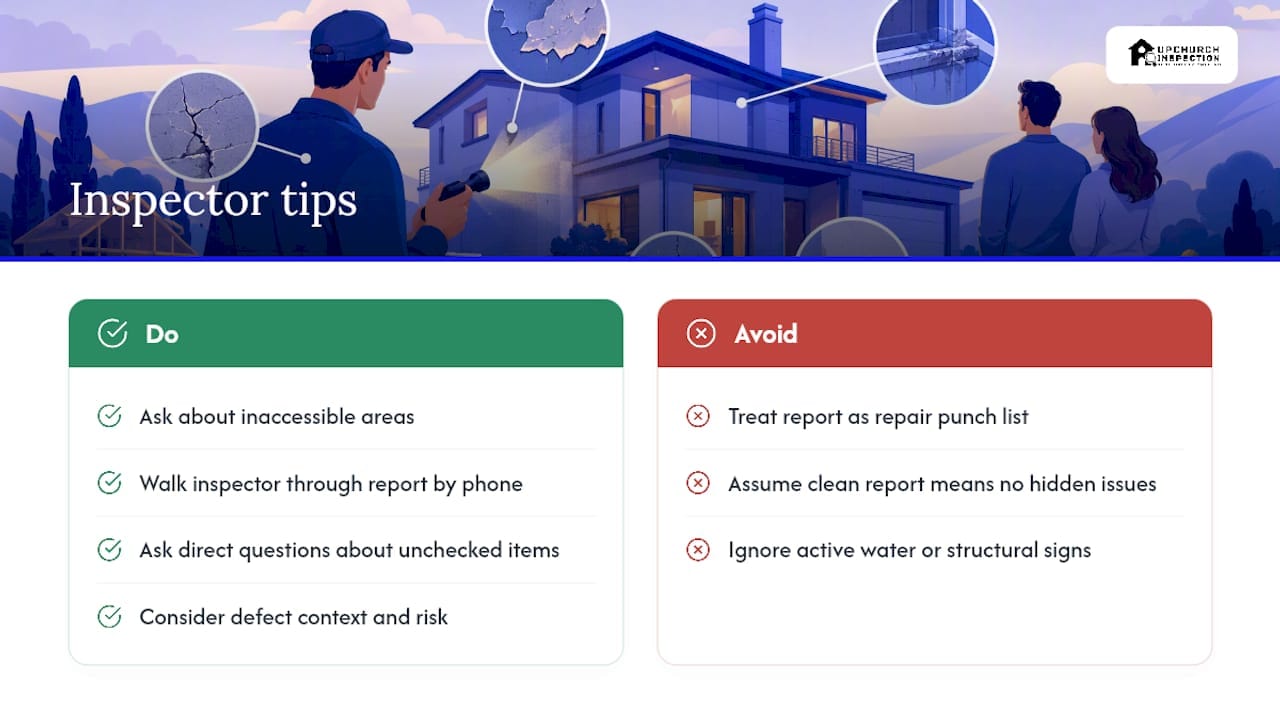
Experienced inspectors aren’t hunting for a spotless house. We’re hunting for active water intrusion, structural movement, and anything that could hurt someone, because those are the issues that actually meet the material defect definition. A dated kitchen doesn’t make our priority list. A double-tapped breaker feeding an overloaded panel does.
The most common mistake we see: clients treat the report like a repair punch list, expecting every noted item fixed before closing, when most items are informational. The second most common mistake is assuming a clean report means nothing is wrong behind the walls. It means nothing visible and accessible was wrong, which is a different statement entirely. Walk your inspector through the report by phone if anything is unclear, ask direct questions about what wasn’t checked, and you’ll avoid most of the surprises that turn into disputes later. Understanding why two homes with the same defects can carry very different risk helps explain why context, not just the defect itself, drives the real decision.
— Holly
Get a Straight Answer on Your Property’s Condition
You can get documented, plain-language answers about your property’s condition whether you’re buying, selling, or managing real estate in the Mid-South region. Reports typically highlight material defects in structural, electrical, plumbing, roof, foundation, and HVAC systems, provided by inspectors with qualifications beyond basic state standards. If a defect appears that falls outside the standard inspection scope, such as a suspected structural shift, it will be clearly noted that a specialist evaluation is needed rather than assuming what lies behind the wall. For a broader sense of the return you get from routine evaluations, take a look at the benefits of regular property inspections. If you’re closing on a property soon or managing one that hasn’t been checked in a while, schedule an inspection now, before a hidden problem becomes your problem.
This article is general information, not a substitute for advice from a qualified lawyer. Consult a qualified legal professional about your own circumstances before acting on anything here.