
TL;DR:
- Inspection reports are formal, evidence-backed documents that record a property’s condition, identify material defects, and guide negotiations. They include detailed observations, supporting photos, and clear recommendations, which help protect all parties legally and practically during real estate transactions. Prioritizing safety and major system issues while understanding report structure enhances decision-making and risk management.
An inspection report is a formal, time-stamped document that records a property’s condition at the moment of inspection, identifying material defects and recommending specific actions for buyers, sellers, and agents to act on. The role of inspection reports extends well beyond a simple checklist. These documents serve as objective, evidence-backed records that drive negotiations, inform purchase decisions, and provide legal protection when disputes arise. Whether you are buying your first home in Memphis, selling a commercial building in West Tennessee, or representing a client through a complex transaction, understanding what an inspection report actually does, and how to use it, separates informed decisions from costly mistakes.
What does an inspection report include?
Inspection reports document a property’s condition at inspection time by disclosing which systems and components were inspected, which were present but not inspected and why, and what defects were found. This three-part structure matters because it prevents misunderstanding. A buyer who sees “not inspected” next to the crawlspace needs to know that means access was blocked, not that the space was cleared. State standards, including those in New Jersey and similar jurisdictions, require reports to include repair, replace, or monitor recommendations for every identified defect. That requirement forces inspectors to do more than observe. They must interpret.

A well-structured report also includes photographs, measurements, and field notes tied directly to each finding. These elements are not decorative. They form the audit trail that makes a report defensible if a dispute arises months after closing. Missing photos or vague written observations can be treated as work not performed, which creates real liability exposure for inspectors and leaves buyers without recourse.
The table below shows the core fields found in a professional inspection report and what each one accomplishes:
| Report field | Purpose |
|---|---|
| Inspected systems list | Confirms scope and sets expectations for what was evaluated |
| Not-inspected components | Documents limitations and reasons, protecting all parties |
| Defect observations | Records condition with supporting photos and field notes |
| Significance rating | Helps buyers and agents prioritize safety vs. cosmetic issues |
| Recommendations | Directs repair, replacement, monitoring, or specialist review |
| Inspector limitations | Clarifies what visual inspection cannot determine |
Pro Tip: Ask your inspector to walk you through the report in person or by phone after delivery. The written document captures findings, but a five-minute conversation about which items are safety concerns versus maintenance items can change how you approach negotiations entirely.
How buyers, sellers, and agents use inspection reports in negotiations
Inspection reports provide documented leverage in negotiations, and buyers who use them strategically have seen average savings of around $14,000 through repair requests or price adjustments. That figure reflects what happens when findings are presented clearly and tied to real cost estimates. The report itself does not negotiate. The people holding it do, and how they use it determines the outcome.
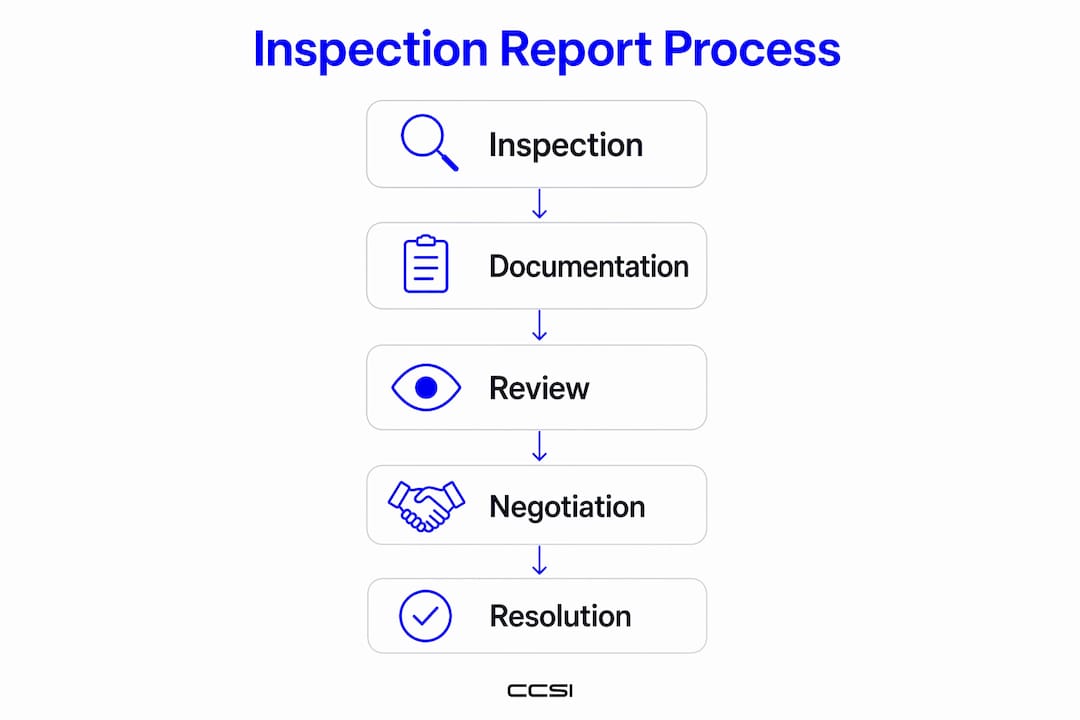
The most effective approach focuses on major systems and safety issues first. Roof condition, HVAC age and function, electrical panel deficiencies, plumbing leaks, and structural concerns carry real cost and risk. These are the findings that justify repair credits, price reductions, or seller-paid remediation before closing. Prioritizing high-impact items preserves negotiation credibility. Agents and buyers who load requests with cosmetic complaints, scuffed trim, dated fixtures, minor caulking gaps, dilute the weight of legitimate concerns and give sellers reason to dismiss the entire list.
Pre-listing inspections serve a different but equally practical purpose. Sellers who commission an inspection before listing can identify and address defects on their own timeline, at their own contractor pricing, rather than under the pressure of a buyer’s contingency deadline. This approach reduces surprises, supports accurate pricing, and signals transparency to buyers and their agents.
Here is how experienced real estate professionals apply inspection reports in negotiations:
- Lead with safety and major system findings. Documented electrical hazards, active roof leaks, and failed HVAC equipment are the strongest negotiation points because they carry clear cost and risk.
- Attach cost estimates to requests. A repair request backed by a contractor quote is harder to dismiss than a line item from a report alone.
- Separate repair requests from monitoring items. Asking a seller to address a cracked HVAC heat exchanger is reasonable. Asking them to fix every minor maintenance item is not.
- Use the report to support a price adjustment. When sellers will not make repairs, documented findings justify a credit or price reduction that buyers can apply to post-closing work.
- Reference the report in written addenda. Tying repair requests to specific report findings by section and page number creates a clear record for both parties.
Pro Tip: When representing a buyer, review inspection examples before the transaction so you can recognize the difference between a well-documented finding and a vague observation that will not hold up in negotiation.
What is the legal and risk management role of inspection reports?
A defensible inspection report functions as an audit-trail style record, preserving time-stamped evidence that can be reviewed long after the inspection to support decisions and resolve disputes. This is not a theoretical benefit. In practice, when a buyer discovers a plumbing defect six months after closing and claims the inspector missed it, the report and its supporting photos either confirm or refute that claim. Without traceable evidence, the inspector has no defense and the buyer has no clear path forward.
The pre-inspection agreement works alongside the report as a risk management tool. Contract clauses in these agreements govern liability limits, claim timing, and dispute procedures. One documented case shows liability capped at the inspection fee itself, with specific clauses controlling where and when claims could be filed. Buyers and sellers should read these agreements before signing, not after a problem surfaces.
The legal value of a report depends on three distinctions that every inspector must make clearly:
- Observed and inspected. The inspector saw the component, evaluated its condition, and documented findings with photos and notes.
- Present but not inspected. The component exists but was inaccessible or outside the agreed scope. The reason must be documented.
- Material defect identified. A condition that affects safety, function, or value and requires repair, replacement, or specialist evaluation.
Compliance in inspection reporting is not just about meeting a checklist. A compliant report is a defensible record where every finding is tied to objective evidence and structured for clarity and auditability. Inspectors who treat reports as living legal documents, rather than delivery receipts, protect themselves and give their clients a record that actually holds up.
How to interpret inspection findings and prioritize your next steps
Inspection reports strengthen risk management by grading issues in ways that drive maintenance prioritization and resource allocation. For buyers and homeowners, this means reading the report as a risk register, not a punch list. Not every finding demands the same response, and treating them equally leads to either panic over minor items or neglect of serious ones.
Safety and major systems come first. Roof covering condition and remaining service life, HVAC equipment age and function, electrical panel type and condition, plumbing supply and drain materials, and structural components including foundation, framing, and load-bearing walls represent the highest-cost and highest-risk categories. A 15-year-old HVAC unit near the end of its service life is a budgeting concern. A cracked heat exchanger is a safety issue requiring immediate action. The report should make that distinction clear, and a good inspector will.
The table below summarizes common finding categories and the recommended response for each:
| Finding category | Typical recommendation | Buyer action |
|---|---|---|
| Safety hazard (electrical, gas, CO) | Repair or replace before occupancy | Require seller correction or credit |
| Major system deficiency (HVAC, roof, plumbing) | Repair, replace, or specialist evaluation | Negotiate repair credit or price adjustment |
| Deferred maintenance (caulking, paint, minor leaks) | Monitor or repair within 12 months | Budget for post-closing work |
| Cosmetic condition (scuffs, dated finishes) | No action required | Do not include in repair requests |
| Specialist review needed (foundation, HVAC heat exchanger) | Obtain evaluation from licensed specialist | Schedule before contingency deadline |
Avoiding overreaction to cosmetic or minor maintenance items is as important as addressing real defects. Buyers who misinterpret inspection severity often walk away from sound properties over normal wear, or spend negotiation capital on items that cost less than the time spent arguing about them. The report’s job is to give you a clear picture of actual risk. Your job is to respond proportionally.
Pro Tip: When a report recommends a specialist evaluation for the foundation or HVAC heat exchanger, schedule that evaluation before your inspection contingency expires. A general inspector’s recommendation to consult a structural engineer or HVAC technician is not a red flag. It is the report doing its job correctly.
Key takeaways
Inspection reports function as defensible, evidence-backed records that protect buyers, sellers, and agents only when their findings are read accurately and applied with clear priorities.
| Point | Details |
|---|---|
| Reports are formal records | Every finding must be tied to photos, notes, and timestamps to hold up in disputes. |
| Structure determines usefulness | Reports that separate inspected, not-inspected, and material defects give all parties a clear decision framework. |
| Negotiation requires prioritization | Focus repair requests on safety and major systems to maintain credibility and achieve real results. |
| Legal protection is built in | Pre-inspection agreements and defensible reports together manage liability for inspectors and buyers. |
| Severity interpretation matters | Treating cosmetic items the same as safety hazards leads to poor decisions and wasted negotiation leverage. |
What I have learned from years of reading and writing inspection reports
The most common mistake I see buyers make is treating an inspection report like a pass-or-fail grade. A 40-page report with 60 findings does not mean the house is falling apart. It means the inspector did their job. Every house, including new construction, has findings. The question is always what kind and how serious.
What separates a useful report from a document that creates more confusion than clarity is specificity. Vague language like “evidence of moisture noted” without a photo, a location, and a recommendation leaves everyone guessing. When we write a report at Upchurchinspection, every finding gets a photo, a location reference, and a clear recommendation. That structure is not just professional practice. It is what makes the report worth anything in a negotiation or a dispute.
The other pattern I see regularly is buyers and agents misreading when an inspection should end a deal versus when it should inform a negotiation. A failed HVAC unit in a Memphis summer is a real cost. A 20-year-old water heater still functioning is a budgeting note. Both appear in the same report. How you respond to each one determines whether the inspection works for you or against you.
Sellers benefit from this clarity too. A pre-listing inspection that identifies a failing roof before a buyer’s inspector does gives the seller options. Fix it, price around it, or disclose it. All three are better than being blindsided during a buyer’s contingency period with a repair demand and a closing deadline bearing down.
— Holly
Get a report that actually protects your transaction
At Upchurchinspection, we produce reports built for real use, not just delivery. Every finding is documented with photos, field notes, and clear recommendations that buyers, sellers, and agents can act on with confidence. Our inspectors in the Mid-South exceed state qualification standards, and our reports are structured to hold up in negotiations and disputes alike. Whether you are buying your first home or managing a commercial portfolio, the protection inspections provide starts with a report you can trust. We also offer regular inspection programs for property owners who want to stay ahead of deferred maintenance and avoid costly surprises at resale.
FAQ
What is an inspection report in real estate?
An inspection report is a formal, time-stamped document that records a property’s condition at the time of inspection, identifying material defects and recommending repair, replacement, monitoring, or specialist evaluation for each finding.
How do buyers use inspection reports in negotiations?
Buyers use documented findings to request repairs, price reductions, or closing credits, with the strongest requests focused on safety hazards and major system deficiencies rather than cosmetic or minor maintenance items.
What makes an inspection report legally defensible?
A defensible report includes photos, timestamps, field notes, and clear documentation of what was inspected, what was not inspected and why, and what constitutes a material defect, creating an audit trail that supports dispute resolution.
Should sellers get an inspection report before listing?
A pre-listing inspection gives sellers the opportunity to identify and address defects on their own schedule, support accurate pricing, and reduce the risk of buyer-driven repair demands during the contract period.
What is the difference between a repair recommendation and a monitor recommendation?
A repair recommendation identifies a defect requiring correction before or shortly after occupancy. A monitor recommendation notes a condition that is not yet a defect but should be tracked over time to prevent it from becoming one.
Recommended
- What a Commercial Inspection Report Should Tell Buyers, Lenders, and Boards
- Role of Inspections in Real Estate Transactions: Protecting Buyers and Sellers
- When an Inspection Should Kill the Deal — And When It Shouldn’t – Upchurch Inspection
- Re-Inspections in Commercial Real Estate: What They Confirm—and What They Don’t – Upchurch Inspection