

TL;DR:
- An 11 month warranty inspection thoroughly evaluates a new home’s workmanship and materials before the builder’s warranty expires.
- It identifies defects in exterior, roofing, HVAC, plumbing, electrical, and interior systems to ensure repairs are made at no cost to the homeowner.
An 11 month warranty inspection is a thorough evaluation of your new home’s workmanship and materials, conducted before your builder’s one-year warranty expires. The purpose is direct: document every defect so the builder is legally obligated to repair it before coverage lapses. Unlike the 2–10 structural warranty that covers only load-bearing failures, the one-year warranty covers workmanship and materials broadly, giving you far more leverage. Inspectors compare findings against the International Residential Code to identify failures. Miss this window, and those repairs become your expense.
1. Which exterior and structural items matter most?
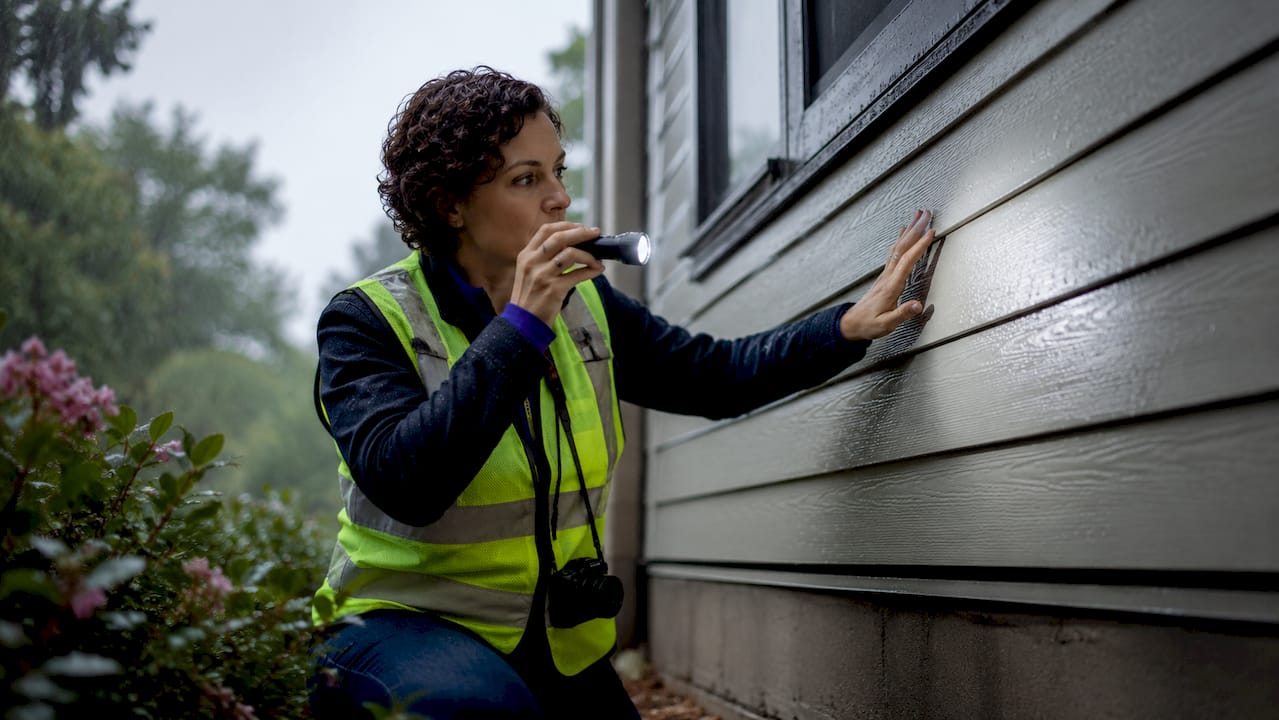
The exterior is where slow-burn problems hide longest. Foundation cracks, negative grading, and drainage failures often take a full seasonal cycle to show up clearly. By month 11, you have enough weather history to catch them before they become your problem permanently.
Key exterior items to document include:
- Foundation cracks and settlement signs. Horizontal cracks in block foundations are serious. Vertical hairline cracks in poured concrete may be normal shrinkage, but diagonal cracks near corners signal differential settlement. Homes with slab foundations need special attention, since slab cracks and settling evolve subtly but carry major long-term consequences.
- Grading and drainage near the foundation. Soil that slopes toward the house directs water into the foundation wall. This is one of the most commonly missed items on a warranty inspection checklist, and seasonal moisture and grading issues can cause serious foundation damage if not corrected during the warranty period.
- Exterior siding, stucco, and paint. Look for gaps at trim joints, caulking failures, and areas where siding does not sit flush. These are entry points for moisture.
- Driveways, porches, and decks. Check for cracking, heaving, and loose railings. Deck ledger connections and stair handrails are safety items, not cosmetic ones.
Pro Tip: Walk the perimeter after a heavy rain. Standing water within 10 feet of the foundation is a warranty claim, not a landscaping preference.
2. What roofing and attic issues are commonly found?
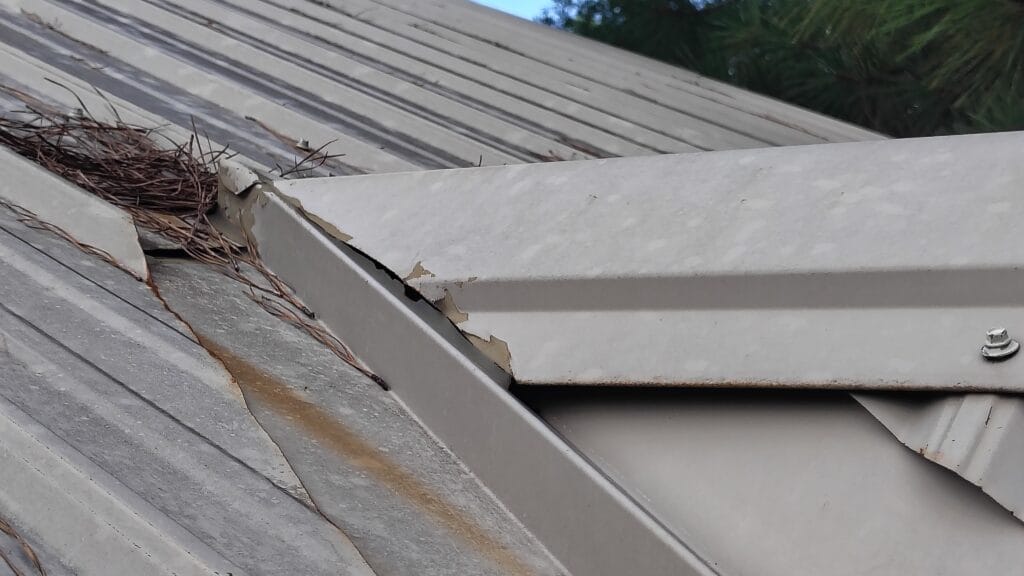
Roofing defects at 11 months are often installation errors that weather has now exposed. A single missing piece of step flashing at a chimney or dormer can drive water into the wall cavity for months before you see a stain inside.
Common roofing and attic items to inspect:
- Missing or damaged shingles and flashing. Check all roof penetrations: plumbing vents, HVAC flues, and skylights. Flashing gaps are the leading source of early roof leaks in new construction.
- Roof decking movement or sagging. Walk the roof if safe, or use binoculars from the ground. Visible waves in the plane of the roof indicate decking that was not properly nailed or was installed wet.
- Attic insulation depth and coverage. Insulation that has been disturbed by HVAC contractors or that was never installed to the required depth is a warranty item. Gaps over exterior walls are particularly costly in energy terms.
- Ventilation and baffles. Soffit baffles keep insulation from blocking airflow at the eaves. Loose or missing baffles cause moisture buildup and premature decking deterioration.
- Hidden moisture and condensation. Check the underside of the roof decking for dark staining, which indicates condensation from inadequate ventilation. This is a defect, not normal aging.
Pro Tip: Bring a flashlight into the attic and look at the ridge vent from inside. Daylight should be visible evenly along the ridge. Blocked sections indicate a ventilation defect.
3. What are the critical HVAC and electrical inspection items?
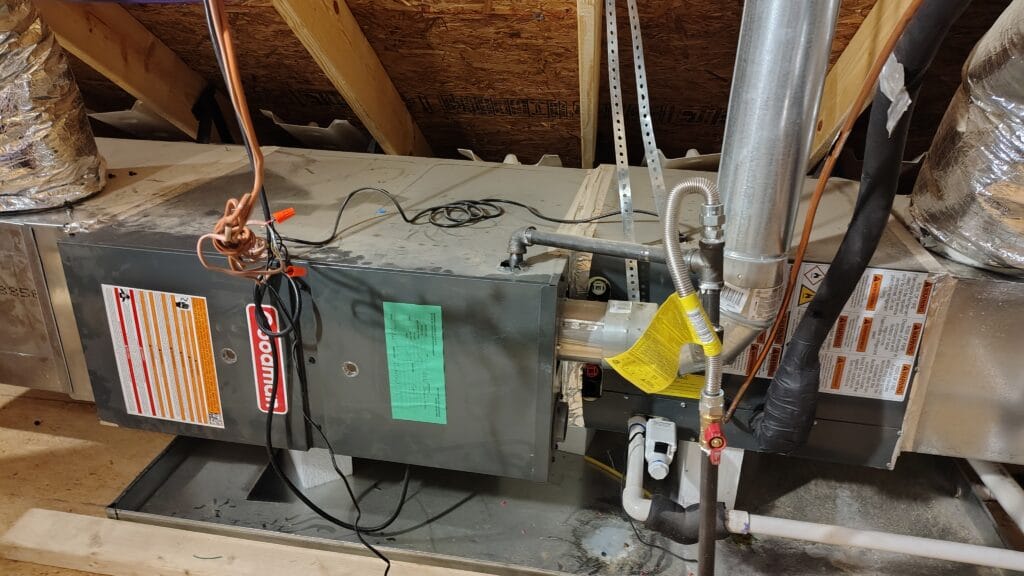
HVAC and electrical defects at 11 months are often installation shortcuts that passed the builder’s final walkthrough but have since created real comfort and safety problems. These are not minor. A disconnected duct in an attic can dump conditioned air into unconditioned space all summer.
Common HVAC defects found at 11 month inspections include unbalanced rooms, thermostat calibration errors, and disconnected ductwork in attics. Inspectors use room-to-room temperature differentials as a quick diagnostic. A difference of more than 3–4 degrees Fahrenheit between rooms on the same floor typically points to a duct problem or a design deficiency.
- Room temperature imbalances. Walk each room with a thermometer. Rooms that run consistently hot or cold indicate air balancing problems or duct leaks. This is a warranty repair, not a thermostat setting.
- Thermostat calibration and condensate drain. A thermostat reading 2 degrees off its setpoint wastes energy and indicates a calibration defect. Condensate drain lines that are not properly sloped or are clogged will overflow, causing water damage to ceilings below air handlers.
- Ductwork disconnections. Attic ductwork connections that were not properly secured often separate after thermal expansion and contraction cycles. A disconnected duct is one of the highest-impact defects you can find at this stage.
- GFCI and AFCI protection. Missing GFCI outlets and AFCI breakers on required circuits are among the most common electrical defects in new construction. GFCI protection is required in kitchens, bathrooms, garages, and exterior locations. AFCI protection is required on bedroom circuits in most jurisdictions.
- Outlet and panel issues. Check every outlet for proper function. Look at the panel for double-tapped breakers, missing knockouts, and breakers that are not labeled. These are code deficiencies, not maintenance items.
4. Which plumbing and interior finish items should you document?
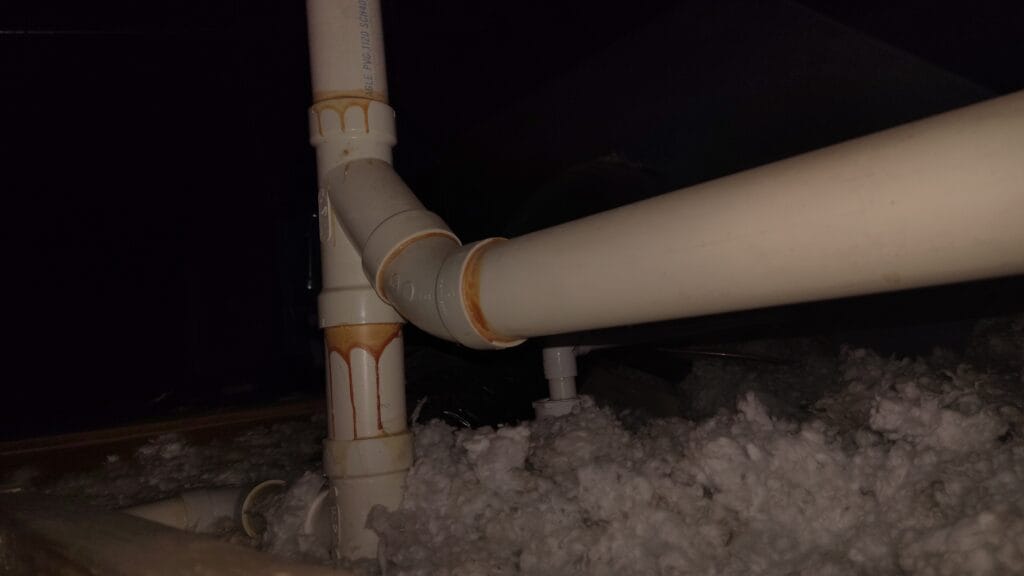
Plumbing leaks in new homes are rarely dramatic. They are slow drips under a sink cabinet or a supply line fitting that was hand-tightened but never torqued. By month 11, those slow leaks have often caused cabinet damage that is now visible.
Key plumbing and interior items to document:
- Supply line leaks under sinks and appliances. Pull open every cabinet under a sink and check the floor of the cabinet for water staining or soft spots. Check behind the refrigerator and under the dishwasher as well.
- Slow drains and water hammer. A drain that runs slowly from day one is a slope or venting defect, not a clog. Water hammer, the banging sound when a valve closes quickly, indicates missing or failed air chambers and is a warranty repair.
- Drywall cracks and nail pops. Drywall cracks present in new homes are among the most common defects found at the one-year mark. Nail pops at seams and corners are normal in the first year but must be documented and repaired under warranty before expiration.
- Door and window sticking. Doors that drag or windows that do not lock properly after a year of settling indicate framing movement. This is not cosmetic. A door that does not latch is a security and fire safety concern.
- Caulking failures and trim separations. Gaps at tub surrounds, window sills, and exterior door frames allow moisture intrusion. Trim that has pulled away from walls is a cosmetic defect but still a warranty item.
5. How to organize and submit your findings as effective warranty claims
A poorly documented punch list gets ignored or disputed. A well-organized report with numbered items, system categories, photo references, and clear defect descriptions gets repairs scheduled. The difference is not the severity of the defects. It is the quality of the documentation.
Comprehensive reports organized by system with photo documentation are the standard that gets builder action. Poorly documented claims lead to repair delays or outright denial.
- Organize by system with item numbers. Group defects under headings: Foundation, Exterior, Roofing, HVAC, Plumbing, Electrical, Interior. Number each item. Builders respond to numbered lists because they can track completion.
- Write clear defect descriptions. “Crack in drywall” is weak. “Diagonal crack at upper left corner of master bedroom window, approximately 14 inches long, consistent with framing settlement” is a warranty claim.
- Include photo references. Every item should have at least one photo. Label photos with the item number and location. This removes all ambiguity about what was found and where.
- Submit 30–45 days before month 12. Scheduling during month 10 or early month 11 allows time to receive the report and have the builder complete repairs before the deadline. The warranty inspection process from scheduling through report delivery takes time. Do not wait until month 11.5.
- Follow up in writing. After submitting your punch list, send a written confirmation to the builder’s warranty department. Keep copies of all correspondence. Verbal agreements about repairs are not enforceable.
Pro Tip: Send your punch list via email with read receipt or certified mail. A builder who claims they never received your list cannot use that defense if you have delivery confirmation.
Key takeaways
The 11 month warranty inspection is the single most time-sensitive inspection a new homeowner can schedule, because defects documented before month 12 are the builder’s legal responsibility to repair.
| Point | Details |
|---|---|
| Schedule early | Book your inspection during month 10 or early month 11 to allow time for report delivery and builder repairs. |
| Exterior grading is critical | Negative slope toward the foundation is a warranty defect that causes long-term water damage if missed. |
| HVAC and electrical need testing | Room temperature differentials and missing GFCI/AFCI protection are common defects that require active testing to find. |
| Documentation quality drives results | Numbered, photo-backed reports organized by system get faster builder response than vague complaint lists. |
| Cosmetic vs. structural matters | Separate paint touch-ups from structural or safety defects to prioritize claims and avoid disputes with the builder. |
What I’ve learned from doing these inspections year after year
The 11 month inspection is the highest-ROI inspection most homeowners never schedule. That is not an exaggeration. I have walked homes where the builder owed tens of thousands of dollars in legitimate repairs, and the homeowner had no idea because nobody told them to look.
The defects that concern me most are not the nail pops and paint gaps. Those are expected. What I watch for are the slow-burn structural issues: negative grading that has been directing water toward the foundation through two wet seasons, disconnected attic ductwork that has been conditioning the attic instead of the living space, and step flashing gaps that have been leaking into a wall cavity since the first winter. These hidden defects only appear after seasonal changes and are exactly what month 11 is designed to catch.
In the Memphis area and across West Tennessee, moisture and grading are the two issues I see most often underestimated. The clay soil here expands and contracts dramatically with seasonal moisture. A grading defect that looks minor in a dry summer looks very different after a wet spring. By month 11, you have seen both. That is your evidence.
My blunt advice: do not try to run this inspection yourself with a checklist from the internet. The home inspection requirements for a proper warranty evaluation reference InterNACHI and ASHI Standards of Practice. A professional inspector knows what a code-compliant installation looks like and can tell the difference between a cosmetic imperfection and a workmanship failure. That distinction is what makes your punch list defensible.
— Holly
Schedule your 11 month inspection before the deadline
Upchurchinspection serves homeowners across the Mid-South with warranty inspections that go well beyond a basic checklist. Our inspectors evaluate every major system, produce detailed reports with numbered items and photo documentation, and deliver findings in a format builders cannot ignore. We know what workmanship failures look like in new construction, and we know how to document them so your claims hold up. The benefits of a professional inspection at this stage are concrete: repairs completed at builder cost instead of yours. Schedule your 11 month warranty inspection with Upchurchinspection at least 30 days before your warranty expires.
FAQ
What does an 11 month warranty inspection cover?
The inspection covers workmanship and materials across all major systems, including foundation, roofing, HVAC, plumbing, electrical, and interior finishes. Inspectors reference InterNACHI and ASHI Standards of Practice to define the full inspection scope.
How long does the inspection take?
A typical on-site evaluation runs 2–4 hours depending on home size and foundation type. Slab homes and two-story homes with complex rooflines take longer than single-story crawl space homes.
What is the difference between the 11 month warranty and the 2-10 structural warranty?
The 11 month warranty covers workmanship and materials broadly. The 2–10 structural warranty covers only load-bearing failures. The one-year window gives homeowners significantly more coverage and more leverage with the builder.
When should I schedule the inspection?
Schedule during month 10 or early month 11. This gives you enough time to receive the report, compile your punch list, and submit it to the builder with 30–45 days remaining before the warranty expires.
Do I need a professional inspector or can I do it myself?
A professional inspector is the right call. Identifying a workmanship defect requires knowing what a code-compliant installation looks like. A homeowner checklist catches obvious problems. A trained inspector catches the ones that cost the most.