
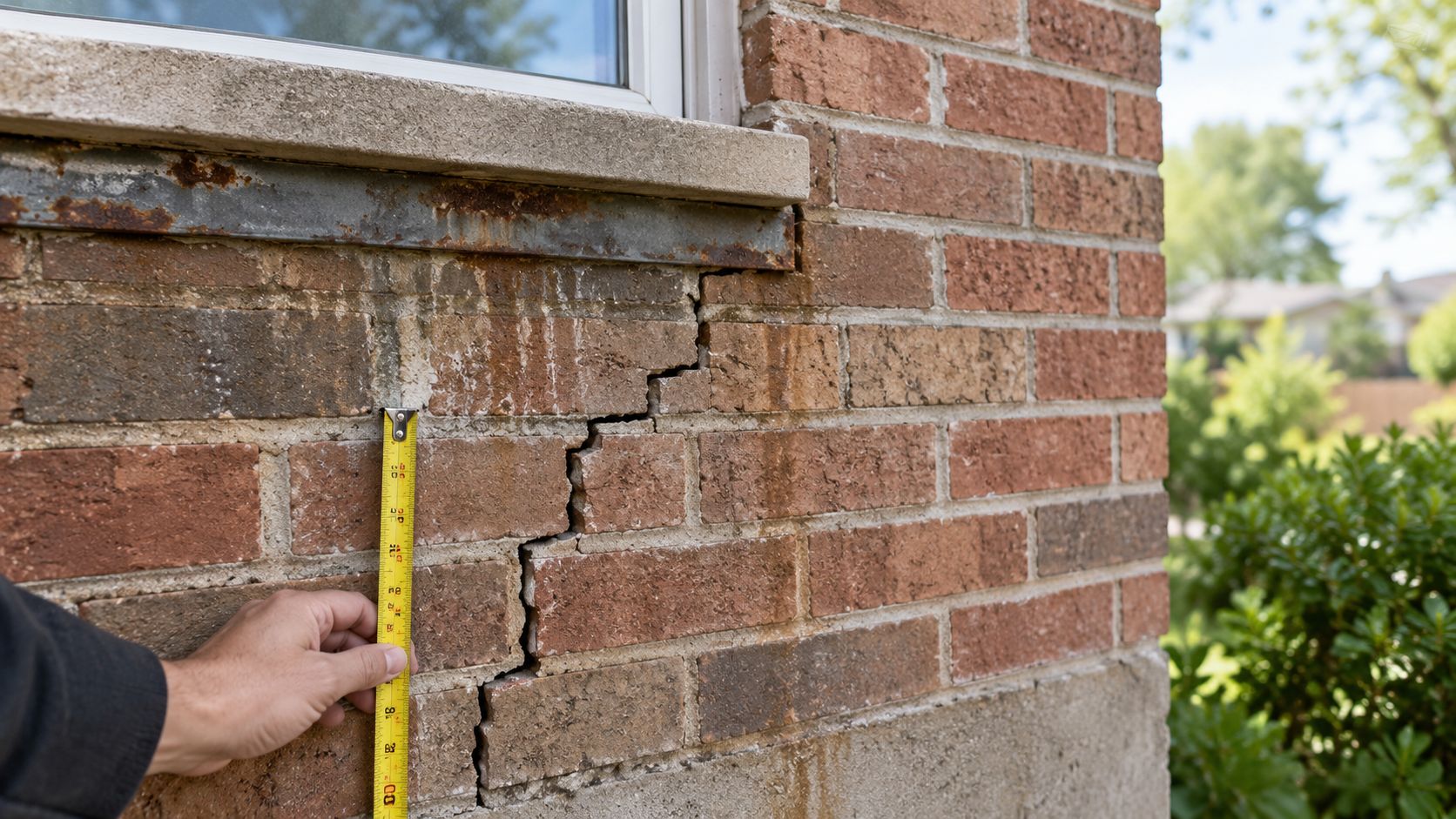
You step onto the front walk on a cool morning, coffee in hand, and notice a stair-step crack climbing through the brick veneer from the foundation line. It may be narrow enough to miss most days, but once you see it, the wall looks different. The first question is usually the same: what causes cracks in brick veneer, and does this one mean the house is in trouble?
A crack is a clue, not a diagnosis. Its direction, location, width, relationship to doors and windows, and signs of movement elsewhere all matter. By the end of this walkthrough, you'll be able to identify a crack pattern, connect it with the most likely cause, decide whether it appears cosmetic or active, complete a calm home inspection, and choose between a tuckpointing repair and a more involved structural evaluation. The aim is practical judgment, not a fear-driven list.
Table of Contents
- A Crack in the Wall and What Comes Next
- How Brick Veneer Is Built and Why It Moves
- Common Causes Behind Different Crack Patterns
- Mid-South Conditions That Show Up in the Mortar
- A Calm Inspection Routine for Homeowners
- Repair Options and When Each One Fits
- Pulling It Together and Knowing When to Call
A Crack in the Wall and What Comes Next
The homeowner in that front-walk scenario may first reach for a tube of mortar repair. That's understandable. A narrow line in a mortar joint often looks like a surface defect, especially when the bricks remain aligned and the wall isn't visibly leaning. But covering the crack before understanding its pattern can hide the evidence that tells you whether the wall has stopped moving.
On inspection, I start with the wall itself. I look at whether the crack follows the mortar joints or cuts through the brick, whether it begins at a corner or opening, and whether nearby bricks have shifted. A stair-step line rising through several joints suggests a different problem from a short vertical split above a window. A horizontal line along a lintel deserves a different response again.
Field rule: Repair the cause before repairing the line. Mortar can close a symptom while the movement behind it continues.
The same approach applies whether the property is in Cape Girardeau, Jackson, Sikeston, Poplar Bluff, Farmington, Perryville, or farther west toward Columbia, Jefferson City, Fulton, Boonville, or Sedalia. Regional soil movement, moisture, freeze-thaw exposure, and aging steel components change the likelihood of particular defects, but the wall still gives you useful evidence.
Start by documenting what you see rather than trying to prove a diagnosis from the sidewalk. Photograph the crack straight on, measure it, check the opposite side of the wall when accessible, and note changes over time. If you find displacement, leaning, a horizontal crack, or matching interior damage, stop treating the issue as a cosmetic project and arrange a qualified evaluation.
How Brick Veneer Is Built and Why It Moves
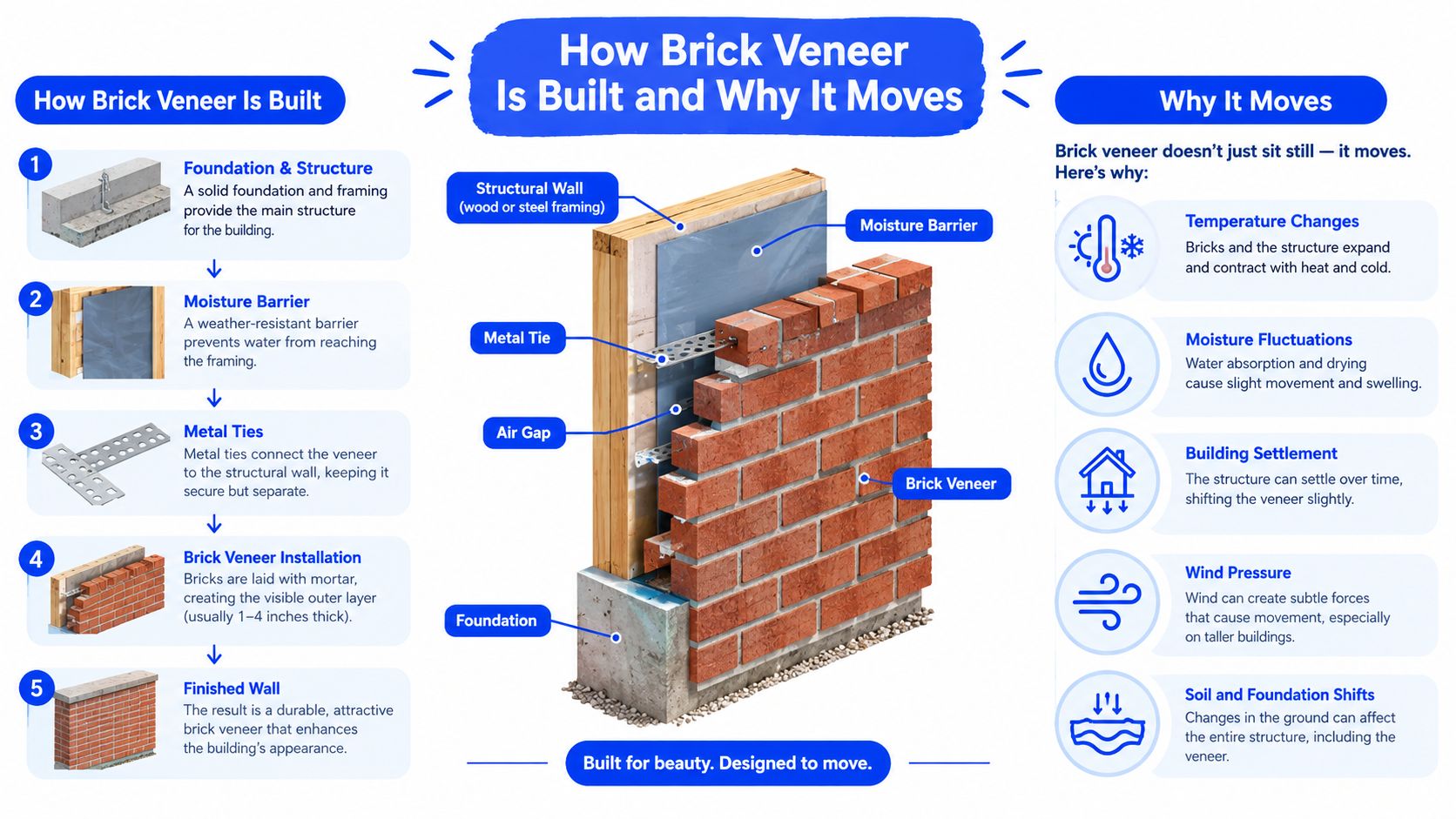
A brick veneer wall is an exterior masonry skin, not a solid structural brick wall. In a typical cavity-wall arrangement, one wythe of brick sits outside a wood or steel frame, with an air space between the veneer and backup wall. Corrugated wall ties connect the veneer to the framing, while a shelf angle or brick ledge supports the brick.
The air space provides room for drainage and limited movement. Flashing and weepholes direct water back outside instead of allowing it to collect behind the veneer. The structural frame carries the roof and floor loads. Brick protects the exterior and gives the building its masonry finish.
These layers respond differently to Mid-South conditions. Brick changes with heat and moisture. Wood framing reacts to moisture and seasonal swelling. Steel framing and lintels respond to temperature and load. The wall ties and joints must accommodate those differences rather than forcing every component to move together.
Movement has planned escape routes
Expansion joints create continuous separations where one veneer section can move without pushing hard against the next. Industry guidance identifies temperature, moisture, elastic deformation, settlement, and creep as movements these joints accommodate. A manufacturer specification describes movement joints as typically 10 to 12 millimeters wide, sealed with backer rod and commercial sealant. The Brick Industry Association technical guidance on movement explains how the joints limit stress in the masonry.
Clay brick also changes size after firing. Thermal expansion is about 4 × 10⁻⁶ inches per inch per degree Fahrenheit, while moisture expansion is about 3 × 10⁻⁴ inches per inch, according to Technical Note 18 on brick volume changes. The same guidance indicates that brick veneer can expand and contract approximately 7/16 inch per 100 feet for every 100-degree-Fahrenheit temperature swing. On long walls, that movement concentrates at corners, openings, and areas without adequate joints.
Mortar joints are intended to absorb much of this ordinary movement before the brick faces crack. In a wall exposed to wet summers, rapid temperature changes, occasional freezes, and uneven drying, blocked drainage or overly rigid mortar leaves stress fewer places to go. Missing ties, poor bearing, and inadequate separation can create similar pressure at weak points.
Drainage details matter as much as movement joints. A wall with blocked or missing openings cannot shed water properly, as explained in this guide to brick weep holes and missing drainage openings. Trapped moisture can affect the backup wall, increase freeze-thaw stress, and make cracking harder to interpret.
Common Causes Behind Different Crack Patterns
A crack's direction, location, and effect on the surrounding brick usually matter more than its width alone. From the sidewalk, the wall may look sound. Up close, a flashlight can show whether the line follows mortar joints, cuts through brick, or has pushed the veneer out of plane. The pattern cannot prove a cause by itself, but it tells you where to look next.
Foundation movement and soil pressure
Uneven settlement often produces stair-step cracking through mortar joints. The line may start near the foundation and climb diagonally, sometimes widening higher on the wall. Heave can compress masonry near corners and openings or push portions of the veneer upward. In Mid-South homes, seasonal soil moisture changes can make these cracks open during dry weather and tighten after rain.
A stair-step crack does not automatically mean the foundation has failed. Brick veneer can record movement in the supporting structure even when the primary foundation has no major structural defect. The concern rises when the crack is widening, the brick is displaced, the wall has shifted out of plane, or the same line returns after repair. This Missouri-focused discussion of stair-step cracks in brick houses offers useful context for deciding when a closer evaluation is appropriate.
Thermal and moisture movement
Long, uninterrupted wall runs commonly show vertical or diagonal cracking near corners, openings, and locations where movement joints are missing or ineffective. A horizontal crack near a shelf angle or window corner can reflect restrained movement, although the same location may point to lintel distress or inadequate veneer support. The surrounding details matter more than applying a single width rule.
Newer brick veneer can develop fine cracks as the units adjust after firing. Moisture-related volume change is most noticeable early in the brick's service life, and stress may collect at corners, openings, or other weak points. Fine diagonal, stair-step, or vertical cracks do not automatically indicate a major structural problem. Check whether the joints are continuous, whether the crack crosses the brick faces, and whether the line changes with seasonal conditions.
Lintels, ties, and freeze-thaw damage
Steel lintels over windows and garage doors can deflect or corrode. Expanding rust presses against the surrounding masonry and often produces cracking above the opening. The corrosion can increase the original metal volume by up to seven times, creating outward pressure on the veneer, as described in this technical explanation of brick veneer crack causes. Look for rust staining, a horizontal crack that follows the opening, or brick that has lifted at one end.
Corroded or missing wall ties may let the veneer bow away from the framed wall. Step cracks in the middle of a broad wall, a visible outward bulge, and loose brick that no longer sits flush deserve prompt attention. Freeze-thaw deterioration looks different. The brick face may flake or spall, while mortar joints crumble where water remains trapped and drying is limited.
Construction defects can create scattered early cracking as well. Overly rigid mortar, poor joint detailing, skipped drainage openings, or inadequate support may leave the veneer with little room to accommodate ordinary movement. A map-like pattern is harder to interpret than a clean stair-step line, so inspect the wall's drainage and support details before choosing a repair.
A practical comparison
Width helps with screening, but it does not establish severity. A narrow crack in an active, displaced wall can matter more than a wider dormant crack with stable edges.
| Crack Pattern | Likely Cause | Typical Width | Urgency |
|---|---|---|---|
| Stair-step line rising from the foundation | Uneven settlement or heave | Often narrow at first, may widen | Monitor closely, and seek evaluation if active |
| Horizontal crack near an opening | Lintel movement, corrosion, or restrained veneer movement | Variable | Professional review is appropriate |
| Vertical crack at a corner or long wall | Differential or thermal movement | Often hairline | Check joints, openings, and movement history |
| Bulging wall with step cracks mid-wall | Failed or missing wall ties | Variable | Prompt masonry or structural evaluation |
| Flaking brick face and crumbling joints | Moisture and freeze-thaw deterioration | Surface loss rather than a single width | Repair drainage and damaged masonry |
As a general screening point, a crack under 1/8 inch is usually cosmetic, one from 1/8 to 1/4 inch is worth monitoring, and a wider crack may be structural. Any line that continues moving deserves closer attention, whatever its current width. Record its location, photograph the surrounding brick, and check again after weather changes or repairs.
Mid-South Conditions That Show Up in the Mortar
A brick wall in Southeast Missouri doesn't experience the same conditions as one in every other region. The useful question isn't whether brick cracks. It's which local condition is most likely to be acting on this wall, at this location, during this season.
Clay soil and seasonal movement
Around Cape Girardeau, Jackson, and parts of the Bootheel, homeowners may see cracks that open during dry periods and tighten after wetter weather. Expansive clay soils shrink as they lose moisture and swell when moisture returns. A veneer wall may record that foundation movement with diagonal cracks beginning at window or door corners.
Seasonal reopening is an important observation. It doesn't prove a foundation defect, but it tells you the crack may be active. Keep drainage directed away from the wall, and don't assume that adding soil against the brick solves the underlying movement. Changes in grade, roof runoff, and foundation drainage should be considered together.
Freeze-thaw exposure
North-facing walls and unheated garage gables often receive less drying and can stay damp longer. When moisture occupies pores in brick or mortar and temperatures cycle through freezing conditions, the surface may flake and the head joints may crumble. Spalled brick isn't fixed by painting over it. The damaged units and the moisture path need attention.
Aging lintels and local moisture
Older steel angle lintels over garage and window openings can corrode. As the metal expands from rust, cracks may form above the opening and extend through several courses of brick. The same wall may also show mortar deterioration from persistent humidity, blocked drainage, or water entering around windows and roof transitions.
Tree roots near foundations can add another variable by disturbing soil or hardscape drainage. They don't automatically cause a brick crack, so look for a matching pattern, displaced walks, drainage changes, or movement in nearby foundation areas before assigning blame.
For readers comparing regional soil behavior, this discussion of the Memphis loess soil problem and foundation cracking offers a useful reminder that soil conditions can change the meaning of a visible masonry defect. In Columbia, Jefferson City, Fulton, Boonville, and Sedalia, the same observation-based process still applies, even when the soil profile and exposure differ.
A Calm Inspection Routine for Homeowners
You don't need specialized equipment to document a crack responsibly. A flashlight, tape measure, phone camera, and notepad are enough for an initial check. The goal isn't to certify the wall. It's to preserve useful information and recognize the point where someone with structural or masonry training should take over.
Start with a record
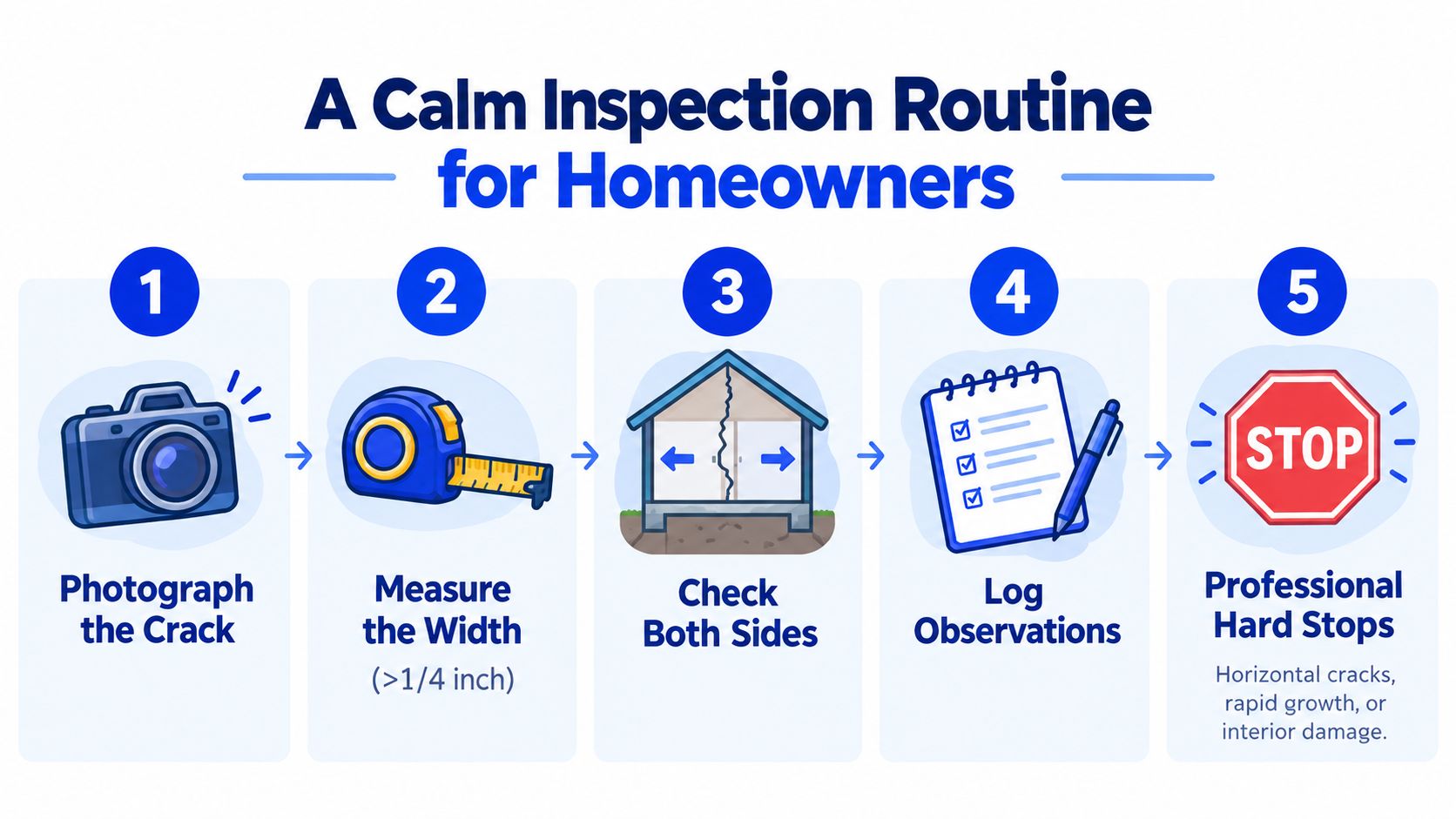
Photograph the crack straight on so the full pattern is visible. Take another image at an angle with a ruler or coin in the frame, then write down the date, wall orientation, approximate height, and whether the crack follows mortar or cuts across the brick.
Measure the length and widest point. A simple crack gauge can help you record changes, but a tape measure and consistent photographs are still useful. Don't scrape out the joint before documenting it, because the original edges may help an inspector understand whether the crack is old, repaired, or actively opening.
Check the surrounding structure
Walk the wall slowly and look for:
- Displaced masonry: Note bricks that project, tilt, bulge, or no longer align with adjacent courses.
- Openings and supports: Inspect above windows, doors, and garage openings for horizontal lines, rust staining, crushed mortar, or brick movement.
- Drainage details: Look for blocked or missing weepholes, damp areas, poor grading, and water discharging close to the foundation.
- Interior evidence: Check inside at corners, around doors, near windows, and along ceiling lines for cracks that correspond with the exterior location.
Use caution around loose brick, higher areas, and unstable walls. Don't climb onto roofs or scaffolding to inspect a crack, and don't remove brick, mortar, siding, or interior finishes to look for hidden damage.
Track change without guessing
Recheck the area in two to four weeks, then again across a season. Record whether the line closes, widens, or stays steady. A crack that changes with weather may point toward movement or moisture conditions, while a stable hairline may be suitable for routine monitoring, subject to the rest of the wall's condition.

Set clear hard stops. Any horizontal crack, any crack wider than a quarter inch, or any crack with displacement, leaning, or matching interior damage should go to a structural engineer rather than directly to a mason. A home inspector can document visible conditions and identify related concerns during a routine evaluation, but an engineer is the appropriate professional for questions about load paths, foundation movement, or structural safety.
Repair Options and When Each One Fits
The right repair depends on whether the wall is stable, whether water is entering, and whether the crack reflects damage to a supporting component. A good mason can repair masonry. A mason shouldn't be expected to determine the full structural cause when the evidence points to foundation movement or a failing support.
Match the repair to the evidence
Tuckpointing fits dormant hairline cracks limited to otherwise sound mortar joints. The damaged mortar is removed to an appropriate depth and replaced with compatible mortar. Smearing new material over the face of an old joint may improve appearance briefly, but it doesn't create a durable repair.
Epoxy or polyurethane injection can suit narrow cracks where water entry is the concern and movement has stopped. These materials aren't a solution for an actively moving wall. If the crack continues to open, the injection repair can fail or redirect water elsewhere.
Brick replacement is appropriate for isolated spalling, broken units, or localized stair-step damage. The contractor should also investigate the moisture source and any damaged lintel. Replacing only the visible brick leaves the original cause in place.
Lintel replacement addresses cracking above an opening when corrosion or deflection has damaged the steel angle. A replacement angle may be hot-dipped galvanized or stainless steel, depending on the project and design. The surrounding brick often needs removal and rebuilding because the lintel and masonry must work together again.
Partial or full wall rebuilding belongs to widespread movement, failed ties, recurring separation, or substantial drainage defects. That work may include new wall ties and through-wall flashing, not just new mortar. If the veneer has bulged, don't let a cosmetic repair become the final answer.
| Crack Pattern | Typical Repair | When to Choose Differently |
|---|---|---|
| Dormant hairline in mortar | Tuckpointing with compatible mortar | Choose evaluation first if it reopens or crosses brick |
| Narrow stable crack with water entry | Injection repair and moisture correction | Avoid injection while movement remains active |
| Spalled or broken isolated brick | Remove and replace affected units | Investigate freeze-thaw or water entry before replacement |
| Cracking above a window or garage door | Lintel assessment and possible replacement | Use structural review if the opening or wall has shifted |
| Bulging veneer or recurring step cracks | Wall ties, flashing correction, or partial rebuild | Escalate to structural evaluation when movement is widespread |
The cheapest repair applied to the wrong cause usually becomes the most expensive option over time. Start with diagnosis, then select the repair that fits the movement pattern and the wall's drainage condition.
Pulling It Together and Knowing When to Call
Use three questions to decide what happens next.
Is the crack active? Compare dated photographs and measurements. A line that changes after rainfall, drought, or freeze-thaw conditions needs more attention than one that remains stable.
Is it wide or structurally shaped? A horizontal crack, a stair-step crack wider than a quarter inch, or a crack that cuts through brick deserves professional evaluation. Width alone doesn't settle the question, but width combined with displacement raises the concern.
Are there other movement signals? Sticking doors, sloped floors, leaning brick, gaps at eaves or sills, and matching interior cracks change the urgency. Recurring cracking at the same location after repair also means the original cause may still be active.
Call a home inspector for a routine evaluation when you need the visible condition documented and related systems checked. Call a structural engineer when the wall shows load-bearing concerns, displacement, horizontal cracking, significant width, or coordinated movement around openings. A qualified mason can then address the masonry repair once the cause and scope are clear.

Keep a simple log. Date the crack, record its widest point with a crack gauge, photograph the full pattern, and revisit it in sixty days. Clay soils, freeze-thaw cycles, and aging lintels are the Mid-South conditions most likely to bring the same wall back to your attention.
If a brick veneer crack has you unsure whether you're looking at cosmetic mortar damage, moisture deterioration, or movement around the foundation and openings, Upchurch Inspection can document the visible condition and related concerns through a residential or commercial inspection. Schedule an evaluation before patching the wall so you can prioritize the next step with better information.