
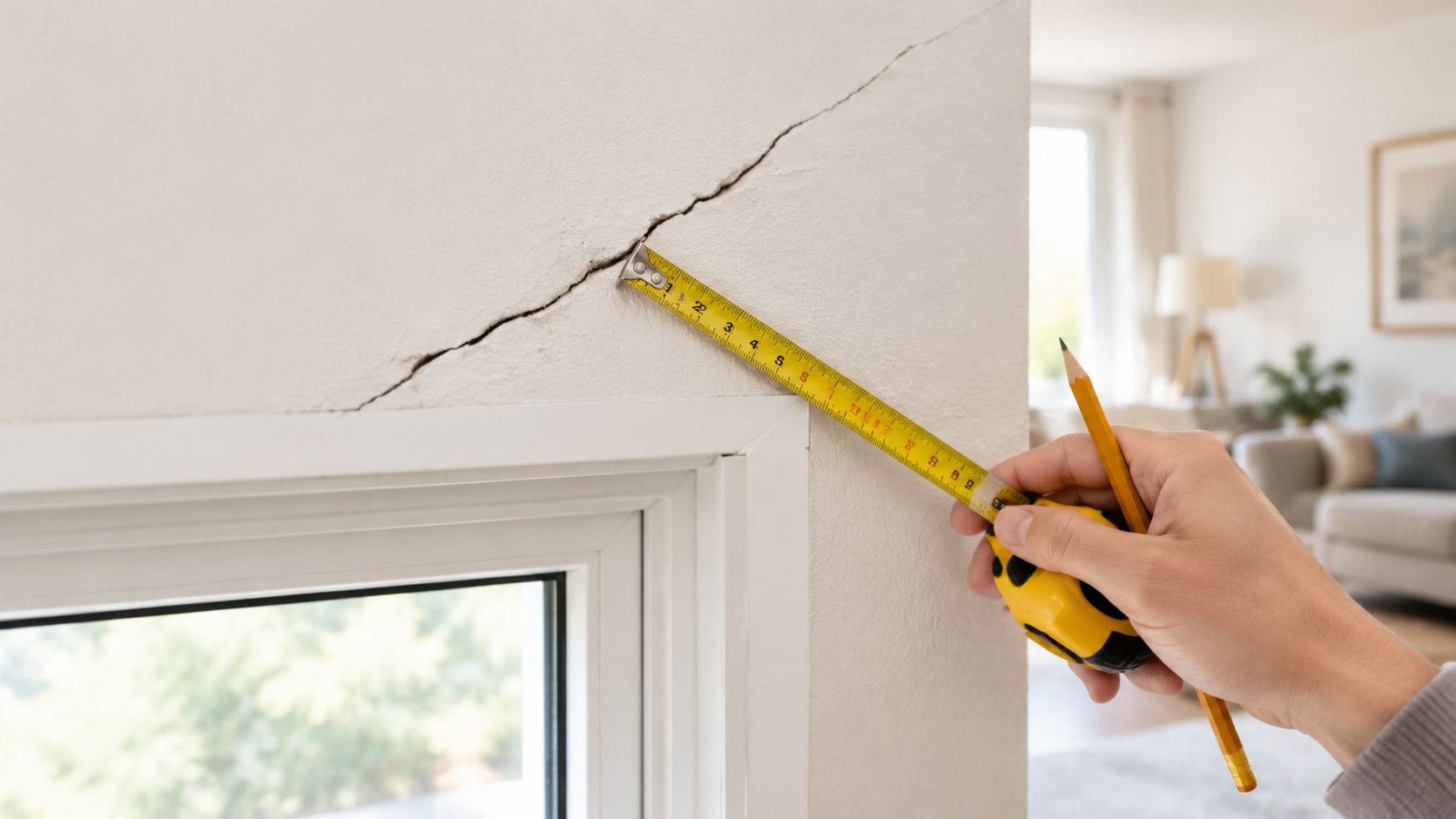
You notice it while walking past the bedroom door, a thin line running diagonally from the corner of the frame toward the ceiling. Maybe it appeared after a storm, or maybe it's been hiding behind paint for months. The question comes quickly: how serious are diagonal drywall cracks, and do they mean the foundation is moving?
Sometimes the answer is a cosmetic drywall repair. Other times, the crack is one visible clue in a larger pattern involving settlement, moisture, or movement in the structure. The angle and location make diagonal cracks worth checking, but the crack alone doesn't prove that the house is failing.
The practical way to sort it out is to look at four things: angle, width, location, and change over time. You'll also want to check whether doors stick, floors slope, the drywall surfaces sit at different heights, or similar cracks appear elsewhere. Those details matter in homes across Southeast Missouri and Mid-Missouri, including Cape Girardeau, Jackson, Sikeston, Poplar Bluff, Farmington, Columbia, and Jefferson City.
This guide explains what the pattern can mean, what you can safely document yourself, and when an inspector, contractor, or structural engineer should become involved. The goal isn't to create panic. It's to help you replace guesswork with a sensible next step.
Table of Contents
- What Diagonal Drywall Cracks Are and Why Angle Matters
- How to Tell How Serious a Diagonal Crack Really Is
- Common Causes Behind Diagonal Cracks in Missouri Homes
- What You Can Safely Check and How to Monitor for Movement
- Repair Options and When to Book a Professional Evaluation
- Moving Forward With Confidence After Spotting a Diagonal Crack
What Diagonal Drywall Cracks Are and Why Angle Matters
A diagonal drywall crack often begins at the corner of a door or window and runs into the wall at an angle. The pattern matters because an opening interrupts the wall, concentrating stress around its corners. Cracks between 30 and 60 degrees from horizontal, especially those near 45 degrees, deserve a closer look. The angle is a screening clue, not proof that the foundation is damaged.
Why the wall can crack diagonally
A rectangular wall is meant to hold its shape. If one corner settles while the opposite area remains more stable, the wall can distort and create shear stress. Drywall may split along that diagonal path, particularly beside an opening.
That movement can come from several conditions. Framing settlement, seasonal moisture changes, and a localized drywall problem can all produce similar lines. Missouri homes also require attention to soil and foundation type. Clay soils can change volume as moisture conditions shift, while basements and crawlspaces may reveal movement, moisture, or framing changes before the finished room does. The crack should be considered with those surrounding conditions, not judged by its angle alone.
Drywall installation changes the picture too. A crack that follows a taped joint may reflect joint-compound shrinkage, weak tape adhesion, or ordinary finishing movement. A line that crosses the paper face of the board suggests that the drywall itself is splitting. That can still be localized and cosmetic, but it is a more useful clue than an opening limited to the prepared seam.
Use the 45-degree rule as a starting point
A crack near 45 degrees at a door or window corner deserves more attention than a faint line along a drywall seam. It does not identify the cause. Framing movement, seasonal expansion, moisture, and foundation movement can look alike at the finished surface.
Use four clues to set the priority: angle, width, location, and movement over time. A narrow crack that stays unchanged may need less urgent action than several smaller cracks appearing across different walls. Offset drywall, a sloping floor, or a door that suddenly binds strengthens the case for a broader evaluation. In a basement or crawlspace, look for moisture, framing changes, or related foundation movement near the same area.
Practical rule: The angle tells you where to look next. It does not provide the final diagnosis.
How to Tell How Serious a Diagonal Crack Really Is
A diagonal crack above a basement doorway may look minor at first, especially if the wall is painted and the line is narrow. The useful question is whether it is isolated and stable or part of a pattern that is changing. Start at the crack, then inspect the nearby opening, floor, trim, and accessible basement or crawlspace areas. Record the findings so a professional can compare the same evidence later.
Use four clues to set the priority
Angle and location provide the first screen. A crack near a door or window corner, particularly one close to 45 degrees, deserves more attention than a short line in the middle of a ceiling. The angle points to the type of movement to investigate, but it cannot identify the cause by itself. Note whether the crack crosses the drywall face, follows a joint, or widens toward one end.
Width gives you a practical threshold. A crack wider than 1/8 inch warrants closer review, and a crack at or above 1/4 inch raises the concern further. Measure the widest point with a ruler or crack gauge, and write down the location. Width alone does not prove structural damage, but a widening measurement is more useful than a single visual impression.
Offset matters more than color or staining. Place a straight edge across the crack without pressing on the drywall. If one side sits higher, lower, or farther forward, the surface may have shifted in more than one direction. That finding carries more weight than a simple split in paint or finishing material.
Related symptoms complete the picture. Check for binding doors, sloped floors, gaps around trim, cracks on other walls, or drywall surfaces that no longer sit flush. A repaired crack that reopens also matters because the stress may still be active. In Missouri basements and crawlspaces, look for moisture, exposed foundation cracking, or framing changes near the same area.
Quick triage for diagonal drywall cracks
| What You See | What It Often Suggests | Sensible Next Step |
|---|---|---|
| Thin, stable line with no offset or related symptoms | Localized drywall, framing, or seasonal movement may be involved | Photograph it, record the width, and monitor |
| Diagonal crack near an opening, especially across the drywall face | Possible shear stress or differential movement | Arrange a qualified inspection if it persists or concerns you |
| Crack wider than 1/8 inch | More than a minor surface clue may be present | Seek professional evaluation, especially if it changes |
| Crack at or above 1/4 inch | Greater concern for significant movement | Schedule prompt professional attention |
| Widening crack, offset surface, sticking doors, or sloped floors | Possible active or broader structural movement | Contact an inspector and ask whether an engineer should evaluate it |
For a closer comparison between ordinary settling and movement that deserves review, use this guide to drywall cracks and active foundation shifts.
The key distinction is stable versus changing. Take dated photographs from the same angle, measure the width periodically, and note weather, moisture, or new symptoms. A record of behavior helps determine whether monitoring is reasonable or an evaluation should happen sooner.
Common Causes Behind Diagonal Cracks in Missouri Homes
A diagonal drywall crack can have several causes. The same-looking line may reflect foundation movement in one home and ordinary drywall or framing movement in another. The angle is useful, but it is only one part of the triage. Width, location, nearby symptoms, and whether the crack changes over time provide better context.
Differential settlement and soil movement
Differential settlement happens when one part of a foundation moves more than the adjacent section. The wall above may rack or pull, producing a diagonal crack that runs from a door or window corner. Concern rises when similar cracks appear on more than one wall, the drywall surfaces no longer meet flush, or the line is widening. For a Missouri-specific overview of related warning signs, see foundation settlement in Missouri homes.
Missouri's clay soils can make drainage and foundation movement harder to assess because soil volume changes with moisture conditions. Clay soil alone does not prove a structural problem. Check the surrounding grade, gutters, downspouts, plumbing, and foundation drainage before connecting the drywall crack to settlement.
Basements and crawlspaces often reveal more than the finished wall upstairs. Look for damp areas, musty odors, efflorescence, water staining, exposed foundation cracks, or standing water after rain. In Southeast Missouri communities such as Cape Girardeau, Jackson, Sikeston, Poplar Bluff, and Farmington, and in Mid-Missouri areas such as Columbia and Jefferson City, the home's drainage history can help explain what the drywall is showing.
Less serious movement can look similar
Minor framing settlement, seasonal humidity changes, and normal material movement can open a drywall joint without indicating foundation failure. Localized moisture may soften materials, alter framing conditions, or damage the finish around an opening. Freeze-thaw deterioration can contribute to exterior masonry or drainage issues, but the drywall line needs supporting evidence before it should be labeled structural.
A crack shows movement or stress. It does not identify the source by itself.
Look at the surrounding construction. A crack in a newer addition, near a change between materials, below a roof or plumbing area, or beside an altered opening has different possible causes than one in the middle of an established wall. If water may be entering from above, commercial roof leak repair information explains why the roof system should be investigated separately from the interior finish.
The practical rule is to correct the source before patching the drywall. A cosmetic repair can look finished while the underlying movement continues, allowing the crack to reopen. A stable, narrow line with no related symptoms may only need monitoring, while widening, offset, or moisture-related cracking deserves a professional evaluation.
What You Can Safely Check and How to Monitor for Movement
A diagonal crack can be documented without opening the wall or attempting a foundation repair. Your goal is to establish four things: its angle, approximate width, location, and whether it changes over time. Those details help separate a stable drywall finish problem from a pattern that needs closer evaluation, especially in Missouri homes with clay soils, basements, or crawlspaces.
Build a useful record
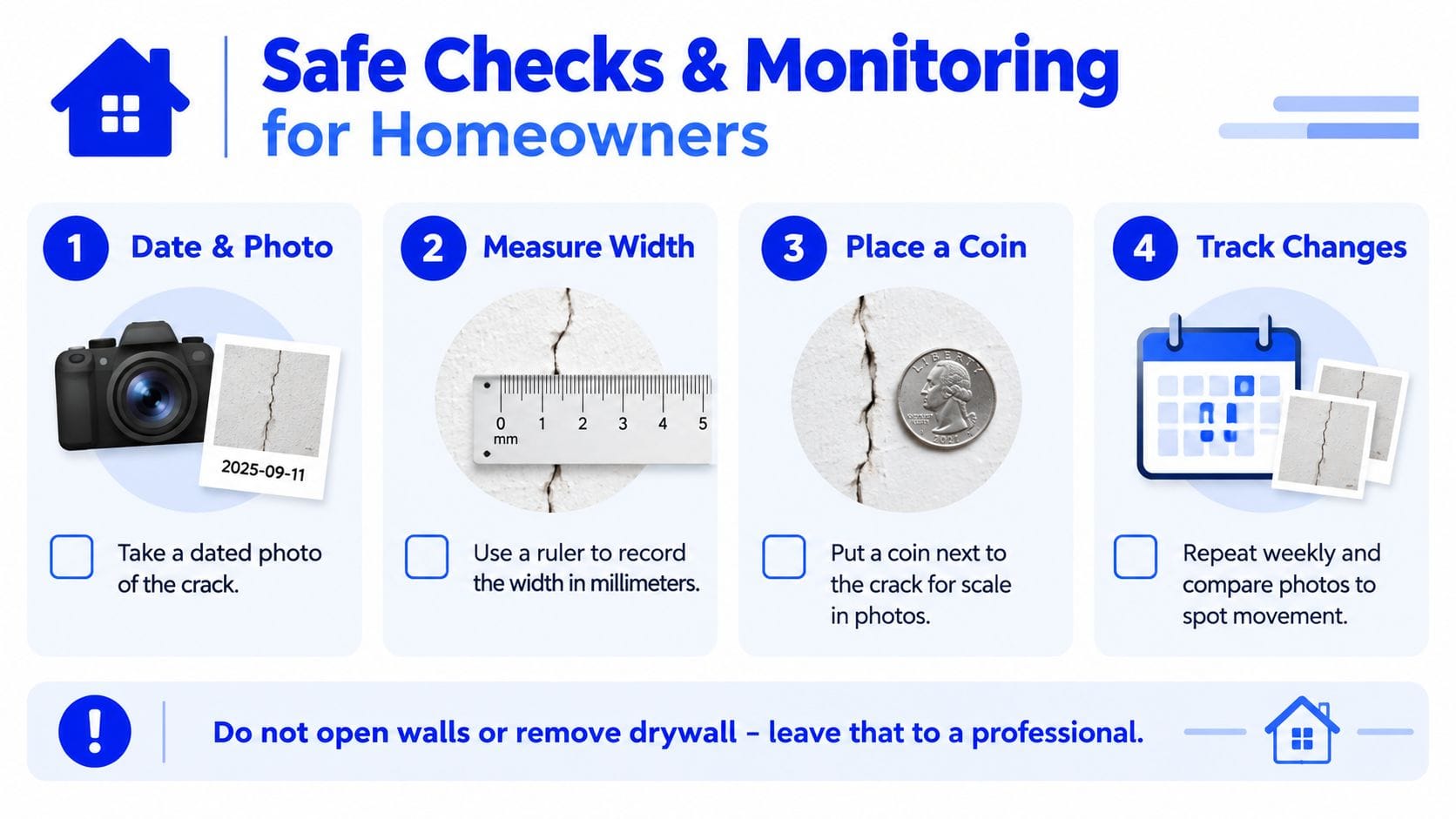
Take one clear photograph showing the entire crack and its position in the room. Take a closer image with a ruler or coin beside the line for scale. Record the date, room, wall, and approximate width. Repeat the same view later so you can compare evidence rather than rely on memory.
Measure without disturbing the finish. Do not force a gauge into the opening, press on the drywall, scrape away paint, or enlarge the line. A narrow crack that stays in the same range is different from one that gradually opens, extends, or develops a step or offset.
Check how the room is functioning. Does a nearby door close as usual? Does the window operate normally? Does the floor look or feel sloped? Walk through adjoining rooms and note similar cracks, trim separation, or joints that no longer meet flush. In a basement or crawlspace, look for damp areas, staining, displaced materials, or conditions that could help explain the interior line. Do not enter an unsafe space or disturb structural components.
Separate active movement from an old mark
The key question is whether the crack is changing. A line that has remained unchanged may still need a cosmetic repair, while widening, lengthening, reopening after patching, or visible offset calls for faster evaluation. Old paint does not prove that movement has stopped.
Keep the inspection non-invasive:
- Photograph consistently: Use the same angle and include a ruler or coin for scale.
- Record operation: Note changes in doors, windows, cabinets, or nearby flooring.
- Inspect related areas: Check basements, crawlspaces, and adjoining rooms for moisture or movement clues.
- Compare location and angle: A crack near a corner, opening, or material transition may warrant different follow-up than one isolated on a broad wall.
- Avoid opening the wall: Leave drywall removal, structural probing, and foundation exposure to qualified professionals.
Stop monitoring and arrange an evaluation if the crack grows, becomes wider than 1/8 inch, develops visible offset, or appears with sticking doors or sloped floors. Monitoring should answer whether conditions are stable. It should not delay help when several warning signs appear together.

Repair Options and When to Book a Professional Evaluation
The right repair depends on whether the movement has stopped. Filling, taping, sanding, and painting can make a stable drywall crack disappear. Those steps won't correct ongoing settlement, drainage problems, framing movement, or a foundation condition.
Match the response to the evidence
For a narrow, stable crack with no offset or companion symptoms, a drywall professional may be appropriate after the cause appears inactive. If a moisture source is involved, a plumber, roofer, or drainage contractor may need to correct the water problem first. Repairs made before drying and stabilization often fail because the wall is being asked to hold a finish over a moving or damp area.
An inspector looks at the crack in context. That includes the surrounding drywall, doors and windows, floors, basement or crawlspace, grading, drainage, and visible foundation surfaces. A structural engineer evaluates the structural implications differently, including whether the observed movement affects load paths and what corrective design may be appropriate. A contractor then carries out the repair based on the identified cause and scope.
Prompt professional attention makes sense when you see:
- Increasing width: The crack is clearly changing between dated photographs.
- Visible offset: The drywall faces no longer align across the crack.
- Multiple locations: Similar diagonal patterns appear on different walls or levels.
- Related movement: Doors bind, floors slope, or trim separates.
- Moisture evidence: Water staining, dampness, or drainage problems accompany the crack.
For homeowners or investors planning drywall work after the underlying issue is understood, LendingXpress drywall financing is a separate financing resource to review. Financing should come after the scope is clear, not before someone determines whether the drywall is the actual problem.
A home inspection can provide broader context, while an engineer's evaluation may be the appropriate next step when the evidence points to active structural movement. Upchurch Inspection can document visible conditions during a home or commercial inspection, and its guidance on structural or engineer evaluations explains when a more specialized assessment may be needed.

Moving Forward With Confidence After Spotting a Diagonal Crack
A diagonal drywall crack deserves a measured response. Angle and location identify the pattern. Width and change over time help establish urgency. Offset surfaces and companion symptoms show whether the concern may extend beyond one patch of drywall.
For the next 30 days, keep the process simple:
- Photograph the crack with a date and scale reference.
- Record its approximate width and exact location.
- Check nearby doors, windows, floors, basement areas, and crawlspaces.
- Recheck the same view and note any change.
- Escalate promptly if it widens, reopens, develops offset, or appears with related symptoms.
Many diagonal cracks can be managed once the cause is understood and movement has stabilized. The mistake is treating every crack as either harmless or catastrophic. Good inspection work sits between those extremes, identifying what the evidence supports and what still needs specialist review.
If the crack is isolated and unchanged, monitoring may be reasonable. If you're buying, selling, managing a commercial property, or seeing several warning signs, a home or commercial inspection can provide the broader context needed before you hire a repair contractor or structural engineer.
If you're concerned about a diagonal drywall crack, Upchurch Inspection can document the visible pattern and check related areas for signs of settlement, moisture, or broader movement. Visit the site to schedule an inspection and get clear findings that help you decide whether to monitor, repair, or bring in an engineer.