
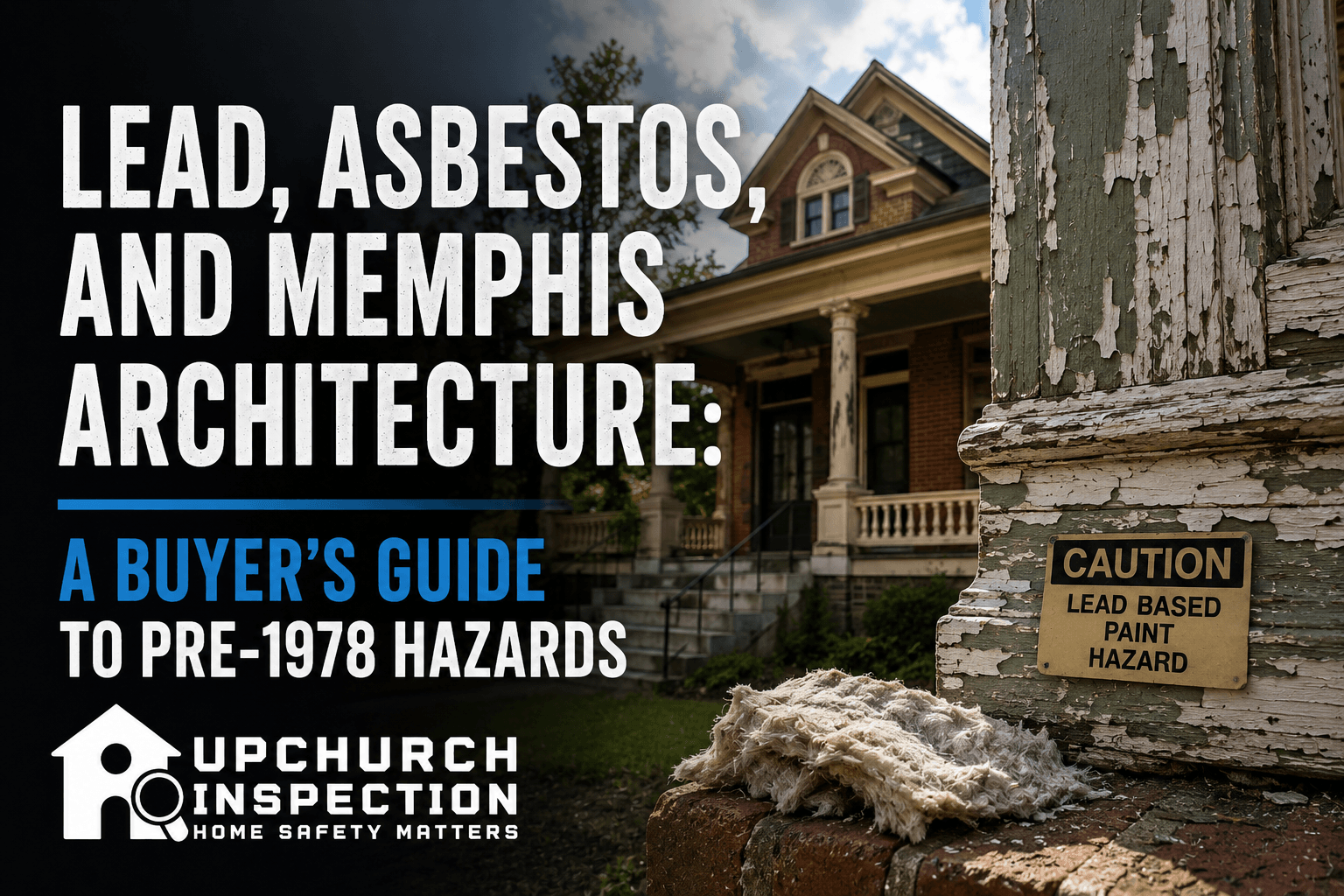
Older Memphis homes have a character you can’t reproduce. Thick plaster walls. Solid framing. Architectural details that disappeared decades ago.
They also carry materials that were once considered normal—and are now known hazards.
If you’re buying a home built before 1978 in Memphis, especially in transitional neighborhoods like Whitehaven and Berclair, you’re not just buying a structure. You’re buying the legacy of the materials used to build it.
Why 1978 Matters—but Isn’t the Whole Story
Most buyers recognize 1978 as the cutoff for lead-based paint, but Memphis housing doesn’t follow clean lines.
Many homes:
- Were built earlier but renovated later
- Contain layered materials from multiple decades
- Have original components hidden behind cosmetic updates
That means a home can look modern while still containing hazardous materials in walls, floors, and mechanical systems.
Lead Paint: Still Where You Least Expect It
The Risk Isn’t the Paint—It’s the Dust
In older homes, lead paint becomes dangerous when it:
- Peels
- Chips
- Turns into dust through friction
Common problem areas include:
- Window sashes and tracks
- Door frames
- Stair railings
- Baseboards
In neighborhoods like Whitehaven, where many homes were updated piecemeal over time, lead paint is often buried under newer layers—until sanding, repairs, or wear expose it.
Berclair and the “In-Between” Era
Berclair represents a transitional construction period. Many homes were built when:
- Lead paint was still standard
- Asbestos products were widely used
- Mechanical systems were evolving rapidly
We frequently see mixed-material homes where:
- Vinyl flooring sits over asbestos-containing tiles
- New drywall covers old plaster
- HVAC upgrades left original duct insulation untouched
This layering creates uncertainty unless properly evaluated.
Asbestos: The Hidden Utility Player
Asbestos wasn’t just used in insulation. In Memphis homes, it commonly appears in:
- Floor tiles and mastic
- Pipe insulation
- Furnace and boiler components
- Transite siding and flues
The danger comes during disturbance. Cutting, drilling, or demolition releases fibers that remain airborne and respirable.
Older homes that have been partially renovated—especially DIY work—are at higher risk because materials may have been disturbed without proper controls.
Why “It’s Been Here for 70 Years” Isn’t Reassuring
One of the most common reassurances buyers hear is:
“If it was dangerous, something would’ve happened by now.”
That logic ignores how exposure works.
Lead and asbestos risks increase during:
- Renovations
- HVAC upgrades
- Flooring replacement
- Window replacement projects
The hazard isn’t static—it’s triggered by change.
What a Smart Buyer Should Be Asking
When purchasing a pre-1978 Memphis home, the key questions are:
- Which original materials remain?
- What renovations have occurred—and when?
- Were hazardous materials properly managed or simply covered?
Testing isn’t about fear. It’s about information before decisions are made.
Living Safely in Historic Homes
Many Memphis homeowners live safely in older homes every day. The difference is management, not avoidance.
That includes:
- Knowing where hazards exist
- Avoiding unnecessary disturbance
- Using proper procedures when remodeling
- Testing when uncertainty exists
Historic charm and modern safety aren’t mutually exclusive—but they require awareness.
Final Thoughts
Older Memphis architecture tells a story—but some chapters include materials we now understand differently.
In areas like Whitehaven and Berclair, pre-1978 homes deserve respect, not assumptions. Identifying lead and asbestos risks early allows buyers to make informed choices rather than expensive mistakes.
Protecting your West Tennessee investment starts with a forensic eye. View our West Tennessee Service Area to see a full list of towns we serve.