
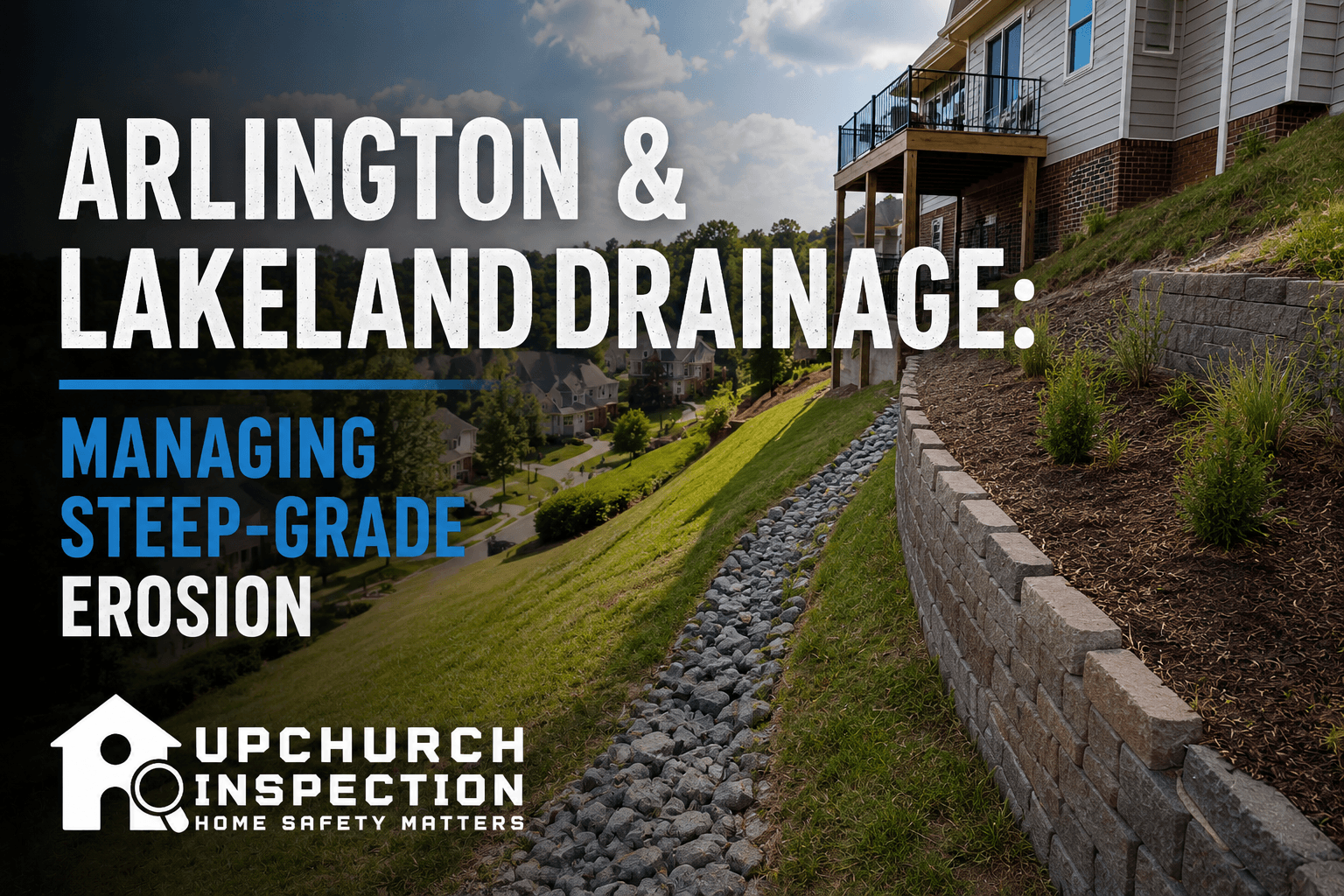
Most of Shelby County is relatively flat. That’s why buyers are often caught off guard when drainage problems show up in Arlington and Lakeland. These areas don’t behave like the rest of Memphis.
Here, elevation changes matter. Water moves faster, cuts deeper, and does more damage—especially when development outpaces proper grading and runoff control.
In higher-end neighborhoods built along rolling terrain, erosion isn’t cosmetic. It’s structural.
Why Arlington and Lakeland Are Different
Shelby County’s “Hilly” Exception
Arlington and Lakeland sit on some of the most pronounced grade changes in the county. Homes are often built:
- Along slopes instead of flat pads
- With walk-out designs
- Near natural drainage paths
When water isn’t controlled, gravity does the rest.
Erosion Is a Slow Failure—Until It Isn’t
In these areas, we frequently see:
- Washed-out soil beneath porches and patios
- Undermined retaining walls
- Exposed footing edges
- Settlement tied directly to runoff paths
The damage often starts subtly. By the time it’s visible, soil support has already been lost.
Retaining Walls: Structure, Not Landscaping
In higher-end developments, retaining walls are often treated as decorative features. That’s a mistake.
A retaining wall without proper drainage behind it is a temporary wall.
Common failure causes include:
- No weep system
- Backfill that traps water
- Hydrostatic pressure building behind the wall
Once pressure builds, walls lean, crack, or fail outright.
French Drains vs. Surface Diversion
The Ongoing Debate
Both systems have a place—but they solve different problems.
French Drains
- Collect subsurface water
- Rely on proper slope and discharge points
- Fail when clogged or improperly terminated
Surface Diversion
- Manages water before it enters the soil
- Includes swales, grading, and hardscape direction
- Often more effective for steep lots
In Arlington and Lakeland, surface diversion is frequently the first line of defense. Subsurface systems alone can be overwhelmed during heavy rainfall events.
Why “Good Grading” Isn’t Always Enough
Even homes with proper initial grading can develop problems over time due to:
- Soil movement
- Landscaping changes
- Fence or patio installations
- Downspout extensions that shift runoff patterns
Drainage systems need to work with the terrain, not fight it.
What Inspectors Look for on Sloped Lots
During inspections in these areas, we pay close attention to:
- Soil displacement patterns
- Drain termination points
- Signs of erosion beneath structures
- Retaining wall alignment and cracking
These clues reveal whether water is being managed—or merely redirected temporarily.
The Cost of Ignoring Runoff
When erosion undermines support systems, repairs escalate quickly:
- Foundation stabilization
- Wall reconstruction
- Drainage retrofits
- Landscaping replacement
Addressing runoff early is far less expensive than rebuilding what water destroys.
Final Thoughts
Arlington and Lakeland offer some of Shelby County’s most desirable homes—but their terrain demands respect.
Water moves differently here. When drainage isn’t designed for steep grades, erosion becomes inevitable. Understanding how runoff interacts with elevation is critical for protecting both foundations and investments.
Ensuring your West Tennessee investment is a safe one, requires the knowledge of a professional inspector. View our West Tennessee Service Area to see a full list of towns we serve.