TL;DR:
- Home inspections provide a factual basis for negotiations but do not determine a property’s pass or fail status.
- Buyers have a limited window of 7 to 14 days to review findings, request repairs, or walk away from the deal.
A home inspection is a formal condition assessment of a property’s major systems, and it is one of the most consequential steps in any real estate transaction. Understanding how inspections impact home sales means recognizing that the report does not pass or fail a property. It gives buyers and sellers the factual basis to negotiate, repair, or walk away. The National Association of Realtors confirms that inspectors report condition without recommending whether to proceed. That distinction matters enormously. Buyers who treat the report as a verdict often make poor decisions. Sellers who ignore it take on unnecessary risk.
How do home inspections influence buyer and seller decisions?
The inspection contingency is the legal window that governs what happens after a report is delivered. Standard contingency windows run 7–14 days after contract acceptance, though hyper-competitive markets sometimes compress that to three days. That window is not just a formality. It is the period during which buyers hold the most leverage in the entire transaction.
Within that window, buyers have four realistic options:
- Accept the property as-is. The buyer proceeds without requesting repairs or credits. This is common in competitive markets where waiving requests strengthens an offer.
- Request specific repairs. The buyer submits a written list of items they want corrected before closing. Sellers are not legally obligated to agree, but refusal can kill the deal.
- Negotiate a price reduction or credit. Instead of asking the seller to manage repairs, the buyer asks for money off the purchase price or a closing credit to handle repairs independently. This approach gives buyers control over repair quality.
- Walk away without penalty. If findings are serious enough, buyers can terminate the contract within the contingency window and recover their earnest money deposit.
Sellers typically have 2–5 days to respond to buyer repair requests. A slow response increases the risk of deal termination. Sellers who respond quickly and in good faith keep the sale moving and signal confidence in the property.
Pro Tip: Request only the items that genuinely affect safety, function, or value. A list of 40 cosmetic complaints reads as bad faith and often pushes sellers to reject the entire request.

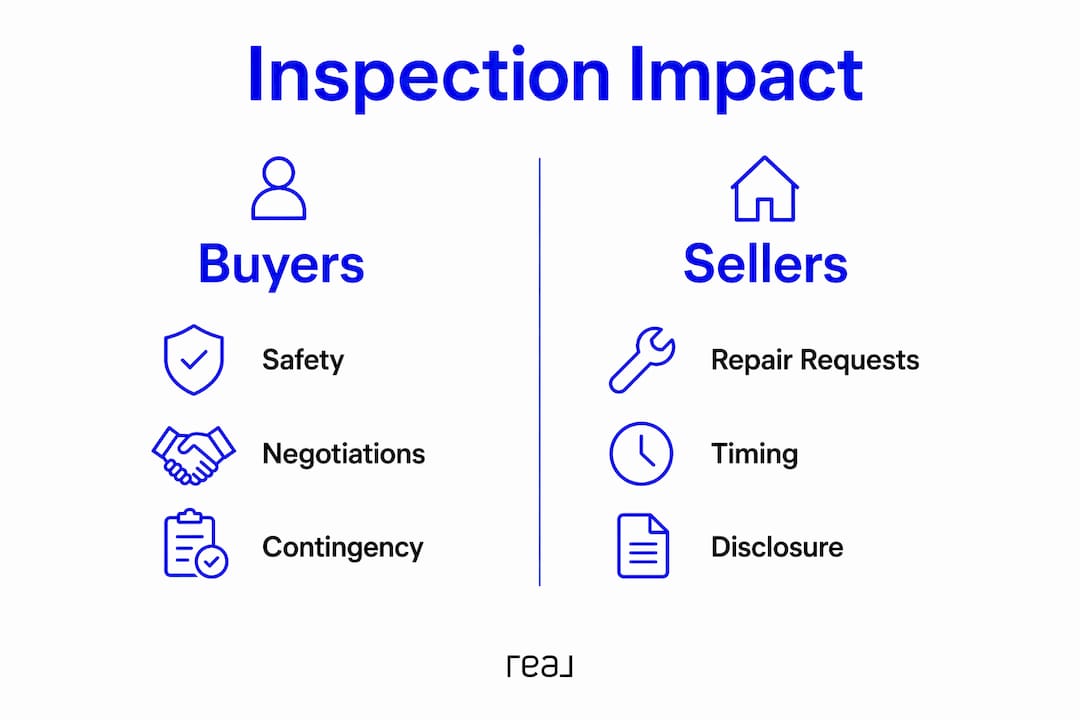
What common inspection findings affect property value and negotiations?
The most frequently found issues across Memphis and West Tennessee homes include roof wear, plumbing leaks, electrical deficiencies, HVAC inefficiencies, water intrusion, mold, and foundation concerns. Each of these carries a different weight in negotiations. Knowing which category a finding falls into determines how hard to push.
Cosmetic vs. structural: why the distinction matters
The single most common mistake buyers make is treating cosmetic defects with the same urgency as structural or safety defects. Cosmetic issues, such as peeling paint, worn flooring, or dated fixtures, do not affect the home’s function or safety. Structural and safety defects, such as a failing roof deck, active water intrusion, or a compromised foundation, directly affect habitability and long-term value.
Here is how the two categories typically play out in negotiations:
| Issue type | Examples | Typical negotiation outcome |
|---|---|---|
| Cosmetic | Peeling paint, worn carpet, dated fixtures | Buyer accepts as-is or requests minor credit |
| Maintenance | Dirty HVAC filters, clogged gutters, worn caulk | Seller corrects before closing or offers small credit |
| Safety | Missing handrails, faulty wiring, inoperable smoke detectors | Seller repairs or lender may mandate correction |
| Structural/moisture | Foundation movement, active roof leaks, mold | Price reduction, specialist evaluation, or deal termination |
One important nuance: even if a buyer agrees to purchase a property as-is, lenders can mandate specific repairs for safety and habitability before approving the loan. Missing handrails and peeling paint on pre-1978 homes are common examples. A buyer and seller can agree to skip repairs, but the lender gets a vote too.
Odors are another factor buyers underestimate. Mold, pet contamination, and moisture-related smells detected during an inspection can affect perceived property value and trigger further investigation requests, even when the underlying cause is minor.
Pro Tip: If the inspection reveals a potential foundation issue, do not guess at the cost. Request a licensed structural engineer’s evaluation before submitting any repair demand. An inspector flags the concern; an engineer scopes the fix.
How do inspections affect the timing of a home sale?
Inspection timing is tighter than most buyers and sellers expect. An average inspection takes several hours on-site, followed by 3–4 days for the inspector to compile and deliver the written report. That reporting window eats directly into the contingency period.
The sequence typically runs like this:
- Schedule the inspection within one to two days of contract acceptance. Delays here compress the review window.
- Attend the inspection in person when possible. Inspectors explain their findings in real time, helping buyers prioritize what matters.
- Review the report the day it arrives. Do not wait. If specialist evaluations are needed, such as a structural engineer or a licensed electrician, those appointments must be scheduled immediately.
- Submit the formal repair request in writing before the contingency deadline. Verbal agreements do not protect buyers.
- Negotiate and reach an agreement within the seller’s 2–5 day response window.
Missing the contingency deadline typically means losing the right to request repairs or cancel the contract. In most cases, the buyer also forfeits their earnest money deposit. That is a real financial loss, not a technicality. Buyers who treat the contingency window casually often find themselves locked into a purchase they cannot afford to fix or exit.
Sellers face timing pressure too. A seller who delays responding to repair requests risks the buyer’s contingency window expiring, creating legal ambiguity. Clear, prompt communication from both sides keeps the transaction on track.
What strategies help buyers and sellers handle inspection outcomes?
Inspection results rarely end a deal on their own. What ends deals is poor strategy on both sides. Buyers and sellers who understand their options before the report arrives make better decisions under pressure.
For buyers:
- Prioritize safety and structural defects in repair requests. Cosmetic items weaken your position.
- Consider a credit instead of repairs for anything that requires contractor work. You control quality; the seller controls cost when they manage repairs.
- In competitive markets, flexibility in inspection contingencies can be a negotiation tool. Offering a shorter review window or limiting requests to major defects signals seriousness without waiving protection entirely.
- Know your walk-away number before the inspection. If foundation repair estimates exceed a threshold you set in advance, the decision is already made.
- Watch for inspection-related odor issues that may indicate hidden moisture, mold, or pest activity. These often require specialist follow-up.
For sellers:
- A pre-listing inspection eliminates the element of surprise. Sellers who know their property’s condition before listing can price accurately, disclose proactively, and avoid last-minute renegotiations.
- Decide in advance which repairs you will make and which you will price into the listing. Buyers respect sellers who have already addressed known issues.
- Offering a credit is often faster and cheaper than managing contractor work during escrow. It also avoids disputes over repair quality.
- Understand that as-is listings still allow inspections. Buyers retain the right to inspect; they simply cannot force repairs. That distinction matters when pricing an as-is property.
The role of inspection reports in real estate deals is to inform, not to dictate. Both parties who treat the report as a starting point for honest negotiation close more deals than those who treat it as a battlefield.
Key Takeaways
A home inspection is a decision-making tool, not a verdict, and buyers and sellers who treat it that way close more deals with fewer surprises.
| Point | Details |
|---|---|
| Inspection contingency window | Buyers have 7–14 days to review findings, request repairs, or cancel without penalty. |
| Pass/fail is a myth | Inspectors report condition only; they do not recommend whether to proceed or walk away. |
| Timing is critical | Missing the contingency deadline typically means losing negotiation rights and earnest money. |
| Cosmetic vs. structural | Prioritize safety and structural defects in requests; cosmetic items rarely justify deal termination. |
| Pre-listing inspections | Sellers who inspect before listing reduce surprises and negotiate from a stronger position. |
What I’ve learned inspecting homes in Memphis and West Tennessee
I have walked through hundreds of properties across the Mid-South, and the pattern I see most often is not bad houses. It is buyers and sellers who misread what the inspection report is telling them.
Buyers see a 40-item report and assume the house is falling apart. Sellers see the same report and assume the buyer is trying to renegotiate the entire deal. Neither reaction is accurate. Most inspection reports on older Memphis homes include a mix of deferred maintenance, normal wear, and one or two items that genuinely warrant attention. The job is to tell the difference.
The findings that actually move the needle in negotiations are the ones involving water, structure, and safety systems. A roof with five years of life left is a negotiating point. Active water intrusion in a crawl space is a different conversation entirely. I have seen buyers walk away from solid houses over cosmetic issues and sellers lose deals because they refused to address a $400 electrical repair. Both outcomes were avoidable.
My practical advice: get the inspection early, read the report the day it arrives, and focus your energy on the findings that affect safety, function, and long-term cost. Everything else is noise. If you are a seller in this market, a pre-listing inspection is one of the most cost-effective things you can do. Knowing what is there before a buyer’s inspector finds it puts you in control of the conversation.
— Holly
How Upchurch Inspection supports confident home transactions
Upchurch Inspection serves homebuyers, sellers, and real estate professionals across Memphis and West Tennessee with thorough residential and commercial property evaluations. The inspectors at Upchurch Inspection hold qualifications that exceed Tennessee state standards, and every report details the condition of major systems, including plumbing, electrical, HVAC, and structural components. For sellers, a pre-listing inspection through Upchurch Inspection reduces the risk of last-minute renegotiations and gives you clear, honest information before the first offer arrives. For buyers, the detailed reports give you the factual basis to negotiate with confidence. Contact Upchurch Inspection to schedule an evaluation that protects your investment at every stage of the transaction.
FAQ
Do home inspections lower the sale price?
Inspections do not automatically lower the sale price, but significant findings often lead to price reductions, repair credits, or seller-paid repairs during negotiations.
Can a buyer walk away after an inspection?
Yes. Within the inspection contingency window, typically 7–14 days, buyers can terminate the contract and recover their earnest money without penalty.
What happens if the buyer misses the contingency deadline?
Missing the deadline typically means the buyer loses the right to request repairs or cancel the contract and may forfeit their earnest money deposit.
Are sellers required to fix everything on the inspection report?
Sellers are not legally required to fix every item. However, lenders may mandate specific safety and habitability repairs regardless of what the buyer and seller agree to privately.
What is a pre-listing inspection, and why does it matter?
A pre-listing inspection is a property assessment conducted before the home is listed on the market. It gives sellers advance knowledge of conditions buyers are likely to find, allowing for proactive repairs or accurate pricing.