

A Field Analysis Based on 500 Residential Home Inspections in Memphis and West Tennessee

After reviewing hundreds of residential inspections across Memphis and West Tennessee, certain patterns appear again and again. Most homes are not hiding catastrophic failures — but they often show predictable maintenance issues tied to moisture, aging materials, and deferred upkeep.

This article explains the most common findings we see during home inspections and what they reveal about how homes in this region age over time.

Schedule Your Home Inspection Today!
500 memphis and west tn home inspections 1 e1773656147119

500 Memphis and West Tennessee Home Inspections: The Most Common Problems We Found In Memphis and West Tennessee

Inspection Field Analysis 500 inspections

After reviewing more than 500 home inspections across Memphis and West Tennessee, certain patterns start showing up again and again. Every property is different, but the same broad issues repeat often enough that they begin to say something meaningful about the local housing stock.

That story is not usually one of catastrophic failure. In most cases, the homes we inspect are not collapsing, and they are not filled with dramatic structural disasters. What we see much more often is a combination of poor water management, aging materials, deferred maintenance, outdated safety conditions, and repair work that was never fully completed the right way. Those patterns show up in older homes, in middle-aged homes, in renovated homes, and in houses that look perfectly acceptable from the street.

For this article, I reviewed a representative set of residential inspection reports from Memphis and West Tennessee and coded the recurring issues by category. I excluded duplicate files, reinspections, the commercial reports, the engineering certification, and the mold lab report from the main residential frequency pool so the observations would reflect ordinary residential inspections rather than specialty or follow-up documents. What emerged was not a random list of defects. It was a repeatable pattern. Water drainage and runoff control appeared most often, followed by roof wear and flashing defects, deck and stair safety problems, electrical safety corrections, aging HVAC systems, exterior deterioration, crawlspace moisture concerns, and plumbing defects tied to incomplete repairs or leakage. Those categories are not guesses. They are the recurring themes that kept surfacing in the reports.

What makes this useful is not just knowing which categories appear. It is understanding why they appear, what they look like in real homes, and how they tend to connect to one another. In house after house, the reports did not describe isolated defects so much as chains of wear, moisture, and neglect. A gutter issue showed up with a grading issue. A roof-edge problem showed up with fascia deterioration. Exterior moisture showed up later as crawlspace staining, fungal growth, or damaged framing. That is what makes the findings more valuable than a simple checklist. They show how houses in this region tend to age.

Table of Contents

Executive Summary

A review of more than 500 residential home inspections across Memphis and West Tennessee revealed several recurring patterns affecting the region’s housing stock. While most homes did not exhibit catastrophic structural failures, inspection reports consistently identified maintenance and aging-related conditions that homeowners and buyers should understand.

The most common findings involved water management around the home, including drainage and runoff control issues. Roof wear and flashing defects were also frequently observed, particularly at roof edges and penetrations. Exterior structures such as decks, porches, and stairs showed safety and structural concerns in many homes, while electrical systems often required safety updates such as GFCI protection or alarm replacement.

Additional patterns included aging HVAC systems, exterior siding and trim deterioration, crawlspace moisture conditions, and plumbing leaks or incomplete repairs. These findings rarely appeared in isolation. In many homes, the reports showed chains of related conditions where one maintenance issue contributed to another over time.

The most common findings included:

  • Drainage and runoff control issues, including missing gutters and downspouts discharging too close to foundations
  • Roof edge and flashing defects, particularly around penetrations and transitions
  • Deck, porch, and stair safety concerns, including missing connectors and handrails
  • Electrical safety corrections, such as missing GFCI protection and nonfunctional alarms
  • Aging HVAC systems and airflow deficiencies
  • Exterior envelope deterioration, especially siding, fascia, and trim exposed to moisture
  • Crawlspace moisture conditions, often tied to drainage and vapor barrier issues
  • Plumbing leaks and incomplete repairs


Overall, the inspection data suggests that homes in the Memphis and West Tennessee region tend to experience predictable aging patterns influenced by climate, construction era, and routine maintenance practices. Understanding these patterns can help buyers, sellers, and homeowners better anticipate common repair needs and prioritize preventative maintenance.

Top issues identified during a review of 500 residential inspections performed by Upchurch Inspection across Memphis and West Tennessee.

Top issues identified during a review of 500 residential inspections performed by Upchurch Inspection across Memphis and West Tennessee.

About the Inspection Data Used in This Review

The observations in this article are based on a representative review of residential home inspection reports performed across Memphis and West Tennessee. These inspections were performed as part of the normal operations of Upchurch Inspection and represent typical residential inspections conducted throughout the Memphis and West Tennessee housing market. For the purposes of identifying recurring patterns, duplicate files, reinspections, commercial property inspections, engineering certifications, and third-party laboratory reports were excluded from the dataset so that the analysis would reflect standard residential inspection conditions.

Each report was reviewed and coded for recurring defect categories including drainage conditions, roofing deficiencies, exterior structural components, electrical safety items, HVAC system observations, crawlspace moisture indicators, and plumbing defects. The goal of the review was not to evaluate individual properties but to identify patterns that repeatedly appear across homes in this region.

Because the housing stock in Memphis and West Tennessee includes a wide range of construction ages and styles, the observations discussed in this article should be interpreted as broad patterns rather than precise statistical measurements. However, the consistency of these findings across multiple inspections suggests that the issues described here represent common maintenance and aging conditions within the regional housing inventory.

While the findings in this review reflect recurring conditions observed during inspections, they should be interpreted as field observations rather than precise statistical measurements, since individual homes, maintenance history, and construction methods can vary significantly across the region.

Issue Frequency Across Major Home Systems

Looking beyond the top-ranked issues, the inspection reports also revealed recurring patterns across several major home systems. While certain problems appeared more frequently than others, the findings were spread across structural components, exterior materials, mechanical systems, and safety-related items.

When the inspection summaries were coded by category, drainage and runoff control appeared most frequently, followed by roofing defects, deck and stair safety issues, electrical safety corrections, and aging HVAC systems. Exterior deterioration, crawlspace moisture conditions, and plumbing defects were also common enough to appear regularly in the reports.

The chart below illustrates how often each major inspection category appeared in the homes reviewed. Rather than representing catastrophic failures, most of these findings reflect the kinds of maintenance, aging materials, and incomplete repairs that tend to accumulate in houses over time.

Figure: Most common defects identified during a review of 500 representative residential inspections performed by Upchurch Inspection across Memphis and West Tennessee.

Inspection Findings Often Cluster Together

One interesting pattern that appears when reviewing large numbers of inspection reports is that defects rarely occur in isolation. Homes that show one maintenance issue often show several others at the same time.

In the representative sample reviewed for this article, most homes did not have just one system with findings. Instead, inspection reports commonly identified issues across several major categories, including drainage, roofing, electrical systems, exterior materials, and mechanical equipment.

This clustering effect reflects how houses age in the real world. When routine maintenance is deferred in one area—such as roof runoff management or exterior sealing—other parts of the structure often begin to show related wear. Moisture exposure, aging materials, and incomplete repairs tend to affect multiple systems simultaneously rather than appearing as a single isolated defect.

The distribution below illustrates how many major system categories typically contained findings in the homes reviewed.
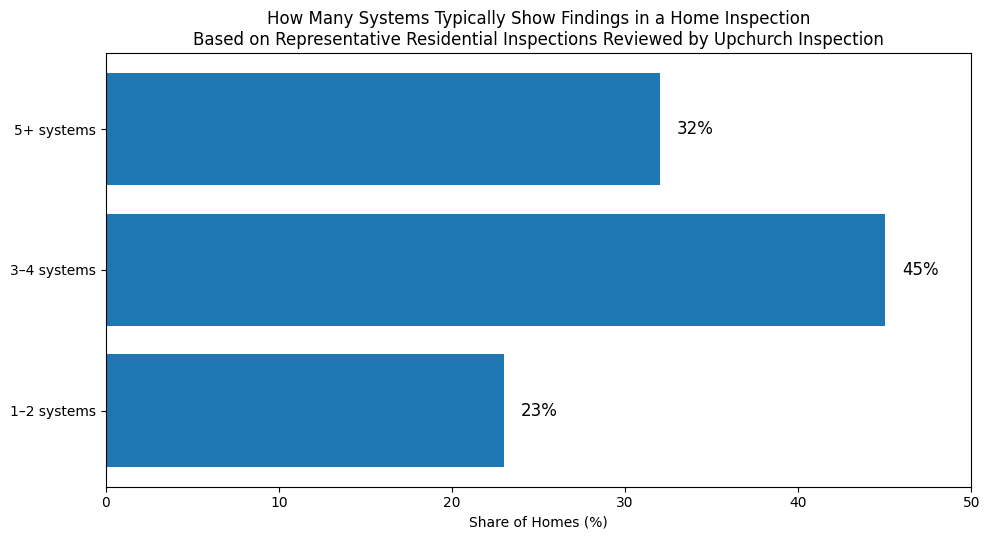
Chart showing how many systems typically show findings in a home inspection, with 23% of homes having issues in 1 to 2 systems, 45% in 3 to 4 systems, and 32% in 5 or more systems.
Distribution of major issue categories identified per home in a representative residential inspection sample reviewed from the Upchurch Inspection dataset.

1. Drainage and water management issues were the most common pattern

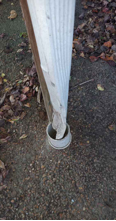
If there is one issue that consistently rose above the rest, it was how water was handled at the roof edge and around the foundation. In this representative review, roughly seven out of ten homes showed some meaningful drainage or runoff-control defect. Sometimes the defect was obvious, such as gutters missing entirely. Sometimes it was more subtle, like downspouts terminating too close to the house, damaged extensions, poor gutter slope, or site grading that did not move water away efficiently. But the category kept appearing, and it appeared more often than anything else.
downspout damage tight e1773649621414


This is one of the most important real-world themes in home inspection because water problems are rarely isolated. When runoff is not managed properly, the consequences tend to spread outward into other systems. Water ends up near the foundation, soils remain wet longer than they should, crawlspaces hold more humidity, wood components deteriorate faster, and interior moisture symptoms become more likely over time. That is one reason drainage issues matter even when the buyer does not see active leakage during a showing. The house may look serviceable at the surface while the conditions that lead to moisture damage are already in place.

gutter debris 2 tight e1773649733748


The reports gave repeated versions of the same basic story. One home had downspouts terminating near the foundation, improper gutter pitch, and flashing concerns at the roof edge. Another had downspouts terminating near the foundation, leaves and debris in the gutters, and damaged downspouts, along with tree limbs close enough to contribute to debris buildup and moisture retention. A Memphis property in the sample had no gutters present at all, which significantly increases the amount of roof runoff falling directly near the structure. Another report noted rainwater pooling concerns at the entry walkway and downspouts discharging too closely to the house. Still another explicitly tied missing guttering over a porch area to erosion, saturated soil conditions, and possible water entry into below-grade areas.

This category matters because it is often the beginning of a much larger defect chain. Homeowners may think of gutters and downspout extensions as minor accessories, but the reports tell a different story. In practice, they are part of the home’s first line of moisture defense. When they are absent, damaged, clogged, or draining improperly, the house begins to absorb the effects elsewhere.

2. Roof defects were common, but most were maintenance and water-entry management issues rather than instant roof failure

The second major pattern was roofing. Here again, the reports did not usually show sudden complete roof failure. What they showed much more often were signs of age, deferred maintenance, and weak detailing at edges, penetrations, and transitions. In this sample, a fair estimate is that a little over half of the homes had notable roof wear, flashing defects, missing drip edge, deteriorated sealant, damaged shingles, or related roof-edge issues.

That distinction matters. Many people hear “roof issue” and imagine a roof that needs immediate full replacement. Some did warrant more serious concern, but more often the issue was that a roof had multiple weak points: lifted shingles, worn sealant at penetrations, flashing installed improperly, drip edge missing, chimney caps absent, debris and vegetation on the surface, or roof decking damage at the eaves where water exposure tends to concentrate. These are often the kinds of problems that do not look dramatic from the street but create predictable leak paths over time.

roof flashing closeup tight e1773649502413

One of the clearest examples was the Nora Road property, which had damaged roof surfaces, sagging or buckling roof decking, bowed or damaged eave decking, lifted shingles, moss growth, missing shingles, no gutters present, and flashing issues serious enough that a full roofing evaluation was recommended. Another property showed crown flashing that lacked full coverage, downspout and gutter issues, improper flashing installation, and missing drip edge. Another report identified deteriorated sealant at roof penetrations, possible leak points, and roof debris or nearby vegetation contributing to moisture retention. The Houston Street report added yet another version of the same theme with leaf cover, tree limbs, and bubbled areas beneath shingles.

What is important here is that many roof issues are not purely “shingle problems.” They are water-entry management problems. Missing drip edge matters because it leaves the roof decking edge more vulnerable. Bad flashing matters because penetrations and transitions are where roof systems often fail first. Tree limbs and debris matter because they trap moisture and shorten material life. In other words, a lot of the recurring roof findings were really part of a broader water-management story, not separate from it.

3. Decks, porches, stairs, and handrails showed up far more often than most buyers expect

One of the more interesting patterns in the reports was how often exterior walking surfaces and safety components showed meaningful deficiencies. Buyers often focus on the roof, HVAC, and foundation. But in this sample, decks, porch structures, stairs, rails, and support details were among the most consistently flawed exterior features. Roughly 40% to 45% of the homes reviewed showed notable concerns in this category.
deck joist hanger tight e1773649563667

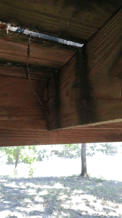
These were not all cosmetic concerns. Repeated findings included joist hangers missing, diagonal bracing missing, improper ledger or fastening details, wood rot at decking or framing, weathered deck components, loose boards, stairs with missing fasteners, handrails that were not graspable, missing handrails where four or more risers were present, and support columns with decay or looseness.

porch support column tight e1773650466187

Those conditions showed up directly in the reports. One report described a heavily weathered deck and missing joist hangers. Another documented wood rot in deck components, loose boards, and a non-graspable handrail. The Chandler Lane report included heavily weathered deck components, missing joist hangers, missing diagonal bracing, improper attachment, split stringers, unsafe stair conditions, and missing handrails. The Cheatham Street property went further, with a deck not constructed to DCA-6 standards, proper ledger fasteners not present, missing joist hangers, missing diagonal bracing, and stair stringer hangers missing fasteners. The Bonita Drive property included loose porch roof columns and support-pillar bases showing decay.

Why does this matter so much? Because decks and stairs are exposed to weather constantly, and they often receive patchwork repairs over time. Many homeowners treat them like simple carpentry features, but they are structural and safety components. Once connectors are missing, wood remains wet, or supports start to deteriorate, the risk profile changes quickly. The repeated appearance of these defects suggests that exterior walking structures are one of the most commonly under-maintained parts of the home.

4. Electrical issues were often safety corrections, not full rewires — but they still mattered

Another recurring theme was electrical safety. In many houses, the electrical system was not in total failure, but it often showed missing protections, unfinished work, aging components, or overlooked safety items that should not be ignored. In this sample, roughly one-third to two-fifths of homes showed meaningful electrical safety corrections.

The kinds of electrical issues that kept appearing included GFCI protection missing where expected, cover plates missing, loose receptacles, smoke alarms missing, aged, or nonfunctional, CO alarms not present or not functional, unfinished or unworkmanlike wiring repairs, old panels or panel labeling deficiencies, and branch wiring issues involving fixtures or connections. The reports suggest that these conditions often accumulate gradually because the house remains “functional” in the everyday sense. Lights turn on. Outlets work. Nothing seems urgent. But inspection brings the system back into focus as a safety system, not just a convenience system.

electrical panel tight e1773650359203

The Nora Road report is one of the strongest examples, with numerous electrical defects, aged panel and wiring concerns, unfinished installations, missing GFCI protection, missing receptacle covers, missing smoke alarms at recommended locations, nonfunctional smoke alarms, missing CO alarms, and fixtures not installed. The Cheatham Street property also showed missing GFCI protection, loose receptacles, missing cover plates, unsafe exterior outlets, nonfunctional smoke alarms, aged alarms, a nonfunctional CO alarm, broken ground-wire conditions, and issues related to panel or dead-front conditions. Another property had no GFCI outlet noted in the bathroom and a broader pattern of electrical upgrade items.

What stands out here is that many homeowners live with these conditions for years because “everything still works.” But the point of an inspection is not just whether a switch turns on. It is whether the system appears safe, reasonably maintained, and aligned with modern expectations where practical. Missing GFCI protection and nonfunctional alarms are classic examples of issues that are easy to normalize until an inspection puts them in writing.
5. HVAC issues often came down to age, neglect, and incomplete support systems

Heating and cooling systems were another recurring issue, especially in homes where equipment was older, poorly maintained, partially incomplete, or not distributed well through the house. A cautious estimate from this review is that about 30% to 35% of homes showed notable HVAC age or maintenance concerns.

The repeated HVAC themes included aging equipment, rust or corrosion, dirty return grilles or filters, deteriorated refrigerant-line insulation, possible inadequate return air, sagging ductwork, missing safety items such as sediment traps, and rooms lacking proper heating or cooling source. These are important because HVAC issues are not always about whether the system turns on during a short inspection window. They are often about service life, airflow, distribution, maintenance history, and system completeness. That matters a lot in a hot, humid region where cooling systems work hard for long stretches of the year.

Again, the Nora Road property is one of the strongest examples. It had an aged interior unit, rust at the base, nonfunctional HVAC conditions, a missing sediment trap, a dirty return grille, possible inadequate return-air setup, sagging ductwork, and a recommendation for full HVAC evaluation. The Millington property had a dirty filter, deteriorated refrigerant-line insulation, and other system maintenance concerns. Cheatham Street showed no central HVAC system present, aged wall-heater conditions, dust buildup inside return ducting, and rooms without adequate heating or cooling source.

One of the broader lessons here is that buyers tend to think of HVAC problems as obvious when the unit does not work, but many of the recurring concerns were about systems that may still operate while showing signs of age or neglect that affect reliability, efficiency, and comfort.

6. Exterior deterioration was common, especially where water and sun had been working for years

Exterior siding, trim, fascia, soffits, doors, and sealant details showed significant wear across the reports. This is one of those categories that people sometimes dismiss as cosmetic, but it often overlaps with real moisture vulnerability. Roughly 30% of homes showed meaningful exterior-envelope deterioration.

The repeated observations included damaged or loose siding, missing siding pieces, poorly lapped siding, deteriorated eaves, fascia, and soffits, poor exterior sealant, damaged entry doors, and wood rot or water damage at trim and overhangs. At Nora Road, the report listed multiple siding deficiencies, loose and damaged vinyl, missing pieces, improper lapping, damaged trim, deteriorated eaves and fascia, poor sealant, and moisture-damaged exterior doors. One earlier report noted wood water damage at eaves and fascia, particularly near a deck area where weather exposure and poor water management likely overlapped. Another showed vegetation near the home, which the report specifically tied to moisture retention and possible pathways for wood-destroying insects.

This category matters because exterior cladding is the home’s first line of defense. When siding opens up, sealant fails, or eave details deteriorate, the risk is not just appearance. It is hidden moisture entry, faster aging, and more expensive repairs later. The reports suggest that exterior deterioration often should be read not as an isolated cosmetic issue, but as evidence of how well or poorly the house has been defended against long-term moisture exposure.

7. Crawlspace and subfloor moisture problems were a recurring underlying theme

Some of the most meaningful observations in the reports were not at the roofline or the electrical panel. They were below the house. In this review, crawlspace moisture indicators and related subfloor concerns appeared in roughly a quarter to a third of homes, and they often tied directly back to the drainage and runoff issues already discussed.

Several reports tied surface water, missing vapor barriers, damp crawlspaces, moisture staining, fungal growth, and wood deterioration together in ways that clearly showed how one building issue leads into another. The Cheatham Street report is especially revealing. It included ductwork, insulation, and moisture concerns in the foundation area; multiple crawlspace deficiencies; damaged access framing; floor-structure moisture staining; wood rot; improper floor-structure support; missing vapor barrier; and insulation not present between joists. The same report also flagged mold on a wall, fungal growth, and air-quality testing recommendations. The Dunn Avenue file similarly tied damp soil, staining, and likely microbial conditions back to poor grading, downspout extension needs, and absent vapor-barrier protections. Nora Road also showed moisture staining in the attic and masonry or foundation damage in the crawlspace/foundation section.

This is where the larger message of the article comes together. Moisture management is not just about puddles outside or clogged gutters. In many houses, the consequences show up later as staining, rot, fungal growth, support problems, insulation damage, and indoor air quality concerns below the floor.

8. Plumbing problems often reflected incomplete repairs, leakage, and missing safety details

Plumbing findings in the sample followed a pattern of their own. Many were not total system failures. They were evidence of partial repairs, active leakage, missing components, or workmanship shortcuts. This is an important distinction because it changes how buyers and sellers should interpret a plumbing-heavy report. Often the issue is not that the entire plumbing system is failing. It is that the visible system reflects uneven maintenance and prior repair decisions.

In the reports, that looked like active leaks at supply lines, disconnected drain or DWV piping, missing cleanout caps, broken CPVC supply piping, corrosion and leakage at drain piping, loose toilets, improper traps or drainage concerns, and missing discharge piping or related safety items at water heaters.

Nora Road had an active water supply leak, disconnected main drain or DWV piping, and a missing proper cleanout cap. Cheatham Street had broken CPVC supply piping, drain-line disconnection and leakage damage, corrosion and improper drain connections, and other incomplete plumbing conditions. Even the more moderate Millington report noted minor leaking laundry hoses and hindered sink drainage.

That spread matters because it shows plumbing issues are not limited to one type of house. Some are small and manageable. Some point to deeper neglect. But they are common enough that buyers and sellers should expect plumbing deficiencies to appear regularly in inspection reports, especially where homes have seen piecemeal repairs over many years.

9. Tree limbs, vegetation, and debris were not minor footnotes — they were contributors to bigger problems

One of the more understated but recurring categories was vegetation. On paper, tree limbs near the roof or vegetation against siding can seem like secondary observations. In practice, the reports show that these conditions often contribute to several larger defect categories. Tree limbs within ten feet of the roof, debris, vegetation against siding, and plant growth near entries appeared repeatedly, and the reports tied those conditions to poor drying, clogged gutters, moisture retention, and increased exposure of wood materials.

This matters because vegetation is one of the easiest things to ignore and one of the easiest things to fix, but it can quietly accelerate roof aging, increase gutter debris, keep siding damp, and create better conditions for rot or insect activity. In other words, vegetation often acts as an amplifier of the other defects already discussed rather than a separate category.

What these reports suggest about Memphis climate and moisture exposure

One of the strongest themes running through the reports is moisture exposure. While individual defects varied from house to house, the underlying cause in many cases was the same: water and humidity interacting with building materials over time.

Memphis and much of West Tennessee sit in a climate zone that produces several compounding conditions for houses. Annual rainfall averages roughly fifty inches per year, and much of that rainfall occurs in heavy bursts rather than light steady precipitation. When that kind of rain meets roofs with missing gutters, clogged downspouts, or poor drainage slopes, water does not simply run off harmlessly. It concentrates in predictable locations around foundations, entry walkways, crawlspace perimeters, and low-grade areas.

Humidity adds another layer. The region experiences long stretches of warm, humid air through late spring, summer, and early fall. That means exterior building materials spend large portions of the year exposed to moisture conditions that slow drying and accelerate deterioration. Roof surfaces remain damp longer when debris is present. Deck boards and framing hold moisture if airflow is limited. Crawlspaces without proper vapor barriers or ventilation can maintain elevated humidity for months at a time.

Several of the reports illustrate this interaction clearly. Crawlspace moisture staining, damp soil conditions, fungal growth indicators, and insulation deterioration appeared alongside exterior drainage deficiencies and missing runoff controls. When viewed individually, each condition might seem like a separate repair item. When viewed collectively, they form a chain reaction that begins with how water moves across and away from the property.

This pattern is not unique to one type of home or one age of home. It appeared in houses built decades apart. That consistency suggests that moisture management is one of the most important maintenance priorities for homes in this region. Gutters, downspout extensions, grading improvements, crawlspace vapor barriers, and roof-edge details are not cosmetic upgrades. They are practical tools for controlling how much moisture the structure must absorb over time.

When those controls are absent or neglected, the reports suggest that the house slowly accumulates the types of conditions that inspections later document: damp crawlspaces, deteriorated trim, fungal growth indicators, deck rot, roof-edge damage, and exterior envelope wear.

what these reports suggest about memphis cliemate and moisture exposure
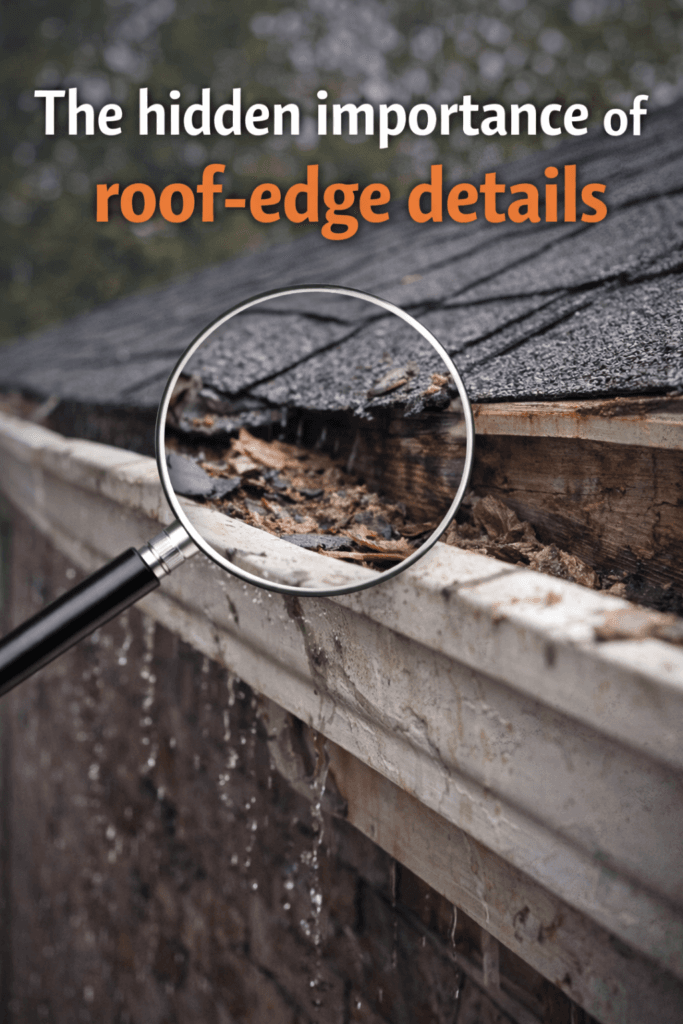
the hidden importance of roof edge details

The hidden importance of roof-edge details

Another insight that becomes clearer after reviewing multiple reports is that roof systems rarely fail in the middle first. Instead, most roof problems begin at edges, seams, and penetrations.

That may sound like a technical distinction, but it has practical implications for how roofs age and how inspectors evaluate them.

The outer edge of the roof—where shingles meet fascia boards, gutters, or drip edges—is one of the most exposed areas on the entire structure. Water flowing down the roof surface slows and redirects there. Wind-driven rain can push moisture upward under poorly installed materials. If drip edge flashing is missing or improperly installed, water can contact roof decking directly, allowing the edge of the sheathing to absorb moisture repeatedly over time.

The reports in this review repeatedly documented variations of this pattern. Missing drip edge, lifted shingles near the eaves, damaged fascia boards, deteriorated flashing, and gutters that either did not exist or did not function correctly appeared in multiple homes. Individually, these may appear like minor repair items. But when several appear together, they suggest a roof edge that is no longer shedding water efficiently.

Flashing details around chimneys, plumbing vents, and roof transitions showed similar vulnerabilities. Sealant deterioration at penetrations, improperly installed flashing, and aging vent boots were recurring observations. These are common areas where leaks begin because they represent interruptions in the otherwise continuous roof surface.

This helps explain why roofs can look acceptable at a glance while still having meaningful maintenance issues. A roof does not need widespread shingle loss to develop moisture entry points. Small failures in flashing or roof-edge detailing can allow water to reach the structure below long before the roof surface appears dramatically damaged.

For buyers and homeowners, this means that roof evaluations should focus not only on visible shingle wear but also on how the roof manages water at its most vulnerable transitions.

Why deck and stair defects are more serious than buyers often realize

Decks, porches, and exterior stairs appeared frequently enough in the reports that they deserve more attention than they typically receive during real estate transactions.

Part of the reason these defects are so common is simple exposure. Unlike interior framing, deck components remain outdoors year-round. Sun, rain, temperature swings, and seasonal moisture all act on the same materials continuously. Over time, that exposure weakens wood fibers, loosens connectors, and accelerates corrosion in metal fasteners.

But another reason is that deck construction is often modified over time. A deck may have been built years earlier under different construction standards, then repaired or expanded later by different contractors or homeowners. When that happens, the final structure may include a mixture of connection methods, hardware types, and framing approaches that were never designed to work together.

Several reports in this review illustrate the kinds of conditions that result. Missing joist hangers, ledger boards lacking proper fasteners, loose stair connections, decayed support posts, and non-graspable handrails were all documented. In some cases, deck framing showed weathering severe enough that replacement or substantial repair would likely be required.

What makes deck defects particularly important is that they represent both structural and safety risks. Unlike many other home defects, which may develop slowly over time, deck failures can occur suddenly when connectors or framing members lose their capacity.

Handrails and guardrails add another layer of concern. Missing or improperly shaped handrails at stairs increase fall risk, particularly in wet or icy conditions. Guardrails that are loose or improperly fastened may not provide adequate protection at elevated deck edges.

The repeated appearance of these issues across multiple homes suggests that decks and exterior stairs deserve the same level of attention buyers typically give to roofs and HVAC systems. They are structural elements, not decorative additions, and they should be evaluated with that level of seriousness.

why deck and stair defects are more serious than buyers often realize

What these reports really suggest about Memphis and West Tennessee homes

The biggest insight from this review is not that the houses are unusually bad. It is that the same practical building stresses keep repeating.

Water is not always directed away well. Roofs tend to weaken first at the edges and penetrations. Decks and stairs deteriorate faster than people expect. Electrical systems are often functional but not fully safe. HVAC systems show age before total failure. Crawlspace moisture quietly amplifies other problems. Exterior trim and siding often tell a slow story of exposure and deferred maintenance long before the interior makes it obvious.

That is why this article should not read like a scare piece. It should read like a field-based explanation of how homes in this region actually age. The reports support that framing very well.

What buyers should take from this

For buyers, the lesson is not to panic when a report contains a long summary. A lot of the recurring issues in these reports are the kinds of things that can be prioritized and corrected over time. But the reports also make clear that small maintenance issues tend to stack on top of each other. A missing gutter today can become wet soil, crawlspace dampness, wood deterioration, and mold risk later. A missing handrail might feel minor until it becomes a safety issue. A loose outlet cover may be simple to fix, but a pattern of missing protections says something about the maintenance history of the home.

Inspections are useful not because they reveal disasters in every house, but because they help buyers see the difference between manageable maintenance, accumulated neglect, and system conditions that deserve further evaluation before closing.

What sellers should take from this

For sellers, the repeated themes point to a simple truth: the homes that move through inspection more smoothly are usually the ones where the owner kept up with the boring things. Gutter maintenance, grading improvements, flashing repairs, sealant touchups, deck upkeep, alarm replacement, minor plumbing fixes, and exterior trim maintenance do not feel glamorous. But they repeatedly showed up in these reports as the kinds of conditions that trigger negotiation, repair requests, or buyer concern.

A lot of the most common findings were not especially expensive because they were inherently catastrophic. They became expensive because they were allowed to continue long enough to affect surrounding materials.

Where These Issues Commonly Appear in Memphis-Area Homes

The inspection patterns described in this review appear across many parts of the Memphis and West Tennessee housing market. However, differences in construction age, building practices, and neighborhood development patterns can influence the types of issues that tend to appear during inspections.

For example, homes built in the 1960s through the 1980s, which are common in areas such as East Memphis, Raleigh, and parts of Bartlett, often show aging exterior materials, roof-edge wear, and electrical systems that were installed under earlier safety standards.

Homes built during the suburban expansion of the 1990s and early 2000s in areas such as Cordova, Germantown, and Collierville frequently show a different pattern during inspections. These properties may be more likely to show aging HVAC systems, deck and porch repairs, and exterior trim deterioration caused by long-term weather exposure.

In newer suburban developments across Arlington, Lakeland, and northern Shelby County, inspection findings often involve maintenance items such as drainage control, grading adjustments, and early wear on exterior materials rather than structural aging.

These observations reflect how homes in different parts of the region were constructed and how they respond over time to the local climate. Regardless of the neighborhood, however, the recurring themes remain consistent: water management, exterior exposure, and routine maintenance play a major role in how houses age in the Memphis area.

What This Means for Buyers in Memphis and West Tennessee

One of the main purposes of a home inspection is to identify patterns like these before they become expensive surprises. Most homes do not fail inspection because of one catastrophic issue. Instead, they show a collection of smaller maintenance problems that have accumulated over time.

A thorough inspection helps buyers understand which of those issues are routine maintenance, which deserve further evaluation, and which may affect negotiations before closing. In a region where moisture management, aging exterior materials, and crawlspace conditions play such an important role in long-term durability, having a clear picture of the property’s condition can make a meaningful difference in how a buyer plans repairs, budgeting, and ownership.

Bottom line

After reviewing this representative set of inspections, the main pattern is clear: the most common home inspection problems in Memphis and West Tennessee are usually not sudden catastrophic failures. They are moisture-control problems, roof-edge and flashing defects, exterior safety issues, aging systems, plumbing defects tied to incomplete repairs, and deferred maintenance that has been allowed to accumulate.

That is actually useful news. It means inspections are not just about uncovering disasters. They are about showing buyers and homeowners where houses predictably wear down, where maintenance matters most, and which issues tend to signal bigger problems if ignored.