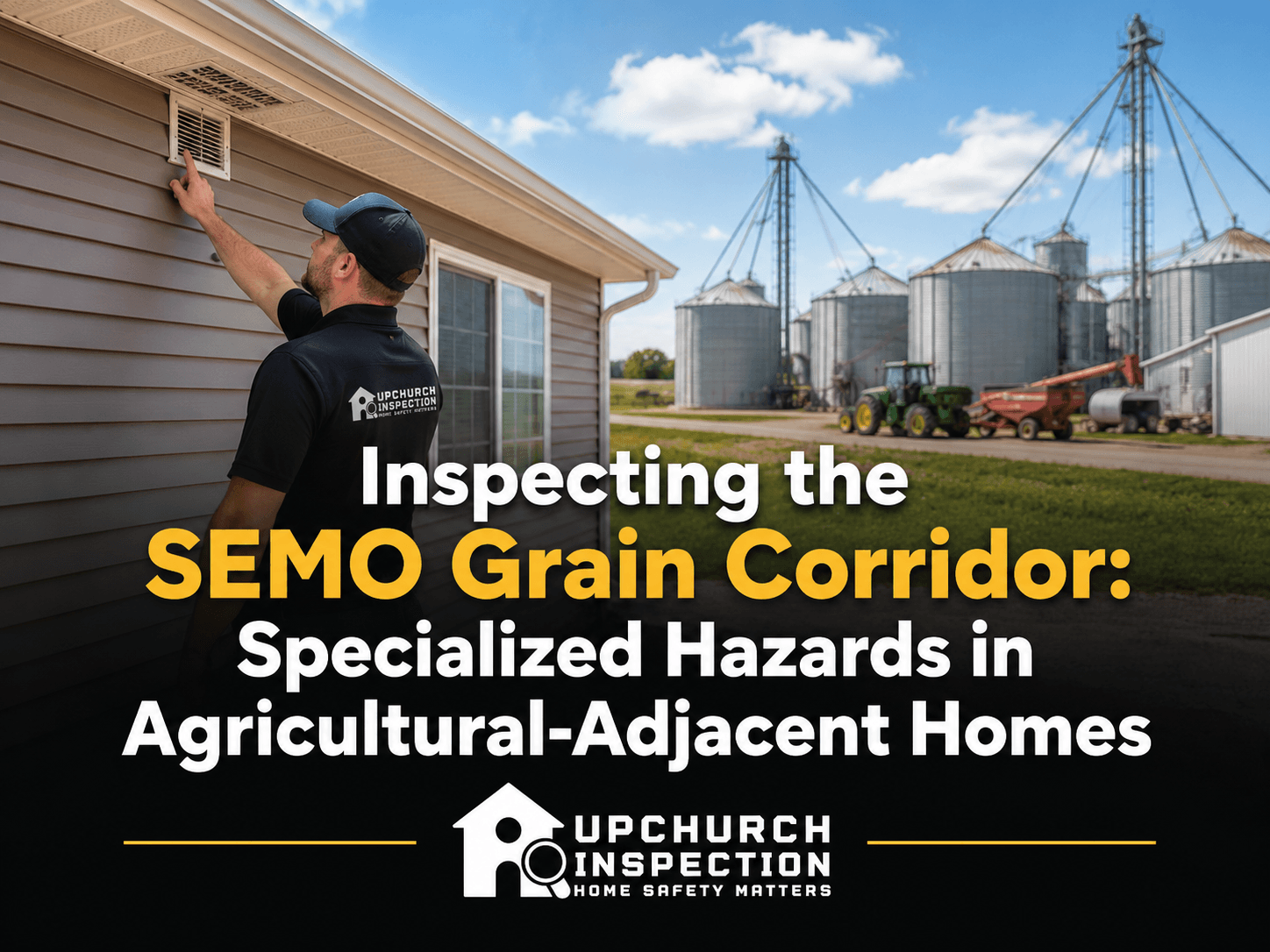
Homes near the SEMO grain corridor live in a different environmental reality than properties tucked into residential subdivisions. In places like Sikeston and Scott City, grain elevators, rail spurs, and processing facilities aren’t just part of the skyline — they actively shape the air, pests, and building conditions surrounding nearby homes.
These aren’t cosmetic issues. They’re forensic clues that change how an inspection needs to be performed.
Combustible Dust Isn’t Just an Industrial Problem
Grain dust travels. During harvest cycles and active processing periods, fine organic dust can migrate well beyond elevator property lines. It settles in attic spaces, wall cavities, and mechanical systems — especially in homes with leaky envelopes or poorly sealed attic accesses.
While residential homes aren’t regulated like industrial facilities, accumulated dust still presents risks:
- Reduced indoor air quality
- Accelerated HVAC contamination
- Elevated fire load in attics and mechanical closets
During inspections in agricultural-adjacent neighborhoods, attic conditions matter more than usual. Dust layering on insulation, framing, and ductwork tells a story about long-term exposure and filtration failures.
Attic Filtration and Air Sealing Matter More Here
Standard attic ventilation isn’t enough when a home sits downwind of grain operations. I pay close attention to:
- Unsealed attic penetrations
- Gaps around bath fans and recessed lighting
- Improperly filtered return-air systems
If dust can enter the attic, it can enter the living space. Poor air sealing allows pressure imbalances to pull contaminated air downward through the ceiling plane, especially during heating and cooling cycles.
Rodent Pressure Along the Corridor
Grain means rodents. Period.
Homes near elevators and rail lines experience higher-than-average rodent pressure year-round, not just seasonally. Mice and rats don’t need much incentive when food sources are constant and shelter is nearby.
This is where pest exclusion forensics become critical. I’m looking for:
- Gaps at sill plates and utility penetrations
- Damaged or missing door sweeps
- Improperly screened vents and weep paths
Rodent entry points are often subtle and easy to miss if you’re not actively hunting them.
Exterior Details That Get Overlooked
Agricultural-adjacent homes tend to age faster at the exterior envelope. Dust accumulation holds moisture against siding and trim, accelerating decay and paint failure. Add in increased pest traffic, and small defects become big problems quickly.
I focus heavily on:
- Foundation-to-wall transitions
- Crawlspace vents and access doors
- Roof-to-wall intersections where debris accumulates
These are the quiet failure points most buyers never think to ask about.
Why SEMO Homes Need a Different Inspection Lens
Inspecting homes along the SEMO grain corridor isn’t about labeling a house “near industry.” It’s about understanding how industrial agriculture changes airflow, pest behavior, and material wear over time.
Buyers looking at properties in Southeast Missouri deserve inspections that account for those realities — not generic checklists built for suburban cul-de-sacs.
You can learn more about how we inspect homes across agricultural and industrial-adjacent communities here:
https://upchurchinspection.com/our-service-areas/home-inspections-in-southeast-missouri/
In SEMO, the land feeds the economy — and quietly tests the homes built next to it.