
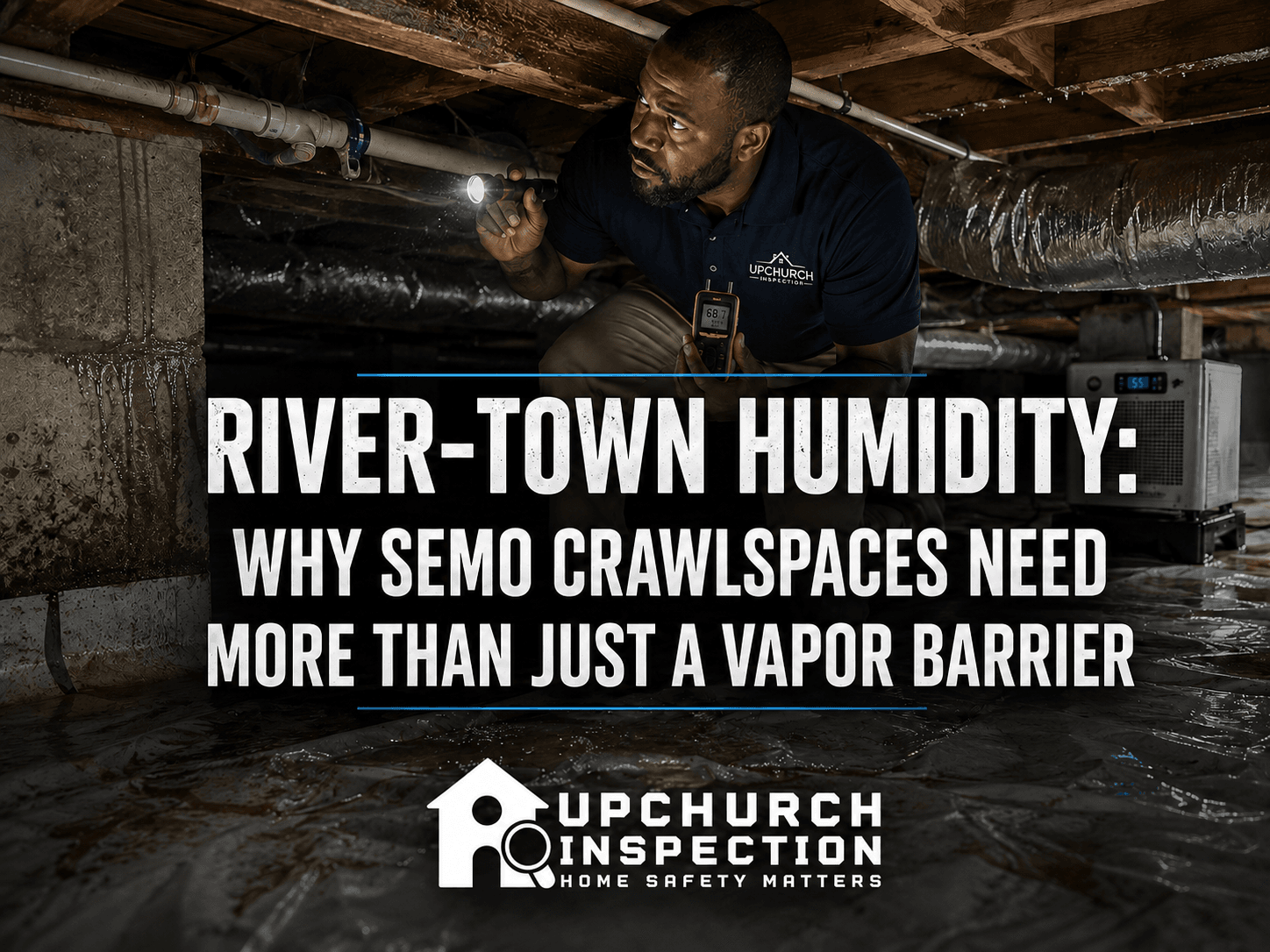
I’m based in Memphis, but I review a lot of inspection reports coming out of Southeast Missouri. When our inspector in the Cape Girardeau area flags a crawlspace moisture issue, it’s rarely a surprise. River towns behave differently, and the Mississippi creates a humidity problem that doesn’t show up the same way in inland markets.
On paper, many of these crawlspaces look fine. There’s plastic on the ground. There’s ventilation. Sometimes everything even looks “recently updated.” But when we dig into the report details, the same red flags keep showing up.
The Mississippi’s Quiet Influence on SEMO Homes
Cape Girardeau and the surrounding river communities sit in a persistent moisture zone. The river creates a localized micro-climate where humidity lingers longer and ground moisture evaporates more slowly. Our inspectors routinely document elevated crawlspace humidity even during stretches of dry weather.
We’ve reviewed reports from homes just blocks off the river where moisture readings never drop into a safe range. Homeowners often assume the vapor barrier should handle it. In this region, it usually doesn’t.
Why Vapor Barriers Alone Fall Short in Older Homes
Many older homes in Southeast Missouri were never designed with modern moisture control in mind. When our local inspector in Cape Girardeau or Jackson documents crawlspace conditions, we frequently see:
- Loose or thin plastic that isn’t sealed at seams or piers
- Open foundation vents pulling humid river air inside
- Insulation that has absorbed moisture and lost effectiveness
- Evidence of condensation on framing and mechanical components
The barrier may block ground vapor, but humid air continues to circulate and condense. Over time, that moisture finds the wood.
When Crawlspace Venting Backfires
One thing that stands out when I review SEMO reports is how often traditional venting actually makes the problem worse. Our inspectors regularly document higher humidity inside the crawlspace than outside.
In river-adjacent areas, pulling in outside air often introduces more moisture than it removes. Our inspector notes focus heavily on:
- Condensation patterns on joists and ductwork
- Rusted fasteners and metal components
- Fungal growth that points to airborne moisture, not standing water
These aren’t one-off findings. They’re consistent across river-town inspections.
What Our Inspectors Are Evaluating in SEMO Crawlspaces
When our Southeast Missouri inspector evaluates a crawlspace, the goal isn’t just to note the presence of a vapor barrier. We’re looking at how the entire system performs together.
Reports typically assess:
- Exterior drainage and grading around the foundation
- Signs of seasonal water intrusion
- Whether the vapor barrier is properly sealed and integrated
- Air leakage between crawlspace and living space
- Mechanical systems interacting with crawlspace air
Most moisture issues we see are the result of multiple contributing factors, not a single defect.
Why Buyers Should Pay Attention in River Towns
Crawlspace moisture doesn’t stay contained. The reports we review often connect damp crawlspaces to interior air quality concerns, floor movement, and persistent odors inside the home.
In river towns like Cape Girardeau, moisture control requires more than a basic vapor barrier. It requires understanding how the river changes the environment around — and under — the house.
That’s why our SEMO inspections dig deeper. The river demands it.