
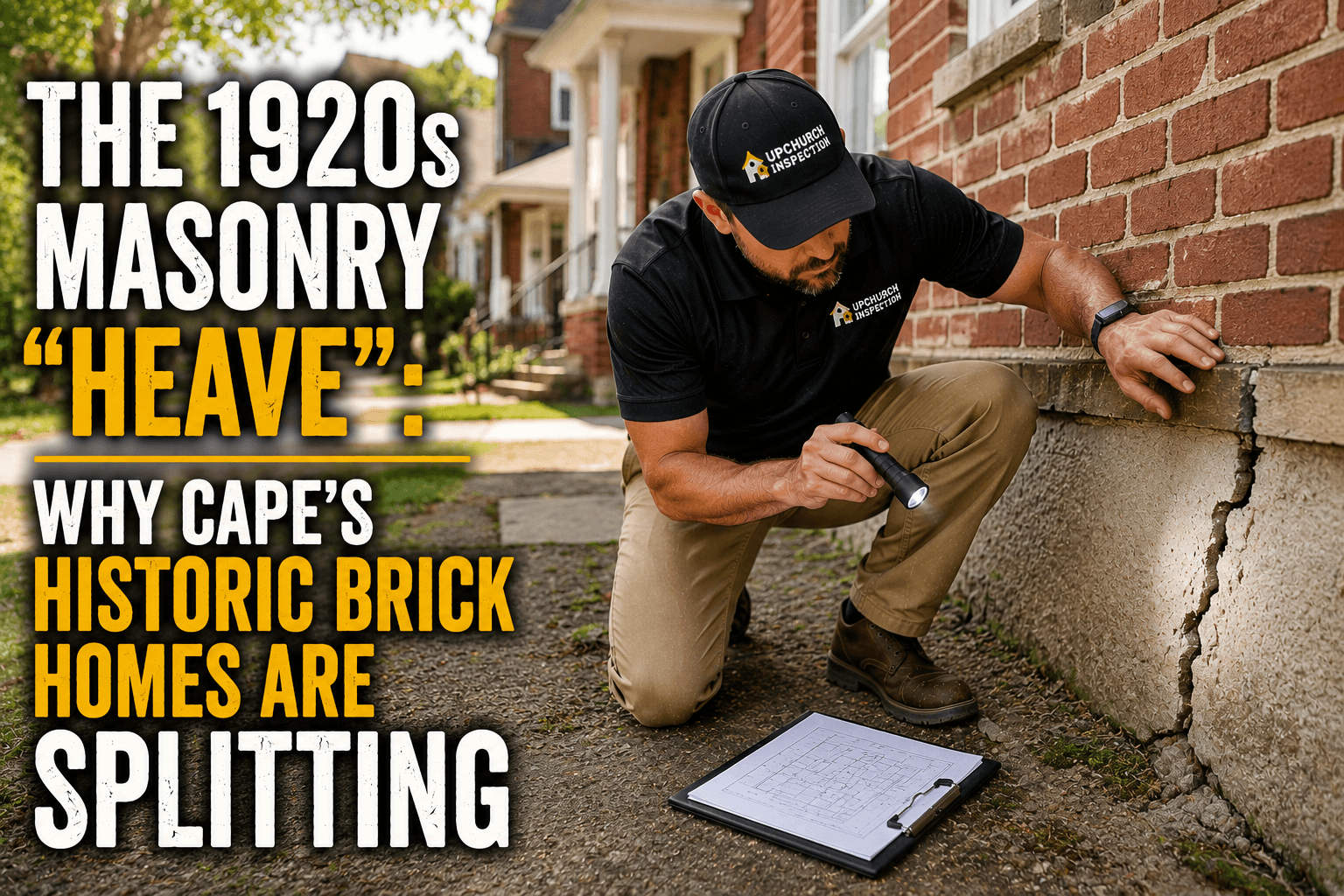
Cape Girardeau’s historic brick homes weren’t built to fail — but they were built for a soil and climate that behave very differently than most buyers expect today. When I inspect 1920s-era masonry homes in the Haute Mode neighborhoods, I’m not just looking for cracks. I’m looking for movement patterns that tell me whether the building is aging naturally or being pushed apart by forces beneath it.
Those forces usually start in the soil.
River Silt, Clay, and Seasonal Movement
Much of Cape’s historic housing stock sits on soil influenced by river-deposited silt and clay. These soils don’t just get wet — they change volume. During prolonged wet periods, they expand. During dry spells, they shrink. Over decades, that constant expansion and contraction applies upward and lateral force to masonry foundations and load-bearing brick walls.
This is where masonry heave begins. Unlike settlement, which pulls a structure downward, heave pushes from below and outward, stressing mortar joints and brick faces in very specific ways.
Lime Mortar vs. Modern Expectations
Homes built in the 1910s and 1920s typically used lime-based mortar, not modern Portland cement. Lime mortar was intentionally softer than brick, allowing walls to flex slightly and release moisture.
The problem comes when those homes are repaired with hard, modern mortar. That mismatch traps moisture inside the brick itself. As water migrates through the wall and freezes or evaporates, it causes spalling — the face of the brick pops off, leaving structural weakness behind.
Spalling isn’t cosmetic. It’s evidence of a wall that can no longer manage moisture the way it was designed to.
Reading the Cracks the Right Way
Not all cracking means structural failure, but historic brick homes crack in recognizable patterns:
- Stair-step cracking through mortar joints
- Horizontal separation near floor lines
- Bowing or bulging at mid-wall height
These patterns tell me whether the issue is soil pressure, moisture expansion, or true foundation displacement. That distinction matters, because the repair strategy changes completely depending on the cause.
Re-Pointing vs. Structural Failure
One of the most common mistakes I see is assuming every brick issue can be solved with re-pointing. Re-pointing addresses deteriorated mortar joints — it does not correct movement, soil pressure, or wall displacement.
If the wall is actively moving due to heave, re-pointing alone is a temporary cosmetic fix. In some cases, it can actually accelerate damage by further trapping moisture.
Understanding when a brick wall needs maintenance versus structural evaluation is one of the most important parts of inspecting historic Cape homes.
Why These Homes Require Specialized Inspections
Historic brick homes near Downtown Cape and the Haute Mode areas carry charm, craftsmanship, and risk — all at once. Their behavior is governed by old materials, river-influenced soils, and decades of moisture exposure.
That’s why inspections in these neighborhoods require more than a surface-level review. They require masonry forensics, soil awareness, and an understanding of how historic construction responds to modern conditions.
For buyers evaluating historic properties across Southeast Missouri, this context is critical before closing.
Learn more about how we inspect historic and river-influenced homes here:
https://upchurchinspection.com/our-service-areas/home-inspections-in-southeast-missouri/
In Cape Girardeau, brick doesn’t just crack — it tells a story.