
TL;DR:
- Start with the summary, but do not negotiate or make a major decision from the summary alone.
- Read the detailed comments, photographs, recommendations, and inspection limitations.
- For Memphis and West Tennessee buyers, pay particular attention to water and drainage, crawl spaces, foundation movement, older electrical systems, HVAC condition, and any recommendation for additional evaluation.
A home inspection report is a snapshot of the visible and accessible condition of a property at the time of the inspection. It is not a pass-or-fail score, a repair list, or a prediction of everything that might happen after you buy the house. The purpose is to document what we observed, explain why certain conditions matter, identify limitations, and help you make a better-informed decision. That distinction is especially important in Memphis and West Tennessee, where we inspect everything from newer suburban construction to 1950s and 1960s ranch homes, Midtown properties approaching a century old, crawl-space homes, slab foundations, rental properties, and houses that have been remodeled several times. A long report does not automatically mean you are buying a bad house. What matters is understanding which findings represent real risk, which need additional investigation, and which are simply part of owning and maintaining a home.
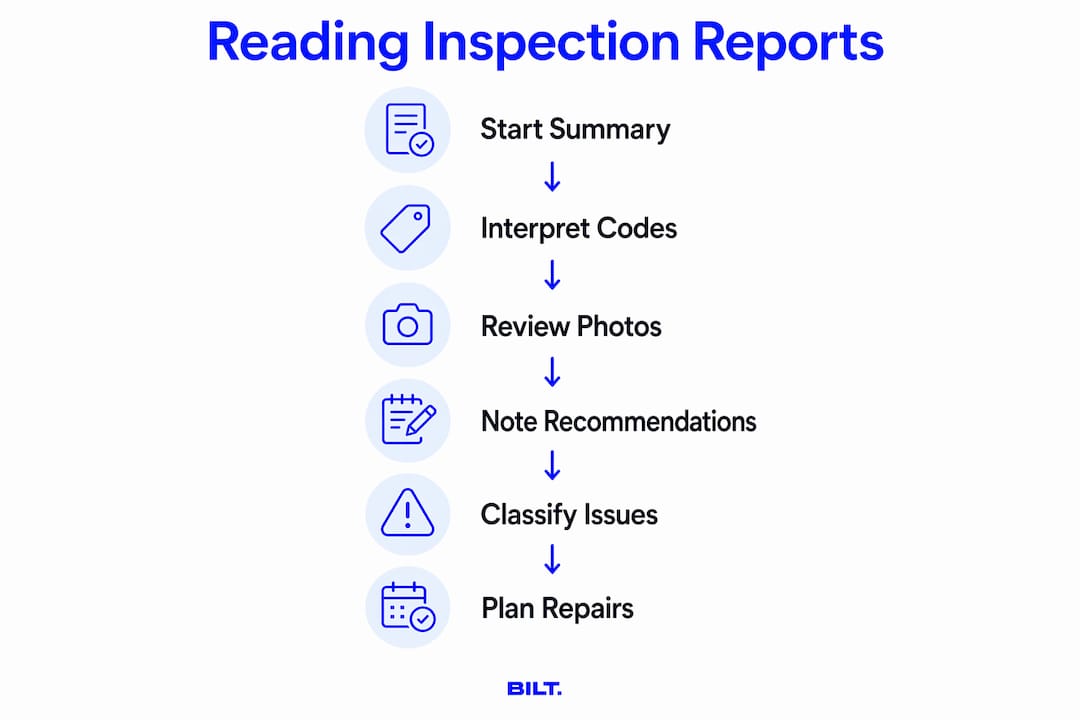
How to read your inspection report: Start with the summary, then read the details
The summary is the right place to begin because it gives you an overview of the findings we considered important enough to highlight. Read through it once before you start thinking about repairs, estimates, negotiations, or whether you still want the house. Then use the summary as a map back into the detailed report. The summary tells you where to look; the detailed comments explain what we actually observed and why it matters.
If you have been researching home inspection reports online, you may have encountered references to letter codes such as I, NI, NP, and D. Those are commonly associated with Texas Real Estate Commission inspection reporting and are not the system you need to learn to understand a Tennessee home inspection report. For your Upchurch Inspection report, the written finding and recommendation are far more important than memorizing a set of reporting abbreviations.
- Safety concerns: Conditions that may create an unreasonable risk of injury, fire, shock, combustion, or another safety hazard.
- Significant defects: Conditions involving major systems, structure, active water intrusion, or potentially substantial repair costs.
- Further evaluation: Conditions where additional investigation by an appropriate specialist is recommended before you make assumptions about the extent or cost of the problem.
- Repair or maintenance: Conditions that should be corrected or maintained but may not materially affect whether the property makes sense for you.
The most useful way to read the report is to ask three questions about each important finding: What did we observe? Why does it matter? What are we recommending you do next? Those questions will tell you considerably more about the house than a severity symbol or page count ever could.
Inspector language also matters. “Monitor” or “continued observation” means the condition may not presently justify invasive action but should be watched for change. “Repair recommended” means we observed a condition that should be corrected. “Further evaluation by a qualified professional” means the concern cannot be responsibly diagnosed or quantified through the general visual inspection alone. Do not treat those phrases as interchangeable.
Pro Tip: Read the entire summary once before reacting to individual defects. Then go back into the detailed report and read the full comment and photographs for every item that could affect safety, cost, or your decision to purchase the property.
What to focus on in the detailed sections: Systems, photos, and recommendations
The detailed body of your report covers the major systems and components we were able to inspect. That typically includes the roof, exterior, electrical system, plumbing, heating and cooling equipment, foundation and structure, attic, insulation, interior components, and accessible crawl-space or basement areas. Each section provides additional context that may not fit into a short summary comment.
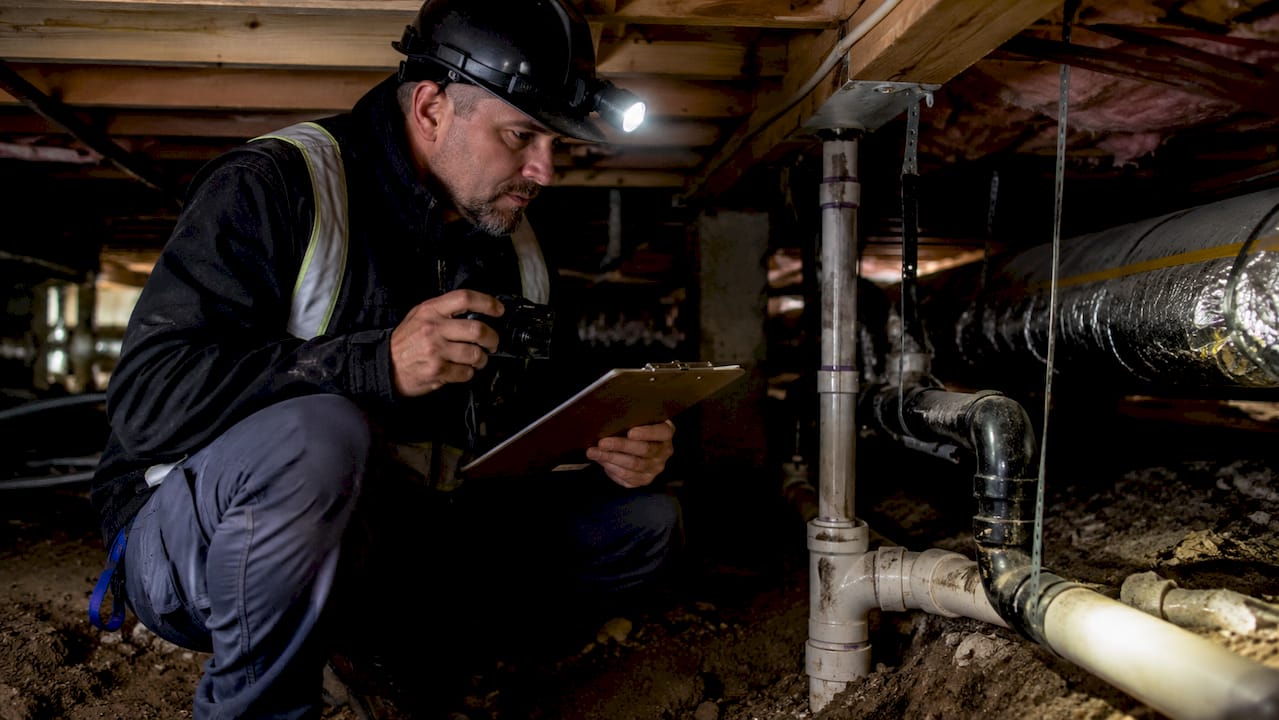
Photos are not decoration. They document what we observed and help establish the location and visible condition of the defect. They are also useful when you later speak with an electrician, plumber, roofer, HVAC contractor, structural engineer, or another professional. At the same time, a photograph should never be read without the accompanying narrative. A crack can look alarming in a close-up photograph while the surrounding evidence suggests relatively ordinary movement. A small electrical defect can look visually insignificant while the written comment explains why it presents a safety concern.
Pay particularly close attention to moisture and drainage language in a Memphis or West Tennessee inspection report. Water affects roofs, siding, windows, foundations, crawl spaces, framing, insulation, plumbing, and indoor finishes. Active moisture is different from evidence of past moisture. Staining is different from current wetness. A damp crawl space may be related to grading, gutters, plumbing, drainage, ventilation, or several conditions acting together. When multiple moisture-related findings appear in different sections of the report, read them together rather than assuming they are unrelated problems.
The table below shows how to think about several common findings and the type of follow-up they may require:
| Finding type | What the report may say | Recommended next step |
|---|---|---|
| Unsafe or exposed electrical wiring | “Repair recommended” | Qualified electrician |
| Foundation cracking without clear evidence of active movement | “Monitor” or “continued observation” | Watch for change and follow report recommendations |
| Structural movement with related cracking or floor displacement | “Further evaluation recommended” | Structural engineer or other appropriate specialist |
| Aging HVAC equipment with questionable performance | “Further evaluation by HVAC professional” | Obtain service evaluation and repair or replacement estimate |
| Active roof leakage or damaged roofing components | “Repair recommended” | Qualified roofing contractor |
Pro Tip: If the report recommends further evaluation, treat that as an unanswered question rather than another repair item. When the answer could materially affect your purchase decision, obtain the specialist evaluation while you are still within your inspection or due-diligence period.
How to classify and prioritize findings before making decisions
Not every defect belongs in the same category. One of the easiest ways to misread a report is to count findings instead of considering their consequences. A report containing forty routine maintenance comments may represent considerably less risk than a report containing ten findings that include active water intrusion, major foundation movement, unsafe electrical conditions, and a failed air-conditioning system.
- Safety concerns: Conditions that may expose occupants to electrical shock, fire, combustion hazards, falls, carbon monoxide, structural instability, or another significant safety risk. These deserve prompt attention.
- Major or potentially expensive defects: Conditions involving the foundation, structure, roofing, sewer or plumbing systems, electrical service, HVAC equipment, or other major components where repair could materially affect the economics of the purchase.
- Items requiring additional evaluation: Conditions where the home inspection identified a concern but cannot determine the full scope, cause, or repair cost without specialized expertise or additional testing.
- Maintenance and minor repairs: Conditions that should be corrected over time but may represent normal ownership responsibilities rather than a reason to abandon an otherwise suitable property.
This does not mean your home inspector decides what you should negotiate. The inspection identifies and explains the property’s condition. Your real estate agent or attorney can help you determine how those findings should be handled under your contract. From an inspection standpoint, the most useful approach is to understand the defect first, determine whether more information is needed, and obtain estimates when cost could materially affect your decision.
The total picture matters as much as any individual finding. A 1960s home in East Memphis with aging plumbing, an older electrical system, crawl-space moisture, and several generations of repairs tells a different story from a newer house with one isolated roof defect. Two homes with identical defects can carry very different risk profiles depending on age, maintenance history, construction, location, and the condition of the surrounding systems. Read the report as a description of the whole house rather than a checklist of unrelated problems.
What are the real limits of an inspection report?
A home inspection is a visual evaluation of accessible systems and components. We do not see through finished walls, concrete slabs, flooring, insulation, or other concealed materials. We cannot guarantee the future performance of a roof, air conditioner, water heater, plumbing line, foundation, or any other component. The report documents what was observable under the conditions present on inspection day.
A good inspection report tells you what was observed, what could not be fully evaluated, and where additional investigation may be warranted. It cannot tell you what is hidden inside every wall, beneath every slab, or underground.
Limitations deserve just as much attention as defects. An attic may be inaccessible. Stored belongings may block part of a wall or electrical panel. A crawl space may be physically inaccessible or unsafe. Utilities may be turned off. Weather may prevent operation of certain systems without risking damage. When we tell you that an area or system could not be fully inspected, do not interpret that as “no problem found.” It means the condition of that area remains unknown or only partially known.
Home inspectors are generalists. When a report recommends additional evaluation by a structural engineer, electrician, HVAC contractor, plumber, roofer, chimney specialist, sewer professional, or another qualified specialist, that recommendation exists because the condition deserves more investigation than a visual general inspection can provide. If the answer could affect whether you buy the house or how much the problem may cost, follow through before closing whenever possible.
Report length does not equal problem severity. A thorough report on an older Memphis home may be significantly longer than a report on newer construction simply because there is more history, more maintenance, more remodeling, and more to document. A 70-page report does not automatically mean the house is a disaster. Buyers who see a long report and immediately assume they should walk away are misreading inspection severity in a way that can cost them an otherwise good property.
Common mistakes buyers make when reading inspection reports include:
- Reacting to the number of findings instead of their significance
- Reading only the summary and ignoring the detailed comments
- Assuming an inaccessible or uninspected area is satisfactory
- Ignoring a recommendation for specialist evaluation
- Looking at photographs without reading the accompanying explanation
- Confusing a home inspection with a municipal code-compliance inspection. These are different evaluations with different purposes
Key Takeaways
The best way to use your inspection report is to start with the summary, read the complete narrative for the important findings, understand any limitations, and then decide what additional information you need before your inspection period expires.
| Point | Details |
|---|---|
| Start with the summary | Use it to identify the findings most likely to affect safety, cost, or your buying decision, then read the complete detailed comments. |
| Read the recommendation | Pay attention to whether we recommend repair, monitoring, or further evaluation rather than trying to assign every defect the same level of urgency. |
| Look for patterns | Several findings involving moisture, structure, drainage, electrical alterations, or remodeling may be different parts of the same underlying problem. |
| Follow up before closing | When specialist evaluation or additional testing could materially affect your decision, obtain that information while you still have contractual options. |
| Respect inspection limitations | An inaccessible or concealed area is an unanswered question, not evidence that the area is defect-free. |
What I’ve learned from inspecting homes in Memphis and West Tennessee
Buyers tend to make two opposite mistakes with inspection reports. Some panic when they see a long list of maintenance items and assume the house is falling apart. Others skim the summary, focus on obvious cosmetic defects, and miss the one structural, electrical, moisture, or mechanical issue that actually deserves their attention. Neither approach gives you an accurate picture of the property.
The most useful findings are specific. There is a major difference between saying “moisture noted” and documenting evidence of past moisture intrusion at a specific foundation wall, explaining whether the material was wet at the time of inspection, noting the exterior drainage conditions in the same area, and recommending an appropriate next step. Context is what turns an inspection observation into information you can actually use.
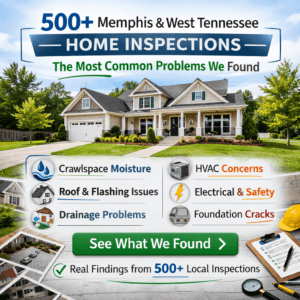
In Memphis and West Tennessee, certain patterns come up repeatedly. We see crawl-space moisture associated with drainage problems, older electrical systems that have been modified through decades of remodeling, HVAC equipment that has been kept in service well beyond the point buyers expect, aging plumbing in older neighborhoods, roof and flashing defects, and foundation movement that has to be interpreted in the context of the rest of the structure. Knowing the most common local defects helps you understand why we may spend more time on certain parts of a West Tennessee house than a generic inspection checklist might suggest.
My strongest advice is simple: never make a major decision from the summary alone. Read the detailed finding, look at the photographs, and understand the recommendation. If we recommend additional evaluation because the scope or cost of a problem cannot be determined during the inspection, get that answer while you still have the opportunity to use it.
— Upchurch Inspection
Upchurch Inspection reports: Built for decisions, not just documentation
Upchurch Inspection serves homebuyers, sellers, investors, and real estate professionals throughout Memphis, West Tennessee, and the surrounding Mid-South. Our reports are designed to explain what we observed, document important conditions with photographs, identify limitations, and provide practical recommendations so you can understand the property rather than simply receive a list of defects. If you are preparing to purchase a home, the role of inspections in real estate is too important to reduce to a pass-or-fail checklist. We also provide information on the benefits of regular inspections for owners who want to identify developing maintenance concerns before they become larger repairs. If Upchurch Inspection inspected your property and you have a question about something in your report, contact us. Helping you understand what we found is part of the inspection.
FAQ
What does “further evaluation” mean in an inspection report?
It means we observed a condition that deserves additional investigation beyond what can reasonably be determined during a general visual home inspection. Depending on the issue, that might involve a structural engineer, electrician, plumber, HVAC contractor, roofer, chimney specialist, sewer professional, or another appropriate specialist. When the answer could materially affect your purchase decision, obtain that evaluation before closing whenever possible.
How do I know which findings are serious enough to negotiate?
Start by understanding the conditions that create the greatest safety, financial, or functional risk. Significant structural concerns, active water intrusion, major electrical defects, roof failure, plumbing or sewer problems, nonfunctional HVAC equipment, and other expensive system defects deserve more attention than routine maintenance. Your inspector explains the property condition; your agent or attorney can help you decide how those findings should be addressed under your contract.
Why is my inspection report so long?
Report length is influenced by the home’s size, age, construction, maintenance history, remodeling, and the amount of documentation required. Older Memphis and West Tennessee homes often have decades of repairs and modifications to document. A long report does not automatically mean the house is in poor condition. Focus on the significance of the findings rather than the page count.
What if part of the house could not be inspected?
It means the condition of that area remains unknown or only partially known. Access may have been blocked, unsafe, physically impossible, or limited by conditions present at the property. If the inaccessible area could materially affect your buying decision, consider having access provided and arranging additional evaluation before your inspection or due-diligence period expires.
Do inspection reports cover code compliance?
No. A home inspection evaluates visible and accessible systems and components within the applicable Standards of Practice. It is not a municipal code inspection and does not certify that an older home complies with every requirement of codes adopted before or after it was constructed. We may identify unsafe, improper, or deficient conditions without performing a comprehensive code-compliance review.