TL;DR:
- A home inspection is a visual assessment of accessible systems conducted by a qualified professional to identify potential issues. It covers major categories like structure, roofing, electrical, plumbing, and HVAC, but excludes invasive testing and code compliance checks. Most inspections reveal issues that can influence negotiations, and attending the inspection provides valuable context for making informed decisions.
A home inspection is a non-invasive, visual assessment of a home’s accessible systems and components, conducted by a qualified professional to evaluate condition and identify potential issues before a purchase or sale. The term “home inspection” is the standard industry phrase, though you’ll also hear “property inspection” used interchangeably in real estate circles. Organizations like ASHI (American Society of Home Inspectors) and InterNACHI (International Association of Certified Home Inspectors) define the minimum scope through published Standards of Practice, which govern what inspectors must examine and what falls outside their role. A home inspection is not a code compliance check, not an appraisal, and not a guarantee. It is a professional opinion on visible conditions at the time of the visit.
What does a home inspection cover?
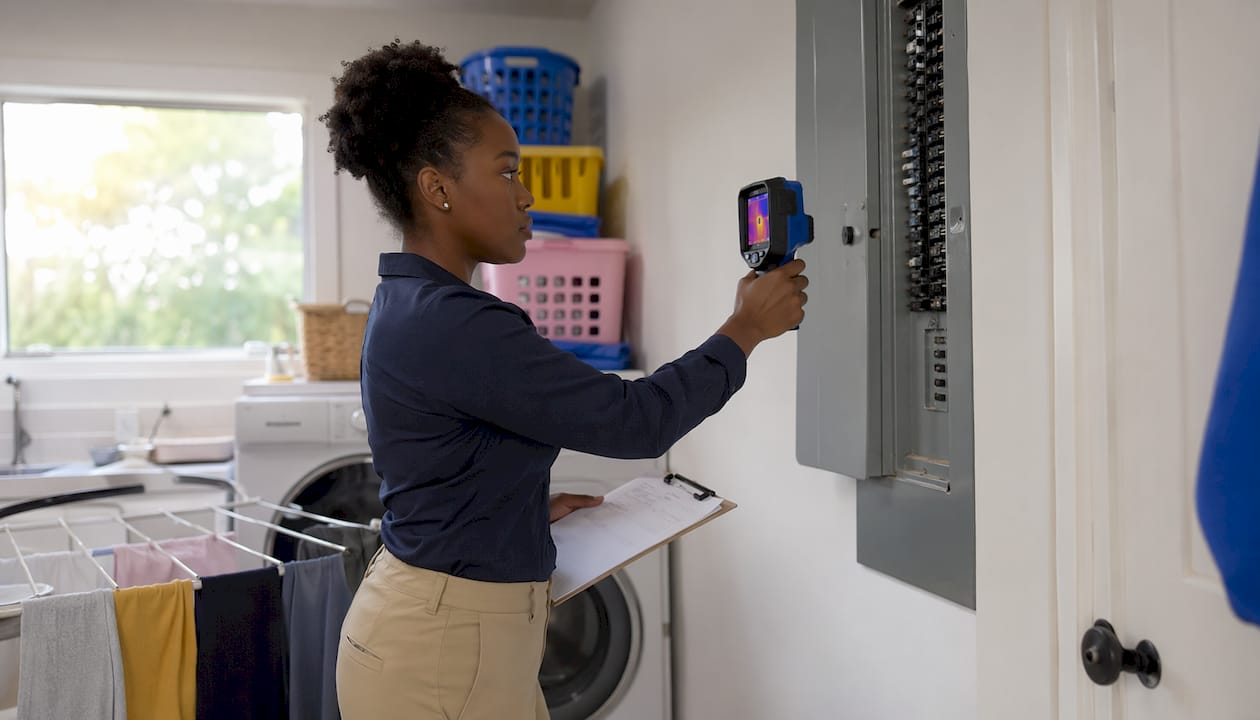
A standard home inspection covers ten major categories: structural components, roofing, exterior, electrical systems, plumbing, HVAC, insulation and ventilation, interior surfaces, doors and windows, and the attic. Inspectors follow a Standard of Practice. The specific standard followed depends on the state of practice and whether the inspector is an ASHI or InterNACHI member. In any case, the standard limits the scope to visible and accessible components only. That boundary matters. An inspector will not open walls, move furniture, or test systems in ways that could cause damage.
Exclusions are just as important as inclusions. Inspectors do not perform code compliance checks, invasive testing, or removal of personal property. Locked rooms, finished basements with no access panels, and crawlspaces blocked by storage all reduce what the inspector can see. Hidden issues remain possible, and that is not a failure of the inspection. It is the defined limit of the service.
Common add-on inspections buyers should consider:
- Radon testing: Recommended in areas with known radon risk; requires a separate test kit or monitor
- Mold assessment: Warranted when moisture staining, musty odors, or prior water damage are present
- Sewer scope: A camera inspection of the main drain line; especially useful for homes over 30 years old
- Septic inspection: Required when the home uses a private septic system rather than municipal sewer
- Termite or WDO inspection: Standard in the Mid-South, where wood-destroying organisms are a real concern
Standard inspections exclude specialty hazards like mold, radon, and underground tanks. Your agent and inspector can help you decide which add-ons fit the property’s age, location, and condition. For a detailed breakdown of what to add beyond the standard visit, the inspection add-ons guide covers the most common choices buyers make.
Pro Tip: Ask your inspector before the appointment which areas of the home may be inaccessible. If a crawlspace hatch is blocked or an attic has no pull-down stairs, you can sometimes arrange access in advance with the seller.
| Category | Included | Excluded | Common Add-On |
|---|---|---|---|
| Structure and foundation | Yes | Behind finished walls | Engineer’s evaluation if flagged |
| Roof covering and drainage | Yes | Interior of sealed skylights | Infrared scan for moisture |
| Electrical panels and wiring | Yes | Inside conduit or walls | Arc-fault testing |
| Plumbing supply and drain | Yes | Inside pipes | Sewer scope camera |
| HVAC systems | Yes | Internal heat exchanger | Duct leakage test |
| Mold and radon | No | Not in scope | Separate mold or radon test |
How does the home inspection process work?
The inspection is typically scheduled after a purchase offer is accepted and during the due diligence or contingency period. Timing varies by contract terms, but most buyers have 7–14 days to complete their inspection and respond. Scheduling early in that window gives you time to order add-on tests or consult a specialist if the inspector flags a concern.
On-site, a typical inspection takes 3–5 hours depending on the home’s size and condition. Smaller condos or townhomes may wrap up in 60–90 minutes. Homes over 3,500 square feet, or those with significant deferred maintenance, can run 4–6 hours or more. That time estimate matters when you’re coordinating with your agent, the seller, and any specialty inspectors.
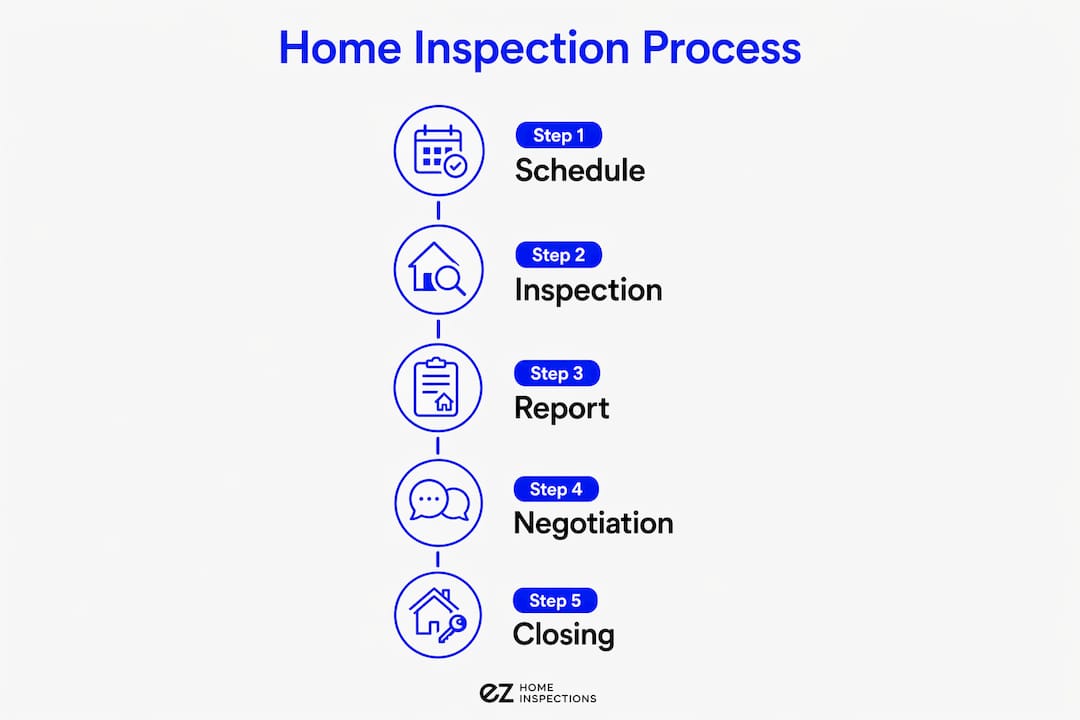
Here is what the process looks like from start to finish:
- Schedule the inspection. Contact your inspector promptly after the offer is accepted. Confirm access with the listing agent and clarify any add-on services you want included.
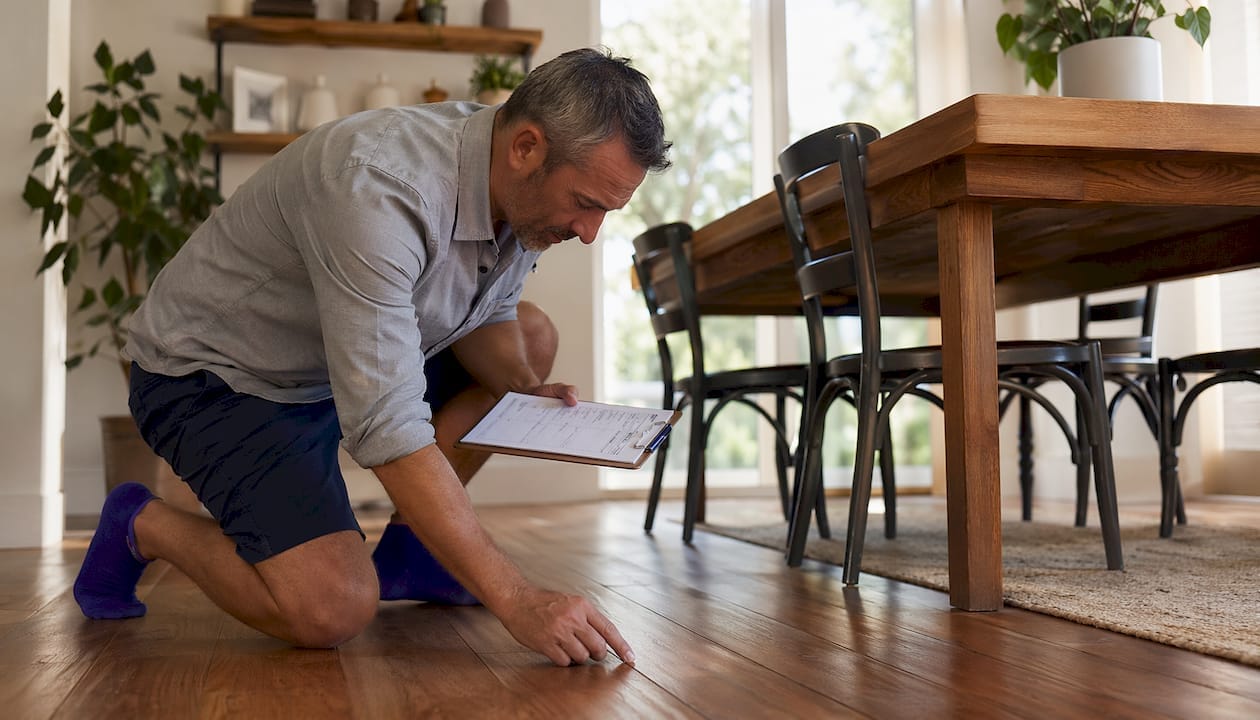
- Attend the inspection. Walk the property with the inspector. This is your best opportunity to see conditions firsthand and ask questions in real time.
- The inspector documents findings. The inspector photographs and notes every observed deficiency, from minor maintenance items to safety concerns.
- Receive the report. Reports are delivered within 24–48 hours and typically run 30–50 pages, including photos and severity ratings. Some inspectors provide same-day preliminary summaries.
- Review with your agent. Your agent helps you sort findings by severity and decide whether to request repairs, a price reduction, or accept the property as-is.
- Respond within your contingency window. Use the report to negotiate, request specialist evaluations for flagged items, or, in rare cases, walk away from the deal.
Pro Tip: Attend the inspection in person. Reading a 40-page report without having seen the conditions yourself makes it harder to judge severity. Buyers who walk the property with the inspector consistently make better-informed decisions.
For a deeper look at each step, the home inspection process for buyers breaks down what to expect at each stage.
What do inspectors commonly find?
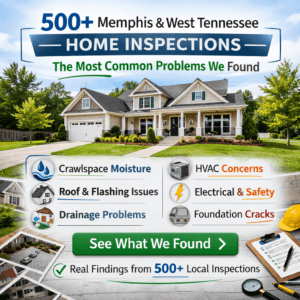
Across the industry, 86% of home inspections reveal at least one issue. That number should not alarm you. It means inspections work. In fact, we’d argue that the number is low and points to how inadequate other inspection companies are. We have never found a perfect house. That doesn’t mean you won’t find the perfect home. The real question is not whether something will be found, because odds are we will find something wrong. The real question is how serious that finding is.
Findings generally fall into four categories:
- Safety concerns: Exposed wiring, missing GFCI protection near water, inoperable smoke detectors, or improper gas line connections. These require prompt attention regardless of the negotiation outcome.
- Major defects: Roof failure, foundation movement, failed HVAC equipment, or active water intrusion. These affect the home’s function and value and typically drive negotiation.
- Deferred maintenance: Peeling caulk, dirty HVAC filters, minor gutter damage, or worn weatherstripping. These are normal wear items that accumulate when a home has not been kept up.
- Cosmetic issues: Scuffed paint, dated fixtures, or minor surface cracks. These do not affect function or safety and rarely warrant negotiation.
46% of buyers negotiate repairs or price reductions after receiving their inspection report, saving an average of $14,000. That figure reflects the real financial value of a thorough inspection. A buyer who skips the inspection to make their offer more competitive is trading a known cost for an unknown one.
One caution: a clean report does not mean a perfect house. Inspection is knowledge gathering, not a guarantee. Conditions can change after the inspection date, and hidden issues behind walls or under slabs remain outside the inspector’s scope. Use the report as a decision-making tool, not a warranty.
To understand how to read and prioritize what your report says, the guide on reading inspection reports walks through severity ratings and what each category means in practice.
Why get a home inspection before buying or selling?
A property inspection gives buyers verified information about what they are purchasing. That knowledge has three direct uses: informed decision-making, negotiating power, and assurance of safety. Buyers who skip inspections to speed up closing often face expensive surprises within the first year of ownership.
Sellers benefit from inspections too, and this surprises many people. A pre-listing inspection lets sellers identify and address issues before buyers find them. That reduces the chance of a deal falling apart mid-contract and gives sellers more control over repair costs. Fixing a plumbing leak on your own schedule costs less than crediting a buyer $3,000 at closing.
Key benefits for buyers and sellers:
- Buyers gain negotiating leverage when major defects are documented
- Sellers can price accurately and avoid last-minute surprises
- Both parties reduce the risk of post-closing disputes
- Buyers learn the home’s maintenance needs before they own it
- Real estate agents can advise clients more accurately with a full report in hand
Buyers should verify state licensing and inspector credentials before hiring, since regulations vary by state and some states lack mandatory standards. In Tennessee and the Mid-South, look for inspectors whose qualifications meet or exceed state requirements. Membership in ASHI or InterNACHI is a reliable baseline signal of training and accountability.
Pro Tip: Do not choose an inspector based on price alone. A $50 savings on the inspection fee means nothing if the inspector misses a $15,000 roof problem. Check credentials, read sample reports, and ask how long the inspector has been working in your area. (Or better yet, just choose Upchurch Inspection, so you know you are getting the best inspector in the Mid-South.)
If you are building your financial plan around a home purchase, a home-buying savings plan can help you budget for inspection costs alongside your down payment and closing costs. Most buyers should budget $400–$800 to cover a standard inspection and common add-ons such as radon or mold testing.
For practical preparation before your appointment, the guide on how to prepare for a home inspection covers what to bring, what to ask, and how to get the most out of the visit.
Key Takeaways
A home inspection is a professional, non-invasive assessment of visible systems and components that provides buyers and sellers with the factual information needed to make sound real estate decisions.
| Point | Details |
|---|---|
| Scope is defined by standards | ASHI and InterNACHI Standards of Practice limit inspections to visible, accessible components only. |
| Most inspections find issues | Across the industry, 86% of inspections reveal at least one deficiency; findings drive negotiation in nearly half of all transactions. |
| Add-ons fill critical gaps | Radon, mold, sewer scope, and WDO tests cover hazards outside the standard inspection scope. |
| Attend in person | Walking the property with the inspector gives context that a written report alone cannot provide. |
| Verify inspector credentials | State licensing requirements vary; ASHI or InterNACHI membership signals verified training and standards. |
What most buyers get wrong about home inspections
People treat the inspection report like a pass/fail grade. It is not. A 45-page report full of findings does not mean the house is a disaster. A 12-page report with few items does not mean the house is perfect. What matters is the category and severity of what was found, not the volume.
The second mistake I see regularly is buyers panicking over deferred maintenance items and walking away from solid homes. Dirty HVAC filters, minor caulking gaps, and a few missing downspout extensions are normal in any lived-in home. Those items cost a few hundred dollars to address. Buyers who confuse maintenance with structural failure make poor decisions.
The third mistake is skipping the inspection entirely to make an offer more attractive. I understand the competitive pressure, especially in a tight market. But an inspection contingency protects you from buying a home with a failed roof, active water intrusion, or a compromised foundation. The $400 inspection fee is the cheapest insurance you will buy in the entire transaction.
One thing I want buyers in Memphis and West Tennessee to understand: local conditions matter. Pier-and-beam foundations, older cast-iron drain lines, and high humidity create specific failure patterns that a generalist inspector may not flag with the same precision as someone who has worked this region for years. Ask your inspector how many homes they have inspected in your specific area and what they commonly find.
— Holly
Thorough inspections from Upchurch Inspection
Upchurch Inspection serves homebuyers, sellers, and real estate professionals across the Mid-South with residential and commercial inspections that go beyond a basic checklist. Every report covers major systems including plumbing, electrical, HVAC, and structural components, with photos and severity ratings that make findings clear and usable. The inspectors at Upchurch Inspection hold qualifications that exceed Tennessee state standards, and their local experience means they recognize the specific conditions common to Memphis and West Tennessee properties. For buyers weighing specialty services, the guide on choosing the right specialized inspection explains when a standard inspection is enough and when add-ons are worth the cost. Property owners who want to understand the long-term value of regular evaluations can also review the benefits of regular inspections to see how consistent oversight protects their investment.
FAQ
What is a home inspection exactly?
A home inspection is a non-invasive, visual examination of a home’s accessible systems and components conducted by a qualified professional. It evaluates condition and identifies deficiencies but does not check code compliance or guarantee future performance.
How long does a home inspection take?
Most inspections take 2–4 hours on-site, with smaller condos finishing in 60–90 minutes and larger homes over 3,500 square feet taking 4–6 hours or more. Reports are typically delivered within 24–48 hours after the visit.
What does a home inspection cost?
A standard home inspection costs $400–$500, with larger homes running higher. Buyers who add radon, mold, or sewer scope testing should budget $400–$800 total.
Does a home inspection cover mold and radon?
No. Standard inspections exclude specialty hazards like mold, radon, and underground storage tanks. These require separate tests, which inspectors can often perform as add-on services or refer to a specialist.
Can a seller benefit from a home inspection?
Yes. A pre-listing inspection lets sellers find and fix problems before buyers discover them, reducing the risk of contract failures and giving sellers more control over repair costs and pricing.