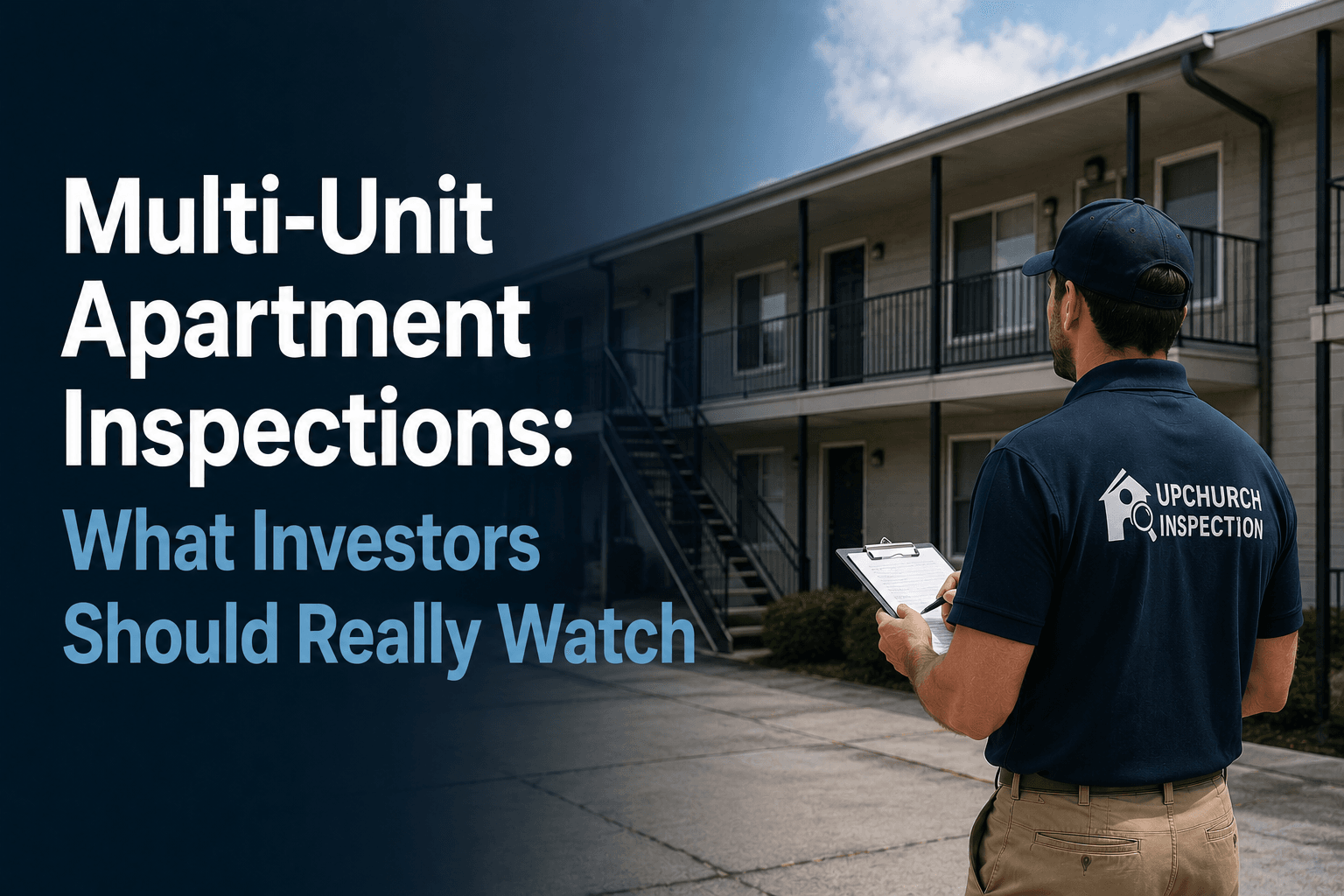
Multi-unit properties look simple on paper. Repeating floor plans, shared systems, predictable rent rolls. Many investors approach apartment inspections expecting efficiency—walk a few units, scan the roof, review the mechanicals, and move on.
That approach misses where the real risk lives.
At Upchurch Inspection, multi-unit inspections are less about counting units and more about understanding how repetition amplifies small problems. What’s minor in one apartment becomes expensive when it exists in twenty, forty, or eighty of them.
Repetition Is the Risk Multiplier
The defining feature of apartment buildings is repetition. Same plumbing layouts. Same electrical designs. Same construction shortcuts. That repetition is exactly what turns isolated defects into systemic risk.
A marginal plumbing configuration in one unit is an inconvenience. The same configuration repeated across every stack is a liability. Inspectors pay close attention to patterns because patterns reveal whether issues are incidental or structural to the building’s design.
Investors who focus only on representative units often miss how widespread a condition really is.
Shared Systems Deserve More Attention Than Individual Units
New investors tend to focus on unit interiors because that’s where tenants live. Experienced inspectors focus on what tenants don’t see.
Shared systems—roofs, electrical service, water distribution, drainage, structural framing—carry the highest financial exposure. When they fail, they affect multiple tenants at once.
In apartment inspections, inspectors spend significant time evaluating:
- Main electrical capacity and distribution
- Water supply and waste systems
- Roof drainage and penetrations
- Structural consistency across units
- Fire separation and life-safety elements
A clean unit interior means very little if shared systems are stressed or nearing failure.
Deferred Maintenance Shows Up Between Units
Apartment buildings rarely defer maintenance evenly. Some units get upgrades. Others don’t. Over time, that uneven care leaves fingerprints.
Inspectors look for:
- Inconsistent plumbing repairs
- Mixed electrical components
- Varying window and door performance
- Uneven HVAC upgrades
- Patchwork structural repairs
These inconsistencies often signal reactive management rather than planned ownership. That doesn’t make the building unworkable, but it changes how capital expenditures should be forecast.
Turnover Repairs Can Hide Bigger Problems
Fresh paint and new flooring are common before showings. Inspectors are trained to look past turnover cosmetics.
Repeated turnover repairs can mask:
- Moisture intrusion that hasn’t been addressed
- Flooring replaced without fixing subfloor issues
- Cosmetic wall repairs covering movement
- Temporary fixes to avoid vacancy delays
In multi-unit buildings, inspectors look for evidence that the same repairs keep happening in the same locations. Repetition tells a story cosmetic updates can’t hide.
Plumbing and Drainage Are Often the Silent Deal Drivers
In many apartment buildings, plumbing systems quietly determine profitability.
Inspectors pay attention to:
- Pipe materials and age
- Drain line slopes and access
- Evidence of recurring backups
- Past repair patterns
- Signs of long-term leakage between units
A single plumbing issue may not concern investors. A plumbing pattern across multiple stacks should.
Water doesn’t respect unit boundaries, and neither do plumbing failures.
Electrical Capacity Matters More Than Condition
Many older apartment buildings still function on original electrical designs that barely support modern usage.
Inspectors don’t just look for unsafe components. They evaluate whether the building can support:
- Tenant appliance upgrades
- HVAC replacements
- Future renovations
- Code-driven improvements
A building that “works” today but lacks capacity for tomorrow creates hidden upgrade pressure that often surfaces after closing.
Fire and Life-Safety Exposure Is Cumulative
In single-family homes, fire and life-safety issues affect one household. In apartments, they affect dozens.
Inspectors pay close attention to:
- Fire separation between units
- Penetrations through rated assemblies
- Stairwell and corridor conditions
- Egress consistency
- Alarm and detection coverage
These issues aren’t always dramatic, but they carry outsized liability when overlooked.
Why Investors Should Care Less About Individual Defects
Experienced apartment investors don’t ask, “What’s wrong with this unit?”
They ask:
- Is this issue repeated elsewhere?
- Is it design-based or repair-based?
- How expensive is it to correct at scale?
- What happens if we defer this further?
Commercial apartment inspections are about understanding how a building behaves as a system, not as a collection of rooms.
The Practical Reality
Multi-unit apartment inspections aren’t about finding more problems—they’re about recognizing patterns early.
What looks manageable in isolation can become costly when multiplied. What feels minor in one unit can become operationally disruptive across many.
Inspectors who understand multi-unit buildings don’t just report conditions. They interpret how repetition, shared systems, and maintenance decisions shape long-term ownership.
That’s what investors should really be watching.