
Foundation and Crawlspace

Mid South Homeowners: 4 DIY Tests for Efflorescence on Basement Walls
Inspector tested checklist for Mid South homeowners: 4 DIY checks, the plastic test thresholds, and when to call an inspector or contractor.

Inspector tested checklist for Mid South homeowners: 4 DIY checks, the plastic test thresholds, and when to call an inspector or contractor.


Retail and strip centers tend to present well. Clean facades, consistent signage, freshly paved lots, and occupied storefronts create a sense of stability that can make a property feel lower-risk than it really is. For buyers—especially those newer to commercial real estate—that visual order can be misleading. A retail center

Buyers often focus on a home’s age when trying to gauge risk. “How old is the roof?”“How old is the HVAC?”“How old is the house?” Age matters—but it’s rarely the most important factor. What experienced inspectors really pay attention to is how the house has been maintained, because maintenance history
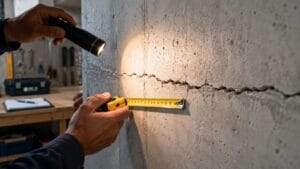

You're halfway down the basement stairs when you spot it, a horizontal line running across the block wall, maybe with a little dampness, maybe with a slight curve in the wall that you hadn't noticed before. That's the kind of finding that makes people stop and stare, because a horizontal
Subdivision Growth Comes With Patterns When I review reports from our Centerview, Missouri inspector in the eastern Kansas City suburbs, the homes in Lee’s Summit and Blue Springs tend to share a predictable inspection profile. These communities saw heavy subdivision growth from the 1990s through the 2010s, and many homes
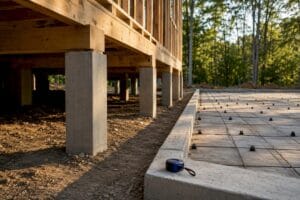
Inspection first comparison for Mid South buyers. Learn how pier and beam and slab foundations affect long term repair costs, common inspection red flags,…

When buyers think about expensive home repairs, they usually think about roofs, HVAC systems, foundations, or electrical panels. Those systems are visible, familiar, and easy to imagine. Sewer lines are different. They are underground, easy to ignore, and usually invisible during a normal showing or walkthrough. That is exactly why
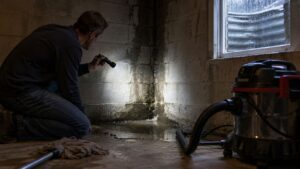
You've just come downstairs after a hard storm, flashlight in hand, and found a dark streak running down the basement wall. Maybe there's a shallow puddle where the wall meets the floor. Maybe the concrete has a white, crusty residue, or a hairline crack is slowly wetting the surface. Water

When I review reports from our Centerview, Missouri inspector, homes in Marshall tend to have a different feel than homes in faster-growing suburban markets. These properties often reflect the town’s agricultural roots, long-term ownership patterns, and practical approach to maintenance. Many were not built for rapid turnover or constant resale.
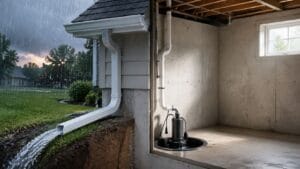
The storm is still working its way across the neighborhood when you hear the sump pump start cycling faster. Then you notice the dark stain spreading where the basement wall meets the floor. A shop vacuum can't keep up, cardboard smells damp, and the dog refuses to go near the
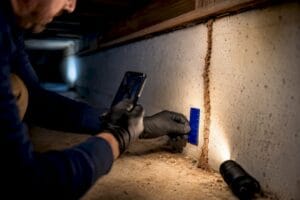
Found mud tubes? Learn how to photograph, measure, and test them, when to call a licensed inspector, and how inspection findings affect repair and CapEx…
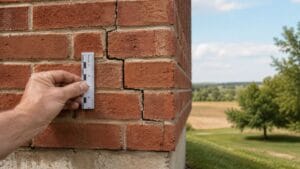
You notice it while walking past the side of the house, perhaps after a dry spell or a stretch of heavy rain. The mortar line beside a window no longer looks straight. It rises and drops in a diagonal staircase, and suddenly a routine maintenance question becomes, “Is this a