
Subdivision Growth Comes With Patterns
When I review reports from our Centerview, Missouri inspector in the eastern Kansas City suburbs, the homes in Lee’s Summit and Blue Springs tend to share a predictable inspection profile. These communities saw heavy subdivision growth from the 1990s through the 2010s, and many homes were built by the same regional builders using similar layouts, materials, and construction methods.
That consistency makes it easier to spot recurring issues—especially once you’ve inspected enough of them.
Foundations and Grading in Planned Developments
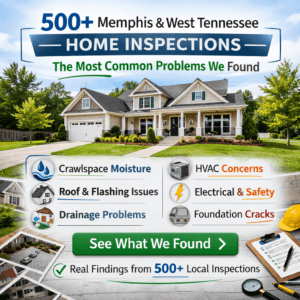
Most subdivision homes in Lee’s Summit and Blue Springs sit on full basements or slab-on-grade foundations. While large-scale settlement issues are less common than in older urban areas, our inspector frequently documents drainage-related concerns.
Lots are often graded to move water efficiently at the time of construction, but over the years landscaping changes, settling, and altered downspout routing can reverse those slopes. In several inspections, minor foundation cracking and basement moisture were traced back to grading that no longer directs water away from the home as intended.
Roofing and Exterior Wear
Roofing systems in these suburbs tend to age in clusters. Because many homes were built around the same time, hail and wind events affect entire neighborhoods at once. Our inspector often finds similar shingle wear patterns, granule loss, and repair histories across multiple streets in the same development.
Siding issues follow a similar trend. Vinyl siding is common, and while generally durable, it can conceal moisture problems when flashing details around windows and doors weren’t installed correctly during original construction.
Interior Systems and Builder-Grade Components
Inside the home, many subdivision properties feature builder-grade mechanical and electrical components. HVAC systems often reach the end of their service life around the same time the roof does, creating a convergence of major expenses for homeowners.
Electrical panels and wiring are typically adequate but not always optimized for later upgrades. Our inspector has noted overloaded circuits, added outlets tied into existing runs, and garage subpanels that weren’t designed for today’s electric vehicle chargers or workshop loads.
What These Inspections Reveal
Inspections in Lee’s Summit and Blue Springs aren’t about uncovering surprises—they’re about recognizing patterns. When I review these reports, the most valuable insight comes from understanding how subdivision homes age as a group, not just as individual properties.
That regional context helps buyers and owners anticipate maintenance needs, understand what’s normal for the area, and make informed decisions in some of Western Missouri’s fastest-growing communities.