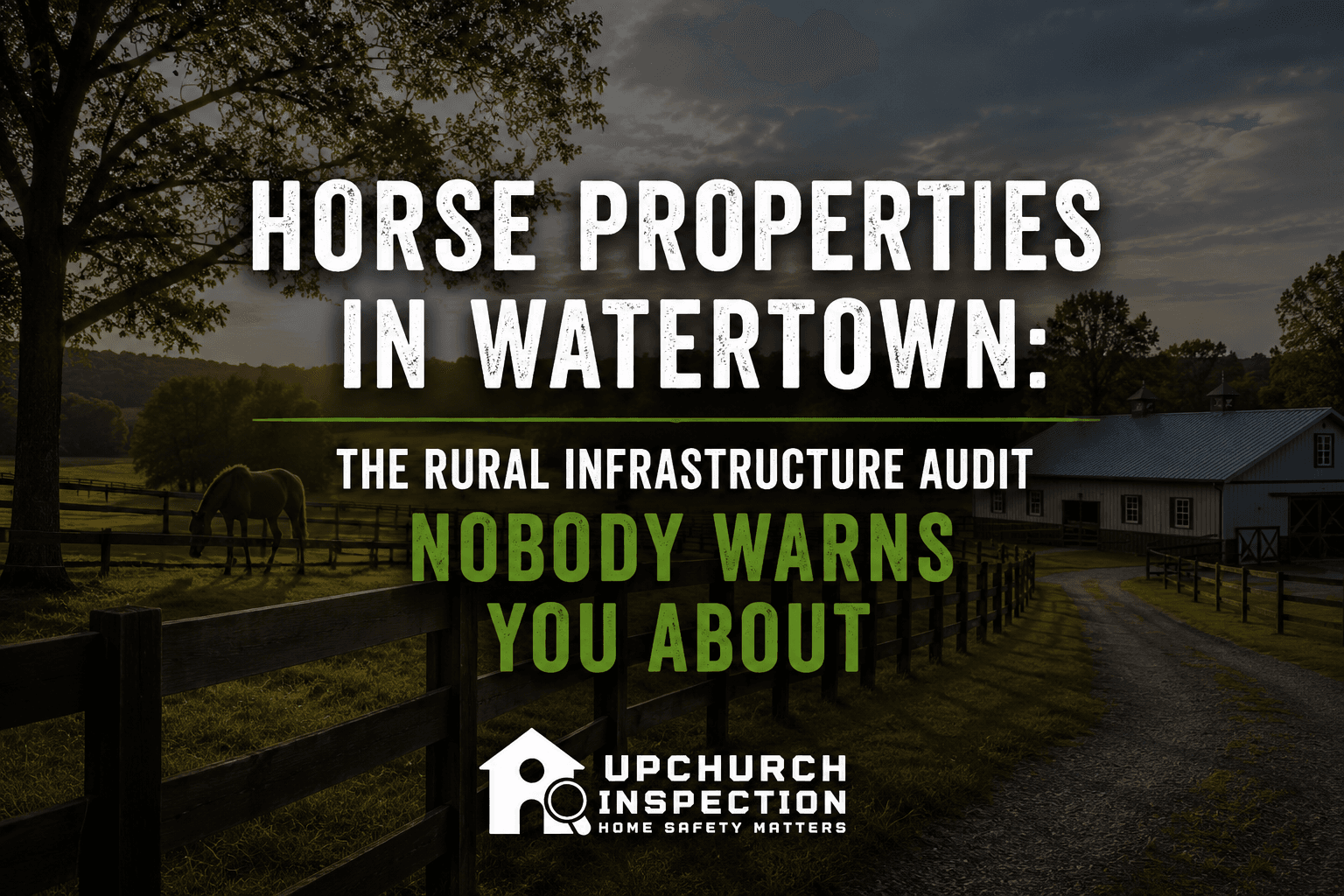
Horse properties around Watertown look peaceful from the road. Big sky. Long driveways. Barns set back just far enough to feel “country” without feeling remote. Buyers fall in love fast — and then get blindsided by infrastructure problems that don’t show up on a residential checklist.
Out here, the house is the least complicated part of the deal.
If you’re buying acreage in eastern Wilson County, especially around Watertown and Statesville, the inspection has to shift gears. This isn’t a home inspection with bonus land. It’s an infrastructure audit with a house attached.
Long Driveways Hide Long Problems
Let’s start with access. Long gravel or paved drives aren’t cosmetic. They’re systems. Poor base prep, inadequate drainage, or cheap surface material turns driveways into ongoing maintenance projects.
I look for:
- Rutting that shows water isn’t shedding
- Soft spots that indicate base failure
- Culverts that are undersized or partially buried
If heavy trailers, feed trucks, or equipment are using that drive, small problems get big fast.
Electrical Service Wasn’t Designed All at Once
Rural electrical systems almost always grow in stages. House first. Then a barn. Then a shop. Then another outbuilding. Each addition gets tied in however it was convenient at the time.
During inspections, I’m paying close attention to the service drop and how power is distributed across the property:
- Feeder sizing relative to total load
- Subpanels without proper disconnects
- Grounding systems that stop at the house
This matters because overloaded rural services don’t fail gracefully. They fail at connection points — the exact places fires start.
Barn Wiring Is a Different Animal
Barns are rough environments for electrical systems. Dust. Moisture. Temperature swings. Rodents. If wiring wasn’t installed with that reality in mind, it degrades faster than buyers expect.
I routinely see:
- Romex run exposed where it shouldn’t be
- Improvised lighting circuits added over time
- Open junction boxes collecting dust and debris
Add hay storage to the mix, and suddenly electrical shortcuts aren’t just sloppy — they’re dangerous.
Wells and Pressure Don’t Lie
Many Watertown-area horse properties rely on wells, and buyers often treat wells like a yes/no question. “Does it have water?” That’s the wrong question.
What I’m actually looking at:
- Pressure consistency under load
- Pump cycling behavior
- Evidence of sediment or mineral intrusion
Barn wash racks, automatic waterers, and household demand stack up. A well that works fine for a single-family house can struggle when the property actually gets used the way buyers intend.
Septic Systems Carry More Than You Think
Septic systems on horse properties aren’t just handling household waste. Add in wash areas, guest spaces, or converted outbuildings, and the system can quietly exceed its design limits.
Warning signs I watch for:
- Lush vegetation downslope from drainfields
- Persistent wet areas during dry weather
- Add-on plumbing that never made it into permits
Septic failures don’t announce themselves politely. They show up when the ground can’t absorb anymore.
Barn-Stall Moisture Eats Buildings from the Inside
Here’s a Wes-ism for you: barns rot from the inside out.
Animals generate heat and moisture constantly. Without proper ventilation and detailing, that moisture condenses on framing, fasteners, and roof components. Over time, it weakens structures buyers assume are “solid.”
I look closely for:
- Rot at post bases
- Corrosion on metal connectors
- Sagging roof lines above stall areas
If a barn smells musty even on a dry day, there’s a reason.
Fence Lines Tell the Drainage Story
You can learn a lot about a property by walking the fence lines. Erosion, leaning posts, and washed-out sections tell me where water is moving — and where it’s concentrating.
Poor drainage doesn’t just damage fences. It undermines barns, creates mud zones, and accelerates soil compaction that affects animal health and usability.
Utilities Don’t Like Distance
Long runs of water, power, and data lines mean more points of failure. Freeze protection, burial depth, and material choice matter a lot more when lines stretch hundreds of feet.
I pay attention to:
- Shallow water lines near barns
- Electrical conduit exposed above grade
- Splices buried where they shouldn’t be
Out here, repairs aren’t quick. And they aren’t cheap.
Why Rural Inspections Have to Be Less Polite
This is where I stop softening the message. Horse properties don’t forgive ignorance. If the infrastructure doesn’t work, the lifestyle doesn’t work. Period.
Buyers who assume “we’ll figure it out later” usually figure it out with a contractor invoice in hand.
The Reality of Buying Acreage in Wilson County
Properties in this part of Middle Tennessee are incredible — when they’re understood. The land is valuable. The setting is hard to beat. But the systems that support that land matter just as much as the house sitting on it.
For buyers evaluating rural and horse properties across Middle Tennessee, inspections need to go wide before they go deep.
https://upchurchinspection.com/our-service-areas/home-inspections-in-middle-tennessee/
Out in Watertown, the quiet is real.
So are the infrastructure problems — if you don’t look for them.