
INSPECTION FINDINGS · FROM OUR INSPECTION RECORDS
A ceiling stain is an observation, not a complete explanation. In one inspection, we documented a bedroom ceiling stain whose appearance could not establish whether the moisture was current or historic. In commercial settings, we recorded discoloration across suspended ceiling tiles and wall paneling that had warped and deteriorated near the floor. The reports identified the affected finishes and the need to investigate their moisture history.
These are three separate examples. The wall-panel photograph shows material deterioration, while the ceiling photographs help locate staining. They do not prove a shared cause, and they should not be presented as different stages of one leak.
Photographs and documented observations
A stain on the bedroom ceiling
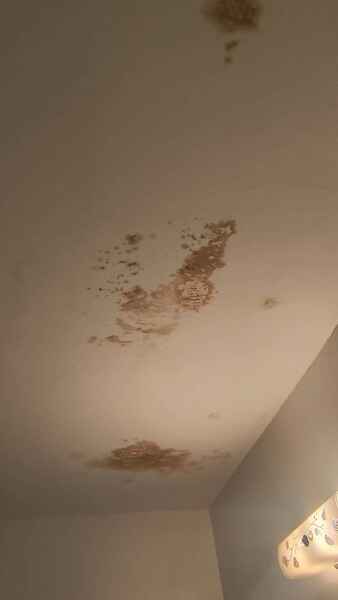
We found a stain on the bedroom ceiling. Its appearance alone couldn’t tell us whether the moisture was current or historic. We recommended finding the source before repairing the finish.
Water stains in a suspended ceiling
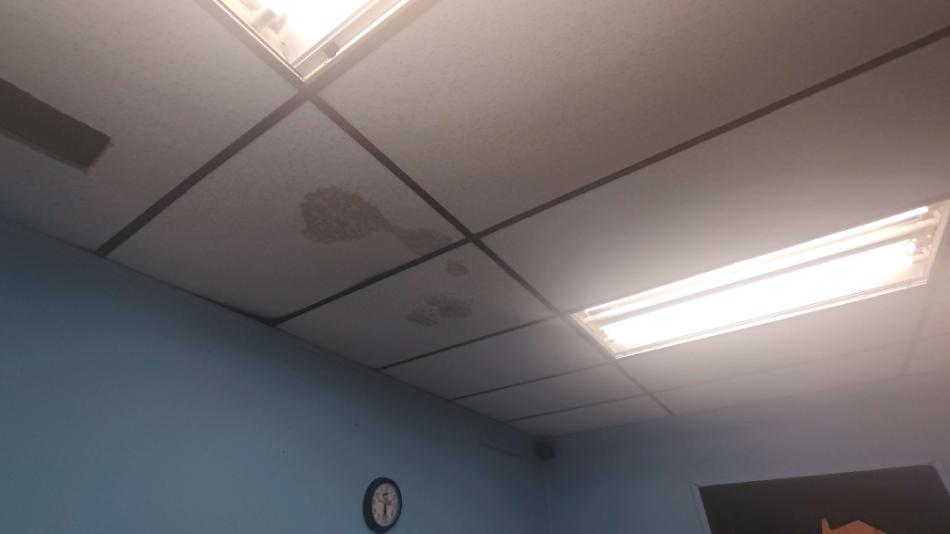
We found brown discoloration across ceiling tiles near the grid and lighting. The staining helped locate an area to investigate for past or ongoing water entry.
Water damage broke down wall paneling
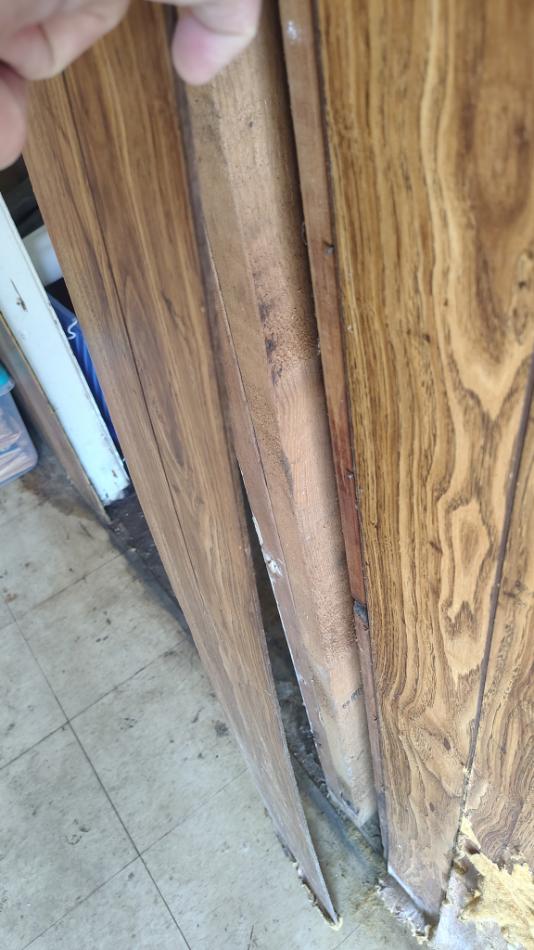
We found warped wall panels with visible gaps and deteriorated material near the floor. The report flagged the damage as consistent with possible moisture intrusion.
Keep the uncertainty in the report
A dry surface during one visit would not establish that a leak never recurs, just as a stained surface would not prove that water was entering at that moment. The useful report language records what was visible and explains which question remains open. For the paneling, the observed condition was consistent with possible moisture intrusion and warranted further evaluation.
Investigate before replacing the finish
New ceiling tiles or wall panels can make a space look substantially better, but the repair record should also explain what happened above or behind them. The original recommendations focused on evaluating the source and affected materials. Buyers and building managers can use these photographs to ensure that the investigation addresses the documented location rather than only the appearance of the room.
Related inspection insights
For related context, read Why Inspectors Care So Much About Water (Even When You Don’t See a Leak) and Musty Smell in Basement but No Visible Mold What to Do.
Learn more about our home inspection services and the way we document building conditions for buyers and property owners.
By Wesley Upchurch. This article draws on documented inspection observations and photographs. Images show conditions at the time of inspection; later repairs are not established unless stated. Property addresses and client details are omitted.