
The median Jefferson City home is about 50 years old, and homes sell in an average of 11 days, so a thorough inspection plus targeted add-on testing is your best protection against costly surprises. The market moves quickly, but rushing past due diligence can leave you evaluating roof wear, foundation movement, sewer problems, or radon after you already own the property.
You may be looking at a house that feels right, with a competitive offer deadline and little time to decide. The inspection isn't meant to make the purchase feel impossible. It gives you a clearer way to separate manageable maintenance from defects that deserve specialist attention, repair negotiations, or a slower decision.
Table of Contents
- Understanding Jefferson City's Housing Market and Inspection Needs
- Common Structural and Moisture Concerns in Older Homes
- Essential Testing Beyond the Standard Inspection
- Responding to Inspection Findings and Negotiating Repairs
- When to Call in Specialists for Deeper Evaluation
- Creating Your Inspection Timeline and Checklist
Understanding Jefferson City's Housing Market and Inspection Needs
A buyer in Jefferson City may need to schedule an inspection almost as soon as the offer is accepted. The home could be pending before you have much time to compare contractors, request specialty testing, or review every accessible area. That pace makes preparation important, because an inspection contingency is useful only if you use the available time deliberately.
Jefferson City homes sold in an average of 11 days, and the median sale price was about $260,000 over the three months ending in August 2026, according to Jefferson City housing market data. The same market information identifies 1976 as the median year built. In 2026, that puts the typical home near 50 years old, which is long enough for original or aging roofing, electrical, plumbing, insulation, and mechanical components to require closer review.
Why age changes the inspection conversation
A house from this era isn't automatically defective. Many established homes are well maintained, and a visible age-related component may still be working as intended. The practical issue is that the inspector needs to determine condition, installation quality, active defects, and signs of deferred maintenance rather than assuming newer materials or recent upgrades are present.
Look beyond the paint and remodeled kitchen. Ask whether the attic shows moisture or inadequate ventilation, whether the electrical panel and branch wiring appear properly installed, whether plumbing repairs are consistent, and whether the roof drainage system moves water away from the foundation. A finished basement can look clean while concealing staining, patched cracks, or moisture conditions behind walls.
Practical rule: A fast market makes an efficient inspection more important, not less important.
The long-run housing baseline also helps explain why older resale homes remain central to the local market. The Census reported a median owner-occupied housing value of $208,000 for 2019–2023, while the market source lists a Zillow 2026 estimate of $280,343, up 7.8% year over year. Those figures come from different measures, so they shouldn't be treated as a direct apples-to-apples comparison, but they reinforce the need to understand the condition of the specific home rather than relying on broad market impressions.
What to do before making an offer
Before you write, ask how long the inspection period lasts, whether the seller has disclosed prior water or foundation repairs, and whether utilities will be on and accessible. If the property has a basement, crawlspace, mature trees, or a long ownership history with no sewer evaluation, plan for testing that a standard inspection may not include.
For a more local explanation of settlement patterns and foundation observations, review this overview of Jefferson City foundations and settlement in the Missouri River Valley. The goal isn't to reject every older home. It's to make sure the offer gives you enough time to understand the conditions that matter most.
Common Structural and Moisture Concerns in Older Homes
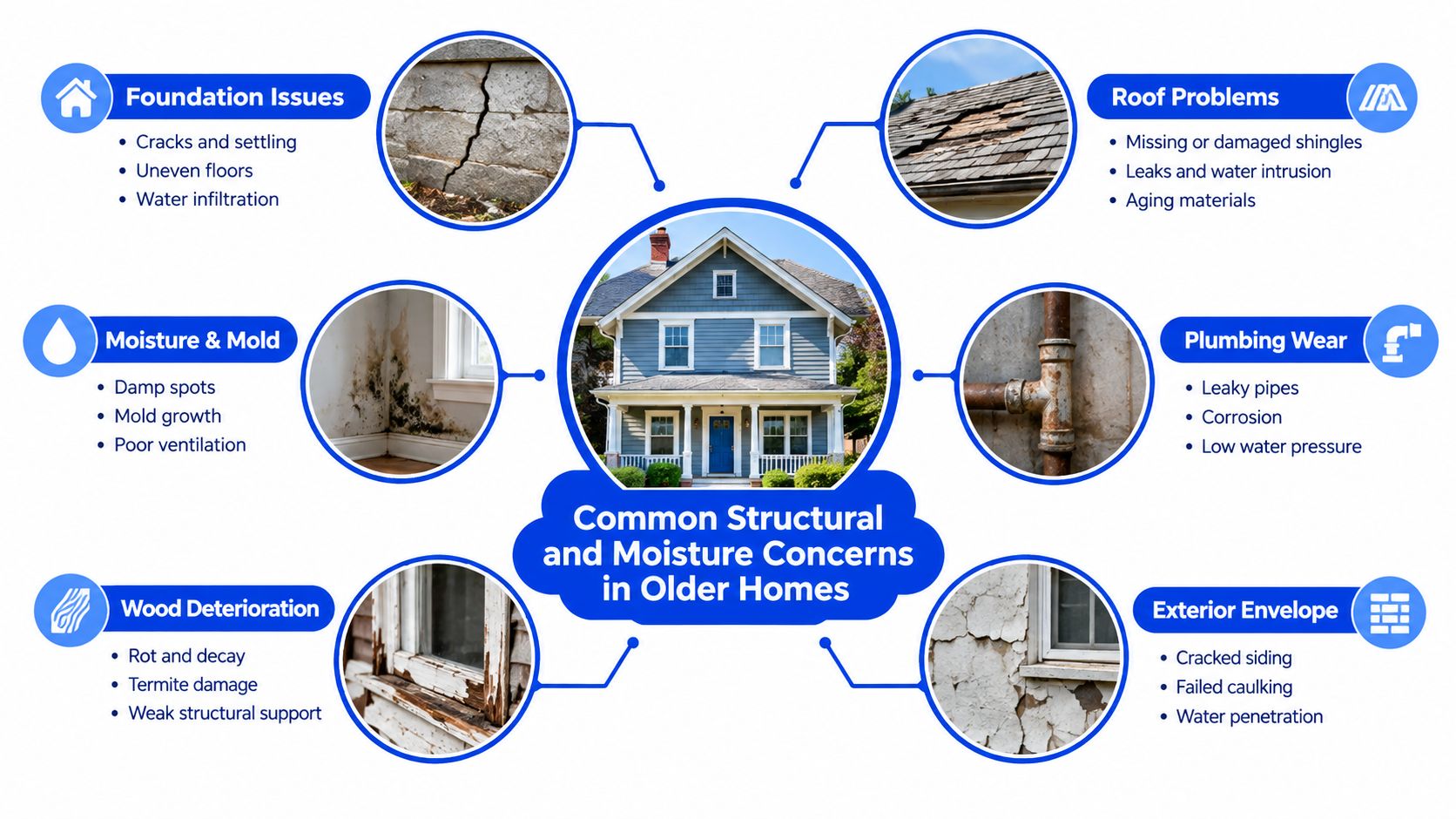
Moisture deserves priority because it can affect several parts of a home at once. Poor grading sends water toward the foundation. A blocked or short downspout concentrates runoff beside the wall. That water can enter through cracks, joints, porous masonry, or a crawlspace floor, then create conditions that are more serious than a single stain suggests.
Missouri inspection standards call for reviewing basements, foundations, crawlspaces, visible structural components, and signs of active water penetration. They also identify movement indicators such as sheetrock cracks, brick cracks, out-of-square door frames, and sloping floors. These requirements are summarized in the Missouri home inspection standards.
Reading the clues correctly
A small, isolated crack doesn't provide enough information to diagnose a foundation problem. Concrete and masonry can crack for several reasons, including normal material movement, settlement, drainage-related soil changes, or structural movement. The pattern, location, width, history, associated symptoms, and evidence of water all matter.
Pay attention to combinations:
- Diagonal cracks: Cracks extending from the corner of a door or window can deserve closer evaluation, especially when they appear with sticking doors or uneven floors.
- Repeated repairs: Fresh patching, painted-over stains, or repaired drywall can hide a recurring condition. Ask what caused the original damage and whether the repair addressed water entry or only the visible surface.
- Efflorescence and mineral staining: White deposits on masonry suggest moisture has moved through the material. They don't by themselves prove active leakage, but they show that water has been present.
- Musty odors: A smell may point to damp materials, poor crawlspace ventilation, condensation, or past flooding. Odor alone isn't a mold diagnosis.
- Sloping floors and sticking doors: These symptoms can result from framing movement, settlement, swollen materials, or ordinary wear. Several symptoms together justify more investigation.
Jefferson City homes also need careful exterior drainage review. Check whether soil slopes away from the walls, gutters discharge well away from the foundation, and downspouts remain connected and unobstructed. Redfin classifies the city as having moderate flood risk, which adds context when you evaluate drainage, basement moisture, and the home's position relative to surrounding grades.
When a moisture finding becomes a structural question
A wet basement doesn't automatically mean the foundation is failing, and a crack doesn't automatically mean the home is unsafe. The concern rises when water intrusion is active, movement indicators occur in more than one area, walls bow, floors slope noticeably, or repairs keep returning.
You can safely observe gutters, downspout routing, surface grading, visible staining, and whether a sump pump discharges away from the home. Don't excavate beside a foundation, alter structural members, remove suspicious materials, or disturb possible mold without proper guidance. A home inspector can document accessible conditions, while a structural engineer or qualified foundation professional may be needed to determine cause and repair design.
For practical examples of basement conditions and next steps, see common basement problems in Missouri homes. Good inspection work doesn't label every crack a disaster. It identifies the evidence that tells you whether monitoring, maintenance, correction, or specialist evaluation makes sense.
Essential Testing Beyond the Standard Inspection
A standard inspection evaluates visible and accessible components. It won't answer every question about underground utilities or indoor air hazards, so buyers need to decide which add-on tests fit the property and the risk.
Radon should be near the top of that list in Jefferson City. The Missouri health department says radon is present in every county in the state, and the practical testing benchmark is 4.0 pCi/L, the EPA and Missouri action level for mitigation. At 2.0 pCi/L, reducing the level should still be considered. Testing guidance and state information are available through the Missouri Department of Health and Senior Services radon resources.
Make radon a normal purchase decision
A location can't tell you the indoor level of one particular house. The EPA map places counties into zones based on predicted average screening levels, but a zone describes potential rather than a guarantee for an individual property. A seller's statement that the home has never had a radon problem isn't a substitute for a current test.
Radon testing is especially sensible when the home has a basement, crawlspace, or lower-level living area. A high result doesn't mean the home is unusable, and it doesn't prove a foundation defect. It means you should discuss mitigation with a qualified professional and account for that work in the transaction or near-term maintenance plan.
You can confirm that a test location is usable and note moisture or sump-pump conditions, but don't try to interpret a reading from a casual or unsuitable test. Use an approved test and follow the tester's instructions.
Add a sewer scope when the line is a question mark
A plumbing inspection can identify visible leaks, slow drains, and fixture problems, but a camera is needed to see much of the buried main sewer line. Older Mid-Missouri homes may have underground lines that have aged along with the property. A sewer scope can reveal cracks, root intrusion, or collapse that a standard visual inspection can't see.
Consider the scope a high-priority add-on when the home is older, the line's material and history are unknown, mature trees are nearby, drains repeatedly back up, or the seller can't document a prior evaluation. Slow drainage doesn't automatically mean the main line has failed, but recurring symptoms deserve more than a drain cleaner and hope.
The sewer scope inspection explanation can help you understand what the camera does and why it complements a general inspection. A plumber or sewer specialist should interpret significant findings and explain whether cleaning, repair, replacement, or continued monitoring is appropriate.
Other specialty evaluations may include termite or wood-destroying insect checks, mold assessment, septic review, or private-well testing when the property calls for them. The right choice depends on the home's construction, location, visible symptoms, and what the standard inspection cannot access.
Responding to Inspection Findings and Negotiating Repairs
An inspection report is a decision document, not a seller's repair order. In a quick market, buyers sometimes feel pressured to accept everything immediately or demand corrections for every line item. Neither response is useful. Sort findings by safety, active damage, structural significance, likely urgency, and whether a qualified trade needs to diagnose the condition.
A missing sealant joint and active foundation water intrusion shouldn't receive the same negotiating weight. A worn roof component may call for maintenance planning, while evidence of a leak or damaged decking deserves a more immediate conversation. A report can identify the concern, but a contractor or specialist may be needed to define the repair.

Build a request around evidence
Start with a short list of the findings that affect safety, water control, structural stability, or major systems. Use the report language and photographs, then request a defined action such as evaluation by a qualified professional, correction of an active leak, or a credit that lets you select the contractor after closing.
Credits can be more practical than rushed seller repairs, especially when the work needs diagnosis or when you want control over materials and workmanship. Repairs completed before closing can make sense when the problem is clear, urgent, and easy to verify. Ask for invoices, permits where applicable, warranties, and documentation of what was corrected.
For a useful discussion of how inspection findings can shape a water-related repair conversation, see this resource on how to negotiate water damage repairs. The principle applies locally too. Fixing the stain without correcting the roof, grading, plumbing, or foundation source doesn't solve the problem.
Negotiation principle: Ask for a remedy that matches the evidence. Don't trade a clear diagnosis for a cosmetic patch.
Your purchase agreement and inspection contingency control the available options, so involve your real estate professional before deadlines pass. If the seller won't address a serious issue, you may need to accept the condition, renegotiate, seek specialist information, or reconsider the purchase. The report gives you strength through clarity, but it doesn't replace contractual advice.
When to Call in Specialists for Deeper Evaluation
A general inspector is often the right first professional because they evaluate the home's major accessible systems and identify patterns that need follow-up. They aren't a substitute for every trade, and an inspection report shouldn't be treated as an engineering design, electrical certification, plumbing warranty, or HVAC repair proposal.
Use the finding to choose the next professional:
| Finding | Specialist to consider | What the specialist can clarify |
|---|---|---|
| Repeated cracks, wall movement, or uneven floors | Structural engineer or qualified foundation professional | Whether movement is material and what repair approach fits |
| Unsafe-looking panel, damaged wiring, or unusual electrical work | Licensed electrician | Wiring condition, hazards, and corrective scope |
| Recurring backups or an unknown buried line | Plumber or sewer-scope specialist | The line's interior condition and practical repair options |
| Poor heating or cooling performance | HVAC professional | Equipment operation, safety, and service needs |
| Roof leakage or damaged framing | Qualified roofing contractor | Source of water entry and repair requirements |
A structural specialist becomes more important when visible symptoms occur together, when the foundation wall appears displaced, or when prior repairs have failed. A single hairline crack with no related movement may be suitable for documentation and monitoring, but the inspector shouldn't diagnose structural capacity from appearance alone.
Electrical findings deserve the same discipline. Older homes may contain outdated components or modifications that need a licensed electrician's evaluation. Don't open energized equipment, alter wiring, or remove covers beyond what you're qualified and permitted to handle.
The same distinction applies to plumbing, HVAC, mold, and radon. A general inspection can identify accessible evidence, while the specialist measures, tests, diagnoses, and proposes work. That extra step may feel inconvenient during a fast transaction, but it prevents you from negotiating around an assumption.
Creating Your Inspection Timeline and Checklist
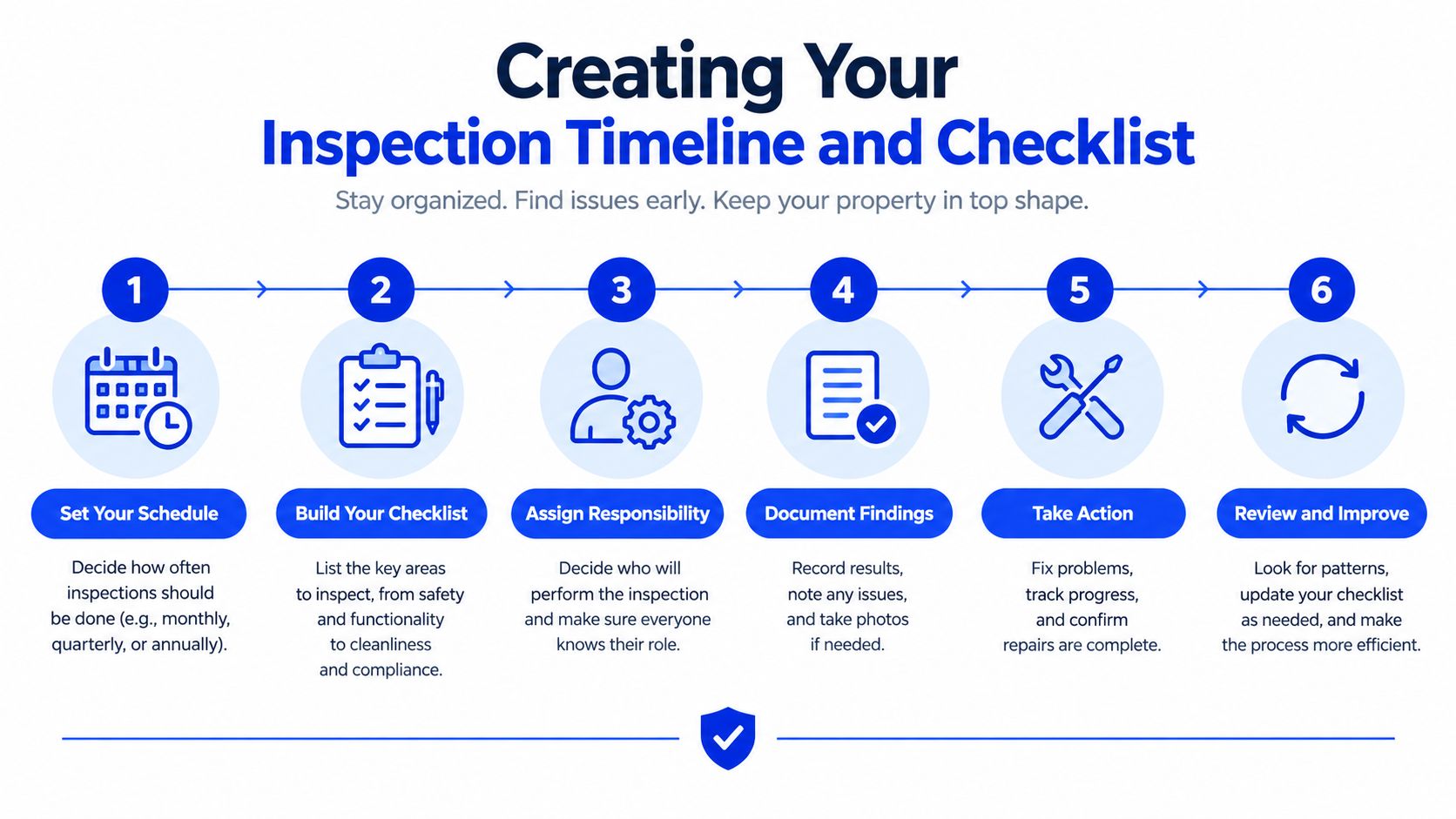
Start before the offer if you can. Keep a short property-specific list that includes the standard inspection, likely add-ons, access requirements, report review, and decision deadlines. Jefferson City's average selling time makes early coordination useful, especially when a basement, crawlspace, mature trees, visible moisture, or older utility systems raise additional questions.
Before and during the inspection period
- Confirm the contract deadline. Know when the inspection contingency expires and how written notices must be delivered. Your real estate professional can explain the agreement.
- Schedule the general inspection quickly. Request access to the attic, basement, crawlspace, garage, electrical equipment, mechanical rooms, and exterior drainage areas.
- Choose add-on testing based on evidence. Arrange radon testing for the home purchase and consider a sewer scope when the property is older, the line is unknown, or symptoms are present.
- Attend when possible. Ask the inspector to show you active water entry, drainage paths, movement indicators, roof observations, and system limitations in plain language.
- Read the report by priority. Separate immediate safety concerns, active moisture, structural questions, nonfunctional systems, deferred maintenance, and routine upkeep.
- Get specialist input before negotiating. If the report raises a structural, electrical, plumbing, HVAC, roofing, or environmental question, obtain the right diagnosis instead of guessing at the remedy.
Keep the checklist focused
Before closing, confirm that agreed repairs are complete, the affected area is accessible for rechecking, and documentation is available. Pay particular attention to the source of moisture, not just the visible finish. A dry wall after painting doesn't prove that grading, drainage, plumbing, or foundation conditions have been corrected.
After you move in, maintain gutters and downspouts, watch for new basement or crawlspace moisture, keep records of repairs, and respond to recurring sewer or electrical symptoms early. The best buying decision isn't a claim that the home has no defects. It's a clear understanding of what exists, what it means, and who should address it.
Upchurch Inspection provides pre-purchase home inspections in Jefferson City that evaluate accessible areas and major systems with clear, photo-rich reporting. If you're buying an older home or need help deciding whether radon, sewer scope, or specialist follow-up testing fits the property, visit Upchurch Inspection to learn more and schedule the right next step.