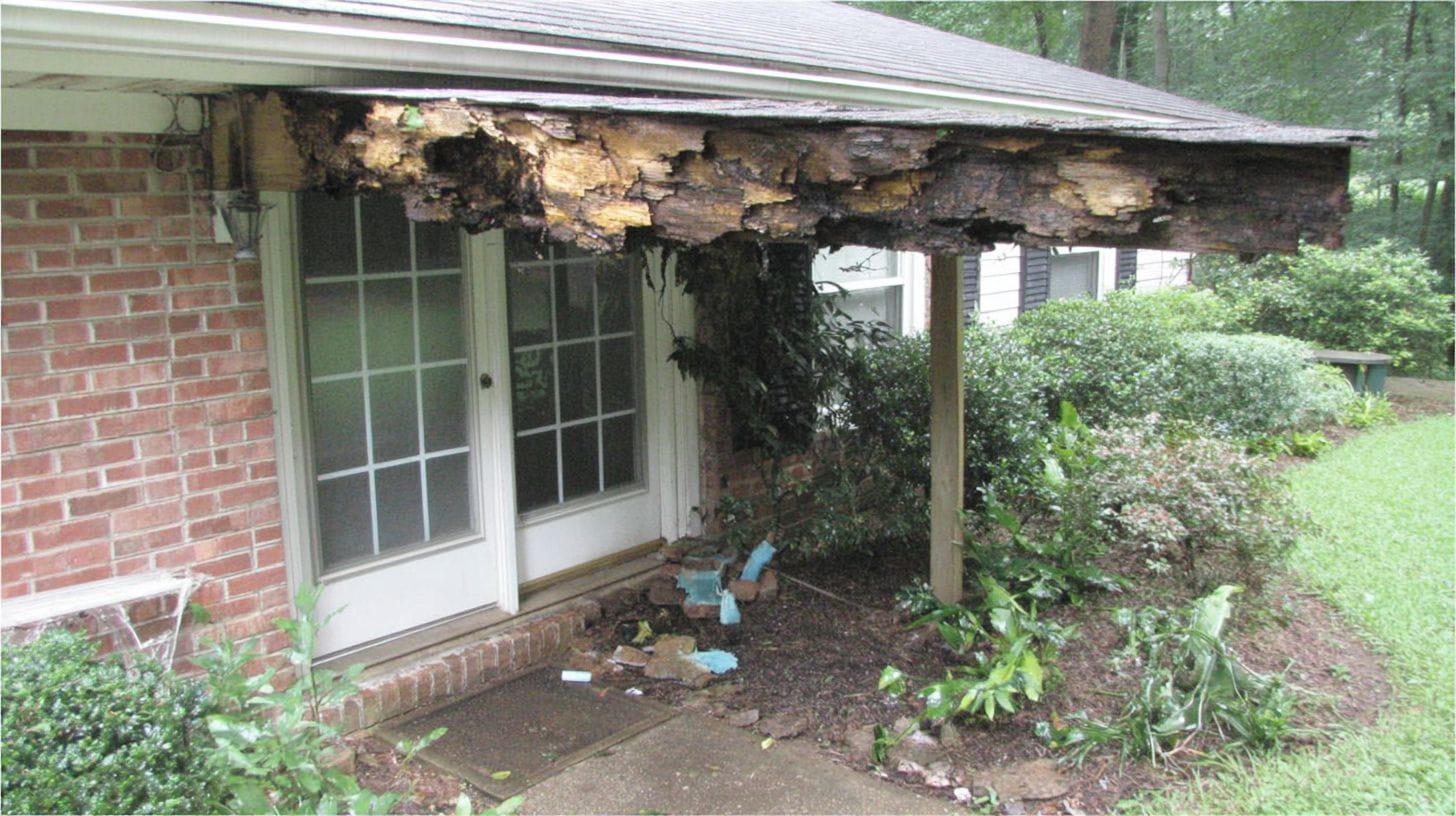
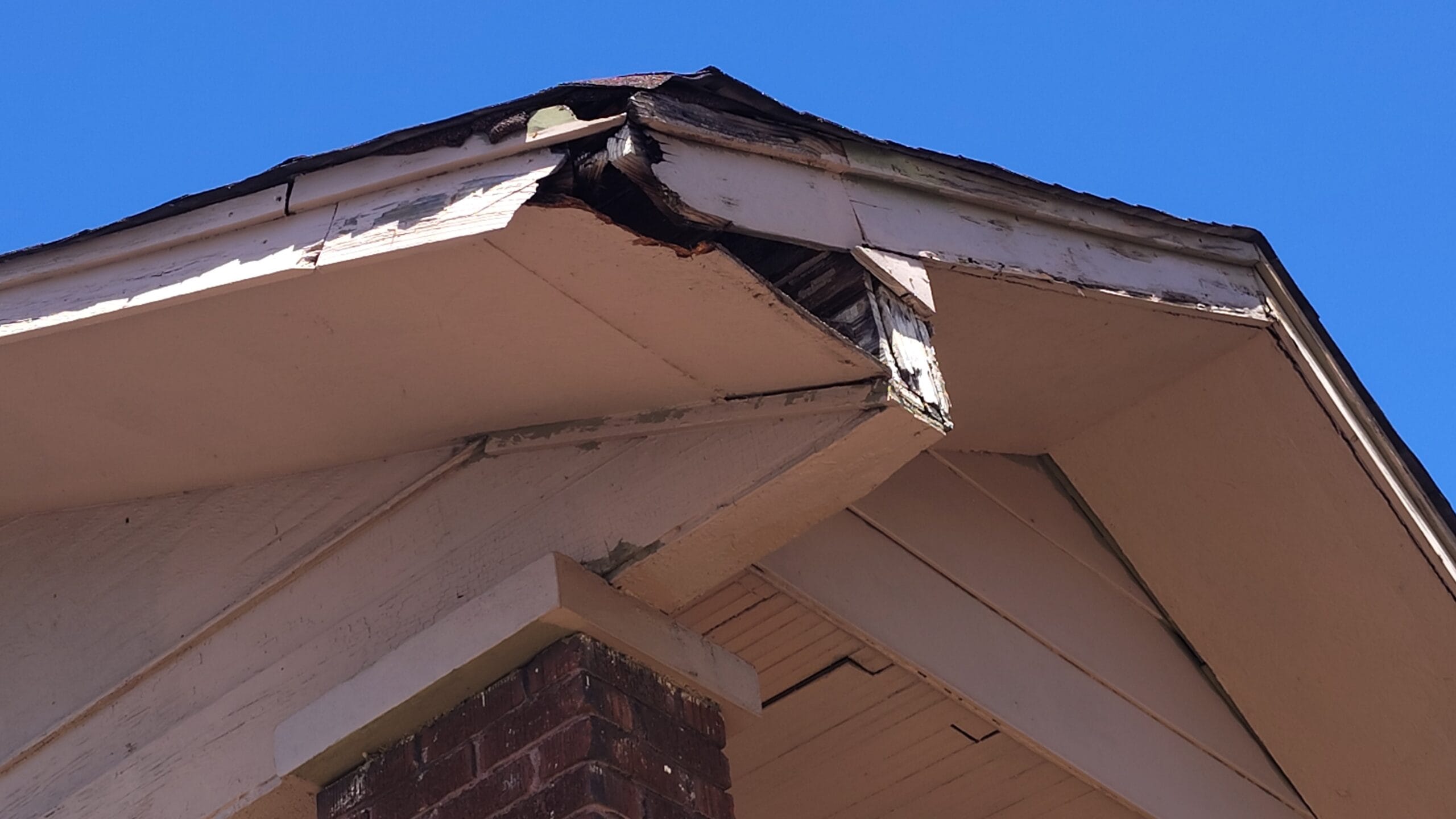
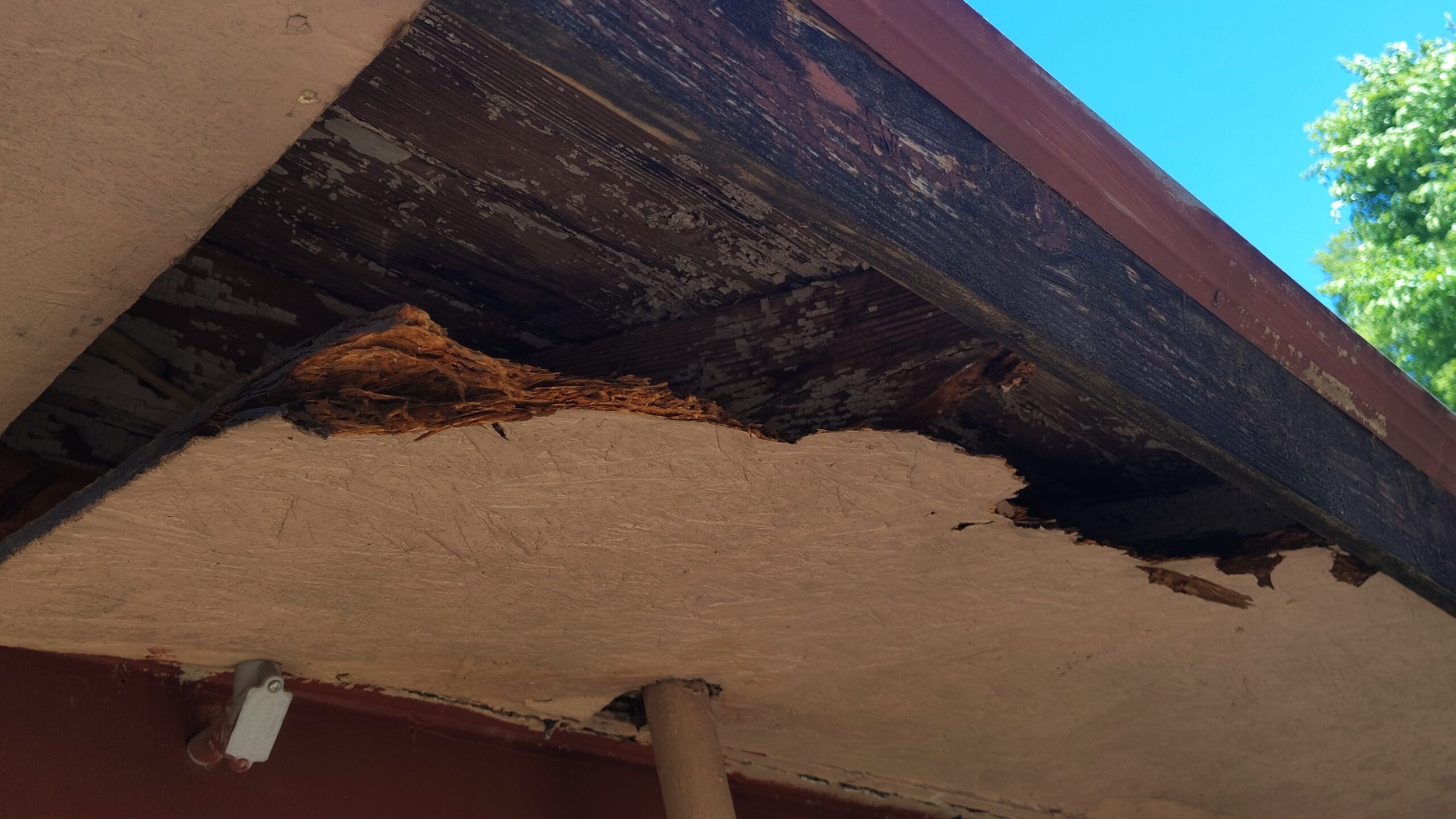
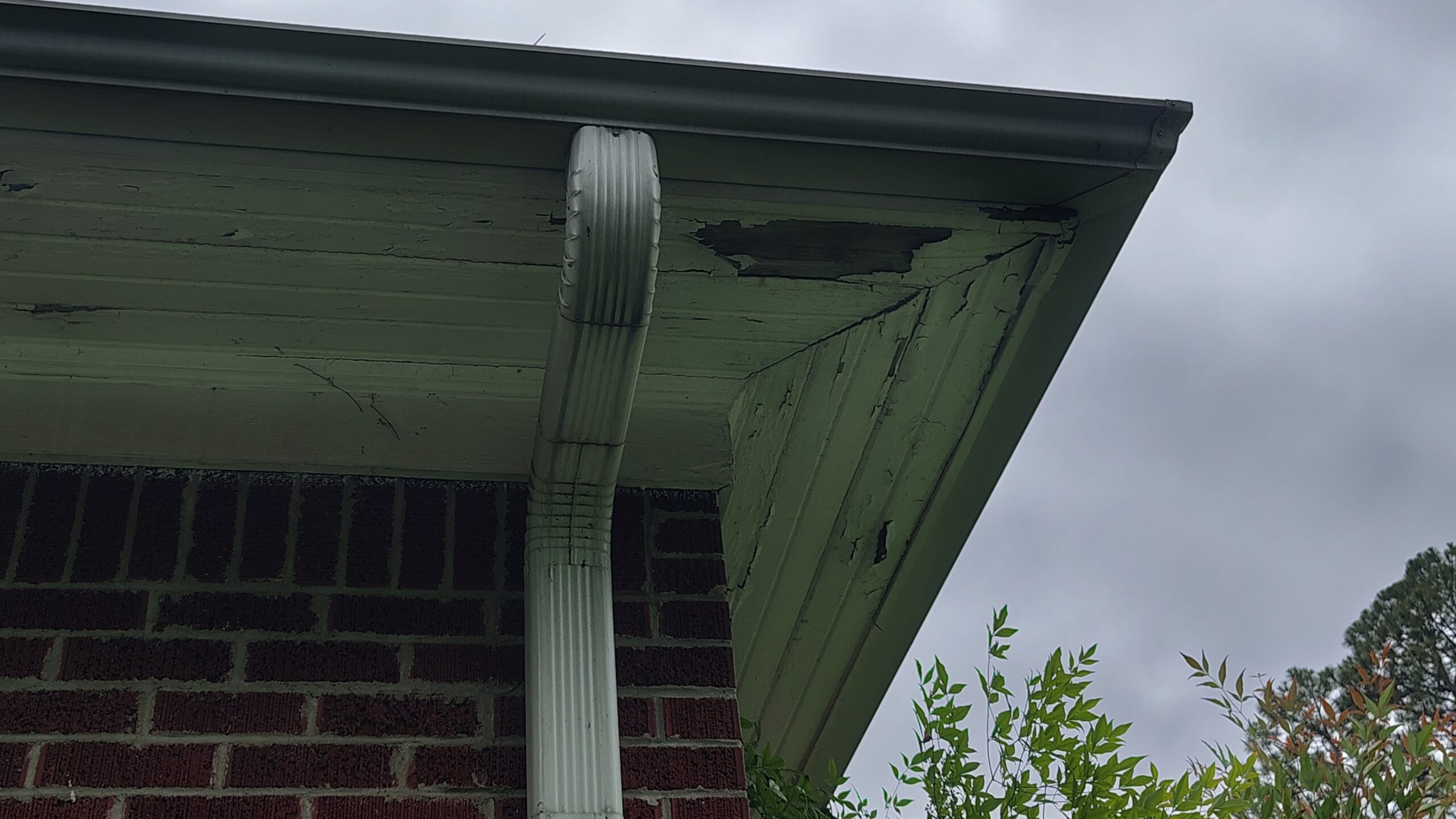
Peeling paint, dark staining, soft wood, or deterioration along the edge of a roof can be easy to dismiss as cosmetic. Sometimes it is mostly a maintenance issue. Other times, damaged soffit or fascia is a clue that water has been reaching an area that should stay reasonably dry.
That distinction matters.
Memphis receives roughly 55 inches of precipitation in a normal year, so roofs, gutters, trim, and exterior wood regularly have to manage significant amounts of water. The climate does not automatically cause wood to rot, but repeated wetting combined with conditions that prevent the wood from drying can create an environment where decay develops.
The useful question is not simply, “Is the fascia rotten?”
It is: Why did it get wet in the first place?
What Are Soffit and Fascia?
The fascia is the finished surface along the edge of the roof. On many homes, gutters are attached to the fascia or to framing immediately behind it.
The soffit covers the underside of the roof overhang. Some soffits contain ventilation openings that allow outside air to enter a vented attic system. Not every home uses the same attic-ventilation design, so the presence or absence of soffit vents alone does not tell you whether an attic is properly ventilated.
These components help finish and protect the roof edge, but they sit in a location where roofing, gutters, flashing, trim, and attic ventilation all come together. That makes deterioration around the eaves worth investigating rather than simply painting over.
What Usually Causes Soffit and Fascia Rot?
Wood decay requires moisture. Humid weather can slow drying, but humidity by itself generally does not supply enough moisture for significant wood decay. The USDA Forest Products Laboratory notes that keeping wood below roughly 20 percent moisture content provides a useful margin of safety against decay.
When damaged fascia or soffit is found, look for a source of repeated wetting.
Gutter Problems
Clogged, leaking, improperly pitched, or overflowing gutters can repeatedly wet fascia boards. Water may also run behind a gutter rather than entering it correctly.
This is one reason a damaged fascia board should not simply be replaced without checking the gutter and roof edge above it.
Roof-Edge and Drip-Edge Problems
The transition between the roof covering and the fascia needs to shed water outward.
Metal drip edge is intended to help direct water away from the roof edge and protect vulnerable materials from moisture intrusion. Missing, damaged, or improperly integrated roof-edge components can allow water to reach the fascia or roof sheathing.
Roof or Flashing Leaks
Sometimes the soffit or fascia is only where the damage becomes visible.
Water may originate farther up the roof and travel along sheathing or framing before appearing near the eave. Roof-wall intersections, valleys, penetrations, and flashing details are common places where water-management problems can develop.
Failed Paint or Exterior Coatings
Paint does not make exterior wood waterproof, but it does help protect the surface.
Peeling, cracking, or missing coatings can expose wood to repeated wetting. If the underlying cause is corrected early, deterioration may remain relatively localized.
Wind-Driven Rain
During strong storms, water can sometimes enter through or around soffit assemblies. The Department of Energy specifically recognizes wind-driven rain intrusion at soffits as a potential moisture problem.
That makes storm exposure another consideration when deterioration appears suddenly or is concentrated on one side of a house.
Signs You Can Look for From the Ground
You do not need to climb onto the roof to notice many roof-edge problems.
Walk around the home and look for:
- Peeling or blistering paint
- Dark staining below the gutter line
- Sections of fascia that appear swollen or distorted
- Sagging or damaged soffit panels
- Gaps between trim components
- Gutters pulling away from the roof edge
- Missing sections of soffit
- Visible deteriorated wood
- Water staining beneath roof edges
- Evidence of insects or nesting animals
Binoculars can help with areas that are difficult to see.
Avoid climbing onto roofs or using ladders simply to investigate suspected rot unless you have the equipment and experience to do so safely.
Does Damaged Fascia Mean the Roof Structure Is Rotten?
No.
This is where homeowners can get unnecessary scares.
A deteriorated fascia board does not automatically mean the rafters, trusses, or roof sheathing are damaged. The deterioration may be limited to an exterior trim component.
However, repeated water entry can sometimes affect materials behind the fascia. The extent cannot always be determined from the ground.
More concerning conditions include:
- Significant softness or missing wood
- A gutter pulling away because its attachment has deteriorated
- Sagging at the roof edge
- Visible deterioration of roof sheathing
- Moisture staining inside the attic near the eaves
- Active water entry
- Repeated repairs to the same area
- Deteriorated framing visible from the attic
Those conditions justify a closer evaluation.
What About Soffit Ventilation?
On homes with vented attics, soffit vents often serve as low intake openings while exhaust vents are located higher on the roof.
The Department of Energy recommends maintaining an air path at the eaves so insulation does not block soffit intake ventilation.
That means damaged soffit should not simply be covered or sealed without understanding how the attic is designed to ventilate.
A repair that stops a leak but blocks the intended ventilation path can create a different problem.
Repair the Moisture Source First
Replacing rotten wood without correcting the reason it became wet is usually a temporary repair.
The order should generally be:
- Identify the likely moisture source.
- Correct the roof, flashing, gutter, drainage, or coating problem.
- Determine how far the deterioration extends.
- Replace materials that are no longer serviceable.
- Restore coatings, flashing, and ventilation details as appropriate.
The repair may be simple if deterioration is localized.
If damage extends into roof sheathing, framing, or large portions of the eave, the repair becomes more involved and may require a roofing contractor, carpenter, or other qualified professional.
Should You Repair Soffit and Fascia Yourself?
Some maintenance is reasonable for homeowners who can perform it safely.
That might include keeping gutters clear, monitoring peeling paint from the ground, maintaining accessible exterior coatings, or trimming vegetation away from the roof edge.
Once the work involves accessing a roof, removing deteriorated materials, repairing flashing, evaluating framing, or working high above the ground, professional help usually makes more sense.
The biggest mistake is not necessarily doing a repair yourself. It is replacing the visibly damaged material without determining why it failed.
What Memphis Homeowners Should Check
Because Memphis receives substantial rainfall throughout the year, water management around the roof edge deserves routine attention.
A simple exterior check can include:
- Make sure gutters are not overflowing during rain.
- Look for staining behind or beneath gutters.
- Watch for loose or pulling gutter sections.
- Check visible fascia for peeling paint or deterioration.
- Look for damaged or missing soffit panels.
- Keep tree limbs from rubbing against the roof edge.
- Have roof-edge flashing evaluated when deterioration repeatedly returns.
- Check accessible attic areas for staining near the eaves.
The goal is not to diagnose every problem yourself. It is to notice changes before a small maintenance issue has more time to develop.
When an Inspection Makes Sense
If you are buying a home, visible soffit or fascia deterioration should be evaluated in context with the rest of the roof and exterior.
A home inspector may be able to determine whether the visible condition appears isolated or whether there are additional warning signs involving the roof covering, gutters, attic, sheathing, ventilation, or surrounding exterior components.
An inspection does not replace destructive testing or structural engineering when those services are needed. It can, however, help determine whether a condition appears to be routine maintenance or whether additional evaluation is warranted.
For Memphis-area buyers and homeowners, Upchurch Inspection evaluates visible roof-edge, exterior, attic, and drainage conditions as part of the overall inspection process and can recommend additional specialist evaluation when the observed conditions warrant it.
The Bottom Line
Soffit and fascia rot is not automatically a structural emergency, but it should not be ignored.
The visible deterioration is often less important than the question behind it:
Where is the moisture coming from?
Find that answer first. Correct the water-management problem, determine how much material has actually been affected, and then make the appropriate repair.
That approach is far more useful than simply replacing a board and hoping the problem does not come back.
What Usually Causes Soffit and Fascia Rot?
Wood decay requires moisture. Humid weather can slow drying, but humidity by itself generally does not supply enough moisture for significant wood decay. The USDA Forest Products Laboratory notes that keeping wood below roughly 20 percent moisture content provides a useful margin of safety against decay.
When damaged fascia or soffit is found, look for a source of repeated wetting.
Gutter Problems
Clogged, leaking, improperly pitched, or overflowing gutters can repeatedly wet fascia boards. Water may also run behind a gutter rather than entering it correctly.
This is one reason a damaged fascia board should not simply be replaced without checking the gutter and roof edge above it.
Roof-Edge and Drip-Edge Problems
The transition between the roof covering and the fascia needs to shed water outward.
Metal drip edge is intended to help direct water away from the roof edge and protect vulnerable materials from moisture intrusion. Missing, damaged, or improperly integrated roof-edge components can allow water to reach the fascia or roof sheathing.
Roof or Flashing Leaks
Sometimes the soffit or fascia is only where the damage becomes visible.
Water may originate farther up the roof and travel along sheathing or framing before appearing near the eave. Roof-wall intersections, valleys, penetrations, and flashing details are common places where water-management problems can develop.
Failed Paint or Exterior Coatings
Paint does not make exterior wood waterproof, but it does help protect the surface.
Peeling, cracking, or missing coatings can expose wood to repeated wetting. If the underlying cause is corrected early, deterioration may remain relatively localized.
Wind-Driven Rain
During strong storms, water can sometimes enter through or around soffit assemblies. The Department of Energy specifically recognizes wind-driven rain intrusion at soffits as a potential moisture problem.
That makes storm exposure another consideration when deterioration appears suddenly or is concentrated on one side of a house.
Signs You Can Look for From the Ground
You do not need to climb onto the roof to notice many roof-edge problems.
Walk around the home and look for:
- Peeling or blistering paint
- Dark staining below the gutter line
- Sections of fascia that appear swollen or distorted
- Sagging or damaged soffit panels
- Gaps between trim components
- Gutters pulling away from the roof edge
- Missing sections of soffit
- Visible deteriorated wood
- Water staining beneath roof edges
- Evidence of insects or nesting animals
Binoculars can help with areas that are difficult to see.
Avoid climbing onto roofs or using ladders simply to investigate suspected rot unless you have the equipment and experience to do so safely.
Does Damaged Fascia Mean the Roof Structure Is Rotten?
No.
This is where homeowners can get unnecessary scares.
A deteriorated fascia board does not automatically mean the rafters, trusses, or roof sheathing are damaged. The deterioration may be limited to an exterior trim component.
However, repeated water entry can sometimes affect materials behind the fascia. The extent cannot always be determined from the ground.
More concerning conditions include:
- Significant softness or missing wood
- A gutter pulling away because its attachment has deteriorated
- Sagging at the roof edge
- Visible deterioration of roof sheathing
- Moisture staining inside the attic near the eaves
- Active water entry
- Repeated repairs to the same area
- Deteriorated framing visible from the attic
Those conditions justify a closer evaluation.
What About Soffit Ventilation?
On homes with vented attics, soffit vents often serve as low intake openings while exhaust vents are located higher on the roof.
The Department of Energy recommends maintaining an air path at the eaves so insulation does not block soffit intake ventilation.
That means damaged soffit should not simply be covered or sealed without understanding how the attic is designed to ventilate.
A repair that stops a leak but blocks the intended ventilation path can create a different problem.
Repair the Moisture Source First
Replacing rotten wood without correcting the reason it became wet is usually a temporary repair.
The order should generally be:
- Identify the likely moisture source.
- Correct the roof, flashing, gutter, drainage, or coating problem.
- Determine how far the deterioration extends.
- Replace materials that are no longer serviceable.
- Restore coatings, flashing, and ventilation details as appropriate.
The repair may be simple if deterioration is localized.
If damage extends into roof sheathing, framing, or large portions of the eave, the repair becomes more involved and may require a roofing contractor, carpenter, or other qualified professional.
Should You Repair Soffit and Fascia Yourself?
Some maintenance is reasonable for homeowners who can perform it safely.
That might include keeping gutters clear, monitoring peeling paint from the ground, maintaining accessible exterior coatings, or trimming vegetation away from the roof edge.
Once the work involves accessing a roof, removing deteriorated materials, repairing flashing, evaluating framing, or working high above the ground, professional help usually makes more sense.
The biggest mistake is not necessarily doing a repair yourself. It is replacing the visibly damaged material without determining why it failed.
What Memphis Homeowners Should Check
Because Memphis receives substantial rainfall throughout the year, water management around the roof edge deserves routine attention.
A simple exterior check can include:
- Make sure gutters are not overflowing during rain.
- Look for staining behind or beneath gutters.
- Watch for loose or pulling gutter sections.
- Check visible fascia for peeling paint or deterioration.
- Look for damaged or missing soffit panels.
- Keep tree limbs from rubbing against the roof edge.
- Have roof-edge flashing evaluated when deterioration repeatedly returns.
- Check accessible attic areas for staining near the eaves.
The goal is not to diagnose every problem yourself. It is to notice changes before a small maintenance issue has more time to develop.
When an Inspection Makes Sense
If you are buying a home, visible soffit or fascia deterioration should be evaluated in context with the rest of the roof and exterior.
A home inspector may be able to determine whether the visible condition appears isolated or whether there are additional warning signs involving the roof covering, gutters, attic, sheathing, ventilation, or surrounding exterior components.
An inspection does not replace destructive testing or structural engineering when those services are needed. It can, however, help determine whether a condition appears to be routine maintenance or whether additional evaluation is warranted.
For Memphis-area buyers and homeowners, Upchurch Inspection evaluates visible roof-edge, exterior, attic, and drainage conditions as part of the overall inspection process and can recommend additional specialist evaluation when the observed conditions warrant it.
The Bottom Line
Soffit and fascia rot is not automatically a structural emergency, but it should not be ignored.
The visible deterioration is often less important than the question behind it:
Where is the moisture coming from?
Find that answer first. Correct the water-management problem, determine how much material has actually been affected, and then make the appropriate repair.
That approach is far more useful than simply replacing a board and hoping the problem does not come back.