Industrial and Warehouse Inspection FAQ
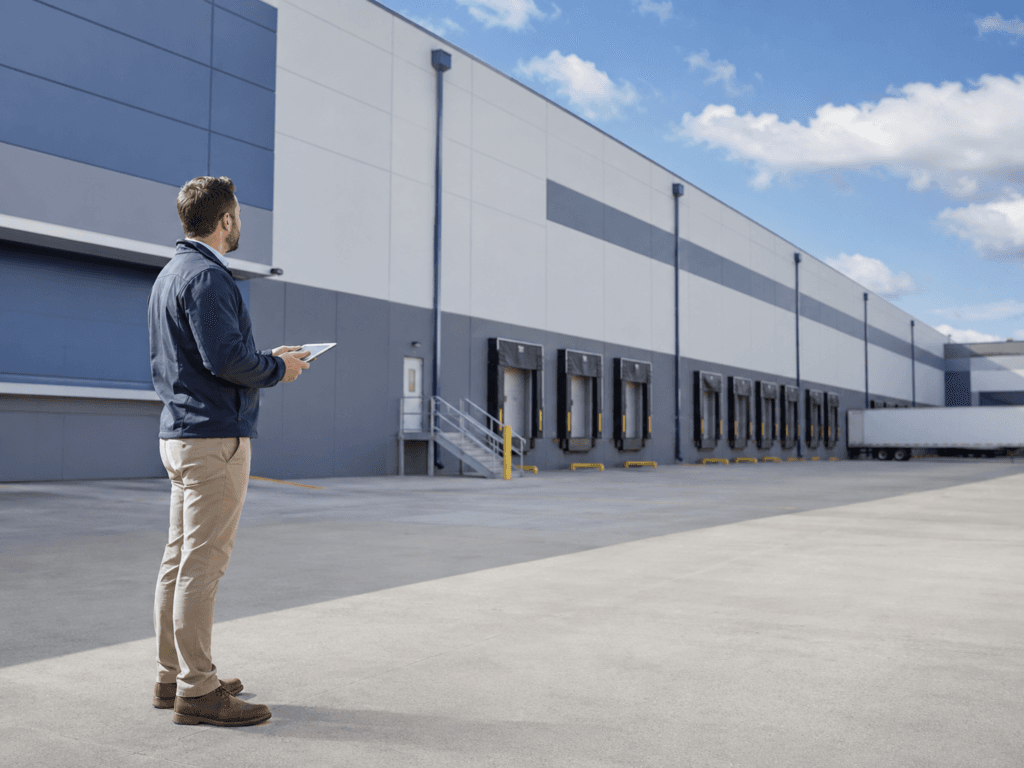
Industrial and warehouse properties are different from ordinary commercial buildings. These properties may include large roof systems, concrete slabs, loading docks, overhead doors, truck courts, high-bay spaces, office buildouts, mezzanines, heavy electrical service, specialized ventilation, divided tenant spaces, and years of operational wear.
This FAQ explains what an industrial or warehouse inspection may include, when a PCA-style review may make sense, and what buyers, owners, lenders, and decision-makers should understand before moving forward.
Schedule Your Church Inspection
F.A.Q.
Frequently Asked Questions About Warehouse and Industrial Inspections
1. Industrial and Warehouse Inspection Basics
An industrial property inspection is a visual evaluation of the readily accessible building systems, site conditions, and visible physical components of an industrial-use property.
Depending on the scope, this may include the roof, exterior walls, structure, concrete slabs, loading areas, overhead doors, office buildouts, electrical systems, HVAC systems, plumbing, fire protection observations, site drainage, parking areas, truck courts, and other visible components.
The purpose is to help buyers, owners, lenders, operators, and decision-makers understand visible property conditions, deferred maintenance, safety concerns, and potential repair exposure before making major decisions.
A warehouse inspection is a commercial inspection focused on the visible condition of a warehouse or storage-use property.
Warehouse inspections may include high-bay storage areas, roof systems, concrete slabs, loading docks, overhead doors, truck access areas, electrical service, lighting, restrooms, office buildouts, mechanical systems, drainage, and exterior site conditions.
Warehouses can look simple, but they often carry major repair risk. Roof leaks, slab damage, poor drainage, damaged dock areas, aging electrical systems, and deferred maintenance can create expensive problems after purchase or lease.
An industrial inspection is a type of commercial inspection, but the scope should be adjusted for industrial use.
A standard commercial inspection may focus on general building systems, while an industrial inspection pays closer attention to conditions that matter in industrial and warehouse properties. These may include concrete slabs, loading docks, overhead doors, metal building systems, roof drainage, truck courts, electrical capacity, ventilation, tenant improvements, storage areas, and operational wear.
The building’s use matters. A warehouse, distribution facility, light industrial building, manufacturing space, or flex property should not be evaluated exactly like a small office or retail building.
Upchurch Inspection can inspect a variety of industrial and warehouse-type properties, depending on the scope and use of the building.
This may include warehouses, distribution buildings, light industrial spaces, flex buildings, small manufacturing facilities, contractor shops, storage facilities, service buildings, mixed office-warehouse properties, and industrial buildings with multiple tenant spaces.
The inspection scope should match the property. A simple warehouse may require a different level of review than a large industrial building with multiple loading docks, specialty equipment, heavy electrical service, office buildouts, and complex site improvements.
Industrial and warehouse inspections may be needed by buyers, sellers, owners, lenders, investors, operators, tenants, asset managers, facility managers, attorneys, boards, and ownership groups.
A buyer may need due diligence before purchasing the property. A tenant may need to understand the condition of a building before signing a lease. An owner may need help identifying deferred maintenance before repairs or capital planning. A lender or ownership group may need a clearer understanding of visible physical condition before approving or moving forward with a transaction.
The inspection is about understanding the building before the building becomes a surprise.
No. Industrial inspections are not only for buyers.
They may also be useful for current owners, sellers, tenants, lenders, facility managers, ownership groups, and operators. A property owner may request an inspection to understand deferred maintenance. A tenant may request a review before leasing a space. A seller may want to understand visible concerns before listing the property. An ownership group may need a condition review before approving repairs, renovations, or long-term capital planning.
Industrial buildings often carry expensive maintenance exposure, so an inspection can be valuable even when no purchase is taking place.
Industrial buildings are different because they are often designed around function, equipment, storage, loading, production, or operations rather than ordinary office or retail use.
They may include heavy-use concrete slabs, loading docks, overhead doors, truck courts, high-bay storage areas, large roof surfaces, specialized electrical service, ventilation systems, floor drains, utility spaces, office buildouts, mezzanines, and tenant-modified areas.
Many industrial buildings also experience harder use than standard commercial properties. Forklift traffic, truck impacts, heavy storage, roof drainage issues, dock wear, equipment changes, and tenant modifications can affect the building over time.
Common issues include roof leaks, deteriorated low-slope roofs, clogged drains, damaged metal panels, cracked or spalled concrete slabs, settlement, damaged overhead doors, worn loading dock areas, poor site drainage, deteriorated parking or truck courts, outdated electrical components, inadequate lighting, HVAC deficiencies, plumbing leaks, moisture intrusion, damaged interior finishes, and poorly maintained tenant improvements.
Industrial buildings may also have specialty conditions that require further evaluation, such as fire protection systems, process piping, compressed air lines, chemical storage areas, environmental concerns, or structural questions related to heavy loads.
The inspection helps identify visible concerns and areas where specialty evaluation may be needed.
Yes. Upchurch Inspection provides industrial and warehouse property inspections for buyers, sellers, owners, tenants, lenders, and decision-makers.
Our focus is on visible building condition, major systems, deferred maintenance, safety concerns, repair exposure, and practical property risk. For larger or more complex industrial properties, a PCA-style review may also be discussed to better organize findings around due diligence, repair priorities, and capital planning.
2. Property Condition Reviews and Commercial Due Diligence
Not always.
A standard industrial inspection is typically a visual inspection of readily accessible building components and systems. A Property Condition Assessment, often called a PCA, is a more formal commercial due diligence process focused on physical deficiencies, major systems, immediate repairs, short-term concerns, and capital planning.
For larger industrial buildings, lender-related work, ownership group decisions, or serious commercial due diligence, a PCA-style review may be more appropriate than a basic inspection.
A PCA-style review makes sense when the property is large, complex, expensive, older, heavily used, or being evaluated by buyers, lenders, ownership groups, or serious commercial decision-makers.
Industrial buildings can have major repair exposure. Roof systems, slabs, docks, electrical service, HVAC equipment, drainage, fire protection systems, and site improvements can all involve significant cost.
A PCA-style review helps organize those concerns in a way that is more useful for decision-making, budgeting, negotiations, and long-term planning.
For an industrial or warehouse property, PCA-style means the inspection is approached more like a commercial due diligence review than a simple checklist.
The review may focus on visible physical deficiencies, deferred maintenance, major system condition, repair priorities, short-term concerns, and long-term capital planning issues. The report may be organized around systems such as roofing, structure, exterior envelope, site improvements, electrical, mechanical, plumbing, life-safety observations, and interior conditions.
A PCA-style review does not mean every hidden condition is discovered. It also does not replace engineers, contractors, environmental consultants, fire protection contractors, or code officials. It does provide a more serious due diligence framework for evaluating visible property condition.
A basic industrial inspection focuses on visible and accessible components at the property. It identifies major defects, safety concerns, deferred maintenance, and conditions that may need further evaluation.
A PCA-style industrial property review is more detailed and more focused on commercial decision-making. It may place greater emphasis on major systems, repair priorities, short-term concerns, long-term capital exposure, and documentation useful to buyers, lenders, owners, or asset managers.
For a smaller warehouse or straightforward property, a basic inspection may be enough. For a larger industrial facility, older building, multi-tenant property, or transaction involving lender or ownership group review, a PCA-style scope may be the better fit.
Yes. Industrial inspections can help owners and buyers better understand visible repair needs and future maintenance exposure.
A property may have an aging roof, worn dock equipment, damaged pavement, older HVAC equipment, outdated electrical panels, drainage concerns, cracked slabs, and deferred maintenance. Not every issue requires immediate repair, but the client needs to understand what may affect the budget over time.
For ownership groups, operators, and buyers, this can be one of the most valuable parts of the inspection.
Yes. A good industrial inspection should help separate immediate concerns from longer-term maintenance items.
Urgent concerns may include active roof leaks, electrical hazards, unsafe stairs or guards, structural movement, major drainage problems, damaged overhead doors, unsafe loading areas, or conditions that may affect occupancy or operations.
Long-term concerns may include aging roof systems, worn pavement, older mechanical equipment, weathered exterior materials, minor slab cracking, deferred maintenance, or systems nearing the end of expected service life.
The inspection does not make business decisions for the client, but it can help the client better understand what needs attention now and what may require planning.
A standard inspection report identifies visible concerns and recommends appropriate next steps, but it is not the same as a contractor bid.
For larger industrial properties or PCA-style reviews, general opinions of probable cost or repair priority discussions may be included only when specifically agreed to in the scope. These are planning-level opinions, not guaranteed prices.
Actual pricing should come from qualified contractors, engineers, or specialists after they evaluate the specific conditions and repair methods.
An industrial inspection report may help document visible property conditions for buyers, lenders, insurers, ownership groups, attorneys, asset managers, or internal decision-makers.
However, lenders and insurance companies set their own requirements. Some may require specific forms, engineering reports, environmental reports, roof certifications, fire protection documentation, or other specialist evaluations.
If the inspection is being requested for lender, insurance, or ownership group purposes, those requirements should be provided before the inspection so the scope can be discussed.
3. Building Structure, Slabs, and Load-Related Concerns
Yes. Visible and readily accessible structural components may be included in an industrial inspection.
This may include foundations, columns, beams, trusses, joists, framing, masonry walls, metal building components, roof structure, visible slab conditions, and signs of settlement or movement.
The inspection is visual and non-invasive. It is not a structural engineering analysis. If significant movement, deflection, cracking, corrosion, impact damage, or load-related concerns are observed, further evaluation by a structural engineer may be recommended.
Yes. Visible concrete slab conditions are an important part of many warehouse inspections.
The inspection may document visible cracking, settlement, spalling, surface deterioration, joint damage, patched areas, moisture indicators, trip hazards, forklift wear, impact damage, and drainage-related concerns.
A warehouse slab can be a major operational component. Slab defects can affect storage, forklift movement, equipment use, racking, safety, and future repair costs.
Not every slab crack is the same.
Important slab concerns may include wide cracks, vertical displacement, settlement, heaving, spalling, uneven surfaces, moisture-related deterioration, damaged control joints, patching, forklift damage, loading-related distress, and cracks associated with structural movement.
In industrial buildings, slab performance matters because the floor may support storage loads, equipment, forklifts, pallet racking, vehicle traffic, or production activity. Significant slab concerns may require further evaluation by a structural engineer, concrete contractor, or specialist familiar with industrial slabs.
A standard industrial inspection does not determine floor loading capacity.
Floor loading capacity requires engineering analysis, structural design information, slab thickness, reinforcement details, soil/subgrade information, intended loads, and sometimes destructive investigation or specialized testing. An inspector may observe visible slab conditions and signs of distress, but cannot confirm whether a slab is adequate for a specific storage load, equipment load, forklift use, or racking system.
If floor loading capacity is important to the transaction or operation, a structural engineer should be consulted.
Visible and accessible mezzanines or elevated platforms may be observed as part of the inspection.
The inspection may note visible structural concerns, damaged framing, unsafe stairs, missing guards, missing handrails, apparent movement, poor connections, or obvious deterioration. However, a standard inspection does not verify load capacity, design compliance, or engineering adequacy.
If a mezzanine is used for storage, equipment, production, or occupancy, further evaluation by a structural engineer may be needed.
Yes. Visible components of metal building systems may be observed.
This may include metal wall panels, roof panels, framing, columns, girts, purlins, bracing, fasteners, trim, doors, overhead door openings, insulation, interior finishes, and signs of corrosion or movement.
Common concerns include loose or damaged panels, leaks, rust, missing fasteners, deteriorated sealants, damaged trim, insulation issues, impact damage, and modifications that may affect performance.
Yes. Visible masonry, concrete block, brick, or tilt-up concrete wall conditions may be included in the inspection.
The inspection may document visible cracking, displacement, moisture staining, deterioration, impact damage, open joints, damaged lintels, settlement indicators, spalling, corrosion staining, and other visible concerns.
Significant cracking, movement, leaning, displacement, or impact damage may require further evaluation by a structural engineer or qualified masonry/concrete specialist.
Yes. Visible and accessible columns, beams, trusses, joists, and framing components may be observed.
The inspection may document visible corrosion, impact damage, movement, missing connections, obvious deflection, damaged fireproofing, deterioration, or other visible conditions. In high-bay industrial spaces, some components may be difficult to access closely and may be observed from the floor or accessible locations.
A standard inspection does not verify structural design or load capacity.
Yes. A visual inspection may identify signs that suggest possible movement or settlement.
These may include cracks in walls, slab displacement, uneven floors, door or overhead door alignment issues, separated joints, gaps at structural connections, displaced masonry, sloping surfaces, water intrusion patterns, or exterior grading problems.
The inspection can document visible indicators, but determining cause, severity, or structural adequacy may require evaluation by a structural engineer.
A structural engineer should be involved when there are concerns about structural movement, load capacity, major cracking, deflection, settlement, impact damage, mezzanines, elevated storage, heavy equipment loads, racking loads, wall movement, roof framing concerns, or any condition that requires engineering judgment.
The inspection may identify visible concerns, but engineering analysis is needed when the client needs design-level opinions, load calculations, repair design, or confirmation of structural adequacy.
4. Roofs, Building Envelope, and Moisture Intrusion
Yes. The roof is one of the most important systems in an industrial or warehouse inspection.
Industrial buildings often have large roof areas, low-slope roof systems, metal roofs, roof drains, scuppers, gutters, parapets, penetrations, skylights, rooftop equipment, and multiple additions or transitions.
Roof problems can create damage to inventory, equipment, interior finishes, insulation, electrical systems, and structural components. A roof that looks minor on the surface may represent a major capital expense.
Yes. Flat and low-slope roof areas may be included when they are visible and safely accessible.
Common concerns include ponding water, deteriorated membranes, open seams, damaged flashing, clogged drains, poor slope, roof penetrations, patched areas, roof edge deterioration, parapet issues, and evidence of interior leaks.
Low-slope roof systems are one of the biggest cost exposures in many warehouse and industrial properties.
Yes. Visible metal roof conditions may be observed when safely accessible or visible from accessible locations.
Common concerns include loose fasteners, deteriorated washers, corrosion, damaged panels, failed sealants, open seams, poor repairs, leaks at penetrations, damaged trim, and movement at roof transitions.
A full metal roof assessment may require a qualified roofing contractor, especially where access is limited or leaks are active.
Yes. Visible roof drainage components may be included.
Industrial roof drainage is important because large roof areas can collect and discharge significant amounts of water. Clogged roof drains, blocked scuppers, damaged gutters, missing downspouts, ponding water, poor discharge locations, and drainage directed toward the building can create major moisture and structural concerns.
Roof drainage should be evaluated as part of the overall building envelope and site drainage picture.
Yes. Visible exterior wall and building envelope conditions may be included.
This may include masonry walls, metal panels, tilt-up concrete, siding, windows, doors, sealants, wall penetrations, wall caps, expansion joints, parapets, dock areas, and signs of moisture intrusion.
The building envelope helps keep water, air, pests, and weather out of the building. When the envelope fails, industrial buildings can experience leaks, corrosion, interior damage, insulation deterioration, and operational disruption.
Yes. Visible moisture damage and water intrusion indicators are important parts of an industrial inspection.
This may include ceiling stains, wall stains, wet insulation, damaged finishes, rust, efflorescence, mold-like staining, musty odors, roof leak indicators, ponding water, water-damaged materials, or signs of drainage problems.
The inspection can document visible indicators, but hidden moisture, mold testing, environmental testing, and destructive investigation are separate services unless specifically included.
Common warehouse roof and envelope problems include low-slope roof leaks, ponding water, clogged drains, deteriorated flashing, failed sealants, roof penetrations, metal roof corrosion, loose fasteners, open seams, damaged wall panels, masonry cracks, impact damage, poor repairs, and water intrusion around doors, docks, windows, and wall penetrations.
In warehouses, roof and envelope defects can affect storage, inventory, equipment, tenant operations, and long-term property value.
A roofing contractor or building envelope specialist should be involved when there are active leaks, widespread roof deterioration, questionable remaining roof life, membrane damage, metal roof concerns, chronic moisture intrusion, parapet issues, wall leaks, or conditions requiring repair pricing or specialized assessment.
A general inspection can identify visible concerns, but specialty evaluation may be needed for repair design, leak tracing, warranty questions, roof certification, or replacement planning.
5. Loading Areas, Site Conditions, and Exterior Improvements
Yes. Visible loading dock conditions may be included in an industrial or warehouse inspection.
This may include dock walls, dock levelers, bumpers, dock doors, seals, stairs, guards, railings, concrete damage, drainage, impact damage, and general safety concerns.
Loading docks are high-wear areas. Damage from trucks, forklifts, water, settlement, and repeated use can create safety issues and repair costs.
Yes. Visible overhead door conditions may be observed.
The inspection may document damaged panels, poor alignment, impact damage, missing hardware, damaged tracks, deteriorated seals, manual operation concerns, or visible safety issues. Operation may be limited depending on access, safety, power, and whether the doors are in use.
A standard inspection does not replace evaluation by an overhead door contractor, especially for motorized doors, door operators, springs, safety devices, or repair pricing.
Yes. Visible truck courts, drive lanes, and loading areas may be included.
These areas may show pavement deterioration, settlement, ponding water, poor drainage, damaged curbs, potholes, cracking, rutting, failed patches, impact damage, and unsafe transitions.
For industrial properties, site surfaces are not cosmetic. Poor truck court or loading area conditions can affect operations, vehicle access, drainage, safety, and maintenance costs.
Yes. Visible exterior improvements may be included.
This may include parking lots, sidewalks, ramps, exterior stairs, handrails, guardrails, curbs, drainage patterns, catch basins, downspout discharge, retaining walls, and general site safety concerns.
Exterior conditions can affect safety, accessibility, drainage, operations, and long-term maintenance exposure.
Visible retaining walls, fencing, gates, and exterior site features may be observed when included in the inspection scope.
The inspection may document obvious deterioration, leaning, damage, corrosion, missing components, drainage concerns, impact damage, or safety concerns. Specialty systems such as automated gates, security systems, or engineered retaining wall design may require specialist evaluation.
Rail spurs, rail doors, specialty loading systems, and transportation-related features may be visually observed only when included in the scope and safely accessible.
A standard inspection does not provide a railroad engineering assessment, operational certification, or specialty transportation system evaluation. If rail infrastructure is important to the property’s operation or value, a qualified specialist should evaluate those features.
Site drainage is critical because industrial properties often have large roof surfaces, paved areas, loading zones, truck courts, and limited landscaping to absorb water.
Poor drainage can contribute to ponding water, pavement deterioration, slab moisture, foundation movement, dock area damage, water intrusion, erosion, and unsafe walking or driving surfaces.
Drainage problems can also affect tenant operations and long-term repair costs.
6. Electrical, Mechanical, Plumbing, and Fire Protection Systems
Yes. Visible and readily accessible electrical components may be included.
This may include service equipment, panels, subpanels, disconnects, visible wiring, lighting, receptacles, grounding/bonding observations, exterior electrical components, and general safety concerns.
Industrial electrical systems may be more complex than standard commercial systems, and some conditions may require evaluation by a licensed electrician or electrical engineer.
A standard industrial inspection does not determine whether the electrical service is adequate for a specific intended use.
Electrical adequacy depends on equipment loads, production needs, tenant requirements, service capacity, panel capacity, available voltage, phase requirements, future expansion, and engineering calculations.
The inspection may document visible electrical equipment and concerns, but confirming capacity for a specific use should be performed by a licensed electrician or electrical engineer.
Visible three-phase electrical equipment may be observed, but a standard inspection does not fully evaluate design adequacy, load capacity, phase balancing, or suitability for specific industrial equipment.
If three-phase power is important to the buyer, tenant, or operation, the client should have the electrical system evaluated by a qualified electrician or electrical engineer.
Yes. Visible HVAC equipment may be included.
Industrial properties may have rooftop units, split systems, unit heaters, warehouse heaters, office HVAC systems, exhaust fans, make-up air systems, ventilation systems, and equipment serving different areas of the building.
The inspection may document visible condition, apparent age, operation when appropriate, maintenance concerns, damage, condensate issues, and conditions requiring HVAC contractor evaluation.
Visible ventilation, exhaust, and make-up air components may be observed when accessible.
However, a standard inspection does not verify design, air balance, industrial hygiene requirements, process ventilation performance, code compliance, or suitability for a specific operation.
If ventilation is critical to the intended use, especially for manufacturing, welding, chemicals, fumes, dust, food processing, or high-occupancy areas, a qualified mechanical contractor, engineer, or industrial hygiene specialist may be needed.
Yes. Visible plumbing components may be included.
This may include restrooms, break rooms, janitor sinks, water heaters, visible water supply piping, visible drain piping, hose bibbs, floor drains, utility sinks, and signs of leaks or corrosion.
Industrial buildings may also contain specialty plumbing or process-related systems that are outside a standard inspection unless specifically included.
A sewer scope may be worth considering, especially for older industrial buildings, properties with heavy plumbing use, buildings with floor drains, or properties with unknown underground piping.
Commercial sewer repairs can be expensive and disruptive. A sewer camera inspection may help identify root intrusion, broken piping, corrosion, bellies, offsets, blockages, or other visible issues inside accessible sewer piping.
Sewer scoping is not always included in a standard industrial inspection and should be added when desired and when access is available.
Compressed air systems, process piping, gas piping for production equipment, chemical piping, specialty drains, manufacturing equipment, and other industrial process systems are generally outside a standard property inspection unless specifically included in the scope.
These systems often require specialized knowledge, operational testing, safety procedures, and evaluation by qualified contractors or engineers.
The inspection may document visible concerns or recommend further evaluation when specialty systems appear to be significant to the property.
Visible fire protection components may be observed, but a standard inspection does not replace inspection, testing, certification, or design evaluation by fire protection professionals.
This may include visible observations of sprinkler components, alarm panels, extinguishers, emergency lighting, exit signs, and obvious fire/life-safety concerns. However, proper testing, certification, hydraulic adequacy, alarm function, and code compliance should be handled by qualified specialists.
Specialty contractors should be involved when systems are complex, damaged, old, inaccessible, not operating, possibly unsafe, or critical to the intended use of the property.
Electricians, HVAC contractors, plumbers, fire protection contractors, engineers, and other specialists may be needed for repair pricing, capacity evaluation, code compliance, system testing, or design-level opinions.
A property inspection helps identify visible concerns, but it is not a substitute for specialty evaluation when specialty knowledge is required.
7. Offices, Tenant Improvements, and Interior Areas
Yes. Office buildouts inside warehouse or industrial buildings may be included.
The inspection may include visible conditions of walls, ceilings, floors, doors, windows, restrooms, HVAC, electrical, plumbing, lighting, and general interior safety concerns.
Office areas are often added or modified over time, and they may not match the age or condition of the main warehouse space.
Yes. Visible restrooms, break rooms, locker areas, employee areas, and similar spaces may be included.
The inspection may document plumbing concerns, leaks, damaged finishes, ventilation issues, electrical concerns, moisture damage, trip hazards, and general maintenance issues.
These areas can reveal deferred maintenance and may affect tenant use, employee comfort, and repair planning.
Yes. Visible interior components may be observed.
This may include walls, partitions, ceilings, doors, windows, flooring, stairs, guards, handrails, ceiling stains, damaged finishes, and signs of moisture intrusion.
In industrial properties, interior finishes may be less important cosmetically, but they can still reveal leaks, structural movement, moisture problems, tenant damage, or deferred maintenance.
Storage areas may be inspected for visible building-related concerns, but racking systems are generally outside a standard property inspection unless specifically included.
Racking systems may require evaluation by a qualified rack specialist or engineer, especially if there is damage, overloading, missing anchors, impact damage, modifications, or seismic/load concerns.
The inspection may document obvious visible concerns around storage areas but does not certify racking capacity or installation.
Cranes, lifts, conveyors, hoists, production equipment, machinery, and similar operational systems are generally outside a standard industrial property inspection.
These systems require specialty evaluation, maintenance records, operational testing, safety review, and sometimes certification by qualified professionals.
The inspection may document visible conditions around these systems or recommend further evaluation when they appear significant to the property.
Cold storage, food processing, clean rooms, laboratories, specialty manufacturing areas, and similar spaces may involve systems beyond a standard property inspection.
Visible building conditions may be observed when accessible, but refrigeration systems, food safety compliance, process systems, environmental controls, sanitation compliance, and specialty equipment should be evaluated by qualified specialists.
If the property has a specialty use, the scope should be discussed before the inspection.
If a building has multiple tenants or divided spaces, the inspection scope should clearly define which areas will be inspected and what access is available.
Multi-tenant industrial buildings may have separate electrical panels, HVAC systems, restrooms, offices, storage areas, overhead doors, and tenant improvements. Some tenant areas may be locked, occupied, or inaccessible.
If areas are not accessible, those limitations should be documented in the report. Follow-up access may be recommended when important building systems or representative areas cannot be observed.
8. Environmental, Safety, and Compliance Limitations
A standard industrial inspection is not an environmental site assessment and does not determine the presence or absence of environmental contamination.
Industrial properties may have environmental concerns related to prior uses, chemicals, storage tanks, floor drains, stained soils, asbestos, lead paint, mold, hazardous materials, spills, or regulated substances. These issues may require environmental professionals, laboratory testing, records review, or a Phase I Environmental Site Assessment.
The property inspection may note visible concerns, but environmental due diligence is a separate scope.
Not as part of a standard industrial inspection unless those services are specifically added.
Older industrial buildings may contain suspect asbestos-containing materials, lead-based paint, mold-like staining, moisture damage, chemical residues, or other hazardous materials. Confirming those conditions requires proper sampling, testing, and evaluation by qualified professionals.
The inspection may document visible concerns and recommend further evaluation, but it does not confirm environmental hazards unless testing is specifically performed.
No. A standard industrial property inspection is not an OSHA compliance inspection.
OSHA compliance relates to workplace safety, employer practices, equipment use, training, procedures, guarding, fall protection, hazard communication, and many operational issues that are outside a property condition inspection.
The inspection may identify visible safety concerns related to the building, but it does not certify OSHA compliance.
A standard industrial inspection may observe visible accessibility-related concerns, but it is not the same as a full ADA compliance audit.
Accessibility compliance may involve measurements, legal standards, use-specific requirements, parking, entrances, restrooms, routes, thresholds, signage, and other details. If ADA compliance is a major concern, a dedicated accessibility evaluation should be obtained.
Visible emergency exits and means of egress may be observed.
This may include exit doors, pathways, stairs, corridors, exterior discharge areas, obvious obstructions, damaged doors, missing or damaged hardware, and visible concerns that may affect safe movement out of the building.
However, the inspection is not a full fire code, life-safety, or occupancy compliance review. Fire officials, code consultants, architects, or life-safety specialists may be needed for formal compliance questions.
A standard inspection does not evaluate hazardous material storage, chemical handling procedures, regulatory compliance, spill prevention plans, or environmental safety programs.
The inspection may document obvious visible concerns, such as staining, damaged storage areas, poor drainage, or visible building damage. However, proper evaluation of hazardous materials, chemical storage, containment, labeling, ventilation, and regulatory compliance should be performed by qualified specialists.
Visible floor drains and related components may be observed, but a standard inspection does not fully evaluate underground drainage systems, oil-water separators, stormwater compliance, discharge permits, or environmental function.
Industrial drainage systems can be complex and may involve environmental regulations. If floor drains, separators, stormwater systems, or industrial discharge are important to the property, further evaluation by qualified specialists may be recommended.
An industrial property inspection is visual and non-invasive. It does not open walls, dismantle equipment, verify engineering design, confirm code compliance, test environmental conditions, certify fire systems, inspect machinery, or determine whether the building is suitable for a specific industrial operation.
Some systems and conditions require specialists, including structural engineers, electricians, HVAC contractors, plumbers, roofing contractors, fire protection contractors, environmental consultants, industrial hygienists, and equipment specialists.
The inspection helps reduce uncertainty, but it does not eliminate all risk.
9. Buying, Selling, Leasing, and Ownership Situations
Yes, but the inspection does not make the decision for the client.
The inspection provides information about visible building conditions, major systems, deferred maintenance, safety concerns, and potential repair exposure. The buyer, lender, attorney, ownership group, or advisor must decide whether the property still makes sense based on the findings, price, intended use, financing, negotiations, and risk tolerance.
A commercial inspection is not a pass/fail test. It is a due diligence tool.
In some cases, a preliminary walkthrough or consultation may help identify obvious concerns before a buyer moves deeper into negotiations.
A preliminary review is not the same as a full inspection, but it may help a client decide whether a property deserves further due diligence. This can be useful when comparing multiple buildings or evaluating whether a property appears to carry major visible risk.
A full inspection is still recommended before purchase.
Yes. A warehouse inspection before leasing can help a tenant understand visible property conditions before committing to the space.
This may be especially important if the tenant will be responsible for maintenance, repairs, utilities, HVAC, doors, docks, plumbing, electrical usage, or interior modifications under the lease.
Tenants should review lease responsibilities carefully with their attorney or advisor. The inspection can help identify visible concerns, but it does not interpret lease terms.
A pre-listing inspection can help sellers better understand visible property conditions before the building goes on the market.
This may help reduce surprises during negotiations, identify repair issues, support disclosure decisions, and help ownership prepare for buyer due diligence.
For older or heavily used industrial properties, a seller-side inspection can also help identify issues that may affect pricing, lender concerns, or transaction timing.
Yes. An inspection before renovation, expansion, or change of use can help identify visible building conditions that may affect planning.
This may include roof concerns, drainage problems, electrical limitations, structural observations, slab issues, plumbing concerns, HVAC deficiencies, moisture intrusion, or deferred maintenance.
A property inspection does not replace architectural design, engineering, permitting, zoning review, environmental due diligence, or contractor planning, but it can help the client better understand the existing building before moving forward.
Yes. Industrial properties often accumulate deferred maintenance over time, especially when buildings are leased, heavily used, or modified by multiple tenants.
An inspection can help document visible deferred maintenance related to roofing, exterior walls, loading areas, slabs, electrical systems, HVAC equipment, plumbing, drainage, pavement, and interior spaces.
For ownership groups, this can support better planning, budgeting, and repair prioritization.
Yes, within the limits of a visual property inspection.
Operational risk may include roof leaks affecting inventory, poor truck access, damaged loading docks, overhead door problems, drainage issues, inadequate visible maintenance, unsafe stairs or platforms, moisture intrusion, electrical concerns, or building conditions that may interfere with intended use.
The inspection does not evaluate the business operation itself, but it can identify visible building conditions that may affect use, safety, maintenance, and repair exposure.
An industrial property inspection is visual and non-invasive. It does not open walls, dismantle equipment, verify engineering design, confirm code compliance, test environmental conditions, certify fire systems, inspect machinery, or determine whether the building is suitable for a specific industrial operation.
Some systems and conditions require specialists, including structural engineers, electricians, HVAC contractors, plumbers, roofing contractors, fire protection contractors, environmental consultants, industrial hygienists, and equipment specialists.
The inspection helps reduce uncertainty, but it does not eliminate all risk.
10. Pricing, Timing, Access, and Reporting
Industrial and warehouse inspection pricing depends on the size, age, complexity, scope, access, number of buildings, reporting needs, and requested ancillary services.
A small warehouse may be priced differently than a large industrial facility with multiple tenant spaces, loading docks, office buildouts, mezzanines, complex electrical systems, specialty equipment, or extensive site improvements.
Commercial inspections are priced based on the time and scope required to properly inspect and document the property.
Cost may be affected by square footage, building age, number of structures, roof access, site size, number of tenant spaces, complexity of systems, loading areas, mechanical equipment, crawlspaces or basements, requested sewer scoping, reporting level, travel, and whether a basic inspection or PCA-style review is requested.
Properties with limited access, heavy deterioration, complex systems, or specialty areas may require additional time or specialist involvement.
The time required depends on the size and complexity of the property.
A smaller warehouse may take a few hours. A larger industrial property, multi-tenant building, older facility, or property with extensive site improvements, loading areas, roof systems, office buildouts, and mechanical spaces may take significantly longer.
Industrial inspections should not be rushed. The building may contain systems and conditions that require careful documentation.
Report timing depends on the property size, complexity, inspection scope, photo documentation, and whether specialty services or additional review are involved.
Smaller industrial inspection reports may be completed relatively quickly. Larger properties, PCA-style reviews, multi-building sites, and complex reports may require more preparation time.
The expected report delivery timeframe should be discussed before the inspection.
Before the inspection, it is helpful to provide building age, square footage, site plans if available, roof information, maintenance records, known issues, prior inspection reports, lease information relevant to access, utility information, equipment or system concerns, tenant access details, and any lender or ownership group requirements.
If the property has specialty systems, multiple tenants, restricted areas, or known environmental concerns, those should be discussed before the inspection so the scope can be properly considered.
Yes. Access is important for a thorough industrial inspection.
Important areas may include warehouses, offices, restrooms, mechanical rooms, electrical rooms, rooftops, mezzanines, loading areas, utility rooms, tenant spaces, storage areas, basements, crawlspaces, exterior areas, and site improvements.
If key areas are locked, blocked, occupied, unsafe, or inaccessible, the inspection may be limited.
If some areas are inaccessible, the limitation should be documented in the report.
Common access limitations include locked tenant spaces, blocked electrical rooms, unsafe roof access, stored materials, active operations, inaccessible mezzanines, locked mechanical areas, restricted yards, or areas concealed by equipment or inventory.
If an important area cannot be inspected, follow-up access may be recommended.
For industrial properties, it can be helpful for a buyer, owner, facility manager, property manager, broker, or representative familiar with the building to be available.
The inspector needs space and time to inspect carefully, but having someone available to provide access, explain known conditions, and answer basic property questions can be helpful.
For larger properties, a summary discussion at the end may be more useful than having a large group follow the entire inspection.
For larger industrial properties or PCA-style reviews, a follow-up consultation may be available to discuss the report with buyers, owners, lenders, attorneys, facility managers, or ownership groups.
This can be useful when multiple decision-makers need to understand major findings, repair priorities, limitations, and recommended next steps.
No. An industrial inspection does not guarantee that the building has no problems.
Inspections are visual and non-invasive. Inspectors do not open walls, dismantle equipment, verify engineering design, inspect every concealed condition, certify code compliance, or evaluate every specialty system.
The purpose of the inspection is to reduce uncertainty by documenting visible and accessible conditions at the time of inspection.
To schedule an industrial or warehouse inspection, contact Upchurch Inspection with basic information about the property, including the address, approximate square footage, building type, age if known, number of buildings, current use, access conditions, and any specific concerns.
For larger or more complex industrial properties, we can discuss whether a basic commercial inspection or PCA-style review is the better fit.
Call Upchurch Inspection: (901) 350-8885
Schedule an Industrial or Warehouse Property Inspection
Industrial and warehouse properties can carry serious repair exposure. Roof systems, concrete slabs, loading docks, truck courts, electrical service, HVAC equipment, drainage, and tenant improvements can all affect the true condition and future cost of the property.
Upchurch Inspection provides industrial and warehouse property inspections for serious buyers, owners, lenders, operators, and decision-makers who want clear documentation before moving forward.
If you are evaluating a warehouse, industrial building, distribution space, light manufacturing facility, or mixed office-warehouse property, contact Upchurch Inspection to discuss the scope, access, and inspection needs.
Call Upchurch Inspection: (901) 350-8885