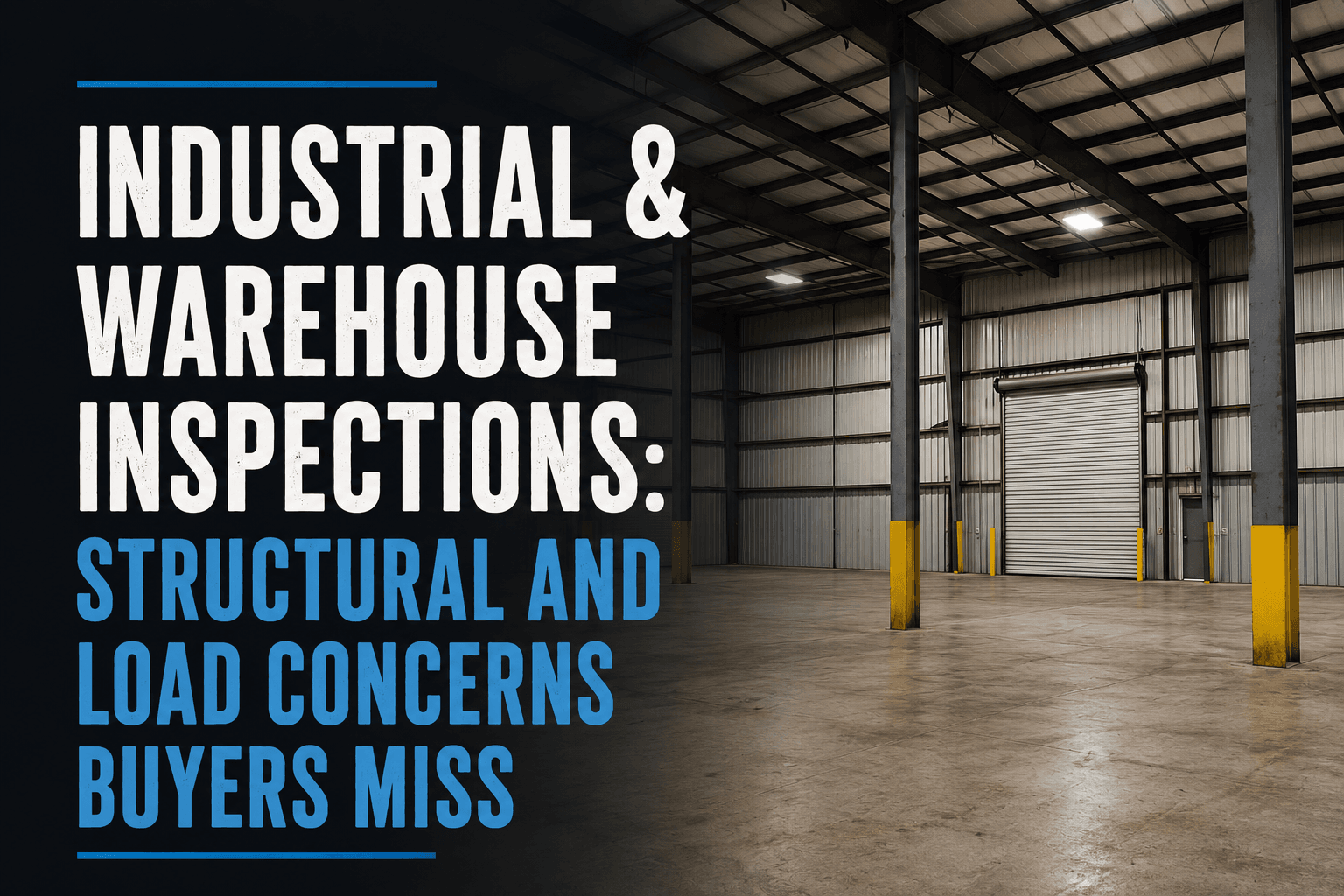
Industrial and warehouse properties tend to inspire confidence. High ceilings, wide-open floor space, heavy construction, and minimal finishes create the impression of durability. Buyers often assume these buildings are simple—fewer systems, fewer problems.
In reality, industrial inspections demand some of the most careful judgment an inspector can apply. The risks aren’t cosmetic. They’re structural, cumulative, and often invisible until the building is pushed to do more than it was originally designed for.
At Upchurch Inspection, industrial and warehouse inspections focus on how the building carries load, absorbs stress, and tolerates change over time.
Industrial Buildings Are Defined by Load, Not Layout
Unlike offices or retail spaces, industrial buildings are shaped by what they carry.
Inspectors look beyond square footage and ceiling height to evaluate:
- Floor load capacity relative to intended use
- Slab thickness and joint condition
- Evidence of point-load stress from equipment
- Settlement patterns tied to heavy use
- Signs of slab repair or modification
A warehouse that performs well for storage may struggle when converted to manufacturing or high-density racking. Load assumptions matter more than aesthetics.
Structural Systems Are Often Quietly Modified
Industrial buildings frequently evolve.
Mezzanines are added. Equipment is anchored. Racking systems are installed, moved, and reconfigured. Over time, these changes alter how loads are distributed.
Inspectors pay attention to:
- Field-modified structural elements
- Added steel or framing without clear documentation
- Penetrations through structural components
- Welding or bolting that doesn’t match original construction
- Mezzanine connections and load paths
These modifications don’t automatically mean a problem—but they change the building’s behavior in ways buyers need to understand.
Roof Systems Carry More Than Weather
In many industrial buildings, the roof is a working surface.
Inspectors evaluate:
- Roof loading from HVAC, exhaust, or process equipment
- Distribution of rooftop units
- Evidence of deflection or ponding
- Penetrations added after original construction
- Access paths that concentrate wear
A roof designed for weather may not be designed for equipment density. Overloading shows up gradually, often long before leaks appear.
Structural Movement Looks Different in Industrial Spaces
Industrial buildings often tolerate visible movement better than finished spaces—but that doesn’t mean movement is irrelevant.
Inspectors look for:
- Cracking patterns that suggest load-related movement
- Misalignment of structural elements
- Separation at connections
- Floor slope changes over large spans
- Repaired areas that indicate past stress
Because finishes are minimal, structural behavior is easier to see—but also easier to ignore.
Utility Infrastructure Often Lags Behind Use
Industrial operations frequently outgrow the building’s original utility design.
Inspectors assess:
- Electrical service capacity relative to equipment load
- Distribution systems adapted piecemeal
- Compressed air, gas, or specialty utility routing
- Ventilation adequacy for process heat or exhaust
- Access for maintenance and upgrades
A building that “works” today may be operating at its limits, leaving no margin for growth or tenant change.
Drainage and Moisture Are Structural Issues Here
In industrial spaces, moisture isn’t just a comfort issue—it’s a durability issue.
Inspectors watch for:
- Slab moisture intrusion
- Exterior drainage patterns affecting foundations
- Evidence of long-term water exposure at columns or walls
- Corrosion at structural connections
- Signs of repeated cleanup rather than correction
Over time, moisture degrades structural components quietly, especially where heavy loads are involved.
Fire and Life-Safety Exposure Is Often Underestimated
Industrial buildings can carry significant fire and life-safety exposure, even when occupancy appears low.
Inspectors evaluate:
- Fire separation between areas of use
- Egress paths relative to equipment layout
- Impact of stored materials on egress
- Penetrations through rated assemblies
- Alarm and suppression system compatibility with current use
Changes in use often outpace updates to safety systems, creating hidden liability.
Industrial Buyers Often Miss Conversion Risk
One of the biggest inspection blind spots is future conversion.
Buyers may plan to:
- Increase racking density
- Add manufacturing equipment
- Change tenant type
- Introduce new processes
Inspectors help buyers understand whether the building can support those changes without major structural or system upgrades.
A warehouse that works today isn’t automatically flexible tomorrow.
The Practical Reality
Industrial and warehouse inspections aren’t about whether a building looks tough. They’re about whether it actually is—under the loads, stresses, and changes ownership intends to impose.
Structural capacity, load paths, and modification history determine long-term viability far more than finishes ever will.
Inspectors who understand industrial properties don’t just document what exists. They evaluate how the building will respond when it’s asked to do more—and that’s the insight buyers can’t afford to miss.