Warehouse and industrial buildings are often sold by the square foot.
But buyers should be careful.
In industrial real estate, square footage is only part of the story. The real question is whether the building can support the intended use without creating major repair costs, operational problems, safety concerns, or capital surprises after closing.
A warehouse may look simple compared to an office building, church campus, or multifamily property. It may be mostly open space, exposed structure, concrete slab, overhead doors, loading areas, warehouse lighting, electrical service, and a small office build-out. That simplicity can make buyers underestimate the risk.
But industrial buildings have their own problems.
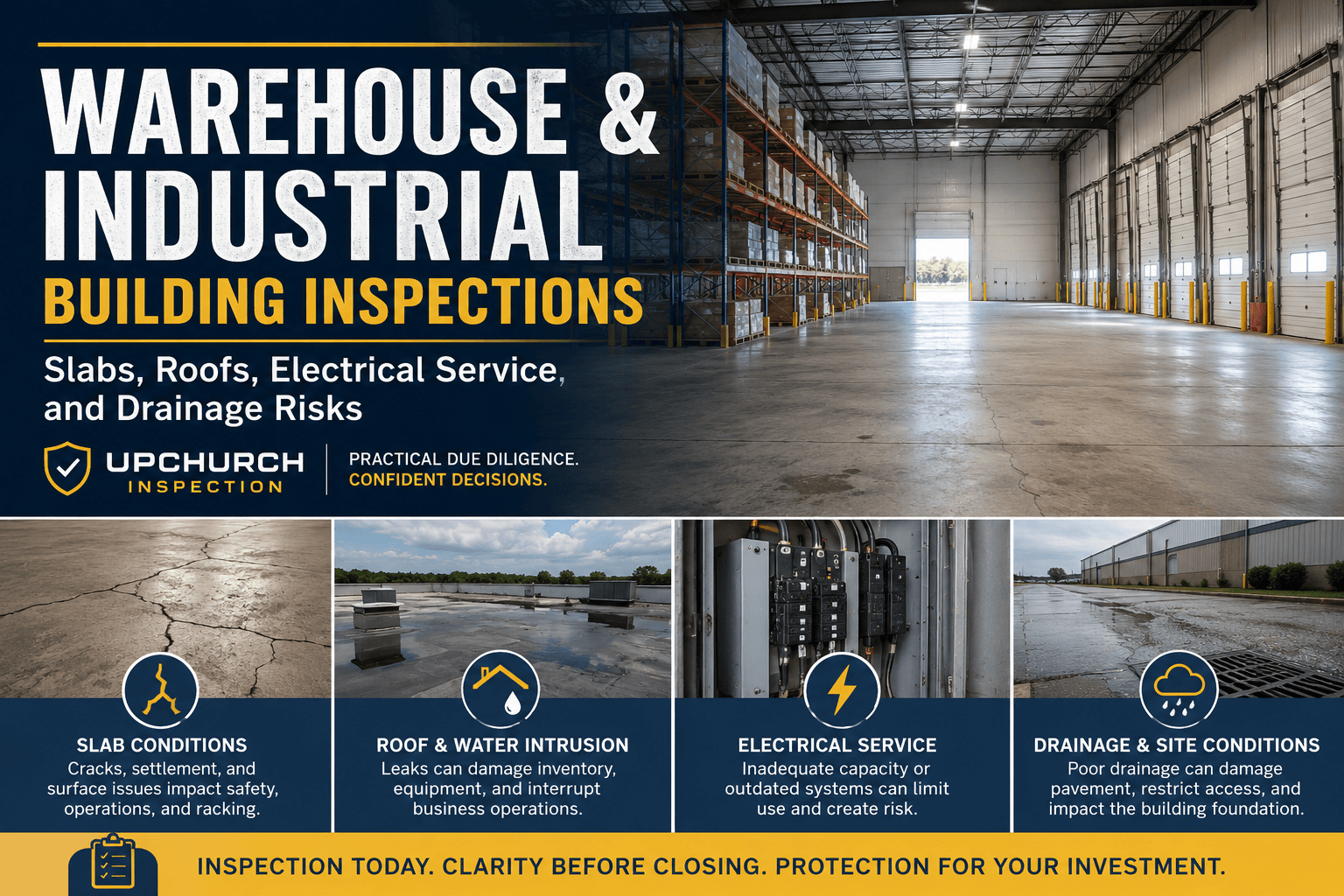
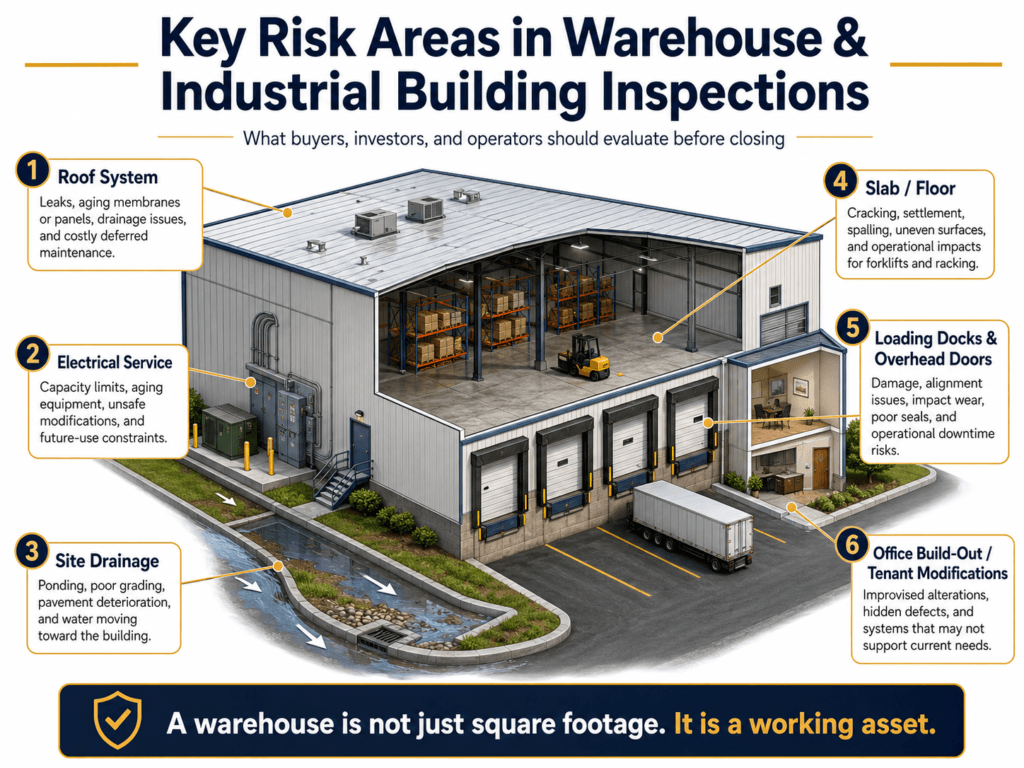
A cracked or uneven slab can affect storage, equipment, forklifts, racking, drainage, and operations. A leaking roof can damage inventory. Inadequate electrical service can limit how the building can be used. Poor site drainage can damage pavement, create access problems, or push water toward the structure. Loading docks, overhead doors, exterior walls, and prior tenant modifications can all carry hidden costs.
For a buyer, investor, lender, or business owner, the question is not just whether the building exists.
The question is whether the building works for the business plan.
At Upchurch Inspection, we view warehouse and industrial inspections as practical due diligence. The goal is not just to identify defects. The goal is to help the buyer understand whether the property’s physical condition creates risk before closing.
Industrial Buyers Are Buying Operational Capacity
A warehouse is not just a shell.
It is a working asset.
A buyer may need the building for storage, distribution, light manufacturing, service operations, vehicle storage, inventory handling, logistics, office/warehouse use, or future tenant occupancy. Each use creates different demands on the property.
A building that worked for one owner may not work for the next one.
A previous tenant may have used the space for basic storage. The buyer may need heavier electrical capacity, more reliable loading access, cleaner interior conditions, improved drainage, better lighting, or a slab that can handle different equipment. A warehouse that was acceptable for low-intensity use may not be appropriate for a more demanding operation without additional investment.
That is why intended use matters during due diligence.
An inspection cannot approve a future business plan or replace engineering, zoning, code, environmental, or design review. But it can identify visible conditions that may affect whether the building is practical for the buyer’s needs.
Industrial due diligence should not stop at, “It has enough square footage.”
It should ask, “Can this property support what the buyer intends to do here?”
The Slab Is One of the Most Important Parts of the Building
In many warehouse and industrial properties, the concrete floor slab is central to the building’s usefulness.
The slab carries the work.
It supports storage racks, forklifts, pallet jacks, equipment, vehicles, inventory, tenant improvements, and daily movement through the building. If the slab is cracked, settled, uneven, deteriorated, moisture-damaged, or poorly repaired, the issue may affect more than appearance.
Some slab cracking is common. Concrete cracks. That alone does not mean the building has failed.
The question is what kind of cracking is present, how severe it appears, whether there is displacement, whether the cracks suggest settlement or movement, whether moisture is present, whether the slab surface is deteriorating, and whether the condition affects the buyer’s intended use.
A hairline shrinkage crack is one thing. A displaced crack that creates a forklift hazard is something else. Surface wear in a lightly used storage area may be manageable. Widespread spalling, settlement, or uneven floor conditions in a high-traffic operational area may deserve closer review.
For warehouse buyers, slab concerns can quickly become operational concerns.
A poor slab can affect safety, racking layout, equipment movement, drainage, repairs, tenant acceptance, and future use of the space. If heavy loads, machinery, racking, or vehicle traffic are planned, a structural engineer or qualified concrete/slab specialist may be needed to evaluate the floor beyond the scope of a general inspection.
The inspection should help identify when that deeper review is justified.
Cracks Tell a Story, But Not Always the Whole Story
Industrial buildings often show cracks in slabs, masonry walls, exterior concrete, dock areas, and paved surfaces.
The job of the inspection is not to pretend every crack has the same meaning.
Some cracks may be typical age-related movement. Some may be related to shrinkage. Some may be tied to settlement, expansive soils, drainage problems, structural movement, heavy use, impact damage, or prior repairs.
In the Mid-South, soil and drainage conditions can make this more important. Clay soils, poor grading, heavy rainfall, and uncontrolled stormwater can all contribute to movement over time. If cracks appear alongside poor drainage, wall displacement, uneven floors, sticking doors, water intrusion, or exterior settlement, the condition may deserve more attention.
A buyer should be especially cautious when cracking affects function.
If cracks interfere with overhead doors, loading docks, forklift movement, racking installation, drainage, or safe access, they are no longer just cosmetic observations. They become business issues.
The inspection should document visible cracking, explain why it may matter, and recommend further evaluation when the condition appears significant or outside the limits of a general assessment.
Roof Leaks Can Threaten Inventory and Operations
Commercial roof risk is important in any building, but it takes on a special role in warehouse and industrial properties.
Many warehouses contain inventory, materials, equipment, vehicles, tools, records, tenant goods, or business-critical operations. A roof leak over an office may damage finishes. A roof leak over stored inventory can become a much larger financial problem.
Industrial roofs are often large and may include low-slope membranes, metal panels, skylights, roof drains, gutters, scuppers, parapets, roof-mounted equipment, penetrations, and prior patches. From the ground, the roof may not reveal much. Inside the warehouse, however, the building may show clues: stained insulation, rusted roof decking, damaged ceiling areas, wet materials, water marks on floors, corrosion, patched roof panels, or tenant reports of leaks.
A warehouse roof does not have to be actively leaking during inspection to be a concern.
Aged roof covering, ponding water, deteriorated seams, rusted metal panels, damaged flashing, clogged drainage, or repeated repairs may all suggest capital risk. Large roofs can be expensive to repair or replace, and they can disrupt operations while work is performed.
For a buyer, roof condition affects more than maintenance. It affects how confidently the building can protect what is inside.
Roof Drainage and Site Drainage Are Connected
Warehouse and industrial buildings often have large roof areas and large paved areas.
That means water management is critical.
A large roof collects a lot of water during heavy rain. That water has to be moved off the roof and away from the building. If roof drainage is poor, water may pond on the roof, overflow gutters, discharge against exterior walls, erode soil, or collect near the foundation. If site drainage is poor, water may pond in parking lots, loading areas, drive lanes, truck courts, or near overhead doors.
Industrial properties can be especially vulnerable because so much of the site may be paved. Water that does not drain properly can deteriorate pavement, create potholes, affect loading access, enter the building, or create safety issues for vehicles and pedestrians.
For logistics, storage, service, and distribution uses, access matters.
A site that floods at loading areas or holds water in drive lanes can affect operations. Ponding near overhead doors can lead to water intrusion. Poor grading can push water toward slab edges or foundation areas. Broken or poorly maintained stormwater features can create recurring problems that are easy to overlook during dry weather.
A buyer should not evaluate the building without evaluating how water moves around it.
In industrial real estate, drainage is part of functionality.
Loading Docks and Overhead Doors Deserve Close Attention
Loading areas are often where industrial buildings earn their value.
If the buyer needs truck access, deliveries, storage movement, shipping, receiving, or equipment transfer, the loading docks and overhead doors are not minor components. They are part of the building’s operational system.
A dock area may have damaged concrete, settlement, poor drainage, deteriorated bumpers, damaged doors, missing safety components, rusted frames, poor lighting, deteriorated seals, or evidence of repeated impact. Overhead doors may be damaged, hard to operate, poorly maintained, out of alignment, or affected by slab movement.
These conditions matter because they can slow operations, create repair costs, and raise safety concerns.
A warehouse with poor loading access may still technically be usable, but it may not support the buyer’s intended business without upgrades. If loading areas are central to the buyer’s operation, any defects there deserve serious attention.
Specialist evaluation may be appropriate when overhead doors, dock levelers, loading equipment, or structural dock components show significant concerns.
Electrical Service Can Limit Future Use
Industrial buyers should pay close attention to electrical systems.
A building’s electrical service may have been adequate for a previous tenant but inadequate for the buyer’s intended use. This is especially important when the buyer plans manufacturing, fabrication, equipment operation, refrigeration, vehicle charging, heavy machinery, specialized lighting, data systems, or tenant improvements.
A general inspection can identify visible electrical concerns, but it does not replace an electrical engineering study or load calculation. If the buyer’s intended use depends on electrical capacity, a qualified electrical contractor or engineer should review the system.
Visible concerns during an inspection may include aging panels, poor labeling, damaged disconnects, open junction boxes, exposed wiring, abandoned circuits, amateur modifications, tenant-installed wiring, damaged conduit, insufficient access, obsolete equipment, or unsafe conditions near equipment.
The practical concern is simple:
The building may have power, but does it have the right power?
A buyer should not wait until after closing to discover that the property requires substantial electrical upgrades to support the planned use.
Lighting Affects Safety and Function
Warehouse lighting is easy to overlook during a sale, especially if the building is toured during daylight or partially occupied.
But lighting affects safety, productivity, security, and tenant usability.
High-bay lighting, exterior lighting, loading area lighting, office lighting, emergency lighting, and exit illumination may all matter depending on the property. Poor lighting can affect forklift movement, inventory handling, employee safety, security, and after-hours operations.
A building with outdated, damaged, inconsistent, or poorly functioning lighting may require upgrades. In some cases, lighting improvements may be part of the buyer’s operational plan. In other cases, poor lighting may reveal broader electrical or maintenance concerns.
Lighting is not usually the largest capital risk in an industrial building, but it contributes to how well the building functions.
An inspection should document visible lighting concerns and recommend further evaluation when lighting conditions may affect safe or intended use.
Office Build-Outs Can Hide Commercial Risk
oMany warehouse and industrial properties include office space.
That office area may have its own HVAC system, restrooms, electrical panels, ceiling finishes, flooring, windows, doors, plumbing, and interior build-out conditions. Sometimes these offices were professionally built. Other times, they were added or modified over years by prior owners or tenants.
Office build-outs deserve attention because they often reveal the maintenance quality of the property.
Poorly constructed offices may show amateur electrical work, inadequate HVAC, moisture staining, plumbing defects, poor fire separation details, damaged finishes, or signs that renovations were done quickly and cheaply.
A warehouse buyer may focus on the open industrial space and overlook the offices. But if the buyer needs those offices for employees, management, customer interaction, or leasing, their condition matters.
If the office build-out was modified without clear documentation, further review may be appropriate depending on the buyer’s intended use.
Prior Tenant Use Can Leave Behind Problems
Industrial buildings often have a history.
That history matters.
A prior tenant may have used the building for storage, vehicle repair, manufacturing, food processing, distribution, printing, fabrication, chemical storage, equipment maintenance, or other uses. Each use can leave physical clues.
The building may show oil staining, floor damage, patched penetrations, abandoned wiring, removed equipment bases, ventilation modifications, wall damage, roof penetrations, plumbing changes, drains, compressed air piping, exhaust openings, or suspicious staining.
Some of those conditions may be harmless. Others may suggest environmental, safety, or specialty system concerns that are outside the scope of a general building inspection.
A commercial inspection is not a Phase I Environmental Site Assessment. It does not replace environmental due diligence. But visible evidence of prior industrial use should not be ignored.
If the property history or observed conditions raise environmental questions, the buyer should consult the appropriate environmental professional before closing.
That is especially important in industrial real estate, where prior use can matter as much as current condition.
Fire and Life Safety Conditions Need Clear Scope
Warehouse and industrial properties may include fire-rated walls, exit doors, emergency lighting, exit signage, fire extinguishers, sprinkler systems, alarm systems, fire separations, hazardous storage areas, and occupancy-related safety requirements.
A general commercial inspection is not a full fire marshal inspection, code compliance inspection, or fire protection system certification. Those are separate evaluations.
However, visible life safety concerns should still be documented.
Blocked exits, damaged exit doors, missing or nonfunctional emergency lighting, obvious electrical hazards, unsafe stairs, damaged guards, inadequate walking surfaces, and visible concerns with fire separation should be taken seriously. If the building has sprinkler systems, fire alarms, or suppression equipment, specialist evaluation by qualified fire protection professionals may be needed.
The buyer should also understand that intended use may change the safety requirements.
A building used for low-intensity storage may be treated differently than one used for manufacturing, public access, assembly, high-piled storage, or hazardous materials. Those questions require review by appropriate authorities and design professionals.
The inspection can identify visible concerns, but the buyer’s future use may require deeper due diligence.
Environmental Due Diligence Is Separate but Important
Industrial properties often require environmental due diligence.
That may include a Phase I Environmental Site Assessment, review of prior uses, records searches, interviews, site reconnaissance, and sometimes further testing if concerns are identified.
A building inspection and an environmental assessment are not the same thing.
The inspection focuses on visible building and site conditions. An environmental review focuses on potential contamination, recognized environmental conditions, hazardous materials, underground storage tanks, chemical use, spills, and historical property use.
For industrial buyers, both may be important.
The building may be structurally and mechanically useful but still carry environmental concerns. Or the environmental review may be clear while the building itself has major physical deficiencies.
A serious buyer should not confuse one type of due diligence for the other.
If the property has industrial history, automotive use, manufacturing, chemical storage, staining, floor drains, tanks, unusual odors, or unknown prior operations, environmental review should be part of the conversation.
The Report Should Connect Defects to Use
A warehouse inspection report should not read like a generic checklist.
It should help the buyer understand how visible conditions may affect intended use.
A cracked slab matters more if forklifts, racks, or heavy equipment will be used. A roof leak matters more if inventory will be stored below. Poor drainage matters more if loading areas flood. Inadequate electrical service matters more if the buyer needs equipment capacity. Damaged overhead doors matter more if daily shipping and receiving depend on them.
The same defect can carry different importance depending on the business plan.
That is why communication matters. The inspection should be scoped and reported with the buyer’s goals in mind. A buyer planning simple storage may have different concerns than a buyer planning fabrication, logistics, assembly, or tenant build-out.
A useful report helps the client understand what was observed, why it matters, what limitations applied, and what should be evaluated further before closing.
Memphis and the Mid-South Industrial Market Make This Especially Relevant
In Memphis and throughout the Mid-South, warehouse and industrial properties are a major part of the commercial real estate landscape.
Logistics, distribution, transportation, storage, light industrial, and service-based businesses all depend on buildings that can support operations. The Memphis area in particular has a strong connection to warehousing and distribution because of its transportation infrastructure and central location.
That makes physical due diligence especially important.
Industrial buyers in this region should pay attention to roof condition, drainage, pavement, loading areas, slab condition, electrical service, and prior use. Heavy rain, humidity, aging buildings, mixed-quality repairs, and deferred maintenance can all affect how these properties perform.
A warehouse may be marketed by size, access, and location.
But after closing, the buyer owns the roof, slab, doors, drains, pavement, electrical limitations, and every deferred maintenance decision that came before.
A warehouse is not just square footage. It is a working asset, and the inspection should help determine whether the building can support the buyer’s intended use.
-Wesley Upchurch, Upchurch Inspection
Final Thoughts
Warehouse and industrial buildings may look simple, but they can carry serious risk.
The most important conditions are often the ones tied directly to operations: slab condition, roof performance, drainage, loading access, overhead doors, electrical service, lighting, prior tenant modifications, and site functionality.
A buyer should not assume that open space equals low risk.
Industrial property due diligence should focus on whether the building can support the intended use without creating major repair costs or operational problems after closing. The inspection should identify visible concerns, document limitations, and recommend specialist evaluation where needed.
A warehouse is not just square footage.
It is a working asset.
And before a buyer closes, they should understand whether that asset is ready to work for them.
Need a Warehouse or Industrial Building Inspection?
Upchurch Inspection provides commercial property inspections and Property Condition Assessments for warehouse, industrial, logistics, office/warehouse, light manufacturing, storage, and mixed-use commercial properties throughout the Mid-South.
We help buyers, investors, lenders, property owners, and business operators evaluate visible building conditions, deferred maintenance, roof and drainage concerns, slab conditions, electrical limitations, loading areas, and other major system risks before closing or major investment.
For warehouses, industrial buildings, service facilities, storage properties, distribution spaces, and office/warehouse buildings, we can help determine the right inspection scope for the decision being made.
To discuss a warehouse or industrial building inspection, contact Upchurch Inspection.