ADA compliance isn’t optional — and it isn’t theoretical.
Buying a retail center or office building without an ADA compliance audit is a legal gamble many investors don’t realize they’re taking until it’s too late.
Most violations aren’t obvious. They’re invisible liabilities hiding in plain sight.
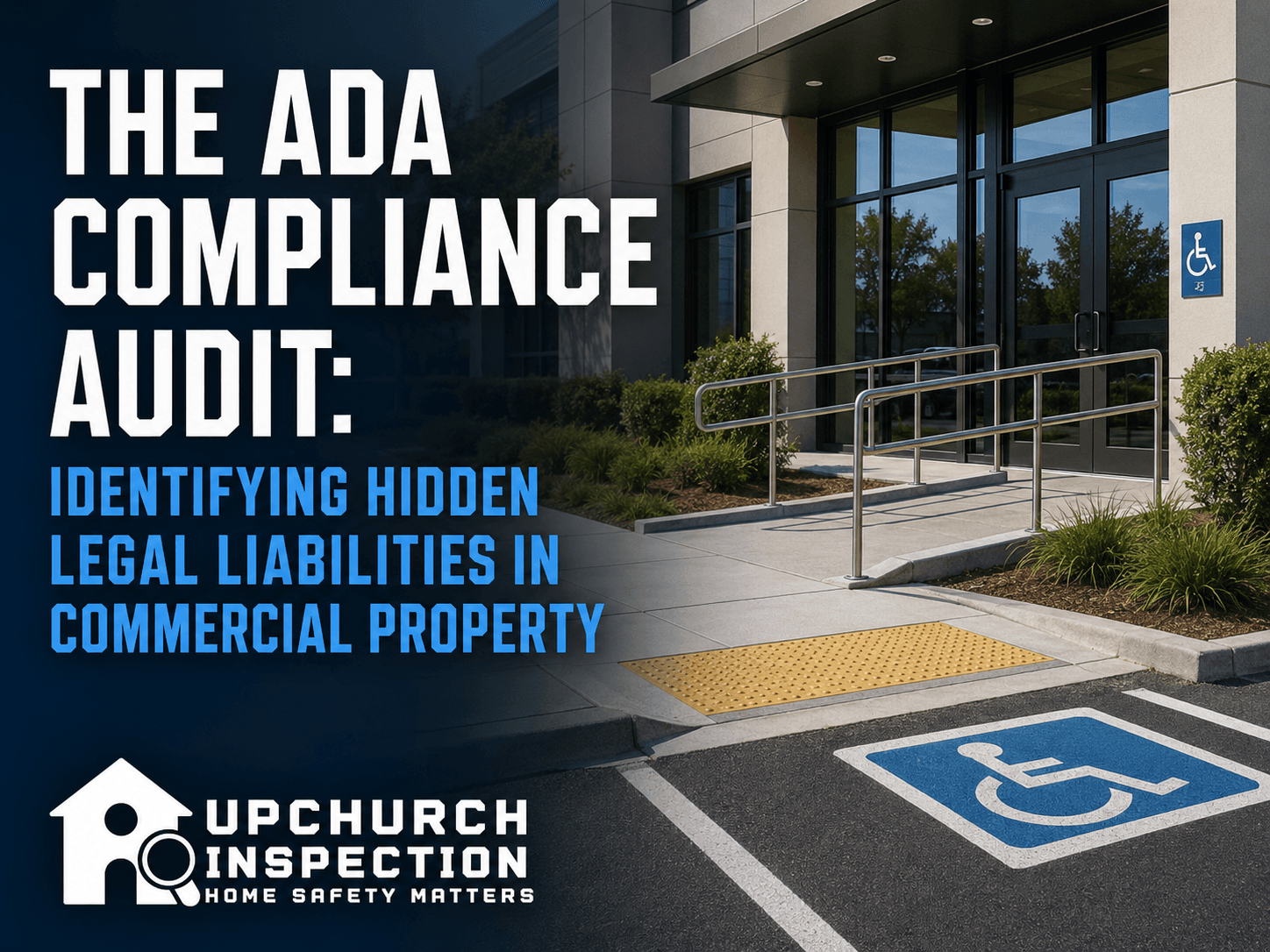
Parking lots are a major one. Slope ratios in accessible parking spaces must fall within tight tolerances. A few percentage points off can make the space non-compliant — even if it “looks flat.” Access aisles, signage placement, and route continuity all matter.
At entrances, door pressure is frequently overlooked. If a door requires too much force to open, it fails accessibility standards regardless of how new it is. Inside restrooms, turning radiuses, grab bar placement, fixture clearances, and mirror heights are all measured — not eyeballed.
One of the most misunderstood concepts is “Readily Achievable” barrier removal. This doesn’t mean “cheap” or “convenient.” It means modifications that are reasonable given the property’s resources and scope — and courts interpret that more strictly than many owners expect.
We also assess egress compliance, because accessibility doesn’t end at entry. Routes, exits, and emergency paths must remain compliant throughout the building.
In retail environments like Cape Girardeau and Columbia, older centers often carry legacy layouts that were never retrofitted properly. That creates exposure that transfers to the new owner the moment the deed records.
An ADA audit isn’t about perfection.
It’s about identifying legal risk before someone else does.