
Commercial buyers in Memphis tend to focus on what they can see—roof condition, HVAC age, parking, and curb appeal. The problem is that some of the most expensive failures in older commercial properties are buried underground.
In Memphis, forgotten sewer lines have a way of turning “good deals” into financial traps.
For investors buying along Downtown Memphis corridors or revitalized stretches like Broad Ave, sewer lines are often original—and often failing.
Why Old Memphis Sewer Lines Are a Different Risk
Much of Memphis’ older commercial infrastructure was installed long before modern materials became standard.
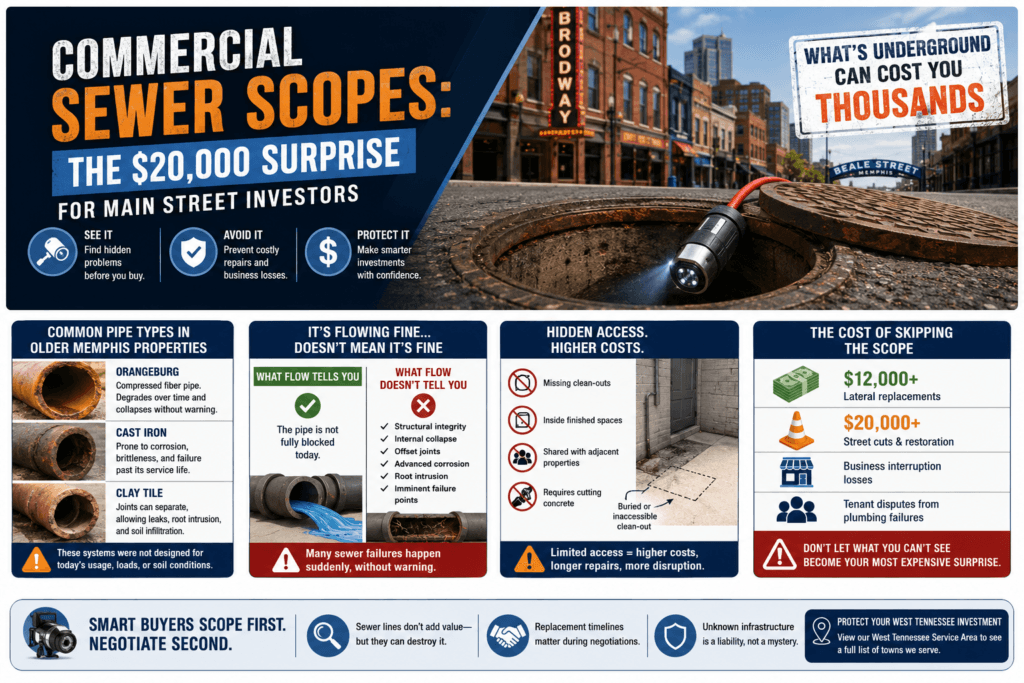
Common pipe types we encounter include:
- Orangeburg (compressed fiber pipe)
- Cast iron well past its service life
- Clay tile with separated joints
These systems weren’t designed for today’s usage loads, grease discharge, or decades of soil movement.
The Problem With “It’s Flowing Fine”
One of the most dangerous assumptions in commercial real estate is:
“The sewer’s working, so it must be fine.”
Flow only tells you the pipe isn’t fully blocked today. It says nothing about:
- Structural integrity
- Internal collapse
- Offset joints
- Advanced corrosion
Many sewer failures happen suddenly, without warning.
Clean-Out Access: The Hidden Limitation
In older Memphis buildings, clean-out access is often:
- Missing
- Buried
- Inside finished spaces
- Shared with adjacent properties
On Broad Ave, we routinely see buildings where:
- No exterior clean-out exists
- Access requires cutting concrete
- Lines run beneath neighboring structures
These limitations make emergency repairs far more expensive—and far more disruptive.
Downtown Memphis: Age Meets Density
In Downtown Memphis, sewer systems are complicated by:
- Tight building spacing
- Shared laterals
- Unknown modifications over decades
A collapsed lateral beneath a sidewalk or street doesn’t just require plumbing work—it often triggers permits, coordination with the city, and extended closures.
That’s where five-figure repair bills come from.
Orangeburg: The Silent Failure
Orangeburg pipe doesn’t crack—it collapses.
As the material degrades:
- The pipe deforms under soil pressure
- Interior diameter shrinks
- Structural failure accelerates
Once collapse begins, spot repairs don’t work. Replacement becomes the only option.
Why Sewer Scoping Is Non-Negotiable for Investors
For commercial buyers, sewer scoping isn’t an add-on—it’s due diligence.
A proper scope can identify:
- Pipe material
- Structural defects
- Root intrusion
- Grade issues
- Imminent failure points
Finding these issues before closing shifts repair responsibility where it belongs.
The Cost of Skipping the Scope
We’ve seen investors inherit:
- $12,000 lateral replacements
- $20,000+ street cuts
- Business interruption losses
- Tenant disputes caused by plumbing failures
All because no one looked underground.
What Smart Buyers Do Differently
Experienced Memphis investors understand that:
- Sewer lines don’t add value—but they can destroy it
- Replacement timelines matter during negotiations
- Unknown infrastructure is a liability, not a mystery
They scope first, negotiate second.
Final Thoughts
In older Memphis commercial districts, the sewer line is one of the most critical—and overlooked—systems in the building.
Whether you’re buying on Broad Ave or in Downtown Memphis, understanding what’s underground can be the difference between a profitable investment and a very expensive lesson.
Protecting your West Tennessee investment starts with a forensic eye. View our West Tennessee Service Area to see a full list of towns we serve.