
Storm Cycles Shape Wear Patterns
When I review reports from our Centerview, Missouri inspector across Western Missouri, storm-related damage shows up in very consistent ways. This region sits squarely in a corridor that sees frequent hail, straight-line winds, and fast-moving thunderstorms. Homes don’t just age here—they get tested.
Understanding what storm damage actually looks like (and what it doesn’t) is critical after hail season wraps up.
Roofing: More Than Just Missing Shingles
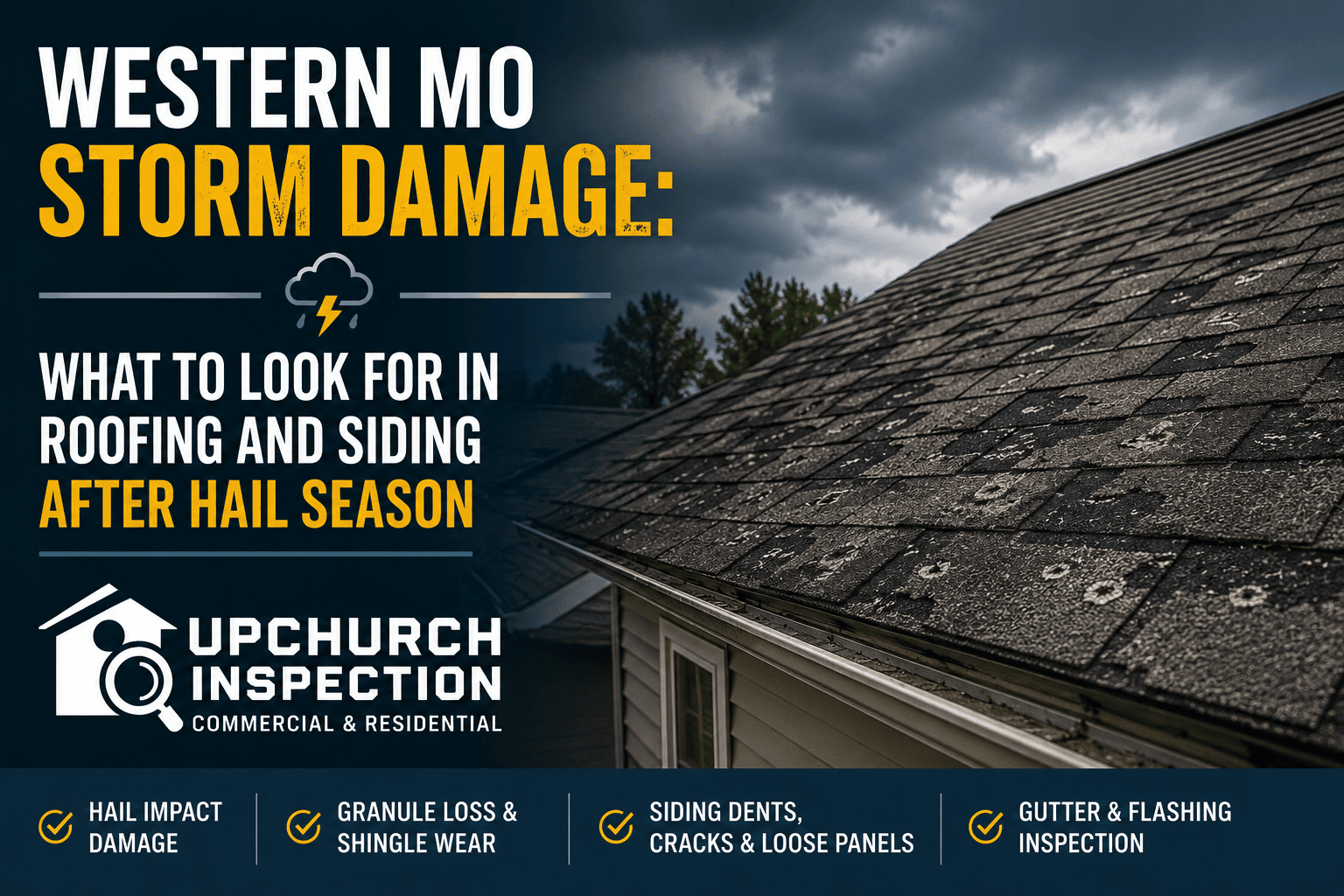
Hail damage isn’t always obvious from the ground. Our inspector frequently documents impact bruising that compromises shingle integrity without immediately knocking shingles loose. Over time, those bruised areas shed granules faster, accelerating roof failure long after the storm has passed.
Wind damage shows up differently. Lifted shingle edges, broken seal strips, and uneven wear patterns often indicate past wind events—even when the roof looks intact from a distance. In Western Missouri inspections, these findings often cluster on the same roof planes based on prevailing storm direction.
Siding and Exterior Trim Take the First Hit
Vinyl and aluminum siding commonly bear the brunt of hail impacts. Cracks, punctures, and loosened panels are frequent findings, especially on elevations facing open exposure. While cosmetic damage is obvious, the bigger concern is what happens behind the siding when moisture gets past compromised panels.
Our inspector also pays close attention to window trim, fascia, and soffits. These components are often damaged during storms and overlooked during quick repairs, creating long-term entry points for water.
Gutters, Flashing, and Secondary Damage
Storms don’t just affect primary surfaces. In many Western Missouri homes, our inspector has noted dented gutters, displaced downspouts, and bent flashing that no longer sheds water correctly.
These secondary components matter. Improperly functioning gutters and flashing can redirect water toward foundations, basements, and crawlspaces—turning a storm event into a long-term moisture problem.
Why Timing Matters After Hail Season
Some storm damage is immediately visible. Other issues take months to reveal themselves. Roof leaks may not appear until the next heavy rain, and siding failures may only show up once moisture has worked its way into wall assemblies.
When I review inspection reports conducted after hail season, the most valuable ones document storm-related wear in context—distinguishing between cosmetic issues, functional damage, and conditions likely to worsen over time.
In Western Missouri, storms are part of the landscape. Knowing how to recognize their impact helps homeowners understand what their house has been through—and what it may still be dealing with.