
TL;DR:
- Due diligence in real estate is the inspection period between signing and closing where buyers verify property conditions and documents. It typically lasts 7-14 days for residential and up to 90 days for commercial transactions, during which buyers can walk away without penalty if issues arise.
Due diligence in real estate is the formal investigation period between signing a purchase agreement and closing, during which buyers verify everything they agreed to purchase. This window gives you the legal right to inspect the property, review documents, confirm finances, and walk away without penalty if something disqualifying turns up. Residential periods typically run 7–14 days, while commercial transactions can extend 30–90 days to accommodate their added complexity. Skipping or rushing this process is one of the most expensive mistakes a buyer can make.
What is due diligence in real estate for residential buyers?
The real estate due diligence process for a home purchase covers four categories: physical condition, title and legal standing, financial obligations, and seller disclosures. Each category can produce findings that change the deal. Treating any one of them as optional is how buyers end up with expensive surprises after closing.
Physical inspections
A licensed general home inspection is the starting point. It covers the structure, roof, foundation, electrical system, plumbing, HVAC, and major components throughout the house. Beyond the general inspection, buyers should consider specialized assessments based on the property’s age, location, and visible conditions.
Common specialized inspections include:
- Pest and wood-destroying organism inspection: Required by most lenders in Tennessee; reveals termite damage, wood rot, and active infestations
- Radon testing: Colorless and odorless, radon is the second leading cause of lung cancer in the U.S. and requires a separate test
- Sewer scope: A camera inspection of the lateral sewer line, which can reveal root intrusion, collapsed sections, or cast-iron pipe deterioration in older homes
- Roof inspection: Warranted when the general inspector flags age or wear; a roofing specialist can estimate remaining service life
- HVAC assessment: Older systems near the end of their service life deserve a second look from an HVAC technician, not just a general inspector
Inspection reports are typically delivered within 24–48 hours after the assessment. That quick turnaround matters because your negotiation window is short.
Pro Tip: Schedule your general inspection within the first two days of the due diligence period. That leaves time to bring in specialists if the general inspector flags something worth a closer look.
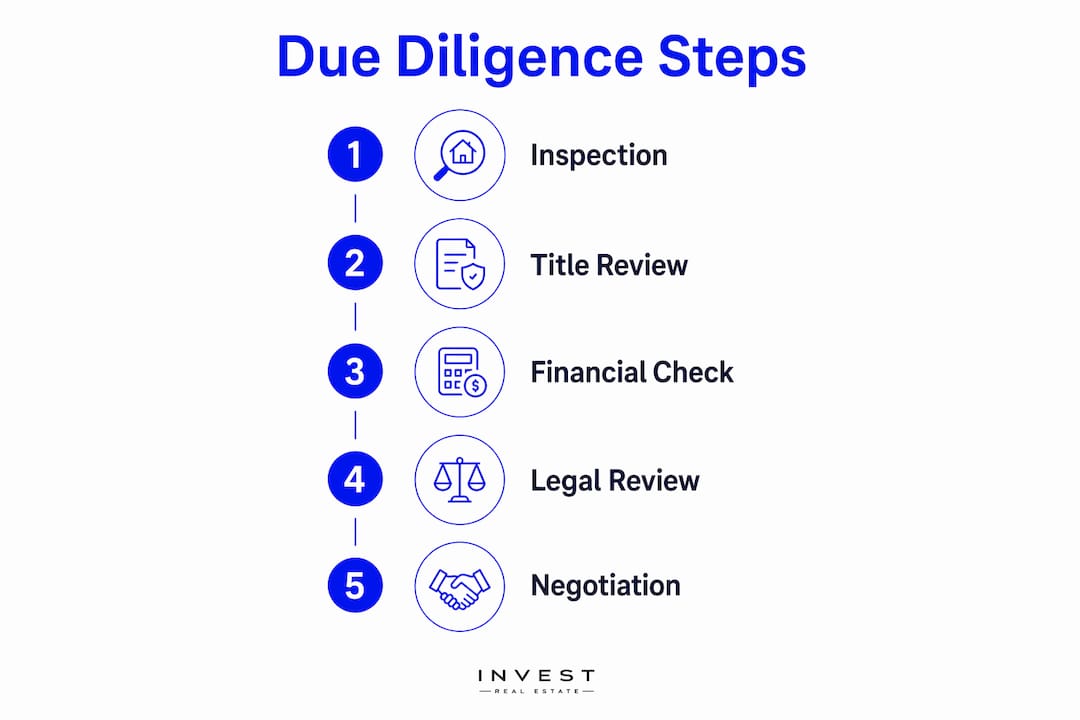
Document and financial review
Title searches reveal liens, easements, or ownership disputes that a clean physical inspection will never uncover. Title issues and undisclosed liens can kill a transaction even when the house itself is in solid condition. Buyers should also review seller disclosure statements, HOA documents, property surveys, and current tax records. Confirming insurance availability and estimating total acquisition costs rounds out the financial picture before you commit.

The role of inspections in real estate transactions extends well beyond checking boxes. A thorough inspection report gives you documented evidence to support negotiation or justify withdrawal.
How does commercial real estate due diligence differ?
Commercial due diligence operates on a different scale. The longer due diligence periods of 30–90 days reflect the added layers of financial, legal, environmental, and physical review required before committing to a commercial asset.
The core components of commercial due diligence follow a structured sequence:
- Financial audit: Verify actual income, not projected income. Review rent rolls, lease agreements, operating expense history, and net operating income. Sellers sometimes present pro forma numbers that do not reflect current performance.
- Title and legal review: Examine ownership history, encumbrances, easements, zoning compliance, and any pending litigation tied to the property.
- Environmental assessment: Phase I Environmental Site Assessments identify recognized environmental conditions. Phase II testing follows if Phase I raises concerns. Contamination can make a property unpurchasable regardless of its physical condition.
- Physical inspection and property condition assessment: A commercial property condition assessment evaluates structural integrity, building systems, deferred maintenance, and estimated capital expenditure needs over a defined period.
- Survey and boundary review: Confirms that improvements are within property lines and that no encroachments exist.
Budget 1%–3% of the purchase price for commercial due diligence costs. On a $2 million property, that means $20,000–$60,000 in upfront investigation costs before you own anything.
| Due diligence component | Residential | Commercial |
|---|---|---|
| General inspection | Required | Required (property condition assessment) |
| Environmental assessment | Rarely needed | Standard practice |
| Financial audit | Basic (taxes, insurance) | Full income and expense review |
| Title search | Standard | Extended, with legal review |
| Typical timeline | 7–14 days | 30–90 days |
Pro Tip: For commercial properties, hire your inspector and environmental consultant on day one. Environmental reports alone can take two to three weeks to complete.
Commercial real estate due diligence inspections require inspectors who understand building systems at scale, not just residential construction. The difference in scope is significant.
What are the most common due diligence pitfalls?
60% of real estate investors report financial regret tied directly to insufficient due diligence. That number reflects a pattern of avoidable mistakes, not bad luck.
The most common pitfalls include:
- Treating the clock as flexible. The due diligence period runs continuously from the moment the purchase agreement is executed. Lender delays, inspector scheduling conflicts, and holidays do not pause it.
- Misaligning lender and inspection timelines. If your lender’s appraisal takes longer than expected, you may face pressure to waive contingencies before your inspection results are fully reviewed. Aligning lender timelines with due diligence deadlines is a coordination task that falls on the buyer.
- Skipping paper due diligence. Buyers sometimes focus entirely on the physical inspection and neglect title, HOA documents, and easement reviews. Undisclosed liens or easements in title documents can make a property effectively unpurchasable, even when the building itself is sound.
- Letting emotion override findings. Buyers who fall in love with a property tend to minimize what the inspector reports. That bias is expensive.
- Rushing inspections to save time. A shortened inspection produces an incomplete picture. Missing a failing HVAC system, active moisture intrusion, or a deteriorating sewer line costs far more than the time saved.
“Due diligence should not be used to talk yourself into a property. It is the test of financial, legal, physical, and market realities. If the numbers and conditions do not hold up under scrutiny, the property fails the test.”
Due Diligence | Real Estate Financial Planner
Some defects only appear after you move in because buyers did not push hard enough during the diligence period. That is a preventable outcome.
How do buyers use due diligence findings to negotiate or walk away?
Due diligence findings are not just a report card on the property. They are negotiating leverage. Inspection results can be used to request repairs, price reductions, seller credits, or contract modifications before closing.
Here is how experienced buyers apply findings:
- Prioritize findings by cost and safety. Separate cosmetic issues from structural concerns, safety hazards, and deferred maintenance with known replacement costs. Focus negotiation on items with real financial impact.
- Request repairs or credits in writing. A verbal agreement to fix something before closing is unenforceable. Get repair requests and seller responses documented as contract amendments.
- Use title and financial findings for concessions. If a title search reveals an unresolved lien or a financial review shows inflated income figures, those findings justify renegotiating the price or terms.
- Know when to walk. The due diligence period is the only time you can exit without penalty. Buyers lose withdrawal rights once the period expires. If findings reveal problems that exceed your budget or risk tolerance, walking away is the right call.
- Communicate clearly with your agent and lender. Both need to know what you found and what you intend to do about it. Surprises at the end of the diligence period create unnecessary pressure.
Pro Tip: Before you negotiate repairs, get a written estimate from a licensed contractor. “The inspector flagged the roof” is a weak negotiating position. “The roof requires $14,000 in repairs per a licensed contractor’s estimate” is not.
Sellers preparing a property for buyer review benefit from addressing visible maintenance issues before listing. Pre-listing cleaning and presentation reduce the number of cosmetic findings that distract buyers from the real inspection results.
Key Takeaways
Thorough due diligence in real estate is the single most effective way to avoid costly surprises, protect your investment, and negotiate from a position of documented fact.
| Point | Details |
|---|---|
| Due diligence timing | Residential periods run 7–14 days; commercial periods run 30–90 days with no pauses for delays. |
| Physical inspection scope | General inspections must be supplemented with pest, radon, sewer, roof, and HVAC assessments when conditions warrant. |
| Paper due diligence matters | Title searches, liens, and HOA documents can kill deals that pass physical inspection. |
| Commercial cost budget | Budget 1%–3% of the purchase price for commercial due diligence costs including environmental and survey work. |
| Findings drive negotiation | Documented inspection results support repair requests, price reductions, or a penalty-free exit before the deadline. |
Why due diligence is where the real decision gets made
I have been through enough inspections in Memphis and West Tennessee to say this plainly: the due diligence period is where you actually make or lose money on a property. Closing just confirms the decision you already made during diligence.
The mistake I see most often is buyers treating the inspection as a formality. They have already mentally moved in. They have picked out paint colors. When the inspector finds a cracked heat exchanger or a failing sewer lateral, they minimize it because they do not want to lose the house. That emotional attachment is the most expensive thing in real estate.
Objective evaluation means reading every finding at face value and pricing it accurately. A $6,000 HVAC replacement is not a dealbreaker on a well-priced property. A $6,000 HVAC replacement on a property already at the top of its market value is a different conversation entirely.
In the Mid-South market, we also see buyers skip specialized inspections to save a few hundred dollars, then discover post-closing that the cast-iron sewer line under a 1960s Memphis bungalow has collapsed. A sewer scope costs less than $200. The repair costs tens of thousands. That math is not complicated.
Choose your inspector based on qualifications and thoroughness, not availability or price. Ask what the report covers, how long the inspection takes, and whether the inspector will walk you through findings in person. A rushed inspection on a tight diligence clock is worse than no inspection at all, because it gives you false confidence.
— Holly
Upchurch Inspection supports buyers through every stage of due diligence
Upchurch Inspection serves residential and commercial buyers across the Mid-South with inspections built for the real estate due diligence process. Reports are delivered within 24–48 hours to keep your diligence timeline on track. Inspectors exceed state licensing standards and cover structural components, plumbing, electrical, HVAC, and major building systems in detail. For commercial buyers, Upchurch Inspection provides property condition assessments and specialized evaluations that go beyond a standard walkthrough. Whether you are buying your first home or evaluating a commercial asset, the inspection report you receive shapes every negotiation that follows. Schedule with Upchurch Inspection before your diligence clock runs out.
FAQ
What is the due diligence period in real estate?
The due diligence period is the time between signing a purchase agreement and closing, during which buyers inspect the property, review documents, and verify finances. Residential periods typically last 7–14 days; commercial periods run 30–90 days.
Can a buyer walk away during due diligence without losing their deposit?
Yes. The due diligence period gives buyers the legal right to exit the contract without penalty if findings are unsatisfactory. Once the period expires, withdrawal rights are lost and the deposit is typically at risk.
What does a due diligence checklist for real estate include?
A standard checklist covers a licensed home inspection, specialized inspections (pest, radon, sewer, roof, HVAC), a title search, seller disclosures, HOA documents, property surveys, and a review of taxes and insurance costs.
How much does commercial real estate due diligence cost?
Commercial due diligence typically costs 1%–3% of the purchase price, covering environmental assessments, property condition reports, legal reviews, and surveys.
What happens if due diligence reveals serious problems?
Buyers can use findings to negotiate repairs, price reductions, or seller credits. If problems exceed acceptable risk or budget, buyers can exit the contract during the diligence period without financial penalty.