
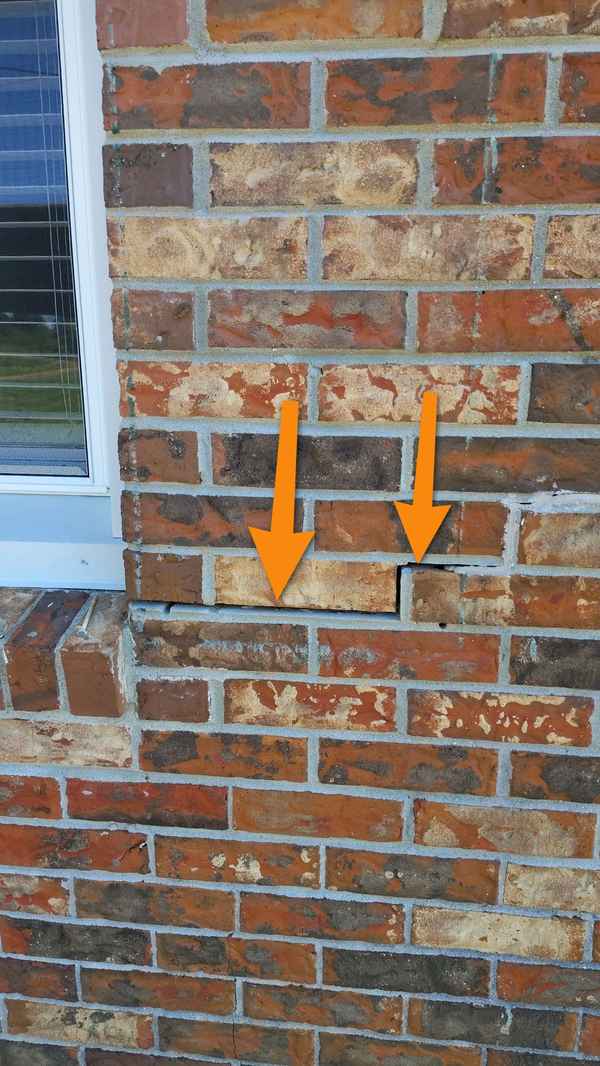
One of the hardest skills buyers develop during the inspection process is learning what to take seriously—and what to take appropriately. Cosmetic defects and structural signals often appear together in an inspection report, described in similar language, documented with similar photos. To an untrained eye, they can feel interchangeable.
They aren’t.
At Upchurch Inspection, a large part of our role is helping buyers understand which findings affect appearance and comfort, and which ones affect how the house carries load, moves over time, and holds together as a structure. Confusing the two leads to bad decisions in both directions—walking away from reasonable homes or underestimating real risk.
Why Cosmetic Defects Get So Much Attention
Cosmetic issues are easy to see. They stand out visually and emotionally.
Cracked drywall, uneven flooring, mismatched trim, patched ceilings, or worn finishes trigger instinctive reactions because they’re obvious. Buyers imagine living with them. They picture the cost and inconvenience of fixing them. Photos amplify that reaction by removing scale and context.
The problem isn’t noticing cosmetic defects—it’s assuming they automatically indicate deeper structural trouble.
In many homes, cosmetic defects reflect normal aging, humidity changes, minor settlement, or past renovations. They’re part of ownership, not evidence of failure.
What Structural Signals Actually Look Like
Structural signals are less about how something looks and more about how the house behaves.
They tend to appear as patterns, not isolated blemishes. Structural concerns usually show continuity across systems or areas of the home.
Examples include:
- Repeated cracking in the same locations
- Doors and windows that bind consistently, not seasonally
- Sloping floors tied to framing movement
- Sagging or deflecting structural members
- Foundation movement that appears ongoing rather than historical
These signals are about load paths, support, and movement—not surface finish.
Why One Crack Can Mean Nothing—or Something
A single crack rarely tells the whole story.
A hairline crack above a doorway may be the result of normal framing movement or seasonal expansion. The same crack, combined with floor slope, separation at trim, and exterior foundation displacement, carries a very different meaning.
Structural interpretation is cumulative. Inspectors don’t evaluate defects individually—they evaluate how findings relate to one another.
That context is what turns observation into judgment.
Renovations Often Blur the Line
Updated homes sometimes make this distinction harder.
New flooring can hide uneven subfloors. Fresh drywall can cover prior movement. Paint can obscure repaired cracks. Cosmetic improvements don’t reset a home’s structural history—they just make it less visible.
That’s why inspectors pay attention to alignment, transitions, and consistency rather than finishes alone. Structural signals tend to reappear in predictable ways, even after cosmetic work.
Why Reports Don’t Always Spell This Out Explicitly
Inspection reports document conditions neutrally. They don’t always label something as “cosmetic” or “structural” because the same condition can fall into either category depending on context.
Inspectors avoid overstating conclusions without sufficient evidence. That restraint protects buyers from unnecessary alarm—but it also means interpretation matters.
This is why conversations with the inspector are often as valuable as the report itself.
How Buyers Commonly Misread the Difference
Buyers often elevate cosmetic issues because they’re tangible and immediate, while overlooking subtle structural signals because they’re less dramatic.
A cracked tile feels urgent. A slightly sloped floor may not.
In reality, the opposite may be true in terms of long-term impact. Cosmetic issues affect aesthetics and comfort. Structural signals affect safety, stability, and future cost.
Recognizing which is which changes how buyers respond.
How Inspectors Separate the Two in Practice
Experienced inspectors look for consistency and cause-and-effect relationships.
They ask:
- Does this defect repeat elsewhere?
- Does it align with known regional soil or moisture behavior?
- Is the condition static or progressive?
- Are multiple systems showing stress in the same area?
Cosmetic defects tend to be isolated. Structural signals tend to connect.
That pattern recognition comes from experience, not checklists.
What Buyers Should Focus On Instead of Appearance
Rather than asking, “How bad does this look?” buyers should ask:
- Does this indicate movement?
- Is this typical for homes of this age and construction?
- Has the condition changed over time?
- Would this affect safety or long-term stability?
Those questions shift the focus from fear to understanding.
Why This Distinction Matters After Closing
Cosmetic issues are usually optional. Structural issues rarely are.
Understanding the difference helps buyers plan realistically. It informs negotiation decisions, budgeting, and long-term ownership expectations.
When buyers treat cosmetic defects as structural failures, they overreact. When they treat structural signals as cosmetic nuisances, they underestimate risk.
Both mistakes are avoidable with proper interpretation.
The Practical Reality
Every home has cosmetic defects. Not every home has structural risk.
Learning to separate the two doesn’t require construction expertise—it requires context, experience, and the willingness to look beyond surface impressions.
Inspections don’t exist to scare buyers. They exist to help buyers understand what matters most beneath what they see.
When that distinction is clear, decisions become calmer, smarter, and far more aligned with reality.
Related reading