INSPECTION FINDINGS · FROM OUR INSPECTION RECORDS
Air-conditioning drainage can create a building concern far from the equipment's main controls. In these examples, we found moisture and corrosion in an attic backup pan, a condensate discharge eroding soil beside an outdoor unit, deteriorated refrigerant-line insulation and a disconnected condensate drain. The findings came from different inspections and described different parts of the system.
The backup pan is particularly important to document because it sits above the finished space. Water in that location called for evaluation of the drainage arrangement. The photograph does not, by itself, identify the exact blockage or failed component, and the report should not pretend otherwise.
Photographs and documented observations
Water in the backup drain pan
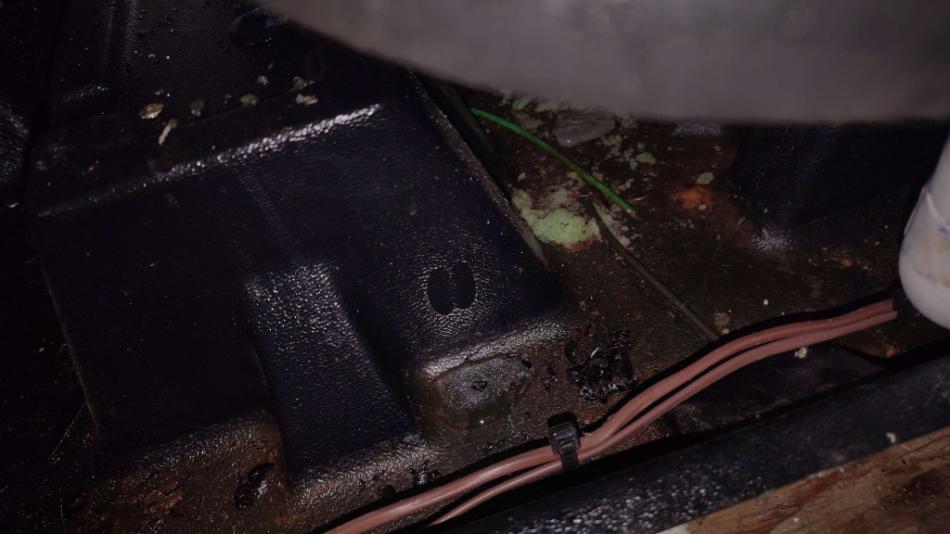
The pan beneath the attic HVAC equipment held moisture and showed corrosion and debris. That pan is there to catch water before it reaches the ceiling below. We flagged it for HVAC follow-up on the drainage.
An AC drain eroding the ground
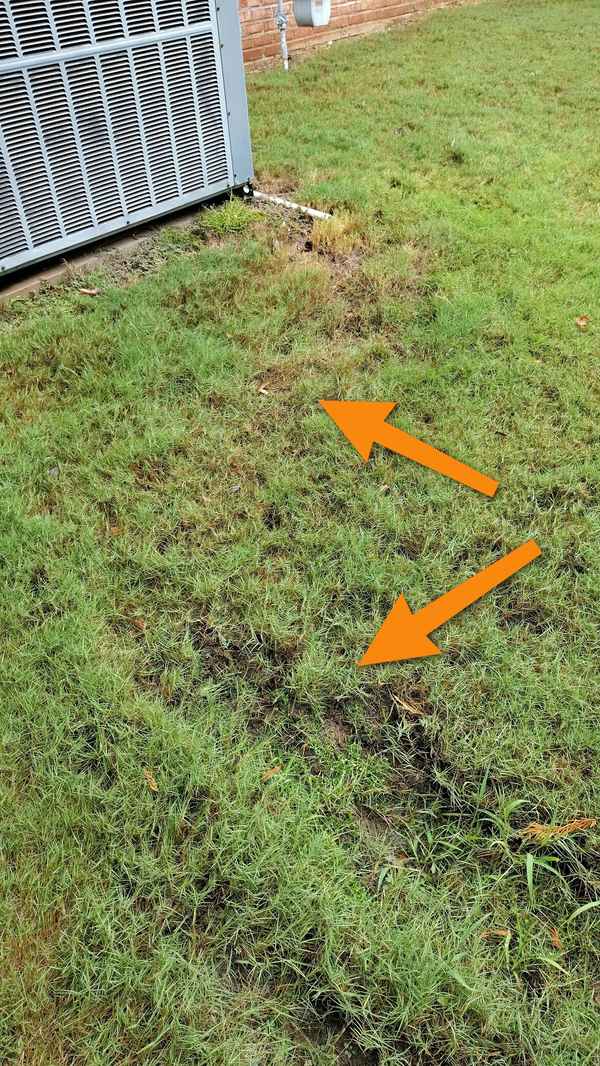
The condensate discharge had eroded the soil beside the outdoor HVAC unit. We flagged where the drain emptied so runoff could be redirected away from the equipment.
Bare copper at a refrigerant line
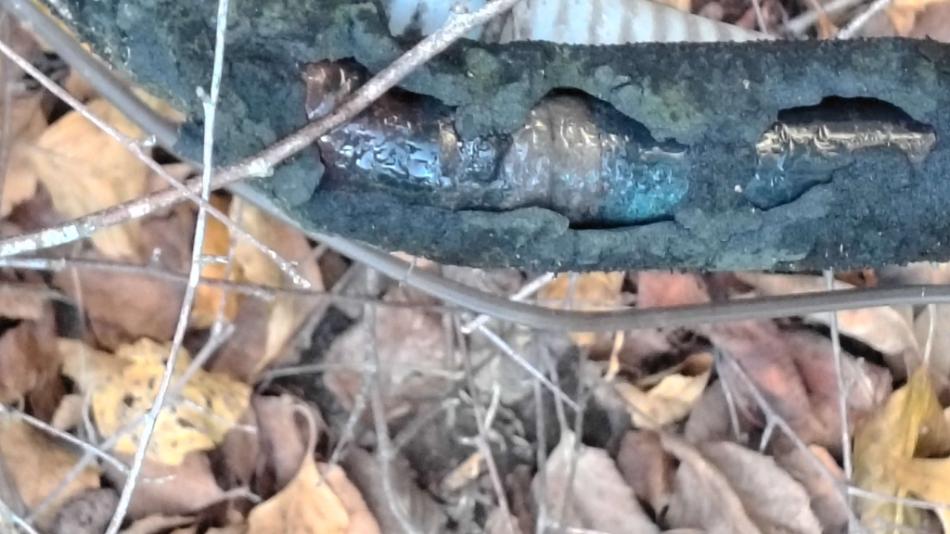
Insulation on the cooling system’s refrigerant line had deteriorated, exposing copper. The exposed section can collect condensation during operation. We flagged the damaged insulation for HVAC follow-up.
A condensate drain came apart
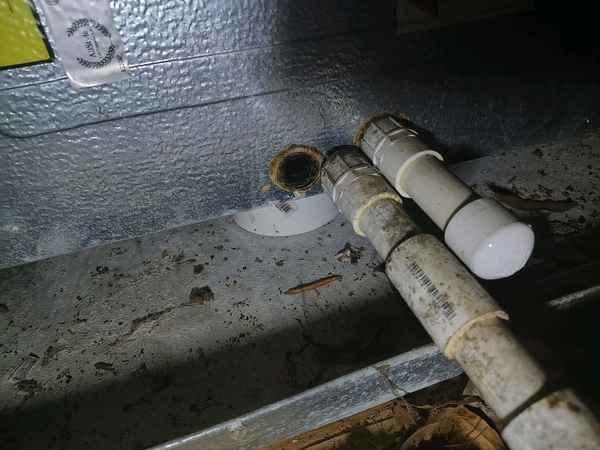
We found a disconnected condensate drain pipe. The open joint left a path for water to escape before it reached its intended discharge point. We flagged it for HVAC repair.
Follow the water through the system
A disconnected line provides one visible explanation for where water can go. Erosion at a discharge point tells us where drainage has been reaching the ground. Missing insulation on the refrigerant line is a separate condition that can be associated with condensation during operation. These details help the HVAC contractor focus the investigation without assuming that every moisture observation has the same source.
Check the drainage after correction
The reports recommended qualified HVAC evaluation and correction of the affected components. A useful service record explains what was repaired and whether drainage was checked under relevant operating conditions. For the buyer, that is more informative than a receipt that only says the system was running when the technician left.
Related inspection insights
For related context, read Why Inspectors Care So Much About Water (Even When You Don’t See a Leak) and Ductwork Disasters: Why You’re Paying to Heat Your Crawlspace.
Learn more about our home inspection services and the way we document building conditions for buyers and property owners.
By Wesley Upchurch. This article draws on documented inspection observations and photographs. Images show conditions at the time of inspection; later repairs are not established unless stated. Property addresses and client details are omitted.