
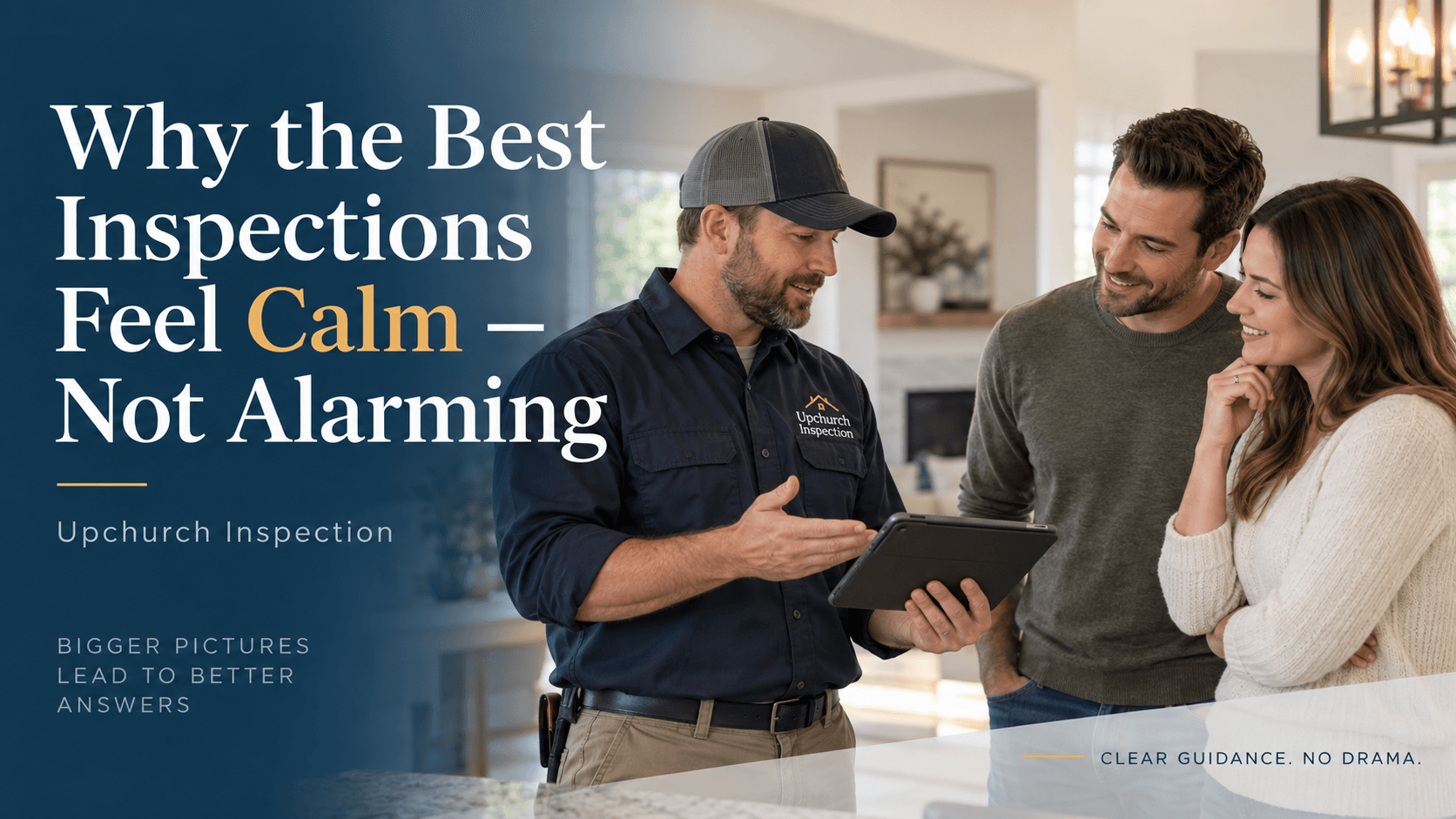
Some buyers expect a home inspection to feel intense. Serious tone. Urgent language. A long list of warnings. When that doesn’t happen, they sometimes wonder whether the inspection was thorough enough.
In reality, the calmest inspections are often the most experienced ones.
At Upchurch Inspection, our goal isn’t to impress clients with how many problems we can find or how dramatic the report sounds. It’s to leave buyers feeling grounded, informed, and clear about what the house is actually telling them.
Calm doesn’t mean casual. It means controlled.
Alarm Comes From Uncertainty, Not From Problems
Most anxiety during inspections doesn’t come from defects themselves. It comes from not knowing what those defects mean.
A buyer can handle bad news when it’s explained clearly. What they struggle with is ambiguity—when issues are mentioned without context, severity, or practical explanation.
Inspectors who lack experience often sound more alarming because they haven’t yet learned how to interpret what they’re seeing. Everything feels important. Everything feels risky. Everything gets escalated “just in case.”
That approach creates stress without adding clarity.
Experienced Inspectors Have Seen the Outcome Before
Calm comes from pattern recognition.
When you’ve inspected thousands of homes in the same regions, you’ve seen how issues tend to play out. You know which conditions almost always escalate, which usually stabilize, and which look worse than they are.
That experience allows an inspector to say, with confidence:
- “This is common here.”
- “This deserves monitoring, not panic.”
- “This matters long-term, but not today.”
- “This one actually needs attention.”
Authority isn’t louder warnings. It’s better sorting.
A Real Example: The Crack That Looks Worse Than It Is
Hairline cracking in drywall or masonry can be visually unsettling, especially to first-time buyers. Inexperienced inspectors may overemphasize it because it’s easy to point out and hard to explain.
An experienced inspector looks at:
- Location
- Pattern
- Width
- Relationship to doors, windows, and structure
- Evidence of progression or repair
Most of the time, those cracks tell a very ordinary story about seasonal movement or settling. Explaining that calmly reassures buyers without minimizing the condition.
When cracking actually suggests structural concern, the tone changes—but it changes for a reason, not by default.
Calm Inspections Focus on Decisions, Not Drama
A good inspection helps buyers answer practical questions:
- What does ownership realistically look like?
- Where should I plan for maintenance or replacement?
- Which issues affect safety or long-term cost?
It doesn’t try to create urgency where none exists.
Buyers don’t need to feel pressured. They need to feel informed.
Why Some Inspections Feel Overwhelming
Reports that feel overwhelming often aren’t more thorough—they’re less interpreted.
When every issue is presented with similar emphasis, buyers can’t tell what actually matters. Minor items feel major. Manageable issues feel catastrophic.
That overload isn’t a sign of diligence. It’s a sign that the inspector didn’t filter, prioritize, or explain based on experience.
How We Set the Tone at Upchurch Inspection
We’re intentional about tone because we know buyers are already under stress.
During inspections, we:
- Explain issues as we see them, not all at once at the end
- Distinguish clearly between safety, cost, and maintenance
- Put findings in regional and age-specific context
- Avoid speculative language unless it’s necessary
The goal is not to make the inspection feel easy. It’s to make it feel understandable.
Calm Doesn’t Mean Soft
There’s a misconception that calm inspections overlook serious issues.
They don’t.
When something matters—when a condition poses real risk, significant cost, or long-term consequences—we say so plainly. The difference is that those moments stand out because they aren’t buried under unnecessary alarm elsewhere.
When everything sounds urgent, nothing does.
Buyers Remember How the Inspection Made Them Feel
Months or years later, buyers rarely remember every line of the report. They remember whether the inspection prepared them or overwhelmed them.
The inspections that hold up over time are the ones that felt steady, honest, and measured—because the expectations they set were realistic.
That’s not an accident. That’s experience at work.
A calm inspection isn’t a lighter inspection.
It’s a confident one.
And confidence, in this industry, comes from knowing not just what can go wrong—but what usually does, what usually doesn’t, and how to tell the difference.