One of the most common follow-up questions buyers ask during an inspection is some version of:
“About how much do you think this will cost to fix?”
It’s a reasonable question. Buying a home is a financial decision, and people want to understand what they’re stepping into. But experienced inspectors are careful here—for a reason.
At Upchurch Inspection, we don’t throw out casual dollar figures, and that restraint isn’t evasiveness. It’s professionalism.
Repair Costs Aren’t Just Numbers — They’re Variables
There is no single “cost” to fix most issues. There’s a range, and that range depends on factors inspectors don’t control.
Who does the work.
How they approach it.
Whether the fix addresses symptoms or root causes.
Whether additional damage is discovered once work begins.
Whether the repair is a patch or a long-term solution.
A number without context creates false certainty, and false certainty is more dangerous than uncertainty.
The Same Defect Can Have Very Different Costs
Take something simple like a roof repair.
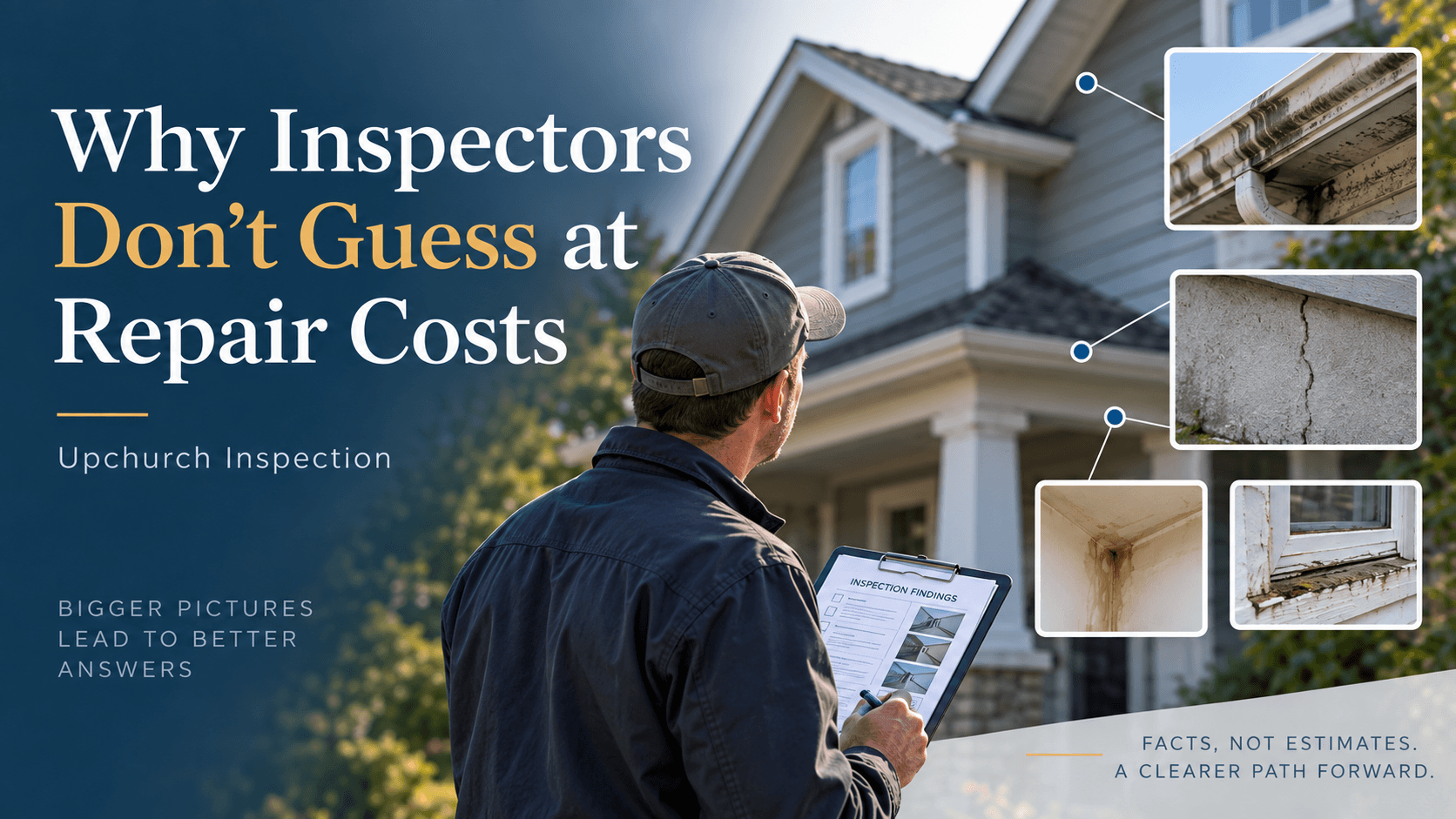
One contractor may recommend replacing a few shingles. Another may recommend replacing an entire slope. A third may identify flashing issues that weren’t visible from the surface.
All three may be technically “fixing the same issue,” but the cost difference can be thousands of dollars.
If an inspector guesses low, the buyer feels misled later. If the inspector guesses high, the buyer may walk away unnecessarily.
Neither outcome serves the client.
A Real Example: “Just a Crack”
Foundation cracks are another area where cost guesses routinely backfire.
Some cracks are cosmetic. Some indicate movement. Some require monitoring. Some justify engineering evaluation.
The cost difference between sealing a surface crack and stabilizing a foundation can be dramatic—but that determination usually requires specialized assessment beyond a visual inspection.
Guessing helps no one.
Why Inspectors Focus on Scope, Not Price
Instead of guessing cost, experienced inspectors explain scope.
What kind of work is likely involved?
Is the issue localized or systemic?
Is this a repair, an upgrade, or a replacement?
Does the issue tend to escalate if ignored?
Understanding scope allows buyers to get meaningful quotes from qualified contractors rather than relying on rough estimates that may not apply.
Repair Costs Change After Closing
Another reason inspectors avoid pricing guesses is that timing matters.
Repairs done before closing are rushed and often cost more for less thorough work. Repairs done after closing can be planned, scheduled, and priced competitively.
Market conditions matter too. Labor availability, material costs, and regional demand fluctuate constantly. What something cost last year may not reflect today’s reality.
Any number given during an inspection is a snapshot that ages poorly.
How Guessing Hurts Buyers
We’ve seen buyers anchor emotionally to offhand numbers given elsewhere.
When real quotes come in higher, frustration follows. When quotes come in lower, trust still erodes—because expectations were set casually.
Inspectors who guess at costs often don’t realize the long-term effect those guesses have on buyer confi